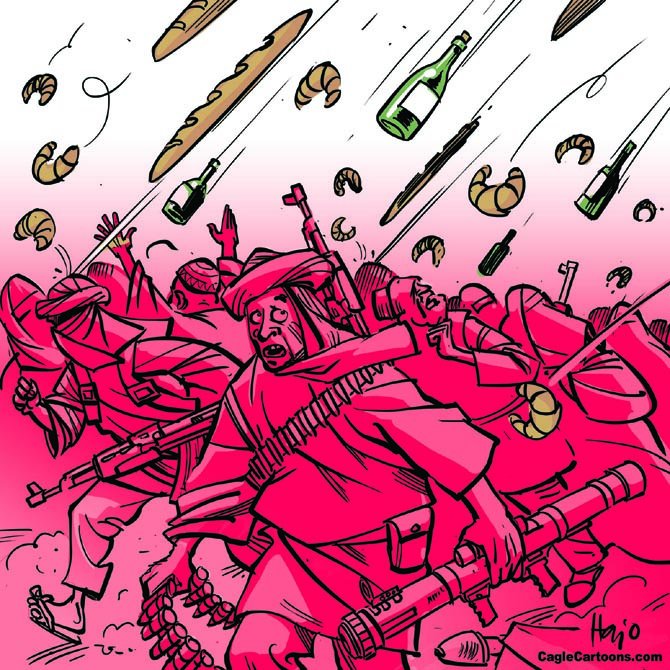
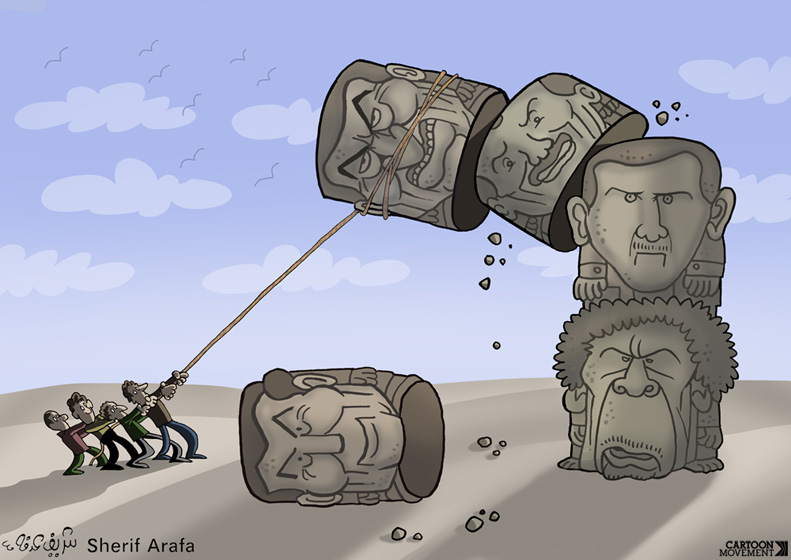
(Cartoon: Sherif Arafa, Cartoon Movement)
Few issues in international criminal justice are as contentious as the relationship between the International Criminal Court (ICC) and regime change. After all, it goes right to the heart of the tensions between humanitarianism and the messy realities of conflict resolution as well as the contradictions between intervening in the internal politics of states in the name of human rights.
But there is a case to be made that ICC’s interventions have directly or indirectly contributed to the goal of regime change. This is particularly so where a regime can be equated with the autocratic rule of an individual leader. Consider some examples.
The explicit message of indicting Muammar Gaddafi was that he was no longer fit to be head of state. The regime change equation was pretty clear: the indictment signalled that Gaddafi should be arrested and brought to justice in The Hague. That meant removing him from power. Ipso facto, the ICC was seeking regime change.
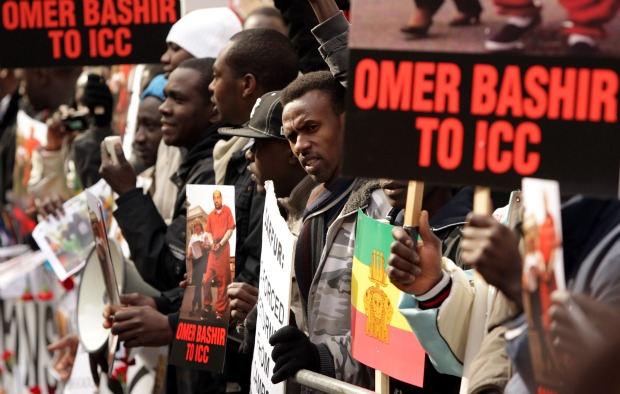
The same goes for the ICC’s indictment of Sudanese President Omar al-Bashir for his alleged responsibility in perpetrating genocide, crimes against humanity and war crimes in Darfur. The arrest warrants signalled that the ICC – if not the international community – viewed Bashir as an illegitimate head of state who ought to be removed from power.
Today, as we debate whether or not the United Nations Security Council should refer the situation in Syria to the ICC, a central – if not the central – question is whether the Security Council is prepared to support the ouster of President Bashar al-Assad.
The ICC is not unique in this case. When the International Criminal Tribunal for Yugoslavia (ICTY) indicted Serbian President Slobodan Milosevic, it did so in the hope that he would be forced out of power. Unlike in the case of Sudan, it worked and Milosevic was sent to the ICTY.
It may be that the goal of regime change is inevitably linked to international criminal justice. The belief that tribunals can marginalize and isolate indicted leaders rests on the conviction that it is desirable to reduce the power of indictees to the point where they can no longer rule. Again, where the target is a head of state, this suggests one thing: regime change.
In short, where international criminal tribunals aim – or are aimed – at sitting heads of state, their implicit aim is to knock their target from power. Whether or not that happens, of course, depends on other factors, particularly whether there is sufficient will within the international community to enforce arrests warrants and/or seek regime change via military intervention. Sometimes it happens (see Gaddafi and Milosevic) and sometimes it doesn’t (see Bashir and Assad, so far). But regime change appears to be a pre-condition for the ICC to achieve its goal of ever seeing leaders like Gaddafi and Bashir in the dock.
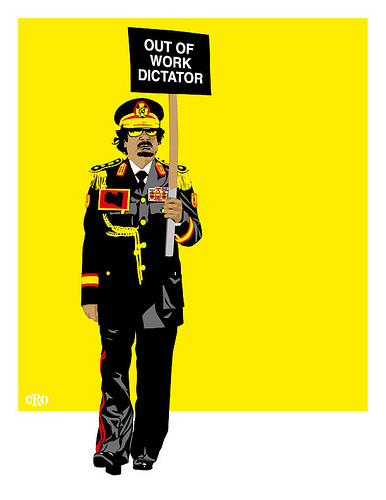
(Cartoon: CRO)
The words “regime change”, however, remain taboo in some international justice circles. A common refrain is that the ICC does “justice, not politics”. And regime change, after all, is fundamentally political.
Louise Arbour, the former ICTY Prosecutor who is now President of the International Crisis Group, and who also happened to have issued that arrest against Milosevic, tackled this subject in a brief article last year, entitled ‘For justice and civilians, don’t rule out regime change‘. Arbour bravely and eloquently put forth the argument that we shouldn’t shun the goal of ousting regimes because “regime change” is a dirty phrase in the world of justice and international relations. It might be the difference between being able to protect civilians from atrocities and dithering in the face of mass human rights violations. Arbour asks a very poignant question: Continue reading