Beyond Criminal Justice: A Truth Commission in Libya

A fascinating debate about where to try the two surviving members of theTripoli Three – Saif al-Islam Gaddafi and Abdullah al-Senussi – is currently raging (see here, here and here). It’s an important debate, and, as readers will know, I have chirped in as well.

But the preoccupation with criminal responsibility shouldn’t detract from the over-arching need for accountability, truth and reconciliation in Libya. Yes, ‘accountability’, ‘truth’ and ‘reconciliation’ are lofty and contested words; this blog post doesn’t pretend to capture the competing views or the political nature of each. The point is rather simple: after forty years of a police state engaging periodically in international terrorism and repressing the freedoms of its own people, there’s a need to pursue justice outside of the courtrooms. An empowered and independent truth commission in Libya could help do just that.

Beyond Trial-Heavy Transitional Justice

The development of international criminal justice is nothing short of remarkable. According to its President, Sang-Hyun Song, when the International Criminal Court became a reality in 2002, the Court’s first judges expressed doubt that the ICC could survive the skepticism and hostility of international politics. Today, hardly a day goes by that an international tribunal isn’t in the news. So remarkable is its reach that individuals, from Sudanese President Omar al-Bashir to former Secretary of State Henry Kissinger, not only fear international criminal justice but calibrate their day-to-day lives according to its reach.

Yet, simultaneously, the expansion of international criminal law onto the agenda of international politics has led to a myopic focus on individual criminal accountability. Indeed, transitional justice and justice in conflict are, generally, trial heavy. Thus, a handful of individuals are deemed responsible for social processes as complex as the alleged genocide in Darfur and the war in Vietnam.
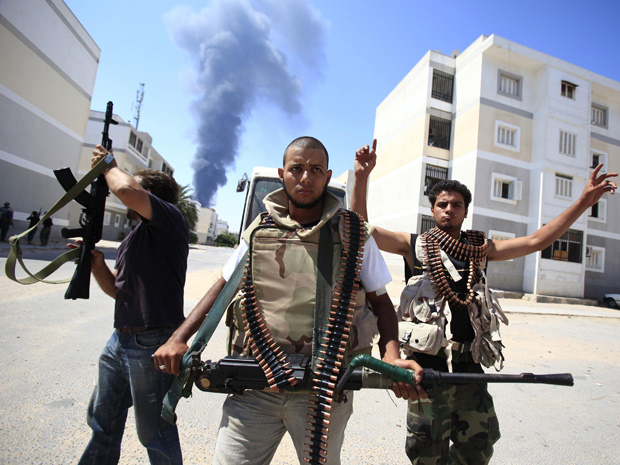
Of course, the focus on individual accountability is not, in itself, a bad thing. There are some individuals who are most responsible for international crimes. However, the attention, resources and political will aimed at ensuring international criminal justice should not come at the expense of identifying the social causes of atrocities. In contexts like Libya,  justice does not end with the sounding of a gavel. There is a need to bring to account those who allow atrocities to occur but could never be brought before an international or domestic tribunal. As Kirsten Ainley explains in a forthcoming paper,

“responsibility for war crimes lies not with individual perpetrators alone but also in significant measure with collectives and with those individuals who did not commit crimes but did contribute to harm.”

Ainley rightly adds that individual accountability should not detract from addressing the “excesses of responsibility” outside of trial chambers. Truth Commissions (TCs) are in a perfect position to do just that.

Getting to the Truth through Truth Commissions

Truth commissions provide accountability primarily through the process of acknowledging that certain criminal acts were committed, and identifying individuals as responsible for those crimes. As the individuals responsible for harmful acts testify and acknowledge their behaviour, truths about the past emerge. Proponents of truth commissions argue that this process of acknowledgement is the first necessary step on the path towards closure and, possibly, forgiveness. Continue reading →

Posted in International Criminal Court (ICC), Libya, Libya and the ICC, The Tripoli Three (Tripoli3), Traditional Justice Mechanisms, Transitional Justice, Truth and Reconciliation Commissions, Truth Commission | Leave a comment

The “Crown Jewel” of Justice in Libya: Senussi, not Saif

Senussi interpol

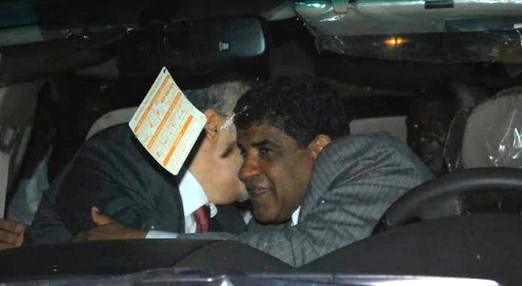
Abdullah al-Senussi (Photo: Interpol)

Since the NATO-backed rebellion in Libya began to sweep away at the four-decade rule of Muammar Gaddafi, the international attention (deficit disorder) paid to Libya has tended to only concentrate on one of the Tripoli Three at a time.

For the vast majority of the conflict, virtually all attention was paid to the enigmatic leader of the country, Colonel Gaddafi. With a few notable exceptions (his links to the LSE and his appearance in Tripoli after being reported captured), Gaddafi’s son, Saif al-Islam escaped much scrutiny.

With Colonel Gaddafi’s death, attention naturally turned to Saif al-Islam, a man who allegedly plagiarized his way to a doctorate from the LSE and manipulated his way into the West’s imagination as a potential moderate heir to his father’s blood-soaked throne. This however, has allowed the third member of the Tripoli Three – the trio of ICC-indicted Libyan officials – to fly, almost entirely, under the radar.

Unlike Colonel Gaddafi and Saif al-Islam, this third member has not had videos or photos depicting his capture or detention splayed out before eager eyes on the internet. His name is Abdullah al-Senussi and he may just be the most important key to justice and reconciliation. Indeed, at a recent lecture in London, respected human rights lawyer Geoffrey Robertson described Senussi as the “crown jewel” of justice in Libya.

Who he is?

Senussi is 61. He is a long-time Libyan official and confidant of Colonel Gaddafi. He has variously been described as “the right hand man” of Gaddafi, the “keeper of Gaddafi’s secrets”, Gaddafi’s “eyes and ears” and, I’m certain, much worse. But Senussi is not just close to the Gaddafis, but part of the family, as Colonel Gaddafi’s brother-in-law.

Curious observers will notice that there isn’t much to find when searching for images of Senussi. This is because, despite wielding an immense amount of power, he has largely kept a low-profile.

Senussi’s involvement in Col. Gaddafi’s tyrannical rule began at some point in the 1970s, although little is known about his role at the time. Regardless, as one commentator noted, “Senussi’s association with the worst excesses of the Libyan regime stretch back to the early days of Col. Gaddafi’s dictatorial rule.” His power and evil streak stem primarily from his position as both the head of the internal and external intelligence services of Libya under Gaddafi.

As a key cog in brutally suppressing the Libyan revolution, Senussi was indicted by the International Criminal Court, as an “indirect perpetrator, for two counts of crimes against humanity.” He was captured this week while hiding in his sister’s home, in the south of Libya and Libyan authorities have said he will face trial in the country and not in The Hague.

What’s he done?

The list of massacres and crimes that Senussi has allegedly been involved in reads like a Christmas list from hell: Continue reading →

Posted in Justice, Libya, Libya and the ICC, The Tripoli Three (Tripoli3), Uncategorized | 1 Comment

The International Criminal Tribunal for the former Yugoslavia: Reconciling Torn Societies?

The front of the premises of the International Criminal Tribunal for the former Yugoslavia in The Hague (Wikimedia Commons)

I have always been of the opinion that we need to closely scrutinize the effects that are being attributed to international trials. There is a tendency to conflate the objectives and capabilities of international courts and tribunals by putting forward ever new and more grandiose claims as to what they can actually achieve in building up post-conflict or post-dictatorship societies. One of the classical claims brought forward is that trials can contribute to the reconciliation of torn societies by determining who is and who is not guilty of committing atrocities and by presenting a truthful historical record on which a common future can be built.

According to Audrey Chapman reconciliation in this context means both the transformation of the relationship between people living in the conflict region as well as the creation of a new relationship built on trust between the people and the government (p. 143). As reconciliation processes are more likely to gain momentum in the long run, the case of the International Criminal Tribunal for the former Yugoslavia (ICTY) is probably the most suitable for having a closer look at these claims. Indeed, the ICTY does claim that it furthers reconciliation within its jurisdiction by personalising the guilt for atrocities and thus shielding communities from being labelled as collectively responsible in the general information material available at the premises of the court.

The ICTY has been investigating crimes and trying cases in the former Yugoslavia for close to two decades now. Important international players like the US have discouraged the court from ever becoming an effective institution in its early phases by trying to withhold necessary resources and the tribunal has seen its fair share of attempts of external political meddling in later years. Still, the ICTY has been able to produce some impressive results, including the arrest of those deemed most responsible for the worst crimes committed during the Balkan wars. The tribunal has shown that those indicted will eventually end up in the dock, even if it takes decades for justice to take its course.  Former Serbian President Milosevic was arrested in April 2001, and Radovan Karadzic, accused of being involved in the Srebrenica Massacre, was arrested in July 2008, after having lived in hiding as a doctor for alternative medicine in Belgrade for years. Finally, the court was able to secure the arrest of Ratko Mladic, the last fugitive among the high profile indictees of the tribunal, in May 2011.

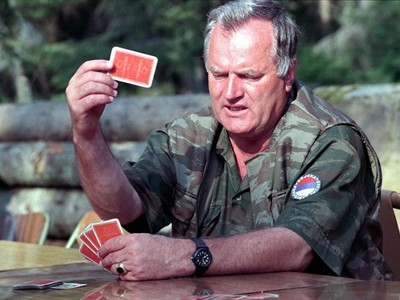
Ratko Mladic in his uniform during war times

Continue reading →

Posted in Apologies, ICTY, Ratko Mladic, Serbia, Slobodan Milosevic, War crimes | Tagged , , , , , , , , , , , , , | Leave a comment

ICC Confirms: Trial in Libya by the Court is a Possibility!

(Photo: REUTERS/Ahmed Jadallah/Files)

So it wasn’t such a crazy idea after all. Tucked away and close to the end of a Reuters article from last night were words that sped up my heart-rate. In the context of the ongoing debate about where to try Saif al-Islam Gaddafi and Abdullah al-Senussi, a spokesperson for the International Criminal Court admitted that a possibility exists to hold an ICC trial in Libya:

There are, however, few obvious alternatives to trying Gaddafi and Senussi at The Hague, which risks angering many Libyans, and holding a trial in Libya without ICC authorization, which is likely to upset the West, violate international law, and provoke accusations of victors’ justice.

ICC spokesman Fadi El Abdallah said a third option could be for the ICC to hold trials in Libya rather than at its Dutch headquarters, though how that would work in detail was unclear

“It is possible for ICC judges to organize a trial in the country if deemed appropriate,” El Abdallah said.

Readers will know that a handful of observers, including David Kaye, Kevin Jon Heller and myself (see here and here) have spoken out in favour of such an option. Yet, to date there had been no official statement in support or against it.

Of course, with ICC chief Prosecutor Luis Moreno-Ocampo bound for Libya at some point this week, it remains to be seen whether he will attempt to negotiate such a justice-sharing agreement with Libya’s National Transitional Council. He could insist on bashing Libyan authorities over their heads with their purported procedural obligation to hand Saif al-Islam over to The Hague – but given their obvious desire to hold a trial in Libya this would seem fruitless.

I say: go for it!

*********************************************

UPDATE: it seems that the arrest of Senussi and Saif-al Islam Gaddafi has instigated more discussion of a possible ICC trial in Libya. Writing at The Guardian, Phillippe Sands adds his voice to the debate, listing four options, including “in situ” ICC proceedings:

“A second option is for the ICC and the new Libyan government to reach agreement on an ICC trial in Libya. This is not something the court has done before; it might go some way to satisfy understandable demands in Libya for a local trial, subject to international oversight and justice dispensed by international judges.”

Posted in ICC Prosecutor, International Criminal Court (ICC), Libya, Libya and the ICC, The Tripoli Three (Tripoli3), Transitional Justice | 4 Comments

Saif Gaddafi Arrested: What now for Justice in Libya?

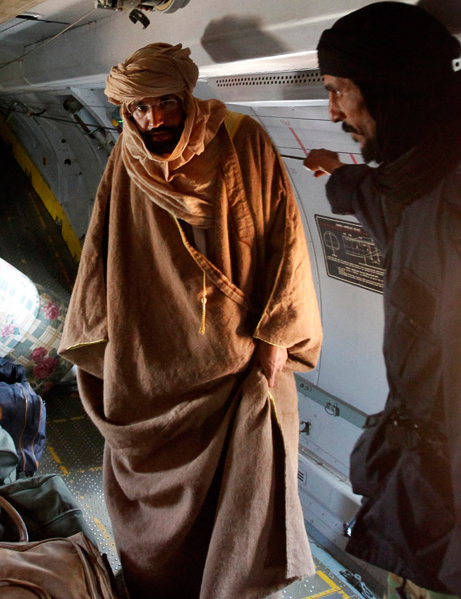
Saif al-Islam Gaddafi on the plane to Zintan after being captured (Photo: Getty Images/AFP)

Last Friday night, Saif al-Islam Gaddafi, dressed in the traditional garbs of the Tuaregs, was detained whilst on the run, likely to neighbouring Niger. With the death of his father, Colonel Muammar Gaddafi, Saif al-Islam had become the most wanted man in Libya and one of the most wanted men in the world. Now, bearing injuries from a NATO air raid this past October, he is cowering in some detention facility in Zintan, a few hours outside of Tripoli. So what now for justice in Libya?

Journey to the ICC: Over before it Began?

Just a few weeks ago, Saif al-Islam made international headlines with reports suggesting he was trying to flee Libya and was willing to hand himself over to the International Criminal Court (ICC). In the wake of the nauseating treatment of Colonel Gaddafi following his capture, it only made sense that Saif al-Islam would want to prevent a similarly brutal fate.

What’s more, the ICC chief Prosecutor, Luis Moreno-Ocampo, maintained that the Court had been in contact with Saif’s “intermediaries” to discuss his surrender to the Court in The Hague.

To date, there has been little more than speculation as to whether any of the above actually happened. The conflict in Libya has spewed a lot of hearsay and rumours, reminding us of the all-too-true adage that “in war, truth is the first casualty.”

Indeed, it is interesting that when asked about having spoken to the ICC about potentially surrendering by a Reuters correspondent following his capture, Saif, who had said little to that point, remarked: “It’s all lies. I’ve never been in touch with them.”

Whether or not Saif did get in contact with ICC officials or not, the chances that Saif al-Islam will ever reach an ICC court room are zero-to-none.

There are rumours that the Libyan National Transitional Council (NTC) will hold a vote to decide where Saif al-Islam Gaddafi should be tried. While this would be a sensible and democratic approach, it virtually guarantees that Saif will be tried in Libya.

Observers are right to point out that, under international law and Resolution 1970, Libya has an obligation to arrange the transfer of Saif to The Hague. However, it seems unlikely that much will be made of this obligation amongst international diplomats and leaders.

In this context, the remarks by UK Prime Minister David Cameron were telling, but for what they didn’t say:

“It is a great achievement for the Libyan people and must now become a victory for international justice too…

…Britain will offer every assistance to the Libyan government and the International Criminal Court to bring him to face full accountability and justice for what he has done.

The Libyan government has told us again today that he will receive a trial in line with international standards, and it is important that this happens.”

Cameron neglects any mention of the obligation to bring Saif to the ICC and like other comments on the issue and much of the rhetoric regarding international justice in Libya, suggests that Libyan authorities will be in the drivers’ seat when it comes to deciding Saif’s fate.

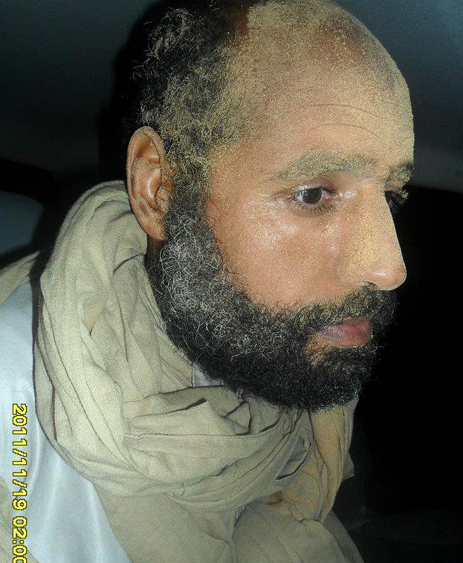
Photo of Saif al-Islam Gaddafi shortly after his capture (Photo: Getty Images/AFP)

What (International) Justice will be served?

Despite protestations by the NTC that Saif al-Islam will get a “fair trial”, there are significant potential dangers to having a trial in Libya. Beyond the fact that there has never been a functioning independent judiciary for at least four decades, it is not clear what domestic legal paradigm could be used in trying Saif al-Islam, nor whether international law would be respected in key regards. Continue reading →

Posted in Complementarity, Human Rights, ICC Prosecutor, International Criminal Court (ICC), Justice, Libya, Libya and the ICC, The Tripoli Three (Tripoli3) | 3 Comments

Justice in Conflicts: What’s all the Fuss About?

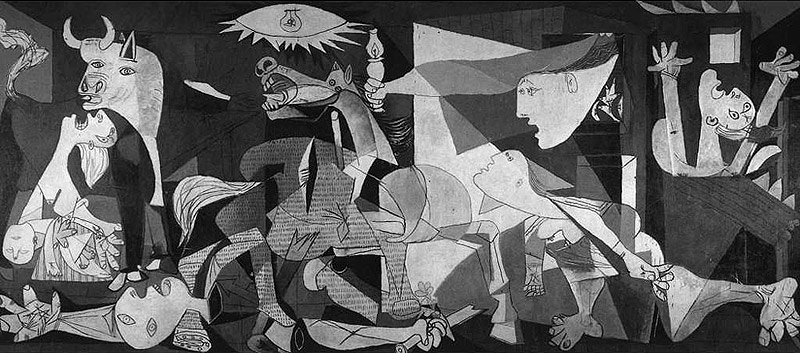
Pablo Picasso's 'Guernica' has become one of the most powerful symbols for suffering in war of contemporary times

When I first found this blog, weeks before becoming a regular author, I was excited. I thought it covered an angle of the transitional justice debate that had so far been neglected, and I would like to take the time to elaborate that point in this post. I believe that the application of international criminal law in conflicts is a trend that will be with us for the decades to come. The implications of this development may be enormous, and I believe that the potentially far-reaching consequences have so far not gotten the attention they deserve by academics and practitioners alike.

For those who have been working on questions of transitional justice for some time, this statement might seem a bit grandiose. After all there is a long history of national trials and amnesties implemented during conflicts. Nicaragua tried a number of rebels for crimes against humanity between 1983 and 1988 while its bloody civil war was still ongoing and the Philippines tried members of its military in 1988 and 1990 during its conflict with the Communist Party of the Philippines, to just name two examples. But the trend of transitional justice moving into conflicts can be demonstrated both in figures as well as in statements made by stakeholders.

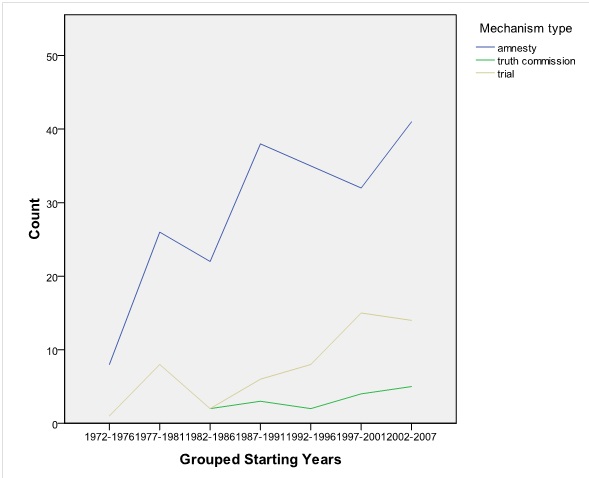
The Transitional Justice Database compiled by Prof. Payne, Andrew Reiter and Tricia Olsen includes all transitional justice measures implemented worldwide between 1970 and 2007. If we have a look at the trials conducted in the context of conflicts, we find a steadily increasing number, particularly starting in the early 90s. While 17 trials were carried out in conflict contexts between 1972 and 1991, 34 were initiated between 1992 and 2007 alone. At the same time, the share of international and hybrid trials amongst the total number of trials conducted in conflicts is increasing.

This graph shows the number of transitional justice mechanisms applied in conflict context. The share of trials is increasing.

This suggests that there is an increasing probability that atrocities committed in conflicts will trigger what we might call an international criminal justice intervention. The likelihood that either the International Criminal Court (ICC) or a tribunal mandated by the United Nations Security Council intervenes has increased with time. This is reflected in the statements of some stakeholders. The Chief Prosecutor of the ICC, Luís Moreno Ocampo, has made this explicit: ‘[t]he ICC’s mandate to select the most serious crimes committed after July 1, 2002, requires that we engage in judicial proceedings in relation to conflicts even before they have ended. […] My Office is part of a new system dealing with a complex new reality: transitional justice during ongoing conflicts.’ Continue reading →

Posted in Justice, Peace Processes, Peacebuilding, Responsibiltiy to Protect (R2P), Transitional Justice, UN Security Council, Uncategorized, War crimes | 1 Comment

Who Gets to Serve Justice: Saif Gaddafi and ICC Due Process

Mathias Holvoet, a PhD-Candidate, studying international criminal law, at Vrije Universiteit Brussel (Free University of Brussels), joins us to discuss the possible surrender of Saif al-Islam Gaddafi to the ICC. Specifically, Holvoet covers the issue of due process of the accused at the ICC in the context of the complementarity regime . Mathias is also an nalyst for the Global Justice Section of the Global Governance Institute. 

Who will try Saif al-Islam Gaddafi (middle)?

On the 26th of October, Saif al-Islam Gaddafi, the last of Muammar Gaddafi’s eight children still on the run, proposed surrendering to the International Criminal Court (ICC), which had indicted him for crimes against humanity.

Apparently, Saif al-Islam, having seen his father killed in cold blood by rebel militiamen, is so fearful of staying in Libya that he would rather face trial in The Hague. Saif al-Islam had previously called the ICC a tool of foreign powers. But they are also the only organization that would at least respect his rights as an accused, something doubtful of the NTC. Given the troubling human rights record the NTC has compiled in recent, including abuses of detainees and assassinations, Saif  al-Islam’s fear would appear to be warranted.

It was also reported that the former intelligence chief of the Gaddafi regime, Abdullah al-Senussi, intended to surrender to the ICC as well. On the 28th of October, the ICC said it had held talks – through intermediaries – with Saif al-Islam about his possible surrender. In response, the NTC expressed concerns over the informal talks the ICC had with Saif al-Islam. The NTC would prefer to capture Saif al-Islam and put him on trial in Tripoli.

Due process of the accused v. the primary right of the state to prosecute its nationals for international crimes in light of the principle of complementarity (Article 17 ICC Statute)

The future will tell if Saif al-Islam really wanted to surrender to the ICC as a result of the deteriorating human rights situation in his home country. But let’s consider, for the sake of the argument, that Saif al-Islam indeed surrenders himself to the ICC in order to evade “justice” (in whatever form that may be) in Libya and the Libyan courts subsequently start their own investigations, and request the transfer of Saif al-Islam, basing themselves on the principle of complementarity and their primary right to investigate and prosecute the crimes at stake. This raises fundamental questions on the mysterious mysteriousness of the concept of complementarity, which is considered the cornerstone of the Rome Statute.

Saif al-Islam Gaddafi has reportedly said he wants to give himself up to The Hague to avoid a fate similar to his father's

Under Article 19 of the Rome Statute, an accused has the right to challenge the admissibility and jurisdiction of the ICC on the grounds referred to in Article 17 of the Statute, but the Statute is silent on the right of the defendant to challenge the inadmissibility of the case. What is more, it seems that the Rome Statute relies on the underlying presumption that the rights of the accused are guaranteed if the accused can challenge the jurisdiction of the ICC by asserting his right to a trial in his home forum.

Consider, for example, that the Libyan authorities pursued their own investigations into the crimes committed by Saif al-Islam and bring challenges under Article 19 of the Rome Statute to the ICC on the grounds that the Libyan courts are genuinely able and willing to prosecute Saif al-Islam, similar to the recent submissions brought by the Kenyan authorities before the ICC to challenge its cases against six suspects accused of orchestrating violence in the aftermath of the disputed 2007 elections. Would Saif al-Islam be able to challenge a referral of his case to the Libyan authorities, arguing that the Libyan courts are unable to guarantee due process?  More generally, can the ICC rely on due process for a defendant to render a case admissible, and if yes, to what extent?

The majority of international criminal law scholars would answer with a clear “yes”. In defense of the due process thesis, they argue that the prospect of an unfair national trial renders a State ‘unwilling’ to investigate or prosecute. Others point to Article 17(2) of the Statute, which says that unwillingness should be determined with ‘regard to the principles of due process recognized by international law’. Still others argue that a State is ‘unable’ to investigate or prosecute if it does not guarantee fair trial rights of the accused.

A minority however disagrees. Kevin Jon Heller argues, in my view quite compellingly, that nothing in the Rome Statute suggests that Article 17 requires States to guarantee defendants due process. Continue reading →

Posted in ICTY, International Criminal Tribunal for Rwanda (ICTR), Libya, Libya and the ICC, The Tripoli Three (Tripoli3) | 2 Comments

Pride and the Interventionist Itch: NATO in the Wake of Libya

Walking a thin line (Photo: Reuters)

Pride is a tricky thing. We want to feel it but it doesn’t always manifest itself as a good trait. For this reason Alexander Pope once declared that pride is “the never-failing vice of fools”, while Saint Augustine wrote that “[i]t was pride that changed angels into devils; it is humility that makes men as angels.” Pride can blind us and can lead even those with the best of intentions astray.

Last week, when NATO chief Fogh Anders Rasmussen declared that the military organization’s mission to Libya would conclude, he stated that he was “proud of the part NATO played” in “answering the call” to save civilians under attack from Gaddafi forces.

My contention here isn’t to predict the future of NATO engagements. The aim is simple: to place NATO’s “success” in Libya into context and consider the potential dangers of a proud military organization seeking to reproduce its success beyond the remits of international law.

NATO in Libya: Success?

It is remarkable how little the ambivalence and uncertainty of the first few months of the Libyan intervention is now recalled. Who now remembers the Obama administration’s ambivalence and (poorly) expressed desire to “lead from behind” in Libya? And what of the consistent reports that Libya faced a grave danger of becoming an intractable conflict, mired in a perpetual stalemate? All but distant memories now.

On the contrary, the rhetoric surrounding the mission in Libya has been thoroughly triumphalist. Chalk up a victory for the Obama administration, and especially its “liberal hawks” – Secretary of State Hilary Clinton, UN Ambassador Susan Rice, and senior security adviser Samantha Power. Chalk up a victory for NATO and its member states. And, before they forget, chalk up up a victory for Libyans!

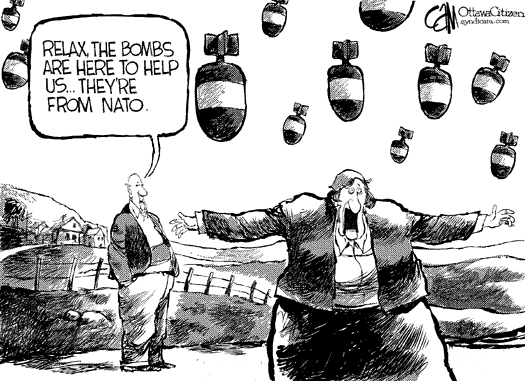
(Cartoon: Ottawa Citizen)

Libya has been framed as a success for a number of reasons. For many internationalists, Libya is a success because the Responsibility to Protect (R2P) was finally invoked by the UN Security Council. Many had thought that the emerging doctrine of R2P had become stagnant and were caught by surprise when adversaries like Russia and China allowed the words “responsibility to protect” to be articulated in Security Council Resolution 1973. Not only was R2P invoked but it appeared to work – the obvious threat to the citizens of Benghazi was averted.

For many Western states, particularly the US, the fact that there were no Western casualties was critical to any possible success. Since the events of Black Hawk Down in Somalia, it has become a pseudo-doctrine in Washington that US troops not be deployed in humanitarian crises. Indeed, the “success” of Libya in this regard may embolden a US belief that holding to the ‘Mogadishu line’ and succeeding in engaging in humanitarian disasters is feasible and desirable. While the number of humanitarian crises that the US gets involved in may increase, the use of drones and jets will almost surely contribute to the trend of removing the human from humanitarian interventions.

For better or worse, there’s only so much states are willing to pay for humanitarianism. It appears that the intervention in Libya never came close to any such threshold. While the cost of the intervention will undoubtedly grow as the damage done by the intervention is assessed, the total expenditure of the US was about $1 billion and about the same for the UK. That may seem like a lot but just put that into comparison with the following figures:

Now, I’ll be honest. I love baseball, I appreciate a good Hallmark card and, somewhat selfishly, I do dream of reversing the pandemic of receding hairlines. Joking aside, compared to these expenditures, the costs of the Libya intervention is astonishingly low. In contrast to Iraq and Afghanistan, Libya was peanuts. Iraq and Afghanistan have cost the US trillions of dollars alone. In 2011, monthly military operations in Afghanistan and Iraq were costed at $6.7 billion (Afghanistan) and $6.2 billion (Iraq) per month, respectively. Indeed, it was in part because of these exorbitant costs that virtually no one predicted another intervention in the region.  Continue reading →

Posted in Afghanistan, Iran, Libya, NATO, Responsibiltiy to Protect (R2P), Syria | 1 Comment

What a Difference Actually Asking Makes: Burkina Faso, Asylum and Gaddafi

Campaore and Gaddafi (Photo: AFP)

A few months ago, amidst rampant rumours that Muammar Gaddafi was seeking asylum in Burkina Faso, I expressed my frustration at what I thought was groundless and largely unfounded speculation:

“If Gaddafi does, in fact, seek asylum he will surely be very careful which country he chooses for his refuge. Yet few analysts seem to know the slightest about Burkina Faso. Indeed, there has been zero concrete evidence that the pro-Gaddafi convoys are, in fact, heading to Burkina Faso. Most media reports suggest this could be the case because the capital of Niger is close to the border with Burkina Faso and because Burkina Faso had offered Gaddafi asylum.

Burkina Faso now denies that it had offered Gaddafi asylum and it’s interesting to look at media reports to the contrary which never quote any officials from the country.”

Alison Cole at the Open Society came to a similar conclusion. In his typically astute and thoughtful fashion, John Birchall commented on the fact that the offer of asylum could not actually be traced:

 I find it interesting to trace the origins of the widely reported “offer of asylum” from Burkina. It seems all based on the Reuters interview with the FM. Its not clear that he even used the word “exile”, which sems based on this quote:

“In the name of peace, I think we will take, with our partners in the international community, whatever steps are necessary,” Bassolet said, without giving any other details.

And exile went to asylum as fast as you can drive across the deserts of Niger.”

This week, it became even more evident that Burkina Faso never actually offered Gaddafi asylum. The President, Blaise Compaore, was remarkably unequivocal about his country’s support for the ICC’s role in Africa:

“It is our duty to sensitise Africans… We must continue to convince them that such a court is essential…Many African countries believe that the ICC was a tool from the Western world against African countries. There’s a perception to be changed.” Continue reading →

Posted in Burkina Faso, International Criminal Court (ICC), Libya, Libya and the ICC, The Tripoli Three (Tripoli3) | Leave a comment

The “Injustice Cascade” – Supplanting International Justice with Targeted Killing

Dear readers – this piece was originally posted, in an edited form, at JURIST. For keen readers of JiC there may be some repetition from previous themes or pieces but I thought it was “original” enough to post here nonetheless. Enjoy!Gaddafi killing

(Credit: ssoosay)

Hilary Clinton thought it was funny. Millions rejoiced and took to the streets in celebration. Some were simply disgusted. Others worried about what it all meant, for Libya and for justice. Indeed, the reactions to the death of Muammar Gaddafi have been remarkably mixed and contradictory. In particular, there has been a vast gulf between those who see Gaddafi’s killing as having finally served justice to a man who reigned, at times brutally, over his police state and those who viewed his killing as a concerning demonstration of injustice. Perhaps even more worrying is the reality that, rather than being exceptional, Gaddafi’s killing is part of an increasingly acknowledged trend which may challenge not only international law but the nature of justice itself.

The “Justice Cascade”

Numerous scholars, diplomats, human rights activists and lawyers often proclaim that we live in a world where impunity is a thing of the past. This high rhetoric represents the belief that international criminals – including heads of states who perpetrate war crimes, crimes against humanity and genocide – have no place to hide. Even if they escape justice now, accountability will catch up with them eventually.

Kathryn Sikkink, for example, recently published The Justice Cascade, wherein she argues that we have been in the midst of a tectonic normative change in how we deal with human rights abuses and international crimes. Today, Sikkink argues, the world expects that leaders who abuse their people will be held to account. That is the conclusion we should draw, according to Sikkink, from the experiences of Argentina’s junta trials, the indictment for Pinochet, and from seeing Slobodan Milosevic in the dock. But does Sikkink’s notion of a “justice cascade” represent an accurate reflection of the way the world is or is it instead a form of talking norms into reality?

Blinded by the Light

It is worth wondering whether part of the reason so many observers were so shocked by Gaddafi’s death was because they believed in the justice cascade. Surely, a justice cascade existed, Gaddafi would have been presented alive, in front of his victims, in a cold court room, rather than dead, his corpse lying half-naked in a cold storage container.

Indeed, it seems that the belief in a settled norm where leaders who commit international crimes are held legally accountable is an expression of hope of where international politics could go, rather than a reflection of where it actually is. Continue reading →

Posted in Crimes against humanity, Justice, Libya, Libya and the ICC, Middle East, NATO, Slobodan Milosevic, The Tripoli Three (Tripoli3) | Leave a comment