Despite Ups and Downs, the ICC is Here to Stay

Alex Whiting joins JiC for this guest-post putting the highs and lows of the ICC into historical and political perspective. Alex is a Professor of Practice at Harvard Law School where he focuses on international and domestic prosecution issues. He previously worked as a prosecutor at the International Criminal Court and International Criminal Tribunal for the Former Yugoslavia.

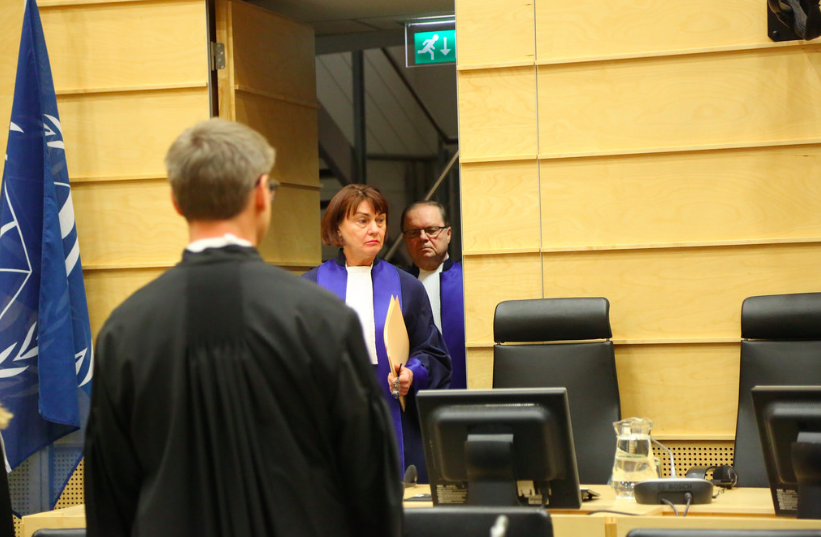
A visualization of the permanent premises of the ICC, currently in construction (Schmidt Hammer Lassen Architects)

A visualization of the permanent premises of the ICC, currently in construction (Schmidt Hammer Lassen Architects)

In his post here at JiC where he discussed the news that an LRA commander and International Criminal Court indictee may have been apprehended, Mark noted the apparent rapid reversal of fortunes of the ICC.  Just last month, the news about the Court focused on the collapse of the Kenyatta case and the Prosecutor’s decision to hibernate the Sudan investigations, causing some to question whether the ICC had become ineffective and irrelevant. Suddenly, this month, the Court appears to be relevant again, even if facing new challenging cases. Palestine has joined the Court, unleashing strong reactions. Now it appears that an LRA indictee has been apprehended after ten years. So is the ICC dead and buried or alive and kicking? It is, in fact, a mistake to think that the ICC is or will meet either of these destinies, emerging as a total failure or a complete success.

The Court is here to stay, it is a reality, and over time it will experience both highs and lows, triumphs and setbacks.  And that has been precisely the history of the international criminal justice project starting with Nuremberg and throughout the life of the modern tribunals. Each time it seemed that the international criminal justice project was dead, it rose again to achieve new successes.

After the historic trials of Nuremberg, suddenly it seemed that international criminal justice was going to be a one-time event. In part because of the onset of the Cold War, there were no international criminal prosecutions for nearly fifty years (though there were some domestic prosecutions) despite there being no shortage of atrocities. The project rose again with the creation of the International Criminal Tribunal for the former Yugoslavia (ICTY) in 1993 and the International Criminal Tribunal for Rwanda (ICTR) one year later.  The establishment of these tribunals led to additional ad-hoc courts for Sierra Leone (SCSL) and Cambodia (ECCC), and ultimately provided momentum for the adoption of the Rome Statute and the creation of the permanent International Criminal Court in 1998.

Although many now say that the ad-hoc tribunals were largely successful in bringing forward credible and fair prosecutions, each of these tribunals at one time or another faced some very bleak moments. I was a prosecutor at the ICTY when Slobodan Milošević died in 2006 after four years of trial. Many thought that the Court would not survive the premature end of its signature case and that the UN would quickly pull the plug and wind down the tribunal. In truth, some of the ICTY’s best work came afterwards, particularly with the apprehension and trials of Ratko Mladić and Radovan Kardžić, and nearly nine years after Milošević’s death the Court is still moving forward.

Some have nonetheless suggested that the Appeals Chamber conviction reversals in the Gotovina and Perišić cases in 2012 and 2013, respectively, have tarnished the legitimacy and reputation of the ICTY, but over time (and after the judgments in the pending cases), I predict that these fears will be seen to have been overblown, even if they are not completely unfounded.
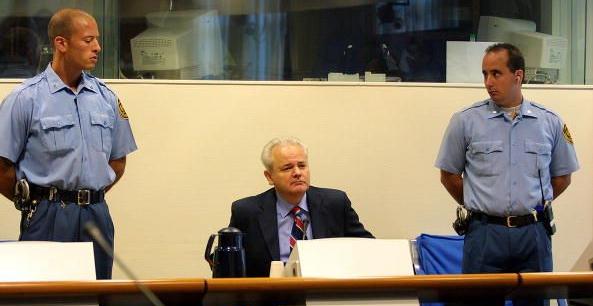
Slobodan Milosevic at the ICTY (Photo: ICTY)

Slobodan Milosevic during his trial at the ICTY.

Other tribunals have faced their own challenges that at times seemed to threaten the credibility or viability of the project: the ICTR in trying (unsuccessfully) to prosecute cases of Tutsi crimes against Hutus (the RPF cases), the ups and downs of the CDF cases at the SCSL, and the accusations of corruption and political interference at the ECCC. This is not to say that these various shortcomings or failures of the ad-hoc tribunals were trivial – they are not – but they also did not ultimately defeat or delegitimize the international criminal justice project. That project has survived.

And even before these last two turbulent months, the ICC has itself experienced a similar trajectory of highs and lows. The Court was more successful than many expected in starting investigations and having cases referred (often self-referred) by states, but faced bigger challenges in shepherding cases through the confirmation and trial processes, resulting in the failure of some cases. Few expected that the UN Security Council – where three of the five permanent members (the U.S., China and Russia) are not part of the ICC – would ever refer a case to the ICC. But it did so twice in the Court’s first ten years: Sudan (2005) and Libya (2011). Each time the referral initially appeared to be a boon for the Court and an enormous boost to its legitimacy and relevance. But in each case, over time, support for the cases waned and the prosecutions stalled, exposing some of the weaknesses of the Court and its powers. Continue reading
Posted in Extraordinary Chambers in the Courts of Cambodia (ECCC), ICTY, International Criminal Court (ICC), International Criminal Justice, International Criminal Tribunal for Rwanda (ICTR), International Law, Justice, Special Court for SIerra Leone (SCSL), Special Tribunal for Lebanon | Tagged | 4 Comments

An ICC Indicted LRA Commander is in US Custody. So What Now?

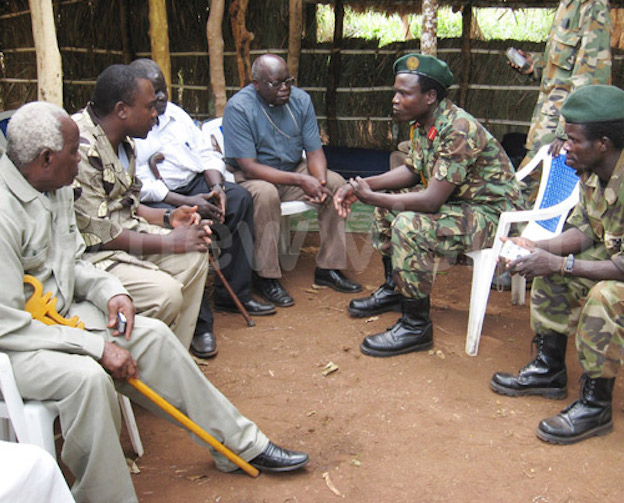
Dominic Ongwen meeting cultural and religious leaders in 2008 (Photo: New Vision)

Dominic Ongwen (centre) meeting cultural and religious leaders in 2008 (Photo: New Vision)

It was just a few short weeks ago, following the collapse of the case against Kenyan President Uhuru Kenyatta, that many were predicting that the International Criminal Court (ICC) was on the precipice of irrelevance. But the world of international criminal justice has been rocked by reports that a senior commander of the notorious Lord’s Resistance Army (LRA) is in US custody. And here’s the juicy bit: Dominic Ongwen is indicted by the ICC for war crimes and crimes against humanity committed in northern Uganda. Ten years after the ICC intervened in northern Uganda, could an LRA commander finally be heading to The Hague? That is certainly the hope of many. But here are five reasons why the news of Ongwen’s reported surrender will likely spur uncertainty and controversy.

1) Ongwen, as many have pointed out on Twitter and elsewhere, is both a victim and a perpetrator of international crimes. According to the Justice and Reconciliation Project, Ongwen was abducted by the LRA at the age of 10. Before he emerged as a trusted and senior member of Joseph Kony, Ongwen “was trained as a ‘child soldier’ to fight against the Government of Uganda and forced to kill, mutilate, loot from and rape civilians.” Ledio Cakaj, a leading researcher of the LRA, has called Ongwen’s story “tragic” and one which “encapsulates many of the complexities surrounding the LRA conflict.”

The prosecution of child soldiers, as Mark Drumbl has eloquently and cogently argued, is deeply controversial. Any prosecution of Ongwen will bring these controversies to the fore and force observers and proponents of international justice to confront a difficult question: when is a victim a perpetrator and a perpetrator a victim? The line is much more murky than we tend to assume.

2) It is far from clear that Ongwen will ever end up at the ICC. The United States (which currently has custody of Ongwen) may not be in the mood to cooperate with the Court, especially after Palestine signed the Rome Statute – something the US was steadfast against. As David Kaye has recently pointed out, it also isn’t clear how deep the oft-reported affection between the Obama administration and the ICC truly is. It thus seems precarious (at best) to assume that Ongwen would be surrendered to the ICC in the way that Bosco Ntaganda, indicted by the ICC for atrocities committed in the Eastern DRC, was in 2013.

3) The most likely scenario is that the US will surrender Ongwen to Uganda, with whom it has been working to ‘hunt’ Joseph Kony and LRA fighters since 2012. But again, it is far from obvious that the Government of Uganda would be inclined to flip Ongwen over to the ICC. In recent months, Uganda President Yoweri Museveni has emerged as the single most virulent opponent of the Court – and not just on the African continent. He has gone so far as to declare that African states should ‘quit’ the ICC. Given Museveni’s nasty rhetoric towards the Court, it seems virtually impossible to imagine that he would cooperate with the ICC in surrendering Ongwen.

Of course, that doesn’t change the fact that Uganda has a legal obligation, as a member-state of the ICC, to surrender Ongwen to The Hague. So what will Museveni do? He has a number of options, including having the US surrender Ongwen (via a third party) to the ICC thus allowing him to save face. But this too seems unlikely. It would be hard to pass up having one of the most senior LRA commanders paraded around in court and legitimating the Ugandan army’s ongoing military excursions into neighbouring states. But, in truth, we can only speculate. For the moment, it isn’t clear what Uganda will do. Still, recent tensions between the Ugandan President and the Court could lead to a very nasty confrontation over Ongwen’s fate.

The trial of Thomas Kwoyelo, seen here shortly after his capture, has been beset by controversy (Photo: Reuters / James Akena)

The trial of Thomas Kwoyelo, seen here shortly after his capture, has been beset by controversy (Photo: Reuters / James Akena)

4) One approach that Uganda could take is to challenge the admissibility of the ICC’s case against Ongwen. The government could argue that it is fully able to prosecute the LRA commander itself. Some will argue that Uganda will still be required to surrender Ongwen to the ICC until Judges agree that Uganda could proceed with a prosecution but, as Kevin Jon Heller points out, the Libya precedents make such an obligation unclear.

Here it is important to recall that Uganda did not refer the LRA (later reinterpreted as the situation in northern Uganda) to the ICC because of the state of their judiciary. Rather, they did so because the LRA was residing in neighbouring states to the north and Uganda was unable to capture them there. Indeed, there was a widespread sense within the Ugandan army and government that the ICC’s involvement might precipitate a wider, international military engagement in support of Uganda.  Continue reading

Posted in Lord's Resistance Army (LRA), Uganda | Tagged | 6 Comments

Is International Criminal Justice Coming to South Sudan?

The following is a guest-post by Patryk I. Labuda on the potential of pursuing international criminal justice in South Sudan. Patryk is a Ph.D. Candidate at the Graduate Institute of International and Development Studies in Geneva who has worked in South Sudan, Sudan and the Democratic Republic of Congo. 

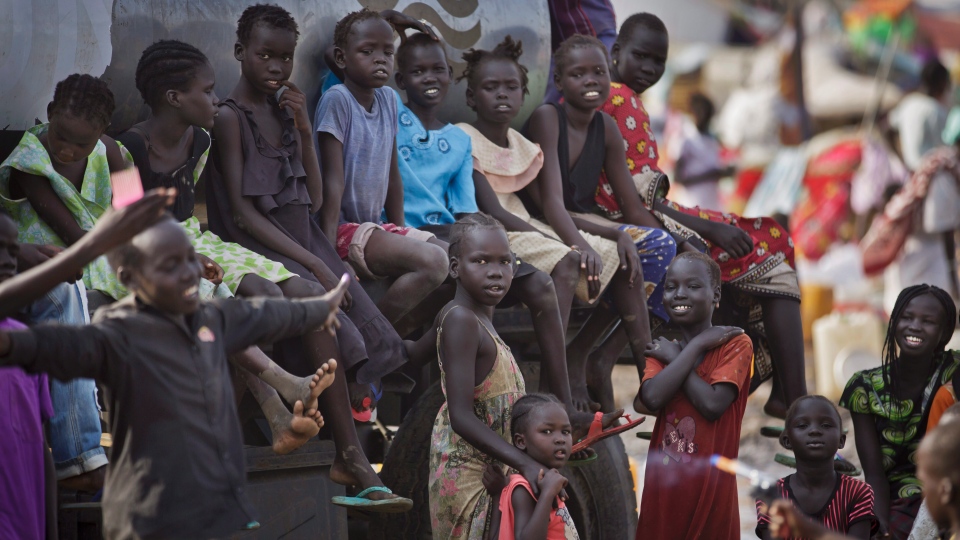
Displaced children gather at a UN compound in Juba, South Sudan. (Photo: Ben Curtis / AP)

Displaced children gather at a UN compound in Juba, South Sudan. (Photo: Ben Curtis / AP)

In July 2011, after decades of armed struggle against the regime in Khartoum, South Sudan became the newest member of the community of nations. Led by President Salva Kiir, the South Sudanese government embarked on an ambitious program of state building, including economic development, security sector reform and the drafting of a new constitution. But just two years later, discussions about democracy and reform in South Sudan were overtaken by a more pressing concern: war.

In December 2013, an old personal rivalry between Kiir and his deputy, Riek Machar escalated into a bloody internecine struggle for power. Reliable data is hard to come by, but estimates suggest that ‘tens of thousands’ have died and nearly 2 million people have been displaced since the beginning of the conflict. As the UN experiences unprecedented difficulties protecting civilians, credible reports indicate that both the government and rebel forces have committed ‘extraordinary acts of cruelty’, amounting to war crimes and, potentially, crimes against humanity. Focusing on the issue of international crimes, this post considers several options for justice and accountability in South Sudan.

Last month, on the first anniversary of the outbreak of hostilities, two prominent international groups released assessments of the human rights situation in South Sudan. ‘We Fear the Worst’, a report by the Federation International de Droits de l’Homme (FIDH) was followed by Human Rights Watch’s (HRW) call for ‘Ending the Era of Injustice.’ The two reports reach broadly similar conclusions. Citing the inadequate independence of prosecutors, a climate of intimidation against judges and lawyers, and inadequate legislation and fair trial procedures, HRW endorses the idea of a ‘hybrid judicial mechanism to try serious crimes’, which would operate outside the South Sudanese domestic legal system. FIDH supports the ‘establishment of a special courts system’ to try perpetrators of international crimes, but it recommends that trials take place within the South Sudanese judiciary as a way of building domestic capacity. While there are some differences in methodology, including HRW’s repeated suggestion (p. 1-2) that ethnicity is the driving force behind the conflict and FIDH’s broader development-based outlook (p. 24-30), both organisations appear to agree that purely domestic trials are not viable. Relying on interviews with South Sudanese victims and members of the judicial community, the reports make a strong case that amnesty for past violations will only breed further violence, and that criminal accountability is needed to break the cycle of impunity and establish the rule of law.

Given the two reports’ focus on international criminal justice, the elephant in the room appears to be the International Criminal Court (ICC). South Sudanese civil society groups have called for the ICC’s intervention in the past, but the government’s conflicting policies reflect the high political stakes of resorting to the Court. Although some human rights and humanitarian treaties were adopted after independence, South Sudan has not moved to ratify the ICC Statute. President Kiir is on record saying that he would “never accept” the ICC, though on at least one occasion he has reportedly welcomed the Court’s investigations in South Sudan.

Kiir’s inconsistent statements can probably be put down to rhetorical bravado and diplomatic gamesmanship, but the South Sudanese government’s position is best explained by old-fashioned realpolitik. Despite breaking away from Sudan in 2011, its northern neighbour remains a key geostrategic partner. Few in Juba will say it openly, but the ICC’s unenforced arrest warrant against Sudanese President Omar Al-Bashir hinders the prospect of ratifying the ICC Statute. As a non-State Party, the South Sudanese government does not have a legal obligation to arrest and transfer Al-Bashir to the ICC. Whatever Kiir’s personal views about Head-of-State immunities, he knows he cannot jeopardise economic and security relations with his northern neighbour during a civil war.

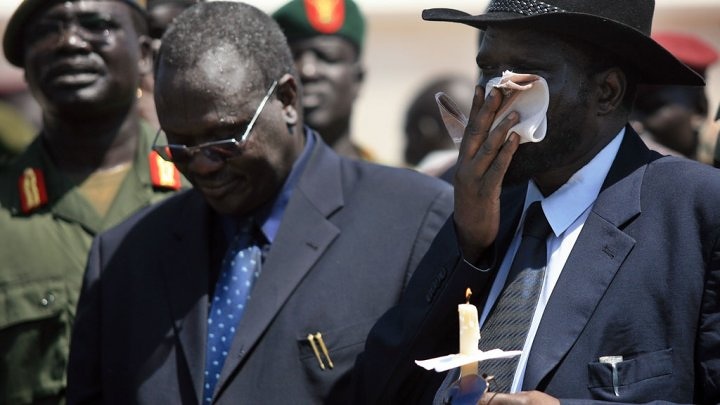
Riek Machar (left) and Salva Kiir (Photo: France 24)

Riek Machar (left) and Salva Kiir (Photo: France 24)

Any discussion of the ICC and South Sudan must also be viewed in the wider context of the standoff between the African Union (AU) and the Court. Wary of ‘foreign intervention’ and ‘neo-colonialist ventures’, the AU has championed ‘African solutions to African problems’. Established in March 2014 to ‘investigate human rights abuses’ and propose ways to ensure ‘reconciliation, healing and accountability’, the Commission of Inquiry on South Sudan marks the first time the AU has created such a body. Heralded as a ‘ground-breaking development and a policy watershed’ by Adama Dieng, the UN Special Adviser on the Prevention of Genocide, the Commission was initially given a three-month mandate to complete its work. But nine months later, it has still not published its findings. Continue reading

Posted in ICC Prosecutor, International Criminal Court (ICC), International Criminal Justice, South Sudan, Sudan | Tagged , | 4 Comments

Happy 2015 – And Predictions!

6IEaMDear readers,

Happy New Years!

For many reasons, 2014 was a remarkable year in the world of international criminal justice. The past 12 months saw fascinating developments – Palestine signed the Rome Statute, unprecedented pressure was been exerted to refer North Korea to the International Criminal Court (ICC), the case against Kenyan President Uhuru Kenyatta collapsed, a final judgement in the Lubanga trial was delivered, and a UN Security Council referral of Syria to the ICC failed. It was, in all, another mixed bag. But one thing is clear: international criminal justice continues to dominate headlines. The ICC’s credibility may have taken some hits but its relevance most certainly has not.

It is never easy predicting what will happen next (anyone remember when Bosco Ntaganda walked into an American embassy and asked officials to transfer him to The Hague?). Last year’s predictions were mixed – some came true, others not so much. Still, here are a few predictions for 2015:

1. By the time 2016 rolls around, the ICC will not have opened an official investigation into events in Palestine.

2. The ICC will open official investigations in both Afghanistan and Georgia in the next 12 months.

3. The investigations in Mali will not result in any arrest warrants in 2015. In essence, the Mali investigation will be hibernated.

4. A Libyan citizen will be detained and transferred to The Hague.

5. Silvia Fernández will become the new President of the ICC.

6. No African Union member-state will withdraw from the Court.

7. The William Ruto case will not collapse but his continued trial in The Hague will cause tensions in Kenya.

8. In part because of Palestine signing the Rome Statute, Israel will (indirectly but significantly) cooperate with the United Nations Fact Finding Mission on the Gaza Conflict investigating Operation Protective Edge in Gaza last summer.

9. The ICC will issue an arrest warrant for a national of a ICC member-state for alleged crimes committed in Syria.

10. Lord’s Resistance Army leader Joseph Kony will die (likely of illness). It is not clear whether or not the world will realize / recognize the fact.

Posted in International Criminal Justice, JiC News | 1 Comment

Did the Torture Report Just Open the U.S. Up to ICC Prosecution?

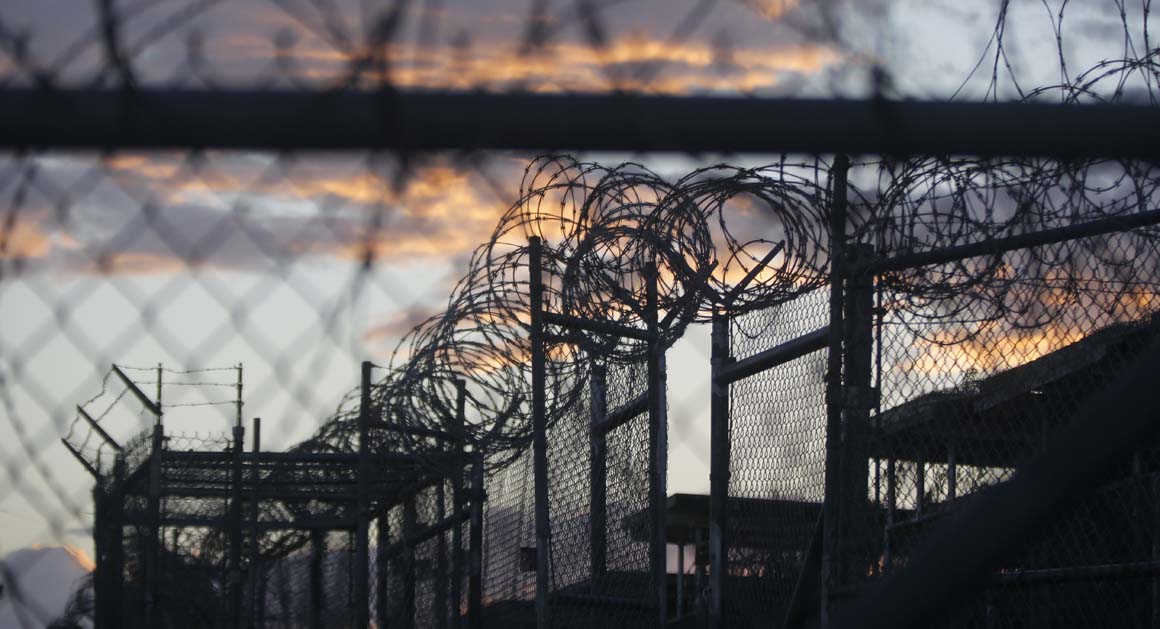
Camp X-Ray, Guantanamo Bay (Photo: AP)

Camp X-Ray, Guantanamo Bay (Photo: AP)

Does the recent ‘torture report’ on CIA ‘enhanced interrogation methods’ leave US citizens vulnerable to prosecution by the International Criminal Court (ICC)? That was the question I was asked to answer in my latest article for the Washington Post’s Monkey Cage, originally posted here.

Dec. 9 saw the much anticipated release of the U.S. Senate’s “torture report,” outlining in harrowing and tragic detail the CIA’s program of “enhanced interrogation techniques” in its “global war on terror.” On Dec. 2, the Office of the Prosecutor at the International Criminal Court also released a report in which it made clear that it was inching closer to opening an official investigation into crimes in Afghanistan – including U.S. interrogation techniques. These developments could very well expose U.S. officials to formal investigation – and potentially prosecution – by the ICC. But is the court truly prepared to confront Washington head-on?

The international justice and human rights world is abuzz with the possibility that accountability for U.S.-sponsored and perpetrated torture and so-called “enhanced interrogation techniques” may finally be at hand. In the span of just a few days, the once naive aspiration that U.S. officials would come under the judicial microscope of the ICC has been resuscitated. However, any move to investigate and prosecute alleged crimes by U.S. citizens in Afghanistan needs to be set within the context of the ICC’s interest in maintaining positive relations with the United States while pushing for accountability for crimes committed by even the most powerful of states.

Despite the United States being a non-member state, no relationship has dominated the court’s first decade as much as that with Washington. The popular narrative, one that the court and its advocates regularly reiterate, is one of consistent struggle and resilient progress. The storyline goes something like this: Despite the United States voting against the creation of the ICC in 1998, in one of his last acts while in office, President Bill Clinton signed the Rome Statute. However, not long after the court became a functioning entity, then-U.S. Under Secretary of State for Arms Control and International Security John Bolton was dispatched to “unsign” the statute, an unprecedented political move. What followed was a series of hostile measures by the United States, including the passage of the American Service-Members Protection Act (or “The Hague Invasion Act”) which prohibited the United States from providing funds to the court and bestowed upon the president the right to use “all necessary measures” to repatriate any U.S. citizen detained by the court. At the same time, the administration successfully employed coercive diplomacy against over a hundred states to ensure that they signed “Bilateral Immunity Agreements,” guaranteeing that they would never surrender a U.S. official or soldier to the ICC.

During President George W. Bush’s second term, relations began to thaw. In 2005, the United States allowed the passage of a U.N. Security Council resolution referring Darfur to the ICC. When President Obama arrived on the scene, relations continued to warm. The United States began actively participating in ICC conferences, identified areas in which it could cooperate with the court and spoke of its “positive engagement”with the ICC. In addition, the State Department expanded its Rewards for Justice Program to include ICC indictees and played an important role in the surrender of Bosco Ntaganda, charged with committing war crimes in the Democratic Republic of Congo, to The Hague.

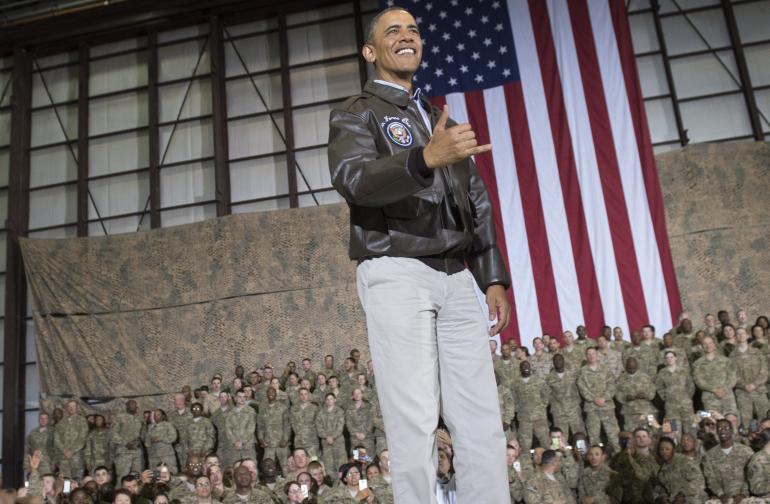
US President Barack Obama speaks to American troops at Bagram air base, Kabul (Photo: Saul Loeb / AFP / Getty Images)

US President Barack Obama speaks to American troops at Bagram air base, Kabul (Photo: Saul Loeb / AFP / Getty Images)

As David Bosco cogently argues in his book, “Rough Justice,” the ICC has generally sought to accommodate U.S. interests. Seeking to improve its relationship with the world’s most powerful country – and the country with the best surveillance techniques and thus access to the kind of evidence the court needs – prosecutors avoided stepping on Washington’s toes, neither investigating alleged abuses by U.S. officials nor intervening in states where the United States had preexisting political interests. This avoidance of confrontation, however, may be about to change in dramatic fashion.

That allegations of torture by U.S. officials in Afghanistan were mentioned in the ICC prosecutor’s report may seem, at first glance, to be window dressing to assuage the concerns of many that the court is toothless when it comes to confronting powerful states. But behind this unprecedented and explicit mention of potential U.S. culpability is a court that appears more willing than ever to finally push the United States over accountability for international crimes in Afghanistan. However, in the wake of some serious setbacks including the collapse of the case against Kenyan President Uhuru Kenyatta, is the ICC in a position to do so? Continue reading

Posted in Afghanistan, International Criminal Court (ICC), International Criminal Justice, International Law, Justice, Torture, United States | Tagged | 67 Comments

Victims at the ICC: What is the Way Forward?

The following is a guest-post on the future of victims and victim participation at the International Criminal Court. It was written by Stephen Smith Cody (Director of the Atrocity Response Program at the University of California, Berkeley School of Law), Susana SáCouto (Director of the War Crimes Research Office (WCRO)) and Chris Tenove (a doctoral candidate at the University of British Columbia).

A witness testifying before the ICC. (Photo: Reporting Kenya)

A witness testifying before the ICC. (Photo: Reporting Kenya)

When the Assembly of States Parties convenes this week, members will select judges, finalize a budget, and debate new rules and regulations. Another topic sure to arise is the major reform of the Registry of the International Criminal Court (ICC). Such actions don’t make headlines, but they have serious implications for how the ICC operates and how it relates to one of its key constituencies, victims of crimes. We have several concerns about how proposed reforms of the Registry might impact victims’ opportunities to engage with and be heard by the ICC.

The Rome Statute gives victims the right to participate in judicial proceedings that affect their personal interests, so long as this does not violate fair trial processes or the rights of the accused. Victim participation, along with victims’ right to reparations and opportunities to receive assistance and rehabilitation from the Trust Fund for Victims (TFV), can enable the ICC to engage victims and promote justice for them beyond the courtrooms of The Hague.

Victims’ opportunities to participate have of course been shaped by judicial decisions. (For several reports and comments on these developments, see the end of this post.) They are also affected by the Registry’s policies, and so the major institutional reform of the Registry – known as the “ReVision Project” – may have significant implications for victim participation. (Registrar Herman von Hebel has discussed this major restructuring, and FIDH has issued a thoughtful letter in response.)  While we can find no public document outlining the ReVision proposals, Registry officials have provided an overview to some civil society actors. Among other proposed reforms, the overview suggests that victim participation will be streamlined by merging two current offices (the Victims Participation and Reparations Section, or VPRS, and the Office of Public Counsel for Victims, or OPCV) into a single Victims Office, and legal representation for victims would come entirely or partly from within this office.

We wholeheartedly support efforts to make victim participation more efficient and effective. However, we are concerned that this reform may not take sufficient account of victims’ actual engagement with their representatives and Court officials or their own views on legal participation. As researchers working on different projects related to victim participation, we have examined these issues from empirical as well as doctrinal perspectives. Drawing on in-depth interviews with Court staff, victims’ legal representatives, and hundreds of victims in four ICC situation countries, we have several observations that might inform debates around victim engagement in general, and legal participation in particular.

Victim participation requires ongoing dialogue between the Court and victims.

Recognition of victims’ experiences and suffering requires contact and conversations with victims. This dialogue should enable victims to learn about the ICC, their right to participate, and details of judicial processes that concern them. It should also enable victims, when appropriate, to put forward their opinions, concerns, and interests.

We agree with the ReVision proposal to improve the coherence of the Court’s communication with victims, but we would emphasize that this engagement must be ongoing. Judicial processes and victims’ situations evolve, and so must opportunities for victims to become informed and to express their views. Victim representatives must be able to provide victims with up-to-date information, solicit victims’ views, and advance them through appropriate judicial and non-judicial channels.

ICC Registrar Herman von Hebel

ICC Registrar Herman von Hebel

One common complaint that we have heard from victims is that they do not know what the Court is doing on matters that concern them, such as the status of their application to participate, the timing of trials, or the opportunity to receive reparations. “The most important thing is that we want somebody from the Court to come here so that we can interact with them,” said one Ugandan victim (interviewed by Cody as part of a multi-country study of victim interactions with the ICC).

It is important that ICC staff and representatives create systems to disseminate information on judicial proceedings and other court-related activities on a regular basis. Doing so may require the Court to provide communication devices, such as radios or mobile phones, to representatives in affected communities and develop protocols for responding to victims’ concerns in a timely manner.

Victims’ representatives should be aware of potential insecurities, including the possibility for retaliation against victim participants. Representatives should also be able to help victims get attention from the Victim Witness Unit (VWU) should they be facing serious security and health threats, particularly if these arise from being victim participants.

In addition, representatives should be aware of the material needs of victims, and should help victims understand what assistance the Court can and cannot provide. In most cases, ICC staff who interact with victims should have a high level of cultural knowledge, training in working with survivors of violence, and experience working with vulnerable populations in the region. They should be able to speak of the work and mandate of the TFV, as well as the Court’s reparations process, while being careful not to unduly inflate victims’ expectations about reparations and assistance.

Victim participation requires independent representation. 

The ICC should establish processes to ensure the effective coordination of victim-related services across all sectors of the ICC, and, where appropriate, combine efforts to utilize common systems and mediate costs and any potential risks to victims. We support some of the ReVision Project’s recommendations to achieve these ends.  Continue reading

Posted in Assembly of States Parties, International Criminal Court (ICC), International Criminal Justice, Victim Participation | 3 Comments

Bringing Conflict into the Peace Versus Justice Debate

(Photo: Reuters)

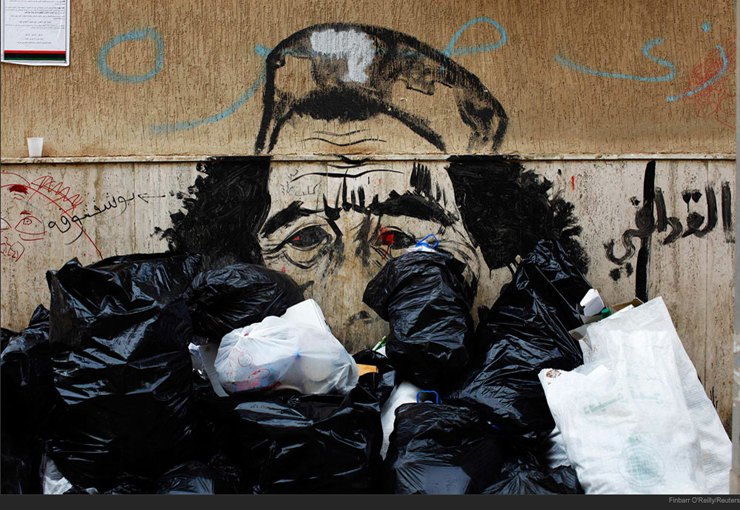
Graffiti depicting Muammar Gaddafi during the 17 February Revolution (Photo: Reuters)

This article first appeared on the new blog Post-Conflict Justice which I encourage all readers to check out!

The so-called ‘peace versus justice’ debate has come to dominate the politics of International Criminal Court (ICC). A tremendous amount of ink and number of neurons have been expended in the attempt to answer the question: do ICC interventions help or hinder ‘peace’?

A gamut of hypotheses have been proffered with regards to the effects of the ICC. On the one hand, it is claimed that the ICC yields a net positive effect on ‘peace’ by marginalizing perpetrators, deterring potential war criminals and inducing parties to enter peace negotiations. On the other hand, critics insist that the Court’s interventions undermine peace by instigating continued violence and leaving belligerents with few options but to continue fighting ‘to the bitter end’.

While recent research continues to refine and test these claims against the empirical record, almost thirteen years after the establishment of the ICC, no one has managed to ‘win’ the peace versus justice debate. Those who were on one side of the debate are unlikely to have been swayed to the other. Instead, the debate has been deemed to have reached an impasse.

But the problem with the peace versus justice debate – and the source of its stagnation – is not the failure of scholars and observers to move ‘beyond’ it. Rather, the debate’s achilles heal is the fact that its starting point is misplaced.

The ICC and Peace Conflict

The ICC does not intervene in peace processes. Nor does it intervene in ‘peace’. Rather, the Court intervenes in the context of active or recently concluded conflicts. Of the eight situations in which the ICC has opened official investigations, six constituted ongoing violent political conflicts (Democratic Republic of Congo, Central African Republic, Uganda, Darfur, Libya and Mali) while the other two had recently expired (Kenya and Côte d’Ivoire). None had official peace negotiations occurring at the time that the ICC became involved.

Indeed, the ICC was created in such a way that it is predisposed to intervening in ongoing and active conflicts. The Court has a forward-looking, temporally limitless jurisdiction in its member-states and those states that have been referred to it by the UN Security Council. The record to date clearly suggests that states view the ICC as a useful, albeit selective, tool in context of the ongoing conflicts in which they are involved. And the growing expectation amongst global populations is that the ICC intervene as a ‘first responder’ when violent political conflict erupts.

The ICC does not intervene into situations of ‘peace’ or in ‘peace processes’. It intervenes in conflicts. It is thus misguided to assume that we can understand the effects of justice on peace if we leave conflict dynamics out of the picture.

But what would examining the ICC’s effects on conflict look like – and when does ‘peace’ come into the equation? Let us examine three interrelated and oft-neglected questions, with reference to the cases of Libya and northern Uganda.

A UPDF soldier (Photo: AP)

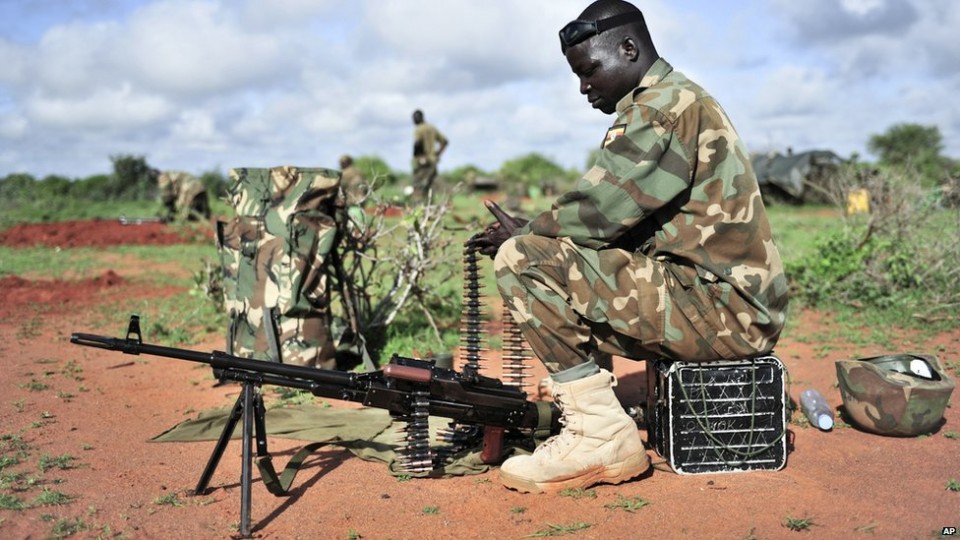
A UPDF soldier takes a break (Photo: AP)

1) How do ICC interventions affect how a conflict is understood?

It has been well-established that conflicts arise – and are perpetuated – by a quixotic, complex mix of economic factors (‘greed’) and socio-political factors (‘grievance’). Yet these causes are often neglected in the dominant narratives of conflicts in which the ICC intervenes. What matters is not why violence happened but that it did. Indeed, the causes of war are often conflated with the ICC’s targets. Put another way, within their respective conflict narratives, the reason there was war in northern Uganda or there was political violence in Libya was because of Joseph Kony and Muammar Gaddafi. Such ‘good versus evil’ discourses, which necessarily conflate specific personalities with the very causes of conflict, spawn predictable prescriptions: if only we could get rid of these actors by bringing them to The Hague or to their grave, the conflict would end. The strength of this narrative can be seen in the statements by ICC prosecutors and NGOs such as Invisible Children.

At the same time, and relatedly, ICC interventions can de-politicize violence by framing conflicts as a matter of humanitarian urgency rather than political failure. As with focusing on the particular ‘evil’ of individuals, de-politicizing violence distracts from an understanding of why political violence erupted in the first place and what dynamics fuel its continuance. The record is murky, but it is unlikely that, without addressing the causes and dynamics of war, a conflict can be resolved or transformed.

2) How does the ICC affect those belligerents and warring parties that it does not target?

The vast majority of attention from both scholars and observers of the ICC is on how the Court affects actors targeted for prosecution. In contrast, the effects of ICC interventions on those actors that are not targeted tend to be neglected. For the dynamics of war and peace, however, it matters just as much that a party is not targeted than that it is.  Continue reading

Posted in Conflict Resolution, International Criminal Court (ICC), International Criminal Justice, International Law, Justice, Libya, Libya and the ICC, Lord's Resistance Army (LRA), Peace Negotiations, Peace Processes, Uganda | 2 Comments

Scoping Out the Crime: Palestine, the Mavi Marmara and the ICC

Dr Russell Buchan joins JiC for this guest-post on the ICC Prosecutor’s decision to close its investigation of Israel’s attack on the Gaza Flotilla. Russell a Senior Lecturer in International Law at the University of Sheffield and the author of International Law and the Construction of the Liberal Peace

(Photo: AFP / Getty)

(Photo: AFP / Getty)

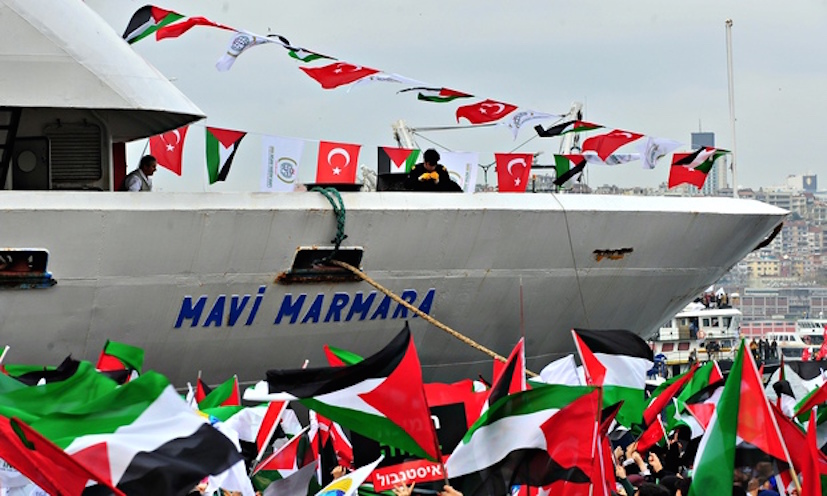
On 31 May 2010, a flotilla of vessels set sail with the express intention of delivering humanitarian aid to Gaza. They set out on the mission despite the fact that it meant violating a naval blockade that Israel had imposed against the Gazan coast in order to prevent war material from being delivered to Hamas fighters. Whilst the flotilla was in international waters, and anticipating that the flotilla was about to breach the naval blockade, the Israeli military intercepted the vessels. This occurred largely without incident. However several vessels, including the Mavi Marmara, the Rachel Corrie and the Eleftheri Mesogios/Sofia, resisted capture. In response, Israeli military personnel forcefully boarded these vessels. The violence that ensued was particularly severe on the Mavi Marmara, with Israeli forces shooting and killing 9 crew members and injuring at least 50 others. In addition, whilst the captured crew members were being ferried to Israel, they were subjected to considerable levels of physical and verbal abuse by Israeli forces.

Despite international pressure, Israel has refused to prosecute its forces for the alleged commission of international crimes or to surrender them to other states that are willing to conduct such trials. The Comoros, a small East-African state to which the Mavi Marmara was registered, therefore referred the situation to the ICC. As a result, the ICC’s Office of the Prosecutor (OTP) opened a preliminary investigation in order to determine whether the incident was admissible before the ICC. On 6 November 2014 the OTP announced that the preliminary investigation had been concluded and that, although there is a reasonable basis to believe that Israeli forces committed war crimes, no individual prosecutions would be brought because the situation is of insufficient gravity; namely, that the international crimes allegedly committed are not sufficiently serious to justify the use of the ICC’s limited time and resources.  In short, what this means is that the case is now closed. The OTP’s decision is likely to prove extremely controversial, for many reasons. In this blog I want focus upon the Prosecutor’s conclusion that the situation is of insufficient gravity and, in particular, challenge the OTP’s determination as to the scope of the situation to be considered.

In determining whether a situation is of sufficient gravity, the OTP must first define the parameters of the situation that is to be assessed. To put the same matter differently, what conduct can the OTP consider when determining whether or not the situation is of sufficient gravity? In the context of the current discussion the OTP determined that the situation included only those international crimes that were allegedly committed within the jurisdiction of the ICC. The OTP explained that although Israel is not a state party to the ICC Article 12(2)(a) of the ICC Statute confers jurisdiction where international crimes are committed on the territory (which expressly includes vessels) of parties to the ICC Statute. Thus, the OTP concluded that the ICC possesses jurisdiction over crimes committed on the Mavi Marmara (registered to the Comoros, a state party of the ICC), Rachel Corrie (registered to Cambodia, also a state party) and Sofia (registered to Greece, also a state party). Accordingly, the Prosecutor found that the situation is limited to events that occurred on these vessels and that it is within these parameters that the gravity threshold must be applied.

Crucially, however, the OTP decided that the situation did not extend ‘to any events that, while related to the events on board these vessels, occurred after individuals were taken off those vessels’ (paragraph 143); notably, the physical and verbal abuse perpetrated by Israeli forces against crew members of the Flotilla as they were being ferried back to Israel. As a result of narrowing the situation to only those events that occurred on the Mavi, Rachel and Sofia, the OTP concluded that the situation was of insufficient gravity.

This is a very narrow interpretation of the ICC’s jurisdiction which, despite satisfying a literal reading of the ICC Statute, is wholly inconsistent with its object and purpose, namely to end impunity for those that commit international crimes. What the OTP is essentially saying is that individuals are protected by the ICC Statute when on a vessel that is registered to a party of the ICC but if they are physically apprehended by a non-state party and forcibly transferred to a different vessel, then that protection is lost. The upshot of the OTP’s decision is that if Palestine was to become a member of the ICC Statute then Israel could forcibly transfer Palestinians from occupied territory (which is actually prohibited by Article 49 of the Fourth Geneva Convention 1949) in order to evade the provisions of the ICC Statute and circumvent the protections offered by the ICC.  This is a regrettable conclusion that is at odds with the spirit of the ICC Statute. Continue reading

Posted in Admissibility, Gravity, ICC Prosecutor, International Criminal Court (ICC), Israel, Palestine, Turkey | Tagged , | 3 Comments

The Lesson the ICC Shouldn’t Learn in the Wake of Kenyatta

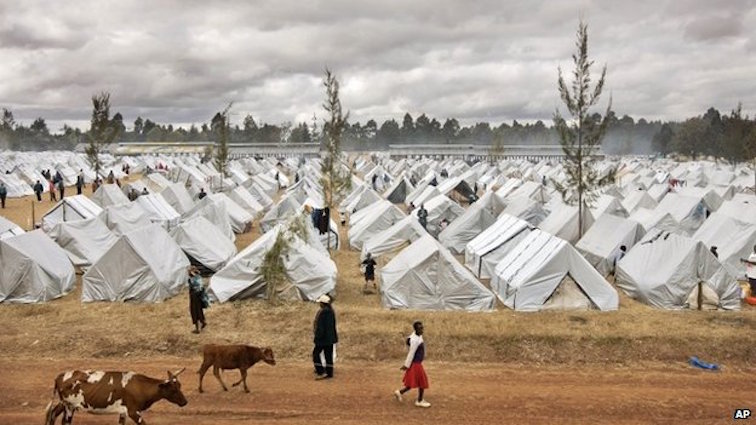
An IDP camp in Kenya (Photo: AP)

An IDP camp in Kenya (Photo: AP)

This article was originally posted at Justice Hub.

The long-dithering case against Uhuru Kenyatta at the International Criminal Court (ICC) finally came to an unceremonious conclusion this past week. In a long anticipated move, the Prosecution announced its case against the Kenyan President was too weak to proceed.

Over the next few days and weeks, two broad story-lines will emerge in wake of the Kenyatta case collapse: one, that prosecutors at the ICC really messed up their investigations in Kenya and need to learn from their mistakes; and two, that Kenyatta has written the political manual on how to win an election, stay in power and simultaneously quash an ICC case against a sitting head of state. But there is also a lesson that the ICC shouldn’t learn, a lesson that poses a far greater risk to the project of international justice than the Court’s investigation techniques or prosecutorial strategies: that the ICC should stop targeting both sides of a conflict.

There is little point in denying that ICC justice is highly selective. Most critics focus on situation selectivity – i.e which states are chosen for investigations and which aren’t (hence the debate on the Court’s focus on Africa and not the rest of the world). But a more nuanced pattern of selectivity appears when examining the selection of cases within situations under investigation by the ICC.

To date, the Office of the Prosecutor (OTP) has opened investigations into five situations after being invited to do so by the state in question – Uganda, the Democratic Republic of Congo, the Central African Republic, Ivory Coast and Mali. In each instance, the Prosecution has focused exclusively on non-state actors (i.e. rebels) and the referring government’s adversaries. Not once has the OTP targeted a leader or government official from any of these states.

The opposite story can be seen in the context of referrals of situations from the United Nations Security Council. The Council has exercised its power to refer situations to the ICC on two occasions: Darfur in 2005 and Libya in 2011. In the wake of such referrals, the OTP has focused almost exclusively on government actors and the Security Council’s enemies.

This brings us to the curious case of Kenya. When the OTP opened an investigation into the 2007/08 post-election violence, it had been neither invited by Nairobi nor requested to do so by the Security Council. Instead, the Prosecutor exercised his ‘proprio motu’ powers, opening a case into a member-state of the ICC ‘upon his own volition’. It was a bold move and not everyone believed the Court was mature – or secure – enough to ‘do things on its own’.

But the ICC had been under pressure to tackle the perception that it was an institution that would only ever mete out selective justice and would always side with governments and the Security Council in their political missions to discredit, delegitimize and dismiss their opponents. As a result, the OTP targeted not one side of the political conflict in Kenya, but both.

(Photo: AP)

(Photo: AP)

Scholars and observers are still trying to sort through the whirlwind of political developments and manoeuvres that came next. Crucially, the two opposing sides joined forces and vowed to run the country together. The resulting Jubilee Alliance won the 2013 elections. In a remarkable twist of fate, Kenya now had a President and Vice President charged by the ICC for crimes against humanity.

Kenyatta and his Vice President, William Ruto, successfully crafted a narrative that pitted the ICC and its supporters as neocolonial tools being wielding by the powerful West against a vulnerable African continent. Leaders across the region – including those that had benefitted from the ICC’s interventions in their own states – raced to the proverbial political microphone, eager to demonstrate to Kenyatta and Ruto that they were their strongest allies against the unholy and unwanted ICC.

In the meantime, justice became essentially obsolete. The storylines were about Kenya (and ‘Africa’) versus the ICC. Very few asked the very simple but crucial question: how will justice be served for the dead and displaced in the wake of the post-election violence? The question had already been answered: it wouldn’t. Six years after violence erupted and left 1,200 dead and 200,000 displaced, one case of murder has been investigated. There is no indication that any other crime, of the thousands that were committed, will ever be investigated or that the perpetrators will be brought to justice. But in the dominant narrative, justice was not a goal for those who perished or survived the post-election violence. Rather, justice could only be served if the unfairly targeted victims of the ICC’s grandeur – Kenyatta and Ruto – were left alone. If we are to believe the hype, the collapse of Kenyatta’s case is the justice that has been delivered to Kenya. Continue reading

Posted in International Criminal Court (ICC), Kenya, Kenya and the ICC | Tagged , | 3 Comments

(Un)Reasonable Dissent? The Lubanga Trial Comes to Close

Thijs B. Bouwknegt joins JiC for this first-hand account and analysis of the decision by Judges at the International Criminal Court (ICC) to uphold the verdict against Thomas Lubanga Dyilo. Thijs is a legal historian and researcher at the NIOD Institute for War, Holocaust and Genocide Studies in Amsterdam.

Lubanga attending his Appeal Chamber ruling (Photo: ICC)

Lubanga attending his Appeal Chamber ruling (Photo: ICC)

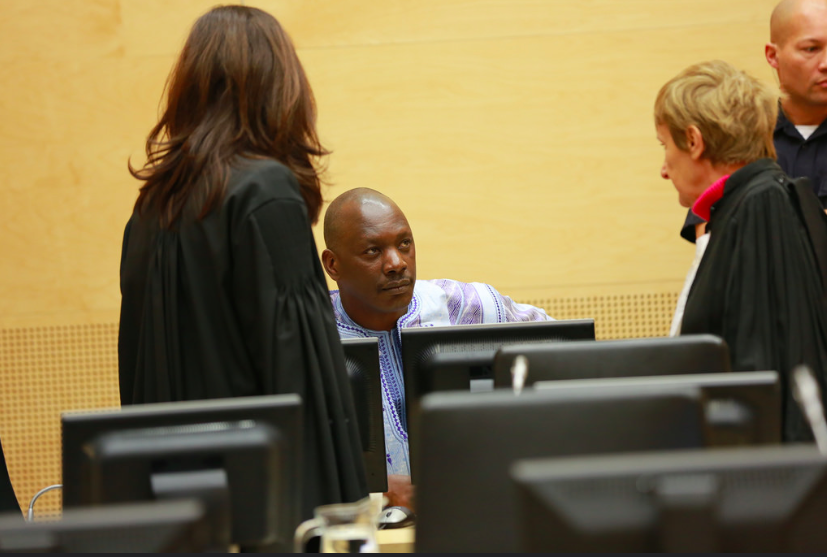
“All rise, the International Criminal Court is now in session. Please be seated.” Thomas Lubanga Dyilo, dressed in a light blue dashiki, put on his headphones, wringed his hands, blinked his eyes, kicked back, sat up again and then rested his head into his hands. He was nervous. Final judgement day had arrived. Finally. Over two and a half years after he was convicted for three war crimes, the International Criminal Court’s Appeals Chamber convened on a cold Monday afternoon to rule on the appeals of the former Congolese politician-styled warlord. His trial was flawed and unfair, he argues. It runs contrary to the Prosecution’s appeal. They wanted his “manifestly disproportionate” 14-year sentence raised, without explicating with how much.

It was an historic day for international justice. This was the first time the ICC signed off an appeals judgement. But interest has waned, as if the world has forgotten about Lubanga and the endemic conflicts in the east of the Democratic Republic of the Congo (DRC). Empty seats remained in the public gallery, not even half of it to be filled with court staff, a handful of devoted journalists and a single NGO observer. Lubanga himself did not invite his family for the occasion, like most other defendants would do on this type of day. Also shining in absence were his victims. The only Congolese present represent the diplomatic corps. “Is this justice seen to be done?” asked a journalist. “Come on, it is appeals,” replies another. On Twitter, trial observer Iva Vukusic, was “wondering what victims get from listening to judgements. Unless you follow the trials regularly, this stuff is incomprehensible.”

And indeed, 3179 days after Lubanga was brought to The Hague, the trial that dealt with child soldiers in the mass violence that plagued the Congolese Ituri region in the early 2000s, ends with an anti-climax: a sober, legalistic and collegial review of the trial chamber’s first ever verdict and sentence. Flanked by four colleagues, Judge Erkki Kourala monotonously read out a summary of the 193-paged appeals judgement and 50-paged sentencing judgement. They took a distanced view; they would not assess the evidence again, but would “only intervene if the Trial Chamber’s findings were unreasonable.” Then, after the chamber dismissed Lubanga’s request to consider three new pieces of evidence, the former UPC leader overheard the rulings on his seven grounds of appeal, alleging abuse of his fair trial rights, a prejudiced Prosecutor and the lack of clear facts underlying his prosecution.

Point-by-point, Kourala listed how Lubanga had not substantiated or sufficiently argued his complaints, only to rule that the trial chamber had not acted beyond the limits of its discretion and that its findings were “not unreasonable.” All grounds of appeals were rejected, including those of the Prosecution, and the verdict and sentence rubber-stamped. But only by majority. Judge Sang-Hyun Song, only disagreed “partly” with his colleagues, on a legal note. According to the ICC’s President, Lubanga should have been convicted and sentenced for one crime of child soldiering and not separately for three ways of committing it [conscripting, enlisting and using children]. Only the Latvian judge dissented from the majority on fundamental grounds.

If it was up to Judge Anita Ušacka, Lubanga should not have been convicted at all. “In my view, the evidence relied upon by the trial chamber to convict Lubanga was not sufficient to reach the threshold of beyond any reasonable doubt,” she explained. “In practice they have applied a lower standard,” because, according to Ušacka, “the trial chamber was motivated more by the desire to create a record of events, rather than to determine the guilt of [the] individual to the standard applicable in criminal proceedings.” On that note, she expressed her hope “that future prosecutions of these crimes at the Court will adduce direct and more convincing evidence and preserve the fairness of proceedings, which lies at the heart of criminal prosecutions and should not be sacrificed in favour of putting historical events on the record.”

Judge Anita Ušacka enters the Appeal's Chamber at the ICC (Photo: ICC)

Judge Anita Ušacka enters the Appeal’s Chamber at the ICC (Photo: ICC)

Ušacka’s dissent was a sharp indictment against the court’s fact-ascertainment dilemmas. She highlighted two well-known deficiencies in this case: insufficiently detailed charges and the absence of the requisite element of crimes. Regarding the indictment, she said it was mainly based on testimony of nine alleged child soldiers – whose testimony was found to be erratic – but that the “remainder of the allegations regarding a pattern of crime did not contain reference to a single identified victim, while the dates and locations were framed in unacceptably broad terms.” For five years, Lubanga had “no meaningful opportunity to challenge the evidence at trial” which was based on these nine individual cases, “yet he was ultimately convinced of the unspecific charges of a pattern of crime.” This approach has broader implications warned Ušacka, as “ultimately, even the factual conclusions of the Trial Chamber suffered from the same level of imprecision.” Continue reading

Posted in Democratic Republic of Congo, International Criminal Court (ICC), International Criminal Justice | Tagged , , , , | 3 Comments