Should Ukraine be on the International Criminal Court’s Radar?

(Photo: Associated Press)

(Photo: Associated Press)

Things were supposed to settle down earlier this week when opposition activists in Kiev accepted an amnesty in exchange for vacating government buildings. Within hours, however, a new spate of violence broke out.

On Wednesday evening it once again appeared that a new ‘truce’ would lead to a simmering of tensions. But the truce quickly collapsed. Parts of the Ukrainian city erupted. The images emerging from Kiev evoke scenes that many haven’t seen in a European capital in years – perhaps not since the Balkan wars and the shelling of Sarajevo. According to one observer, the situation in Ukraine is unprecedented:

The situation is now more dangerous than it has ever been. Ukraine voted for independence and separated from the dying Soviet Union peacefully in the autumn of 1991. Its Orange Revolution in 2004-5, a street response to rigged elections, was also completed without bloodshed, though some panicky reactions on both sides brought it pretty close. Since then, Ukrainian politics have been messy and tainted by corruption, but more spontaneous and democratic in many ways than in the countries around it. It has now descended, for the first time, into violence, and that may be hard to reverse.

Estimates vary, but it appears that about 20 protesters and 10 police officers have been killed in clashes this week. As the international community scrambles to address the ongoing violence, the numbers of dead and injured continue to grow.

The European Union is now considering the imposition of targeted sanctions against the Ukrainian government for what they described as “unjustified use of excessive force by the Ukrainian authorities”. Russian Prime Minister responded by declaring that the Ukrainian authorities should not be a “doormat”, a statement widely interpreted as supporting the government’s crackdown on protestors and activists. US President Barack Obama has also intervened, calling for a “transitional government”. He also attacked Russia for supporting the Ukrainian government’s crackdown on protestors, drawing parallels to Moscow’s support for the Syrian regime of Bashar al-Assad.

For the moment, there is far more rhetoric being strewn about than concerted action to end the violence. But a question that is almost certainly going to be asked with greater frequency in the coming days and weeks is whether the situation in Ukraine should be investigated by the International Criminal Court.

Importantly, despite numerous statements that it supports international criminal justice and would join the ICC, Ukraine is one of the few European states which is not a member of the Court. As a result, the Court can only investigate alleged crimes in Ukraine if the United Nations Security Council referred the situation in the country to the ICC.

(Photo: Andrei Stenin / RIA Novosti)

(Photo: Andrei Stenin / RIA Novosti)

Of course, any discussion of a referral would once again pit Russia against European Union members of the Council, a battle which could easily end in stalemate. Broadly speaking, Russia supports the government and has gone to lengths to paint the opposition as “extremists” and even “terrorists”. They have blamed the “West” for encouraging protestors and sowing dissent. The European Union (EU) is widely seen as sympathetic to the opposition activists who are, by and large, supportive of greater integration with the EU. This is undoubtedly an over-simplification. Some believe that that “this is now an internal, Ukrainian conflict” and “the proxy Russia v EU element seems to have receded.” But the division of international positions on Ukraine have been in place since at least the country’s 2004 Orange Revolution when Russia backed the Presidency of Viktor Yanukovych while the European Union threw its support behind Western-leaning Viktor Yushchenko.

Given these tensions, getting the Security Council to refer the situation in Ukraine to the ICC would thus be immensely difficult – but perhaps not impossible. If all sides truly believe they are in the right and that the parties they support are innocent, they could agree to have the responsibility for violence adjudicated by the Court. That being said, it seems rather clear that, where their interests are at stake and they have taken firm positions in support of one side over another, major powers prefer that no party to a conflict is investigated over the investigation of all parties. Of course, they may also simply not trust the process or they may conclude that it would be deleterious to have the ICC involved when the situation remains fragile and a negotiated settlement to ongoing violence – in combination with an amnesty – is their preferred option.

Continue reading

Posted in Europe, European Union (EU), International Criminal Court (ICC), Russia, Ukraine | Tagged | 2 Comments

A Break in the Status Quo: Could North Korea be Referred to the ICC?

Animation / Image from Camp 14: Total Control Zone

(Animation scene from Camp 14: Total Control Zone)

It’s news that isn’t actually news. A Commission of Inquiry, set up by the United Nations, has issued a report concluding that North Korea has been committing crimes against humanity against its own people. Evidence was gathered primarily through the testimony of North Koreans who had defected from the regime and focuses on the country’s notorious labour camps.

As the report was released, Michael Kirby, one of the Commission’s members sent an ominous message to North Korean leader Kim Jong-un, suggesting that he could eventually be prosecuted at the International Criminal Court (ICC):

“The Commission wishes to draw your attention that it will therefore recommend that the United Nations refer the situation in the Democratic People’s Republic of Korea [the formal name for North Korea] to the international criminal court to render accountable all those, including possibly yourself, who may be responsible for the crimes against humanity.”

Here are a few thoughts on what the Commission’s report means – and what it doesn’t.

North Korea’s Holocaust?

Kirby compared the atrocities being committed in North Korea to those of the Holocaust, stating that there were “many parallels”. As a means of highlighting the severity and extent of the atrocities perpetrated in North Korea, there is little doubt that comparing them to the Holocaust is useful. Drawing parallels between crimes committed by the North Korean regime and those perpetrated by the Nazis appears to be an attempt to strike a deep, moral chord within a primarily Western audience. Indeed, the reference to Nazi Germany was quite clearly made in order to galvanize support for some form of intervention into North Korea. Kirby declared that:

“At the end of the Second World War so many people said ‘if only we had known… if only we had known the wrongs that were done in the countries of the hostile forces’… “Well, now the international community does know… There will be no excusing of failure of action because we didn’t know.”

This is a misreading of what was known about the Holocaust during WWII. The Allied powers knew of Nazi-perpetrated atrocities long before the conclusion of the war and, for a complex, if questionable, set of reasons, explicitly ruled out any form of intervention to undermine the Nazis’ Final Solution that would detract from their singular goal of ending the war.

There is a widespread sense of guilt, especially within the West that not enough was done to stop the Holocaust (as well as the Rwandan Genocide). Its invocation is thus something of a moralizing call-to-arms aimed at preventing “another Holocaust”. But the invocation of the Holocaust as a tool to make headlines and stir the moral imagination of global audiences comes at some cost, especially as it has the effect of de-contextualizing, de-historicizing and depoliticizing the crimes – both in North Korea and during WWII. This has the ultimate effect of making it immensely difficult to craft appropriate responses to mass atrocities – even more so than it already is.

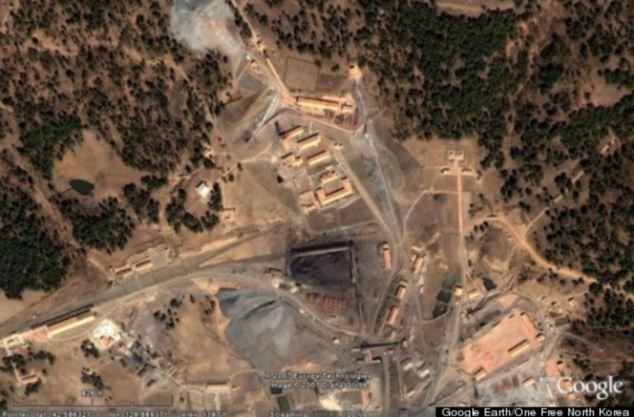
Image of an alleged prison camp in North Korea, captured by Google Images

Image of an “Camp 22” in North Korea, captured by Google Earth

Rocking the Boat: Pressure to Refer North Korea to the ICC?

There has long been a rather “precarious silence” regarding the potential for international criminal justice  in North Korea. I have previously written about the existence of a status quo, reinforced by the international community in its relations with Pyongyang and which has precluded attempts to bring leaders of the regime to account. The Commission of Inquiry poses a potentially significant challenge to this status quo. And this is perhaps its most important contribution.

There have previously been calls to refer North Korea to the ICC but nothing nearly as substantive as the Commission’s report. While the recommendations of Commissions of Inquiry are not legally binding, Commission report reports do hold a certain legal and political gravitas. As a result, the member-states of the United Nations Security Council will have a very difficult time ignoring the report. The question that remains is whether the report will lead the UN Security Council to deal with atrocities and international crimes being perpetrated in North Korea head on. It goes without saying that it is high time that they did.

Still, it is unlikely that the report will lead to a referral of North Korea to the ICC (although crazier things have happened in the world of international criminal justice, so you really never know). But the report could very well force UN Security Council states – especially the US, Russia and China – to deal with alleged atrocities on the Commission’s terms. This could potentially pose a severe test to that very status quo that has allowed states to largely turn a blind eye to North Korea atrocities for decades. Continue reading

Posted in Commission of Inquiry, International Criminal Court (ICC), North Korea | Tagged , | Leave a comment

The Awful Truth About Holocaust Reporting – And Its Legacy

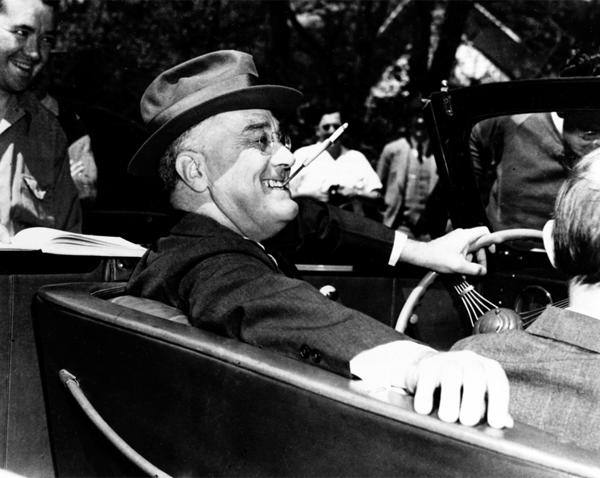
US President Franklin Roosevelt (Photo: Associated Press)

US President Franklin Roosevelt (Photo: Associated Press)

The history of genocide reporting is both fascinating and frustrating. There are few things more difficult to accurately portray – through film, newspapers, blogs or photography – than the so-called “crime of crimes“. Acts of mass violence are complicated and coverage has often stripped them of their political context, redressing them in facile and misleading tropes. But there is no escaping the fact that reporters, filmmakers and journalists are integral to how we understand – and misunderstand – the causes and dynamics of mass violence. To the genocide scholar, this is nothing new. It is the daily grind.

As a teacher on a unique and fascinating course on genocide convened by Jens Meierhenrich at the LSE, I have had the opportunity over the last few years to reflect on how mass atrocities are currently covered by the media as well as how they have been covered in the past. In Meierhenrich’s incisive course reader, the crucial issue of genocide coverage receives its due attention and scrutiny.

No doubt one of the most hard-hitting and impactful pieces that is highlighted is Marvin Kalb‘s lecture, ‘The Journalism of the Holocaust’ (an adapted version of Kalb’s argument can be found here).

The focus of Kalb’s 1996 lecture is on a rather perplexing problem that has long concerned scholars of genocide: why did American journalists largely ignore the Holocaust? After all Kalb reminds us that: “[w]e knew enough, and we knew enough in timely fashion. Week after week, month after month, we read about the roundup of Jews, the wholesale deportations, the killings… How could such a story as the Holocaust not overwhelm the front page of every newspaper?”

Kalb offers five reasons why the Holocaust, despite its scale and sheer brutality, was neglected in the American media:

1. It distracted from Allied interests in ending the war. According to Kalb, “[T]he Allies were determined to win the war; they did not have their focus on saving Jews… [They] had settled, as firm policy, on the ‘unconditional surrender’ of the Nazis, and “no other thought,” even one as humanitarian as saving a people, was allowed to interfere with the prosecution of the war.”

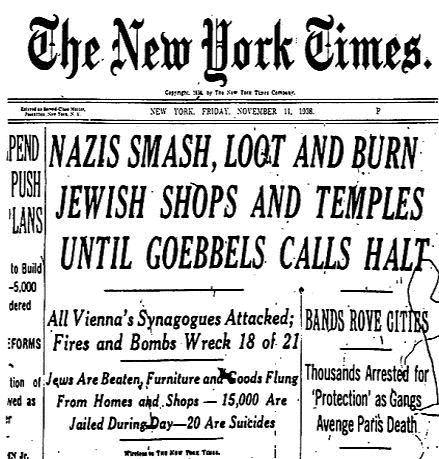
NYT coverage of Kristallnacht

NYT coverage of Kristallnacht

2. It fit with widespread antisemitism. According to Kalb, “a xenophobic antisemitism flourished among many Americans.” He provides shocking statistics to support this observation:

[S]hortly after the outbreak of the war, 66 percent of the American people—two out of every three—described the German people as ‘essentially peace loving and kindly.’ Another poll said that 61 percent believed the German people should not be ‘blamed’ for the ‘mass killings’ of Jews. Fifty-eight percent said that ‘only’ the Nazi leaders should be ‘blamed.’ In January 1943, after Undersecretary Welles publicly confirmed the ‘final solution,’ after the Allies publicly released their joint statement of condemnation, another poll said that more than half of the American people did not believe that the Nazis were ‘deliberately’ killing the Jews.

3. People simply didn’t believe it was possible. Others simply didn’t want to believe that it was possible. Continue reading

Posted in Funding, Genocide, Holocaust | Tagged | 18 Comments

Libya’s Political Isolation Law: Politics and Justice or the Politics of Justice?

Conflicting views on Libya's Political Isolation Law has led to clashes in Tripoli (Photo: Mahmud Turkia / AFP)

Conflicting views on Libya’s Political Isolation Law has led to clashes in Tripoli (Photo: Mahmud Turkia / AFP)

It has been a tough go for Libya. Almost two and a half years after the demise of the Gaddafi regime, the country continues to struggle in its ongoing and tumultuous transition. After forty years of autocratic rule, creating a stable, viable and democratic is undoubtedly a tall order. The country faces a host of challenges: the central government is very weak and has had an immensely difficult time creating strong governmental institutions; regional and city-based militias or ‘thuwar’ control key areas of the country; the economy remains vulnerable; assassinations of former regime officials are a regular and disturbing occurrence; and thousands of individuals remain in illegal detention. And while things in Libya may not be quite as bad as tends to be reported (and there has been some good news), the country faces a tough road ahead.

On matters of international and transitional justice, Libya is a fascinating case. Over the past few years, JiC has featured an array of posts on the International Criminal Court’s intervention into Libya and the subsequent battle over where to try the two remaining Libyan ICC indictees: Saif al-Islam Gaddafi and Abdullah al-Senussi. But there have also been other important developments pertaining to transitional justice in Libya. Amongst these are the passage of a blanket amnesty law and a de-Gaddafication law. These have received far less attention here than they deserve. I was thus thrilled by the opportunity to write an article on the latter in greater depth for a project by the Middle East Institute on Pathways to Transitional Justice in the Arab World. My contribution seeks to place Libya’s Political Isolation Law into context and decipher its potential impact on Libyan politics and the pursuit of post-conflict justice. Here’s a snippet:

In May 2013, Libya’s General National Congress (GNC) overwhelmingly passed the Political Isolation Law (PIL). The PIL’s enactment represented a far-reaching attempt to prevent members of the regime of Muammar Qaddafi from holding public office during the country’s transition. But the decision also appeared to fit a precarious pattern of post-conflict accountability in Libya, which has been characterized by acts of vengeance and one-sided justice aimed at anyone associated with the defeated regime. The passage of the law also reflects the current state of political instability in Libya wherein decisions are politically motivated and often forced at the barrel of the gun rather than agreed upon through public consultation and democratic decision-making.

At its heart, Libya’s PIL is a lustration law. Historically, such laws have been a common tool in the pursuit of transitional justice. Broadly speaking, lustration is a form of vetting citizens to discern whether or not they can hold public office on the basis of their relationship with a prior, delegitimized, and defeated regime. The idea of purging a vanquished political opponent is as old as the practice of war itself. New regimes require the exclusion of members, groups, and structures that sustained previous orders. In the twentieth century, exclusion by extermination of opponents shifted to exclusion through legal and political means. For example, following WWII, the process of de-Nazification sought to expel and subsequently prohibit former Nazi figures from political, cultural, and social positions―albeit with mixed results. More recently, the process of de-Ba`thification in Iraq ensured that individuals associated with Saddam Hussein’s Ba`th party were purged from public office. The policy is widely regarded as disastrous, leaving behind it a “bitter legacy” that has “polarized Iraqi politics and contributed to severe instability in the Iraqi military and government.” Continue reading

Posted in Justice, Libya, Lustration, Transitional Justice | 1 Comment

No Bush-Style BIA – A Clarification on Mali and the US

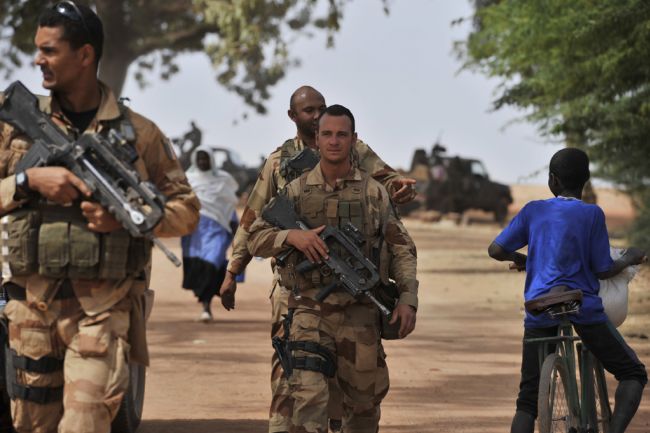
French soldiers (some of which were transported by the US) on patrol on Mali (Photo: Issouf Sanogo/AFP/Getty Images)

French soldiers (some of which were transported by the US) have long been in Mali (Photo: Issouf Sanogo/AFP/Getty Images)

After even more digging, I have found no evidence of a Bilateral Immunity Agreement (BIA) between Mali and the US. Upon a more careful reading of the memorandum declaring that US troops participating in a UN stabilization mission in Mali will be protected from any potential prosecution at the ICC, it has become evident that it doesn’t actually reference a BIA. Rather, it simply states that “the Republic of Mali has entered into an agreement in accordance with Article 98 of the Rome Statute preventing the ICC from proceeding against members of the Armed Forces of the United States present in that country” (emphasis mine). This helps explain why even the Coalition for the International Criminal Court did not cite Mali as a country that had signed a BIA with the US.

Ryan Goodman’s post also provided a clue. Goodman notes that it is possible that the memorandum rests upon a legal source other than a BIA and which the Obama administration views as being consistent with Article 98 of the Rome Statute: “It is unclear whether this is a standard Article 98 agreement or rooted in a Status of Forces Agreement.”

Eventually, I was able to find a reference to a Status of Forces Agreement (SOFA) between the United States and Mali. There isn’t much, but apparently the US and Mali entered into a SOFA (that sounds weird!) in 1997. At the time, the US was conducting military exercises in the country. This agreement – and not a BIA – is likely the legal basis of the memorandum.

While I stand by the arguments in my initial post, this finding is important for at least three reasons. First, it means that the current administration is not recycling sneaky Bush-era tactics to undermine the ICC; those really are a thing of the past. Second, it suggests that the US did not apply pressure on Mali to protect US troops and officials from being sent to The Hague. Rather, the memorandum would appear to be a clever legal manoeuvre based on a creative re-application of an old agreement. Third, the respect that Mali rightfully earned for having rejected any BIA with the US during the Bush years is untarnished.

At the same time, some questions remain and will hopefully be answered soon. First, why did the Obama administration feel the need to issue the memorandum in the first place? Some think it is likely a response to conservative hawks applying pressure to ensure that the administration didn’t send troops into a situation without guarantees that the ICC could never get their hands on them. But if this is the case, it should be clarified – it is key to justifying the memorandum itself. Second, the memorandum makes the legal case of Article 98 agreements less clear. It is a question more for legal scholars and practitioners, but what now counts and doesn’t count as an Article 98 agreement in accordance with the Rome Statute?

One way or the other, hopefully this helps clarify matters a bit. And with that, I’m (probably) done digging.

Posted in Bilateral Immunity Agreements, International Criminal Court (ICC), Mali, United States | Tagged , , | 8 Comments

Update and Clarification — Mali and the US: But What Bilateral Immunity Agreement?

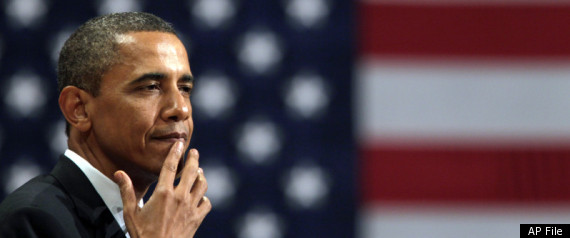
(Photo: AP)

(Photo: AP)

Update / Clarification

After even more digging, I have found no evidence of a Bilateral Immunity Agreement (BIA) between Mali and the US. Indeed, upon a more careful reading of the memorandum stating that US officials and troops participating in a UN stabilization mission in Mali will be protected from any potential prosecution at the ICC, it has become evident that it doesn’t actually reference a BIA. Rather, it simply states that “the Republic of Mali has entered into an agreement in accordance with Article 98 of the Rome Statute preventing the ICC from proceeding against members of the Armed Forces of the United States present in that country.” This helps explain why even the Coalition for the International Criminal Court did not cite Mali as a country that had signed a BIA with the US.

Ryan Goodman’s post also provided a clue. Goodman notes it is possible that the memorandum rests upon a legal source other than a BIA and which the Obama administration views as being consistent with Article 98 of the Rome Statute: “It is unclear whether this is a standard Article 98 agreement or rooted in a Status of Forces Agreement.”

I was able to find a reference to a Status of Forces Agreement (SOFA) between the United States and Mali. There isn’t much, but apparently the US and Mali entered into a SOFA (that sounds weird!) in 1997. At the time, the US was conducting military exercises in the country. This agreement – and not a BIA – is likely the basis of the memorandum.

While I stand by the arguments in my initial post, this finding is important for at least three reasons. First, it means that the current administration is not recycling sneaky Bush-era tactics to undermine the ICC; those really are a thing of the past. Second, it suggests that the US did not apply pressure on Mali to protect US troops and officials from being sent to The Hague. Rather, the memorandum would appear to be a clever legal manoeuvre based on a creative re-application of an old agreement. Third, the respect that Mali rightfully earned for having rejected any BIA with the US during the Bush years is untarnished.

At the same time, some questions remain and will hopefully be answered soon. First, why did the Obama administration feel the need to issue the memorandum in the first place? Some think it is likely a response to conservative hawks applying pressure to ensure that the administration didn’t send troops into a situation without guarantees that the ICC could never get their hands on them. But if this is the case, it should be clarified – it is key to justifying the memorandum itself. Second, the memorandum makes the legal case of Article 98 agreements less clear. It is a question more for legal scholars and practitioners, but what now counts and doesn’t count as an Article 98 agreement in accordance with the Rome Statute?

One way or the other, hopefully this helps clarify matters a bit. And with that, I’m (probably) done digging.

————————————————————-

Original Post:

As per my earlier post, the Obama administration has released a memorandum declaring that any US officials or troops deployed in Mali will be beyond prosecution by the International Criminal Court (ICC). According to the memorandum, this is possible “because the Republic of Mali has entered into an agreement in accordance with Article 98 of the Rome Statute preventing the ICC from proceeding against members of the Armed Forces of the United States present in that country.”

The problem is that there is no trace of a Bilateral Immunity Agreement between the US and Mali.  In his post, Ryan Goodman observes that the memorandum is “significant because Mali has long been opposed to signing an Article 98 agreement with the United States, and held out against the Bush Administration.” Indeed, the Coalition for the International Criminal Court’s situation page for Mali  states that the country “[p]ublicly rejected BIA agreement.” Moreover, Human Rights Watch reported in 2003 that Mali’s Ministry of Foreign Affairs had  “advised AGAINST signing a bilateral agreement, explaining that such an agreement is contrary to Mali’s obligations under the Rome statute and undermines the independence of the ICC.” After some digging, I found that not only had Mali rejected signing a BIA with the US but the Bush administration retaliated by withdrawing military aid to the country (see this 2006 post by Kevin Jon Heller and this article at the New York Times).

So, as far as I can tell there is no public evidence that Mali ever signed an Article 98 Agreement with the United States. While I could be wrong and have simply missed something obvious (and please point this out to me if that’s the case), this does seem to point to a disturbing and additional reality: that the Obama administration itself signed the BIA agreement with Mali as a condition for its participation in the United Nations Multidimensional Integrated Stabilization Mission in Mali.

It is one thing to capitalize on the old tricks of the George W. Bush administration. It is another thing altogether to make them your own.

Posted in Article 98, Bilateral Immunity Agreements, International Criminal Court (ICC), International Criminal Justice, United States | Leave a comment

Unfortunate but Unsurprising? Obama Undermines the ICC

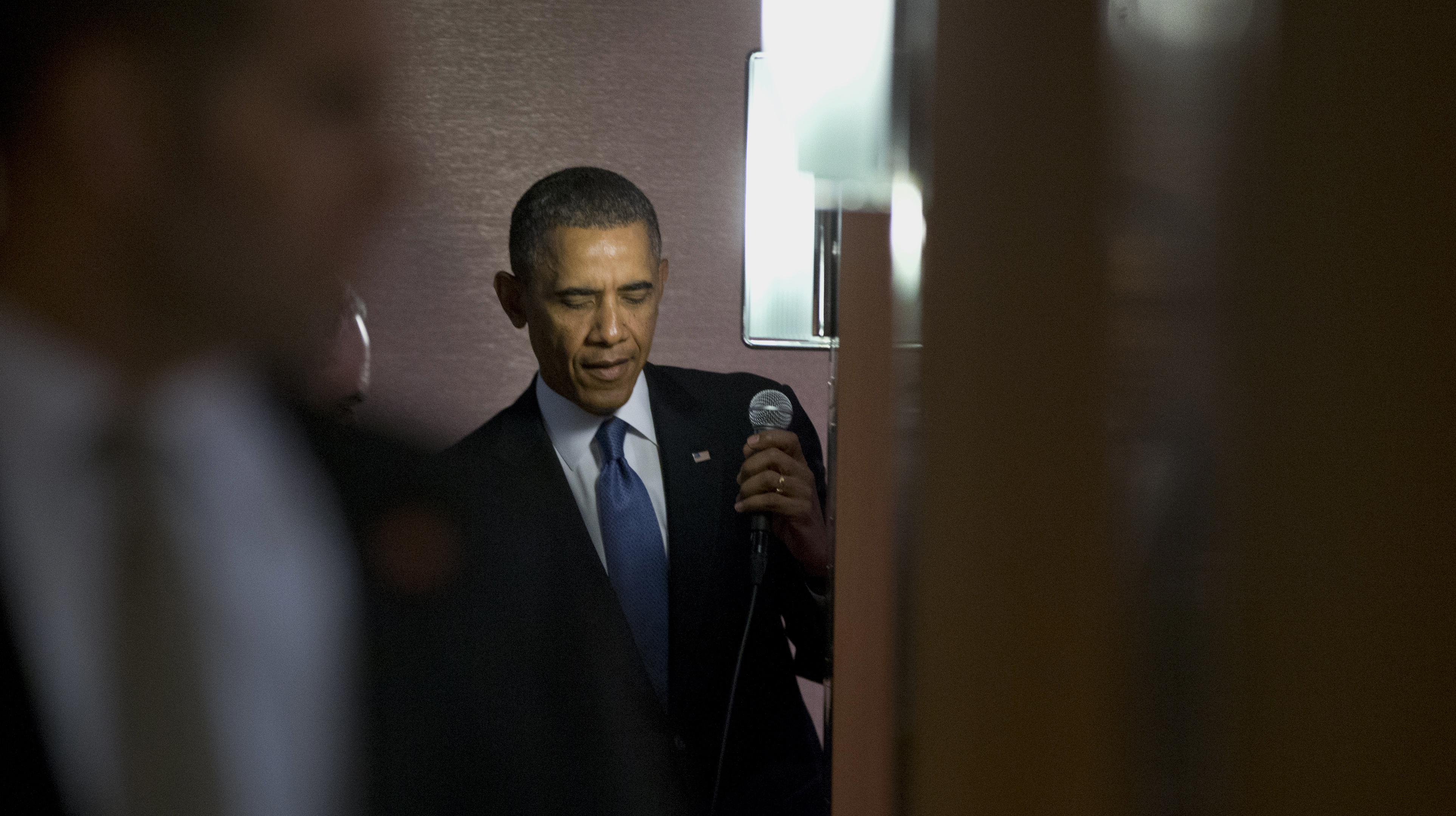
(AP Photo/Carolyn Kaster)

(AP Photo/Carolyn Kaster)

In the brief history of the International Criminal Court (ICC), few issues have received as much attention – from the Court, the human rights community and academics – than the relationship between the United States and the Court. Last week, that relationship took yet another turn – and not in the right direction.

After half a decade of actively undermining the Court during the Presidency of George W. Bush, the US’s relationship with the ICC has improved dramatically in recent years. Many ascribe this upswing to the liberal internationalist-leaning tenure of President Barack Obama but it should be noted that the  positive engagement between the US and the Court began before Obama won the Presidency, ie. under Bush. At the same time, however, it would be folly to suggest that the current administration has anything more than a selective love for the ICC.

Case in point is the memorandum issued by Obama last week stating that any and all US military forces deployed to Mali will not be liable to prosecution in The Hague:

By the authority vested in me as President by the Constitution and the laws of the United States of America, and consistent with section 2005 of the American Servicemembers’ Protection Act of 2002 (22 U.S.C. 7424), concerning the participation of members of the Armed Forces of the United States in certain United Nations peacekeeping and peace enforcement operations, I hereby certify that members of the U.S. Armed Forces participating in the United Nations Multidimensional Integrated Stabilization Mission in Mali are without risk of criminal prosecution or other assertion of jurisdiction by the International Criminal Court (ICC) because the Republic of Mali has entered into an agreement in accordance with Article 98 of the Rome Statute preventing the ICC from proceeding against members of the Armed Forces of the United States present in that country.

Article 98 agreements hark back to that dark period in the ICC’s history when the Bush administration was all gong-ho about undermining the Court. Also known as Bilateral Immunity Agreements (BIAs) – and as their name suggests – the legal basis of the agreements rests on Article 98 which prevents the ICC from proceeding with a request for surrender if it would require the state in question “to act inconsistently with its obligations under international agreements.”

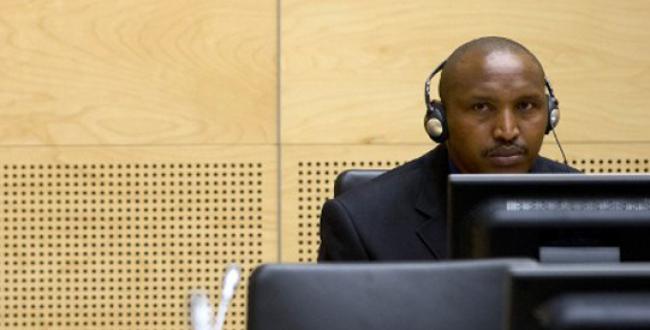
Bosco Ntaganda is currently in the custody of the ICC (Photo: ICC)

Bosco Ntaganda is currently in the custody of the ICC (Photo: ICC)

In the early years of the Court, the Bush administration was keen to sign as many BIAs as possible, emphasizing them in its diplomatic relations. The administration applied relentless pressure to ensure that states signed these agreements and, in so doing, guarantee that any US citizens on their territory would never be surrendered to the ICC. The administration threatened to withdraw aid – and in a few cases did withdraw its aid – from any states that rejected to sign BIAs. In the end, over one hundred states signed Article 98 agreements with the US.

In recent years, the relationship between the Court and the US thawed and, in some respects, even flourished. It was largely hoped that the BIA, anti-ICC days were over. The commitment to ‘hunt down Joseph Kony‘, the expansion the Rewards for Justice Programme to include ICC indictees, the positive vote to refer Libya to the ICC and the extradition of Bosco Ntaganda to The Hague after he surrendered to the American embassy in Kigali, Rwanda — they all pointed to a constructive and productive relationship.

Indeed, these developments would seem to make the memorandum all the more politically curious. It goes without saying that BIAs run against the intent of the ICC, not to mention the principle of ending impunity. They also violate the fundamental principle of equality before the law. After all, the agreements are a declaration that the prosecution of atrocities will depend on whether the alleged perpetrator is American or not.

At the same time, it isn’t clear why such a memorandum is even necessary. The ICC has generally accommodated US interests and avoided investigating or prosecuting American officials or their allies. As a political statement, it’s a significant blow to the ICC. But as detailed by Ryan Goodman at Just Security and by Kevin Jon Heller at Opinio Juris, it’s also legally dubious. Continue reading

Posted in Article 98, Bilateral Immunity Agreements, International Criminal Court (ICC), International Law, Mali, United States | 3 Comments

Trials and Tribulations at the Special Tribunal for Lebanon

Earlier this month, the first trials at the Special Tribunal for Lebanon (STL) finally got under way. Karlijn van der Voort joins JiC for this very timely overview of the many difficulties and challenges facing this unique tribunal. Karlijn is a defence lawyer at Verwiel & Van der Voort advocaten and formerly worked for defence teams at the International Criminal Court, Cambodia Tribunal, Yugoslavia Tribunal, Rwanda Tribunal and the Special Court for Sierra Leone. Karlijn is also the author of the Special Tribunal for Lebanon Blog where she is following and commenting on developments at the STL. Enjoy!

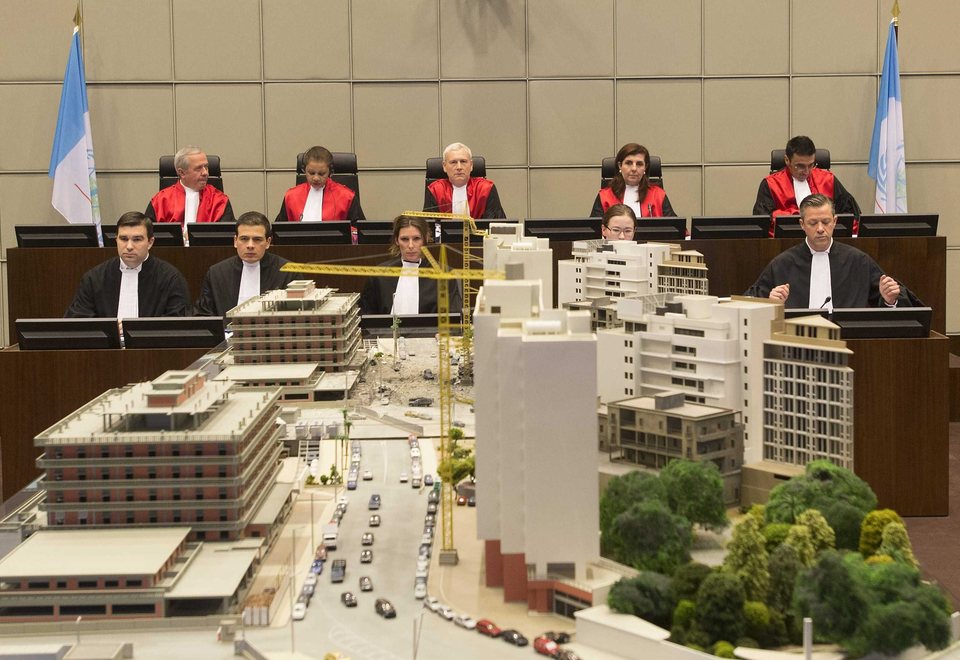
(Photo: Toussaint Kluiters / Pool Photo / LA Times)

(Photo: Toussaint Kluiters / Pool Photo / LA Times)

Delivering justice and accountability in the wake of the assassination of former Lebanese Prime Minister Rafik Hariri was always going to be a tall order. Indeed, the Special Tribunal for Lebanon (STL), set up to prosecute those responsible for Hariri’s death, has been beset by controversy ever since it was established. Yet the tribunal has marched onwards and, earlier this month, proceedings against four persons began. The road ahead is replete with challenges. So what can we expect from the STL?

First, a brief backgrounder. At the request of Lebanon, the STL was created in 2007 to prosecute the persons responsible for the 14 February 2005 assassination of Hariri and 21 others, as well as the injuring of 226 more persons. In the indictment against the four accused, the Prosecution outlines that the attack was carried out by a suicide bomber who detonated large quantities of explosives concealed in a Mitsubishi Canter van, aimed at former President Hariri’s convoy close to the St. George Hotel in Beirut, Lebanon.

Trials and Tribunals – In Absentia

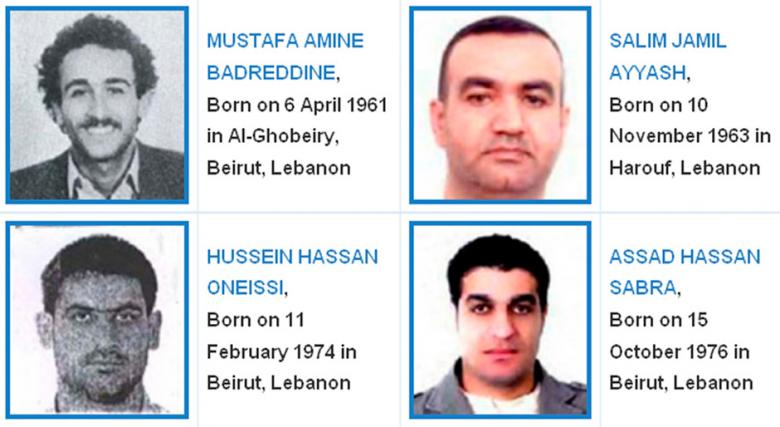
On 16 January of this year, the trial proceedings against the first four accused persons commenced (a fifth accused may also be joined to this case) with the Prosecution’s opening statement, though the defendants were not present in the courtroom. Whilst the Tribunal has asked for the handing over of the indicted individuals, the Lebanese authorities have been unable (or unwilling) to do so. Though no one at the Tribunal seems to know exactly where the accused are, chances are that they are hiding somewhere in Hezbollah-governed territory.

Whilst every tribunal faces its own difficulties, the complexities that this Tribunal faces are of a different nature. To begin with, it is for the first time that an international tribunal tries suspects in absentia. This concept is fairly unknown to common law systems, but forms part of the criminal proceedings in most civil law systems. The Lebanese criminal system itself allows trials to try accused persons in their absence if certain strict criteria have been fulfilled. The main criteria are that (i) the accused is informed of the proceedings against him, or everything has been done to ensure that he is informed and one can reasonably assume that he has been informed, and (ii) that the accused person has the right to a retrial if he is apprehended or otherwise shows up in the future. These represent the two main safeguards that are supposed to protect an accused’s rights in case of an in absentia trial.

Given that this is the first time an international tribunal will try suspects in the absence of the accused, the subject of trials in absentia has received a lot of attention, and criticism. It is already challenging to hold in absentia trials in a domestic setting, but the fact that these trials are in an international forum adds an additional layer of complexity. The assassination occurred nine years ago. What if, in ten years’ time, these individuals are arrested and a retrial takes place some twenty years after the events? Will it then still be possible to find witnesses who can testify to their version of the events? Or will the Tribunal mainly rely on the evidence collected by the Prosecution during the initial proceedings? Will the accused be in a position to receive a fair retrial or will that be impossible at that stage?

The accused. (Photo: Reuters Handout)

The accused. (Photo: Reuters Handout)

Trying ‘Terrorism’

A further complication this trial faces derives from the fact that it marks the first time that an international tribunal will prosecute suspects for the act of terrorism. The Statute stipulates that the Tribunal applies Lebanese law, but the Appeals Chamber held that, in defining terrorism, the Tribunal can be guided by international treaty and customary law. This represents the first time that an international tribunal has defined terrorism as an international crime, despite the fact that the international community has, to date, failed to lay down an authoritative definition of this crime. This means that the Tribunal has assumed a responsibility in creating case law on this matter but without any international precedent to draw upon.

Prosecutorial Motivations

Yet another difficulty in this trial is that the Prosecution seems to have been unable to identify or define a motive for the assassination. Though the indictment mentions the alleged intent of the accused, it fails to define a motive. Counsel Mr. Courcelle-Labrousse for defendant Oneissi argued that the Prosecution’s case against his client was “bereft of motive”. Though motive is not an element of the crime of terrorism, the Defence is expected to allege that failure to argue and prove such motive will make the case against their clients a lot weaker. William Schabas writes that: “If an accused can prove lack of motive, this will colour assessment of ostensibly inculpatory factors, especially if the evidence is indirect.” Attacking the Prosecution case from this angle will provide the Defence counsel with a strategy that they are able to pursue without receiving instructions from their clients who are at large and with whom they do not have any contact. Continue reading

Posted in International Criminal Justice, International Law, Lebanon, Special Tribunal for Lebanon, Terrorism | Tagged , | 1 Comment

Peace versus Justice in Syria

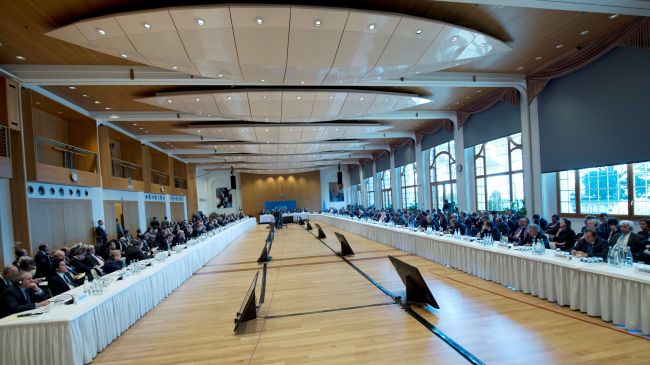
The venue of the Geneva II  peace talks (Photo: PressTV)

The venue of the Geneva II peace talks (Photo: PressTV)

As talks between the Syrian government and Syrian opposition stumble in the opening phases of the so-called Geneva II negotiations, a hot topic is whether those parties responsible for atrocity crimes in Syria can and should be prosecuted.

Of course, this debate has been ongoing since the beginning of the Syria’s civil war. Early on, Western governments funded a team of investigators to collect evidence of alleged war crimes and crimes against humanity, a process that has apparently continued to this day. At the same time, there have been numerous calls by organizations and states for the situation in Syria to be referred to the International Criminal Court (ICC). Because Syria is not a member-state of the ICC, doing so would require a resolution from the United Nations Security Council. Last September, the possibility of referring Syria to the Court was shot down by the Council. According to Carsten Stahn, the potential referral “was sacrificed for the purpose of facilitating a diplomatic compromise over the enforcement regime.”

For a host of reasons (and not just the tired argument that Russia will block any referral), an investigation of crimes in Syria by the ICC isn’t going to happen any time soon. Not even the use of chemical weapons against civilians was enough to alter the stalemate over justice and accountability. Making things particularly tricky is that there is evidence that both sides of the conflict have committed crimes within the jurisdiction of the ICC. Yet (and perhaps as a result), amongst those political actors with leverage, there appears to be little-to-no appetite for accountability in Syria. This is evidenced by the lack of interest in middle-ground options such as a conditional referral, a referral-deferral or the creation of an ad hoc tribunal.

Of course, any suggestion that international criminal justice should be pursued in the context of ongoing hostilities in Syria leads us to the familiar “peace versus justice” debate. Within this debate, there are broadly two camps: one which views international criminal justice as a necessary and useful tool which can deter crimes, marginalize perpetrators and even be conducive to peace negotiations; and a second camp which sees judicial interventions as deleterious to peace talks and claims that it creates disincentives for warring parties to negotiate and leads to increased levels of violence.

To date, those who have engaged in the debate have largely recycled the claims and arguments from one camp or the other and applied them to new and emerging contexts. Thus any potential prosecution of Bashar al-Assad is either necessary to any sustainable peace in Syria or constitutes a naive and dangerous proposition which could prolong violence in the country.

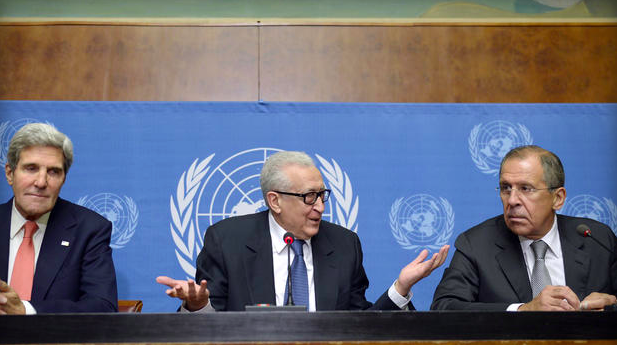
United Nations-Arab League special envoy for Syria Lakhdar Brahimi, US Secretary of State John Kerry and Russian Foreign minister Sergey Lavrov (Photo: Getty Images)

United Nations-Arab League special envoy for Syria Lakhdar Brahimi, US Secretary of State John Kerry and Russian Foreign minister Sergey Lavrov (Photo: Getty Images)

If the Geneva peace talks ultimately fail, it obviously won’t be because of the ICC but a host of other factors. But if the ICC does intervene and the peace talks also fail, critics will point their accusatory fingers at the Court, ascribe responsibility for the failure of negotiations to the Prosecutor and neglect the very factors that would have led to the talks failing irrespective of an ICC intervention. The moving parts would be brushed aside because, within the dominant lenses of the “peace versus justice” debate, the ICC can only help or a hinder to peace. It remains too rarely conceded that the Courts effects are mixed and, even more rarely, that they might be negligible. Continue reading

Posted in Peace Negotiations, Syria | Tagged , | 3 Comments

The ICC in Afghanistan: Peace, Justice and Accountability

Djeyhoun Ostowar joins JiC for this fascinating glimpse into some of the key issues and dilemmas that frame any potential intervention by the International Criminal Court into Afghanistan. Djeyhoun is a PhD student at the War Studies Department of King’s College London where his research focuses on the nexus of peace and justice in Bosnia and Afghanistan, in particular assessing the timing and sequencing of different peace building and transitional justice mechanisms.

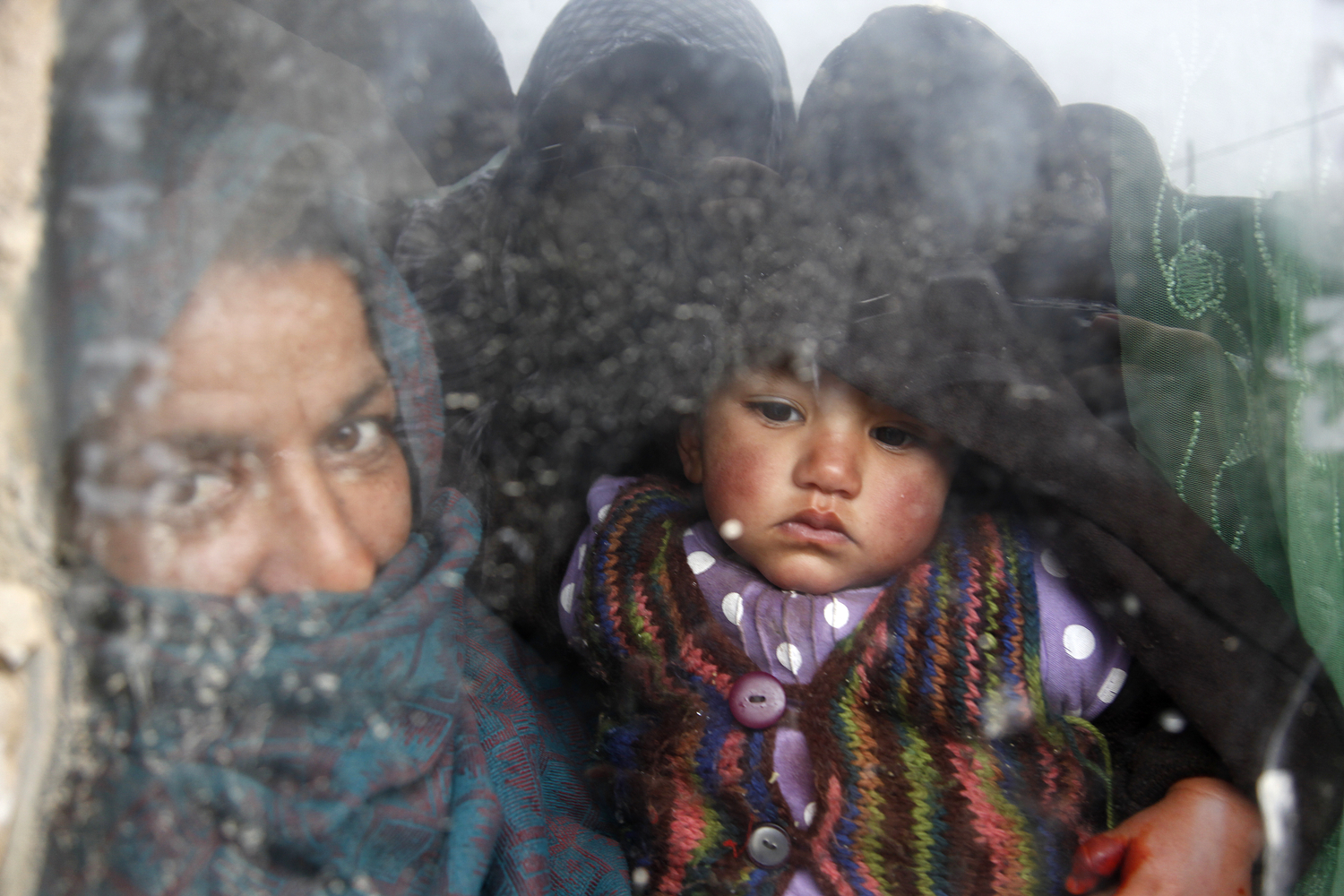
(Photo: UNAMA)

(Photo: UNAMA)

Debates on justice in Afghanistan have generally neglected the role of the International Criminal Court (ICC). International and national attention has focused on domestic opportunities for justice. Following the notorious silence on accountability in the initial phases of the post-Taliban transition, the work of the civil society, in particular the Afghanistan Independent Human Rights Commission (AIHRC), inspired some hope that justice for heinous crimes committed during the different stages of the unyielding conflict in Afghanistan (1978 – ) could still be achieved. However, the comprehensive and ambitious Transitional Justice Action Plan that was signed by President Karzai in 2005 failed dramatically and was eventually discarded altogether in 2010.

With the disappointment over transitional justice options in Afghanistan, the passing of an amnesty law in the Afghan parliament in 2007, and the now imminent drawdown of military and political engagement of the international community in the country after 2014, the ICC has become one of the very few serious options still available in the face of impunity for past crimes and a lack of serious accountability measures for ongoing violations in Afghanistan. Afghanistan is currently only at the preliminary investigation stage at the ICC but at some point in the near future it will have to be decided whether formal investigations should start (the country has been in the preliminary examinations for more than 6 years – the longest period so far). There are many issues that can be raised in connection to the potential operation of the ICC in Afghanistan but the key question is how the ICC could affect the prospects for peace and stability in the country.

The ICC in Afghanistan: Obstacles Abound

Any potential involvement of the ICC in Afghanistan faces many challenges/ It is therefore important to be realistic about what the ICC can achieve in terms of justice and accountability in this country. There is not only the obvious temporal limitation of addressing only the crimes that were committed from 1 may 2003 (the date of the start of the ICC jurisdiction on the territory of Afghanistan) – thereby leaving various incidents and abuses prior to this date beyond the consideration of the court – but also a number of other concrete practical and legal obstacles. There is a basic question of who will be responsible for and likely to follow through the commitment of detecting, apprehending and extraditing potential ICC indictees.

As it stands, the prospects are not particularly encouraging. Neither the Afghan government, despite its ratification of the Rome Statute, nor the government of the main international intervening force, the US, has shown openness to the idea of delivering own citizens at an international court. There is no need to explain that the chances that the Taliban and affiliated armed groups will ever cooperate with an international court are almost nonexistent.

Furthermore, there are serious legal challenges associated with the endeavour. Washington still does not recognize the jurisdiction of the ICC and even has a controversial law dubbed ‘The Hague Invasion Act‘, under which the American forces could unilaterally invade the Netherlands to free American war crime detainees. There is no historical precedence on this yet so the validity and practical value of the Act has not been tested. But as pointed out by Kevin Jon Heller in a post on the topic, the US and Afghanistan also have a ‘bilateral immunity’ agreement, signed in September 2002. This agreement imposes direct legal constraints on the Afghan government’s ability to surrender US citizens to the ICC, independently from the rather slim chance of a hypothetical situation where the Afghan government would seek to apprehend an American citizen in order to extradite him/her to the Court (imagining a top Taliban detainee being delivered to the ICC by Kabul instead of being prosecuted at home is only slightly more imaginable).

The ICC, and perhaps the International Court of Justice (ICJ), in case of a legal dispute between the US and Afghanistan, would have to grapple with this limitation as a separate question. In addition to the problems mentioned above, there are a multitude of other legal and practical challenges associated with investigating specific crimes in a situation of ongoing conflict, identifying direct suspects when some of them may not longer be on the territory of Afghanistan, and dealing with such issues as ‘command responsibility’ and ‘proportionality’ in military operations.

An Afghan soldier in Wardak Province, Afghanistan (Photo: Mauricio Lima / The New York Times)

An Afghan soldier in Wardak Province, Afghanistan (Photo: Mauricio Lima / The New York Times)

Hope Remains

While the above mentioned challenges should not be ignored nor be underestimated, they do not provide sufficient reason to give up the ICC option. Some see an ICC intervention as potentially detrimental. Rahim Kanani warned against “the inevitable political ramifications” in case an official investigation by the ICC would start. He explained: “If a case is officially opened, the Prosecutor must deal with both allegations against the Taliban and the NATO troops. While the former yields no grief, the latter will surely cause a stir”. However, an immediate question here would be: is there any situation where the ICC has opened investigations that was completely uncontroversial politically? Political stir and controversy are not in themselves sufficient justification for opposing the involvement of the ICC. Similarly, the challenge of realizing apprehensions and extraditions is not particular to the case of Afghanistan. In the situations of Northern Uganda and Sudan, for example, this problem was apparent, with the ICC not being able to count on sufficient cooperation in terms of arresting and delivering the indictees. Other issues, such as legal obstacles related to jurisdiction, the bilateral immunity agreement, command responsibility are all real challenges. However, as in any similar situation, these questions should be left for the ICC – or another appropriate legal authority – to adjudicate. Continue reading

Posted in Afghanistan, International Criminal Court (ICC), International Criminal Justice | Tagged | 1 Comment