
The following is a guest-post by Chris Tenove, a doctoral candidate in Political Science at the University of British Columbia where his research explores the political and ethical dilemmas of global governance for international criminal justice and humanitarianism. Chris also runs an excellent blog (see here). In this post, Chris examines critical questions pertaining to, and ways to strengthen and improve victim participation at the International Criminal Court. Enjoy!
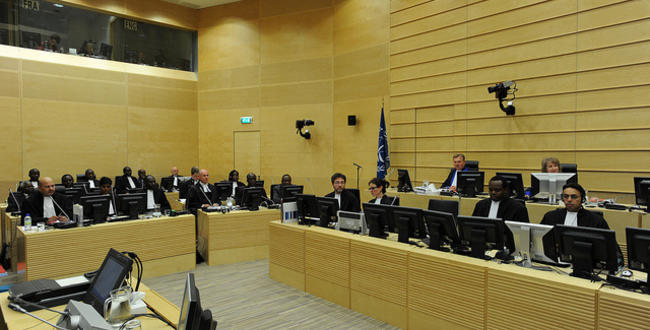
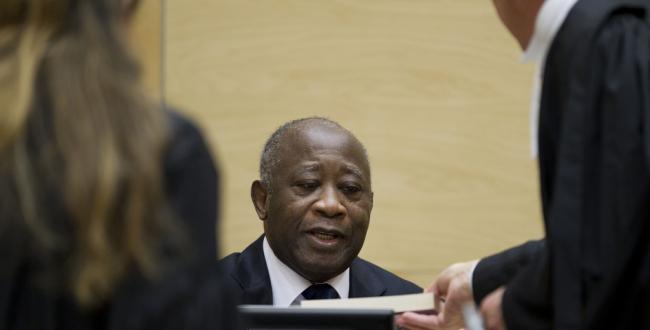
(Photo: ICC)
In the next two weeks, the Assembly of States Parties will undoubtedly address one of the most innovative and troubled aspects of the International Criminal Court: victim participation. Such discussions must take heed of recent decisions by Trial Chamber V on the upcoming trials in the Kenya situation, which introduced a dramatically different scheme for victim participation compared to previous Court practice. Will that decision lead to a shrinking role for victims at the ICC, or make it more efficient and inclusive? Much will depend on how the new scheme is operationalized, including the resources and direction the ASP offers.
The ICC’s approach to victim participation is without precedent. The only role for victims at previous courts was limited to witnesses, a role that was criticized by civil society actors and some states during the drafting of the Rome Statute. The Rome Statute ultimately included Article 68(3), which stated that: Where the personal interests of the victims are affected, the Court shall permit their views and concerns to be presented and considered at stages of the proceedings determined to be appropriate by the Court…
Judges and court staff spent considerable energy in the Court’s early years interpreting and re-interpreting how victims would participate. Fundamental questions have been grappled with: Who is a victim eligible to participate? What modalities of participation are possible, and at what stages of proceedings? ? How can common legal representatives (CLR) for large numbers of victims be selected?
While rules for victim participation have become more concrete, they continue to leave many unsatisfied. This summer, several legal advisers for State Parties told me that it was a top issue for reform, primarily for budgetary reasons. While some civil society groups were pushing for more resources for victims’ legal teams, key State Parties continue to push for tightening legal aid and Registry budgets. These areas of the budget will continue to be squeezed so long as the Court takes on more situations (some referred to it by the UNSC) while State Parties hold to zero-growth in funding.
Kenya I and II: A New Direction for Victim Participation?
Judge Christine van den Wyngaert weighed into the debate with a published paper that called for a dramatic rethinking in approach. Wyngaert argued that victim participation has been resource-intensive and has slowed down proceedings, while providing little real benefits to victims. She notes that the expected costs for victim participation in 2012 (including ICC staff, external lawyers, and in-country field staff) is estimated at over € 7 million. She also notes that Chambers spend considerable time assessing each individual victim’s application to participate. In her paper, Judge van den Wyngaert sees little role for victims other than to provide evidence, and assumes that their main interest is proving the guilt of the accused and receiving reparations. She pointedly questions whether “the participation system set in place is ‘meaningful’ enough to justify the amount of resources and time invested in it or whether it would be better to spend those resources and time directly on reparations” (p. 495). In contrast, Judge Adrian Fulford, presiding judge in the trial of Thomas Lubanga Dyilo, claimed that victim participation did not significantly extend the trial and that victims’ representatives made succinct and relevant contributions.
The new scheme proposed in the Kenya I and II decisions bears traces of Judge van den Wyngaert’s reasoning. It creates two categories of victims. First, those who want to appear directly before the court (in person or video-link). They must prove their status as victims through a submission to be reviewed by Chambers, which is similar to the current process. Second, those who may communicate with the CLR and inform his or her general thinking, but who do not need to submit an application to Chambers. The CLR will be based in Kenya and will only appear in court in The Hague for key moments such as opening and closing statements. Otherwise, the ICC’s Office of Public Counsel for Victims (OPCV) will handle legal proceedings.
This two-tier approach is apparently designed to enable participation that is both deep and broad. A few victims can participate directly in judicial processes. A much larger group will be ‘represented’ by the CLR in a diffuse way and make little demand on Chambers’ resources. This scheme clearly responds to the fact that several thousand Kenyans have expressed an interest in participation—often, as a number of Kenyan civil society members told me, out of the mistaken belief that participants are more likely to receive reparations. While the legal framework is in place, the Kenya I and II decisions leave much to be worked out. How will the CLRs consult with and inform large numbers of participants? How will they choose a small number of active participants? How will the CLRs and the OPCV jointly determine a legal strategy?

Victims and survivors of Kenya’s post-election violence airing their views on the ongoing ICC case. (Photo: Nandemu Barasa / West Fm)
What’s the Point of Victim Participation?
Whether this new approach will improve or harm victim participation depends on what participation should achieve—and there is little clear thought, and even less consensus, on that question. I would propose that there are three general concepts of victim participation:
Victims as legal clients: As much as possible, victim representation should mirror the relationship between lawyers and clients in domestic judicial proceedings. This approach – a favourite among lawyers who work with victims – emphasizes the determination of individual interests of victims, the need for ongoing consultation between lawyer and client, and a substantial role in trial proceedings. It opposes the idea that victims should be treated as an undifferentiated mass whose main interest aligns with the prosecutor. Continue reading












 Justice in Conflict