The aftermath of the ICTY’s Gotovina Trial: Due process and Historical truth

The following is a guest-post by Rhodri C. Williams, a human rights consultant and commentator who recently began working on rule of law issues in Libya with the International Legal Assistance Consortium. Rhodri also writes at his fantastic  TerraNullius blog. In this post, Rhodri examines the uneasy relationship between international criminal law and post-conflict reconciliation.
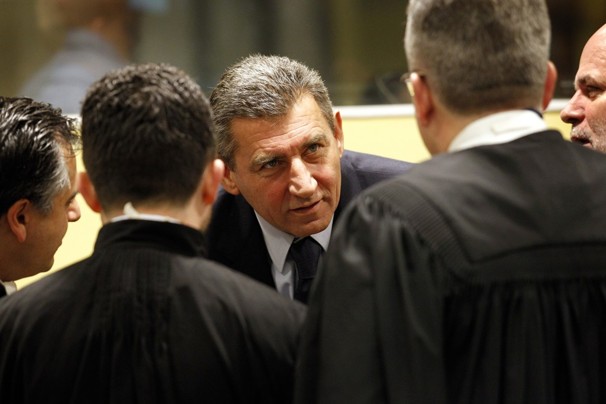
Ante Gotovina shortly after being told he and  Mladen Markac had been acquitted (Photo: AP / Washington Post)

In April 2011, Trial Chamber I of the International Criminal Tribunal for the former Yugoslavia (ICTY) convicted two Croatian Generals, Ante Gotovina and Mladen Markač to lengthy jail terms for their role in planning and carrying out ‘Operation Storm’, a 1995 offensive that resulted in the flight of up to 250,000 Croatian Serbs from their homes in the Krajina region of Croatia. At the time, the conviction hardly came as a shock given that the Storm campaign was widely seen as one of the most large-scale episodes of ethnic cleansing among the many that the 1990s wars in the former Yugoslavia had to offer.

But last Friday, in what has been described as “one of the most comprehensive reversals of the tribunal’s 19-year history”, the Appeals Chamber eviscerated the Trial Chamber’s findings and ordered the immediate release of both defendants. The summary read out in court reflected the Appeals Chamber’s acceptance of both the defense’s key arguments: first that the shelling of four Serb-held towns at the outset of the offensive had not been unlawful, and second, that absent unlawful shelling, the Trial Chamber’s finding of a ‘joint criminal enterprise’ (JCE) to permanently remove the Serb population of the region could not stand in regard to the defendants.

As I’ve described at TerraNullius, at the time of the Trial Chamber decision, the finding of the existence of a JCE by the Trial Chamber tied the defendants to a range of discriminatory actions and policies that accompanied the offensive. Perhaps most notably in relation to the current situation of Krajina Serbs, thousands of whom remain displaced, such acts included both the destruction of private property and the ex lege cancellation of Croatian Serb refugees’ rights to ‘socially owned’ apartments they had often occupied for generations.

As set out in the summary of the decision, the rejection of a JCE removed this link, leaving insufficient evidence to tie the defendants to the policy of expelling Serbs found by the Trial Chamber:

…the Appeals Chamber, Judge Agius and Judge Pocar dissenting, considers that the Trial Chamber’s findings on the JCE’s core common purpose of forcibly removing Serb civilians from the Krajina rested primarily on the existence of unlawful artillery attacks against civilians and civilian objects in the Four Towns. While the Trial Chamber also considered evidence concerning the planning and aftermath of the artillery attacks to support its finding that a JCE existed, it explicitly considered this evidence in light of its conclusion that the attacks on the Four Towns were unlawful. Furthermore, the Trial Chamber did not find that either of the Appellants was directly implicated in Croatia’s adoption of discriminatory policies.

Gotovina and Markac upon their return to Croatia (Photo: Goran Mehkek / CROPIX)

This shock reversal has already begun to generate intense legal and political debate. The Prime Minister of Serbia, where most of the Krajina refugees found shelter, was quick to claim that that the ICTY does not function as a court but rather fulfills “pre-determined political tasks.” However, supporters of Generals Gotovina and Markač began to read the acquittal as a blanket vindication of Croatia’s conduct and aims during its 1991-95 war. As reported in the Guardian, for instance, Gotovina’s defence lawyer, Greg Kehoe, said the appeal verdict demonstrated that Operation Storm had been entirely legitimate under international law, “as a proper and just attempt to bring back that land into Croatia.”

By Friday evening, Gotovina and Markač had already returned from the Hague in the official Croatian government airplane and were met by the Prime Minister and a cheering crowd of 100,000 in the main square of the capital, Zagreb. Both Generals were quick to draw a line under the past, with Gotovina stating that the war “belongs in history” and Markač “happy that in the future every Croat in the world can say ‘we have our homeland and we freed it in a clean way.’” Croatian President Ivo Josipovic went further, arguing that the ruling was evidence that the “Croatian army wasn’t involved in any criminal activities.”

When the dust settles, the legal issues may turn out to be deceptively straightforward. It is certainly credible that the Trial Chamber went too far with its JCE finding and that the Appeals Chamber was right to tighten the focus to what criminal acts could be directly and unambiguously attributed to the defendants. On the other hand, this decision is demonstrative of the legal certainty-defying manner in which international law expands. After all, the same Appeals Chamber that last week swatted away an expansive JCE theory previously presided over an unprecedented – and not uncontroversial – expansion of the genocide definition in the 2004 Krstic judgment (involving the Srebrenica massacre in Bosnia; see the case-sheet here and a synthesis of the criticism here). Continue reading
Posted in Balkans, Croatia, ICTY, Serbia | Tagged , , | 4 Comments

Whither Victim Participation?

The following is a guest-post by Chris Tenove, a doctoral candidate in Political Science at the University of British Columbia where his research explores the political and ethical dilemmas of global governance for international criminal justice and humanitarianism. Chris also runs an excellent blog (see here). In this post, Chris examines critical questions pertaining to, and ways to strengthen and improve victim participation at the International Criminal Court. Enjoy!

(Photo: ICC)

In the next two weeks, the Assembly of States Parties will undoubtedly address one of the most innovative and troubled aspects of the International Criminal Court: victim participation. Such discussions must take heed of recent decisions by Trial Chamber V on the upcoming trials in the Kenya situation, which introduced a dramatically different scheme for victim participation compared to previous Court practice. Will that decision lead to a shrinking role for victims at the ICC, or make it more efficient and inclusive? Much will depend on how the new scheme is operationalized, including the resources and direction the ASP offers.

The ICC’s approach to victim participation is without precedent. The only role for victims at previous courts was limited to witnesses, a role that was criticized by civil society actors and some states during the drafting of the Rome Statute. The Rome Statute ultimately included Article 68(3), which stated that: Where the personal interests of the victims are affected, the Court shall permit their views and concerns to be presented and considered at stages of the proceedings determined to be appropriate by the Court…

Judges and court staff spent considerable energy in the Court’s early years interpreting and re-interpreting how victims would participate. Fundamental questions have been grappled with: Who is a victim eligible to participate? What modalities of participation are possible, and at what stages of proceedings? ? How can common legal representatives (CLR) for large numbers of victims be selected?

While rules for victim participation have become more concrete, they continue to leave many unsatisfied. This summer, several legal advisers for State Parties told me that it was a top issue for reform, primarily for budgetary reasons. While some civil society groups were pushing for more resources for victims’ legal teams, key State Parties continue to push for tightening legal aid and Registry budgets. These areas of the budget will continue to be squeezed so long as the Court takes on more situations (some referred to it by the UNSC) while State Parties hold to zero-growth in funding.

Kenya I and II: A New Direction for Victim Participation? 

Judge Christine van den Wyngaert weighed into the debate with a published paper that called for a dramatic rethinking in approach. Wyngaert argued that victim participation has been resource-intensive and has slowed down proceedings, while providing little real benefits to victims. She notes that the expected costs for victim participation in 2012 (including ICC staff, external lawyers, and in-country field staff) is estimated at over € 7 million. She also notes that Chambers spend considerable time assessing each individual victim’s application to participate. In her paper, Judge van den Wyngaert sees little role for victims other than to provide evidence, and assumes that their main interest is proving the guilt of the accused and receiving reparations. She pointedly questions whether “the participation system set in place is ‘meaningful’ enough to justify the amount of resources and time invested in it or whether it would be better to spend those resources and time directly on reparations” (p. 495). In contrast, Judge Adrian Fulford, presiding judge in the trial of Thomas Lubanga Dyilo, claimed that victim participation did not significantly extend the trial and that victims’ representatives made succinct and relevant contributions.

The new scheme proposed in the Kenya I and II decisions bears traces of Judge van den Wyngaert’s reasoning. It creates two categories of victims. First, those who want to appear directly before the court (in person or video-link). They must prove their status as victims through a submission to be reviewed by Chambers, which is similar to the current process. Second, those who may communicate with the CLR and inform his or her general thinking, but who do not need to submit an application to Chambers. The CLR will be based in Kenya and will only appear in court in The Hague for key moments such as opening and closing statements. Otherwise, the ICC’s Office of Public Counsel for Victims (OPCV) will handle legal proceedings.

This two-tier approach is apparently designed to enable participation that is both deep and broad. A few victims can participate directly in judicial processes. A much larger group will be ‘represented’ by the CLR in a diffuse way and make little demand on Chambers’ resources. This scheme clearly responds to the fact that several thousand Kenyans have expressed an interest in participation—often, as a number of Kenyan civil society members told me, out of the mistaken belief that participants are more likely to receive reparations. While the legal framework is in place, the Kenya I and II decisions leave much to be worked out. How will the CLRs consult with and inform large numbers of participants? How will they choose a small number of active participants? How will the CLRs and the OPCV jointly determine a legal strategy?

Victims and survivors of Kenya’s post-election violence airing their views on the ongoing ICC case. (Photo: Nandemu Barasa / West Fm)

What’s the Point of Victim Participation?

Whether this new approach will improve or harm victim participation depends on what participation should achieve—and there is little clear thought, and even less consensus, on that question. I would propose that there are three general concepts of victim participation:

Victims as legal clients: As much as possible, victim representation should mirror the relationship between lawyers and clients in domestic judicial proceedings. This approach – a favourite among lawyers who work with victims – emphasizes the determination of individual interests of victims, the need for ongoing consultation between lawyer and client, and a substantial role in trial proceedings. It opposes the idea that victims should be treated as an undifferentiated mass whose main interest aligns with the prosecutor. Continue reading

Posted in Assembly of States Parties, ICC Prosecutor, International Criminal Court (ICC), Victim Participation | Tagged | 7 Comments

The Politics of ICC Referrals – A Proposal

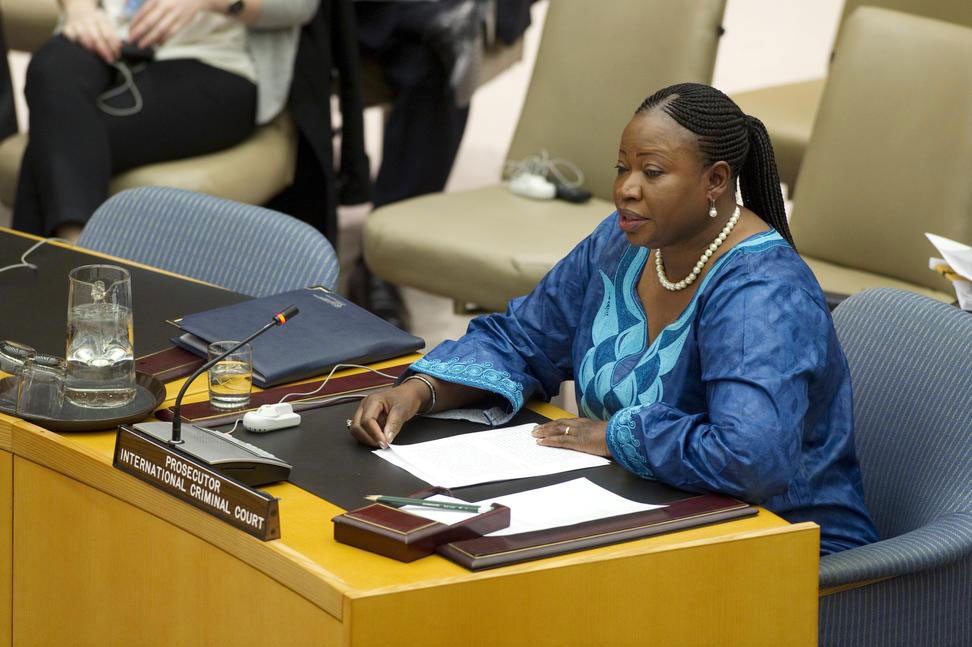
ICC Prosecutor Fatou Bensouda at the UN Security Council (Photo: Evan Schneider/UN)

In the wake of the military and judicial interventions in Libya, this blog has often criticized the relationship between the UN Security Council and the International Criminal Court (ICC). The criticisms are well-known to most readers and hinge on the premise that the UN Security Council’s referrals have placed the Court at the whims of the Council member’s political interests and thus threaten the Court’s independence, impartiality and legitimacy as a judicial institution.

While the practice and politics of UN Security Council referrals have received the lion’s share of attention in recent months, the reality is that every type of referral mechanism opens the ICC up a unique set of potential manipulations. Security Council referrals put the Court at risk of being instrumentalized by the narrow political interests of the Council’s members, especially the permanent five veto-wielding members. The Court’s experience with self-referrals, as in the case of Uganda or the Democratic Republic of Congo for example, has exposed the potential of the ICC to be leveraged by the referring government. As a result, the Court is often seen as pursuing one-sided justice against rebel groups while ignoring government perpetrated atrocities. While technically not a ‘referral’, opening cases proprio motu – through the ICC Prosecutor’s discretion – can also create problems as states argue that the Prosecutor does not have the political authority to intervene and that the Court lacks checks-and-balances in its mandate. Kenya is the best example where this has occurred.

In short, every mechanism available to bring a situation under investigation by the ICC is open to criticism. None is perfect and all are, to one degree or another, political. Yet what has frustrated many observers of the ICC is that the Court often appears unwilling to admit to, let alone critically address, the potential drawbacks of each type of referral. This unwillingness has been particularly worrying given ample evidence from past experiences which demonstrates that accepting referrals with open arms can undermine the public perception of the Court’s independence and legitimacy.

That being said, it is easy to only be critical of the ICC and its relationship with both states and the Security Council. While informed criticism is necessary, it is also important to consider possible solutions which could bolster the Court’s capacity to pursue international criminal justice. In this spirit, here is a proposal which could help the ICC to assess and address the political nature – and dangers – of referrals. Continue reading

Posted in ICC Prosecutor, International Criminal Court (ICC), UN Security Council | Tagged , , , | 4 Comments

A ‘Shot’ of Canada at the Nuremberg Trials

Dear readers,

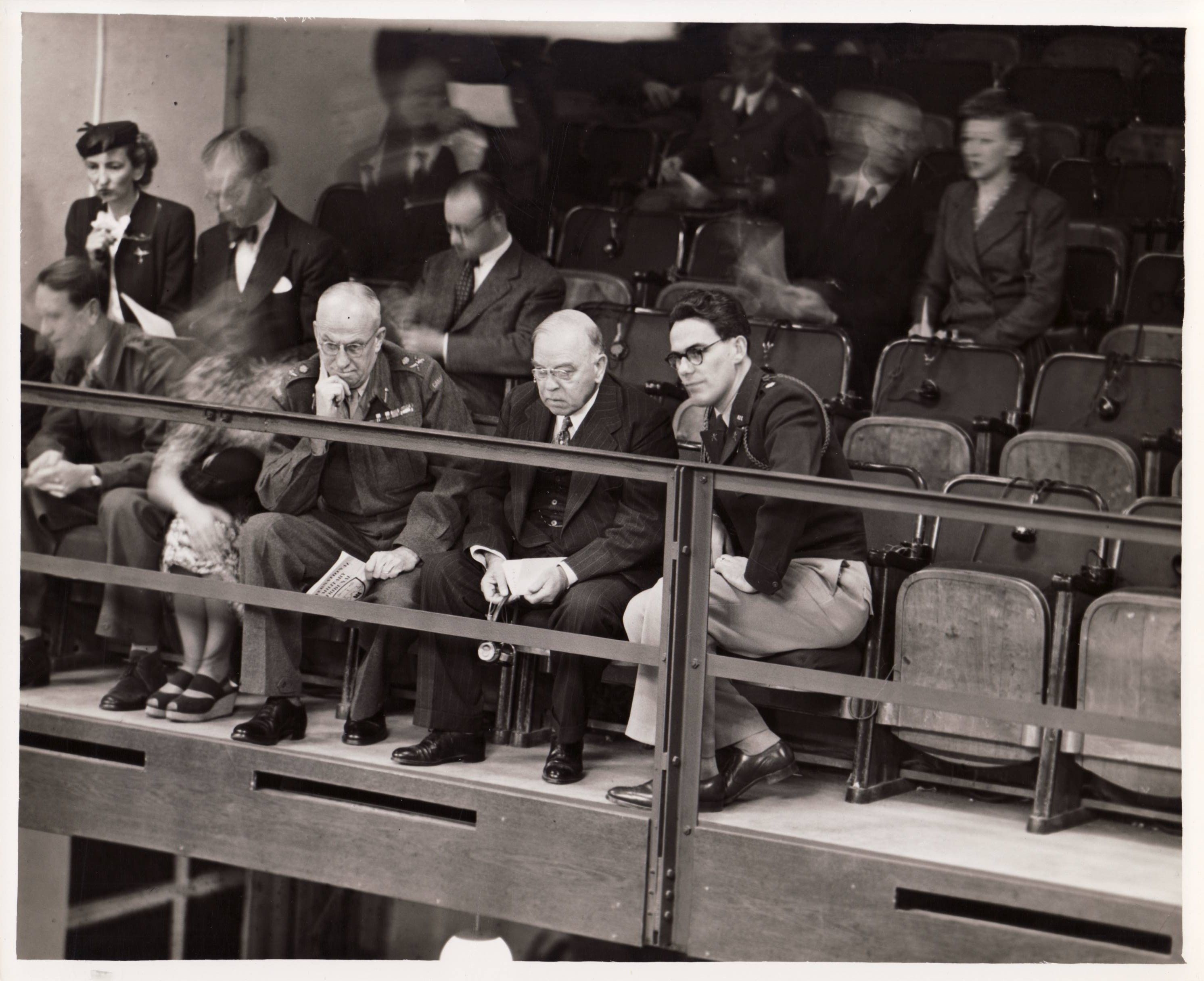
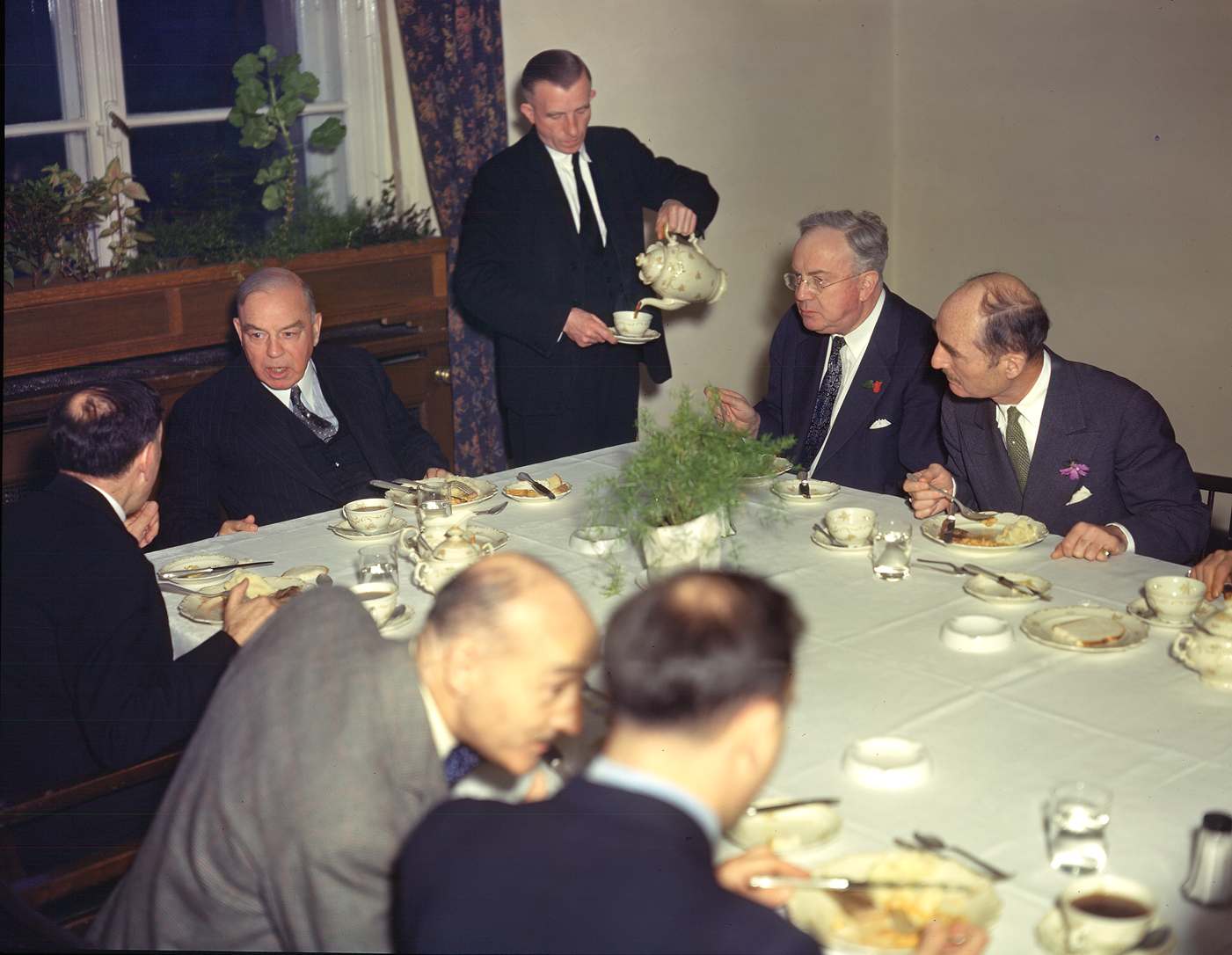
I recently had the unforgettable opportunity of visiting the premises of the Nuremberg International Military Tribunals, where senior officials of the Nazi regime – including Herman Goering, Rudolph Hess and Albert Speer, amongst others – were tried following the conclusion of WWII. Following my visit and a tour of the court, a wonderfully thoughtful curator, Henrike Zentgraf, was kind enough to send me two photographs of former Canadian Prime Minister William Lyon Mackenzie King visiting the court and attending the trials. As an avid researcher of Canadian political history and international criminal justice, I was admittedly surprised to learn that King had even visited Nuremberg following the war. But it is possible that, as with so many other countries, Nuremberg marked the beginning of Canada’s support for post-conflict accountability and justice.

As many readers will know (I hope it’s not hard to tell!), I have a keen interest in photography. It is thus a great pleasure for me to share these two rare and stunning photographs of King attending the tribunals. The first depicts King sitting on the visitor’s balcony in the Nuremberg tribunal courtroom. The second photo is of King with two American judges John J. Parker and Francis Biddle.

(Photo: Museen der Stadt Nürnberg)

(Photo: Museen der Stadt Nürnberg)

Posted in Canada, International Law, Justice, Nuremberg, Nuremberg Trials | Tagged | 8 Comments

Obama and the ICC – Four Reasons Not to Hold Your Breath

(Photo: Mashable)

It wasn’t nearly as close as the pundits and media suggested. As of writing, it seems that Barack Obama may have defeated Mitt Romney by as many as 100 electoral college votes in the United States Presidential election. Many Americans are relieved. But, at least according to some analyses, it would seem that it is people outside of the US who are most comforted by Obama’s victory. For them – as my Facebook newsfeed overwhelmingly attests – the future of the Land, Home and the World of the free and the brave hinged upon an Obama victory.

Many in the international justice community undoubtedly have a glimmer of hope that, at some time during the next four years, Obama will re-sign the Rome Statute of the International Criminal Court (ICC). After all, this time around Obama doesn’t have re-election to worry about and he would seem to be infinitely more likely to sign the Statute than any Republican President. What’s more, all it would take to re-sign the Rome Statute would likely be a brief statement from Obama deposited at the United Nations. But proponents shouldn’t hold their breath. While there are encouraging signs that the US will engage positively with the Court, the likelihood of the US joining the ICC remains slim.

As many critics were wont to point out, the Obama team ran a rather ambiguous campaign.  It should thus come as little surprise that the administration didn’t say what it would do with regards to the ICC. According to the American Non-Governmental Organizations Coalition for the International Criminal Court,

“As in the 2008 platform, the Democratic platform does not explicitly mention the ICC. It does, however, repeat the commitment expressed in 2008 about bringing to justice those who commit genocide and war crimes… The decision not to include the ICC by name reflects the cautious, case-by-case approach of the Obama administration which would likely prefer not to debate the issue of the ICC with the most vocal elements of the Republican party which negotiated the Republican platform and remain hostile to the Court.”

Despite this silence, there are real reasons why the Obama administration could be hesitant to join the ICC. Here are four.

Firstly, the American Servicemembers’ Protection Act (ASPA 2002) remains in force and continues to prohibit any enhanced cooperation between the ICC and the US. It is important to remember that such legislation would likely have to be repealed before the US joined the Court and there appears to be little chance of that happening any time soon.

Second, there is the not-so-little issue of alleged crimes committed in Afghanistan and Iraq. American officials likely (and probably rightly) fear that if the US acceded to the Rome Statute and accepted the ICC’s jurisdiction back to 2002, it would be vulnerable to an investigation by the Court for its actions in Afghanistan and Iraq. David Scheffer recently argued that proponents of the US joining the ICC should have a prospective-oriented position on US accession, one which seeks to align future American behaviour with international criminal law but does not punish it for past decisions and actions. This could plausibly be achieved if the ICC’s jurisdiction over the US began only from the date the US ratified the Rome Statute. Still, Scheffer’s comments reflect the unlikelihood of US accession if doing so without some guarantees that doing so would preclude an investigation and possible prosecution of any American officials for what was done in Iraq and Afghanistan. Of course, this is also problematized by ASPA, which declares that the US President may authorize “all means necessary and appropriate to bring about the release of any US or allied personnel being detained or imprisoned by, on behalf of, or at the request of the International Criminal Court”.  Continue reading

Posted in Drones, International Criminal Court (ICC), Israel, Palestine, Palestine and the ICC, United States | 3 Comments

Outsourcing Justice to the ICC – What Should Be Done?

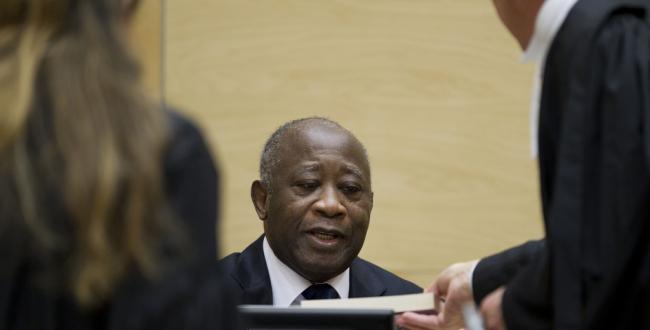
Laurent Gbagbo at the ICC (Photo: RNW)

Few issues have instigated as much controversy in the field of international criminal justice as the question of where International Criminal Court (ICC) indictees should be brought to justice. The majority of attention has been focused on instances when states seek to prosecute ICC indictees domestically and challenge the Court’s jurisdiction. Much less attention has been paid to cases when states choose to ‘outsource’ the trial and prosecution of some individuals to the ICC.

In some cases, where to try ICC indictees seems generally unproblematic. For example, in the Democratic Republic of Congo or the Central African Republic, the virtual lack of anything approximating a functioning and impartial judicial system makes the necessity of trying and prosecuting ICC indictees in The Hague uncontroversial. But other cases, especially states emerging from periods of conflict and which have begun to consolidate democratic and judicial institutions, are another – and much less clear – story altogether. To varying degrees, states like Uganda, Libya and Ivory Coast have emerged from the periods of violence and mass atrocity that instigated ICC intervention. Again, to very varying degrees, they have institutions which may be capable of investigating and prosecuting international crimes. Still, for some individual perpetrators, some states seem to believe that the ICC remains a better option. An important yet seldom asked question thus arises: if a state is able to investigate and prosecute but, for whatever reason, doesn’t want to prosecute particular individuals, should it be able to outsource justice to the ICC?

Complementarity Confusion

The answer to this question rests on the issue of complementarity which, as a principle and practice, is understood as granting the ICC the ability to investigate and prosecute individuals only in those states which are unable and unwilling to do so themselves. Put another way, it is, first and foremost, the responsibility of states to investigate and prosecute individuals allegedly responsible for atrocity crimes. When the state in question fails to do so, then the ICC may be granted or assert its jurisdiction. The brevity of the principle of complementarity, however, betrays its complexity in practice.

It isn’t particularly easy to follow which conception of ‘complementarity’ is being followed at the ICC these days. Take a look across its cases and it is difficult to see a cohesive and consistent application of what “ability” and “willingness” amount to. In some cases, such as Kenya, only the most rigid standard applies, whereby the state must show that it is able and willing to investigate and prosecute the same individuals for the same crimes as those by the ICC. In the Ugandan case, it isn’t clear that the Museveni government was ever unable or unwilling to try LRA commanders. Rather, the government’s problem was that the LRA’s senior command was no longer in Uganda itself and thus couldn’t be arrested. In Libya, the ICC’s Office of the Prosecutor (OTP) has appeared remarkably lenient towards Libya’s demands to try Saif al-Islam Gaddafi and Abdullah al-Senussi, siding with the government’s claim that it is able to investigate and prosecute ICC indictees domestically. It was telling that in the Libyan case, the Court’s defense counsel claimed that the Office of the Prosecutor (OTP) was applying double standards in its use of complementarity. It would come as no surprise if similar arguments are brought up by defense counsel other cases in the future.

But what of this issue of ‘outsourcing’ justice? Let us consider two cases where this seems to be occurring. Continue reading

Posted in Complementarity, ICC Prosecutor, International Criminal Court (ICC), International Law, Ivory Coast / Côte d'Ivoire, Ivory Coast and the ICC, Lord's Resistance Army (LRA), Uganda | 6 Comments

Missing the Mark: The ICC on its Relationship with the UN Security Council

(Photo: Spencer Platt/Getty Images North America)

Last week, for the first time since the International Criminal Court (ICC) was established, the United Nations Security Council debated its relationship with the Court. After two Security Council referrals (Darfur 2005 and Libya 2011), it was high time that the relationship was critically analyzed. Unfortunately, key issues which have undermined the independence and legitimacy of the ICC were left largely unaddressed.

There are many problematic issues with regards to the relationship between the ICC and the UN Security Council. Broadly, most fall under three categories: the potential tensions and dilemmas between peace-making/conflict resolution and international criminal justice; the inevitable selectivity that only some situations of mass atrocity will be referred by the Council to the ICC while other cases, which are just as deserving, will not; and the political constraints imposed by the Security Council on the ICC when it decides to refer a case to the Court.

The first problem is considered in the so-called “peace versus justice” debate. Included  is the issue of political will amongst Security Council states to back-up referrals with effective support. As readers will know, this blog is, to a large extent, dedicated to the relationship between international criminal justice on conflict resolution. With regards to selectivity of cases, it is my view that it is largely out of the control of the ICC but it is also compounded by the selectivity entrenched within the political constraints imposed on the ICC within Security Council referrals. As a result, this post focuses on the ICC’s seeming unwillingness to confront the Council’s political tailoring of referrals.

In a draft academic article on this subject, I argue that the language of the Security Council’s referral of Libya to the ICC is likely to undermine the Court’s independence, impartiality and, thus, its legitimacy. I focus in particular on three issues. First, Resolution 1970 includes a reference to Article 16 which allows the Security Council to stop the ICC’s investigations and prosecutions for 12 months (renewable yearly). Second, the referral explicitly excludes the ICC from investigating or prosecuting any citizens of states which are not members of the ICC. Third, Resolution 1970 stipulates that the Court can only investigate crimes after 15 February 2011.

All of these issues, for various reasons (see here), amount to the Council tailoring the ICC’s mandate to its political whims. Others are also concerned. At a recent conference, Christian Wenaweser, the former President of the ICC’s Assembly of States Parties, stated that there was “pretty much everything wrong” with the language inResolution 1970.

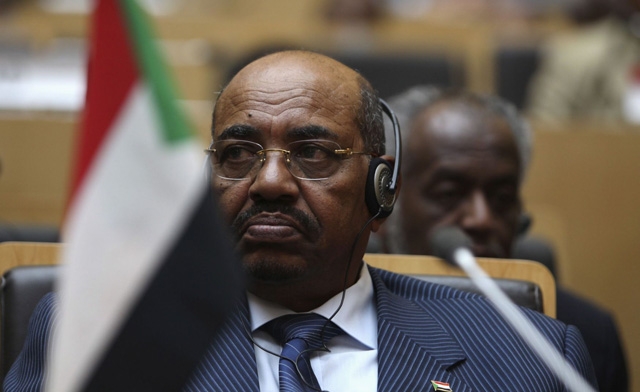
Sudanese President Omar al-Bashir (Photo: Reuters)

Much of the political wording of Resolution 1970 is simply copied and pasted from Security Council Resolution 1543, which referred Darfur to the ICC. One might also add that, in both the Libya and Darfur case, the Council has refused to provide any funding for the Court’s work and has subsequently provided little-to-nothing in diplomatic and political support.

It should thus come as no surprise that after two referrals, the political manipulation of the ICC by the Council isn’t exactly a secret. For example, Human Rights Watch touched directly on the question of political vocabulary and language, declaring that

“The two Security Council referrals to the ICC, Resolutions 1593 and 1970, have included provisions that are damaging to the court, Human Rights Watch said. Both referrals imposed the entire financial burden of the new investigations and prosecutions on the court and its member countries. They also allowed exemptions for the nationals of non-member third countries should they be implicated in serious crimes committed in the referred country.”

In this context, one might expect that the ICC to be eager to confront the Security Council about the language the Council has deployed in its referrals and request it to refrain from using such vocabulary in the future. Unfortunately, that was not the case. Continue reading

Posted in Darfur, ICC Prosecutor, International Criminal Court (ICC), Libya, Libya and the ICC, Sudan, UN Security Council | 7 Comments

Rewards for Justice: The US Takes a Step Closer to the ICC

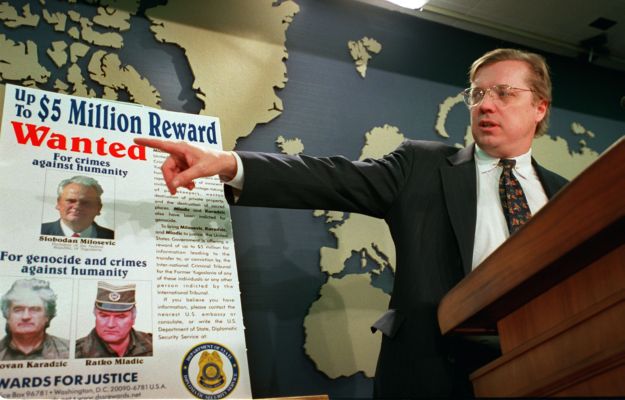
David Scheffer explaining the Rewards for Justice Program as it pertains to the ICTY

It appears that the United States is inching towards a much closer legal, political and institutional relationship with the International Criminal Court (ICC). This may come as a surprise given that the US is currently mired in another tumultuous Presidential election season. Nevertheless, it appears likely that the US will soon expand its Rewards for Justice Program to include ICC indictees. This would mark a significant – and welcome – development in the ICC-US relationship. How it became possible, however, is just as fascinating.

As readers will know, the relationship between the US and the ICC has generally grown more cooperative during the life-span of the Court’s existence. Of course, it didn’t really have anywhere to go but up after John Bolton famously ‘unsigned’ the Rome Statute and the administration of George Bush sought to undermine the Court wherever and whenever it could.

Despite improved relations, however, there is also a growing sense of discomfort with a United States that commits itself to a half-way house relationship with the ICC. Not long ago, I wrote of my concern that America’s position of engaging with the Court but remaining a non-member state could entrench the US’s selective support of international criminal justice, support based not on the interests of justice but the particular political interests of the US government. Indeed, I think there is already palpable evidence of this occurring. As a result, I was rather skeptical when told that Democrats, led by Stephen Rapp, the Ambassador-at-Large for War Crimes Issues, had been working tirelessly to expand the US government’s Rewards for Justice program.

The Rewards for Justice program, as its name suggests, doles out monetary awards to individuals who produce information which leads to the arrest and/or prosecution of terrorist suspects. While the focus is almost entirely on terrorism, under its rubric the program also currently covers individuals wanted by the International Criminal Tribunal for Rwanda (ICTR) and International Criminal Tribunal for the Former Yugoslavia (ICTY). According to its website, the program offers $5 million for information which leads to the detention of individuals wanted by either of the ad hoc tribunals. It is generally accepted wisdom that the program contributed positively to both the ICTY and ICTR gaining custody of most (in the case of the ICTY all) its indictees.

Bosco Ntaganda

Bosco Ntaganda (Photo: AFP)

Perhaps, then, it was only a matter of time before someone sought to expand the reach of the Rewards for Justice program to cover individuals wanted by the ICC. That someone was Stephen Rapp who, David Scheffer has argued, “has worked tirelessly on apprehension initiatives to assist the ICC”. A few weeks ago at a conference in Nuremberg, Scheffer added that Rapp has done a “heroic job in Washington” on expanding support for the Court. He also noted that the expansion of the Rewards for Justice program is well on its way, having cleared numerous political committees in Washington.

It now appears that putting ICC indictees under the remit of the Rewards for Justice program is all but inevitable. What is so remarkable about this development is that it has received almost no criticism or resistance in US domestic circles. One would be excused for thinking: “Well, what about all of those Republicans that have worked tirelessly to undermine the ICC?” Indeed, surely those pesky anti-ICC politicos have made a fuss, right? Not really. According to Scheffer, there has been no significant opposition on Capitol Hill. A few developments may help explain this. Continue reading

Posted in ICTY, International Criminal Court (ICC), International Criminal Tribunal for Rwanda (ICTR), Justice, United States | Tagged , | 1 Comment

Transitional Justice and the Arab Spring – A ‘Webinar’

Dear readers,

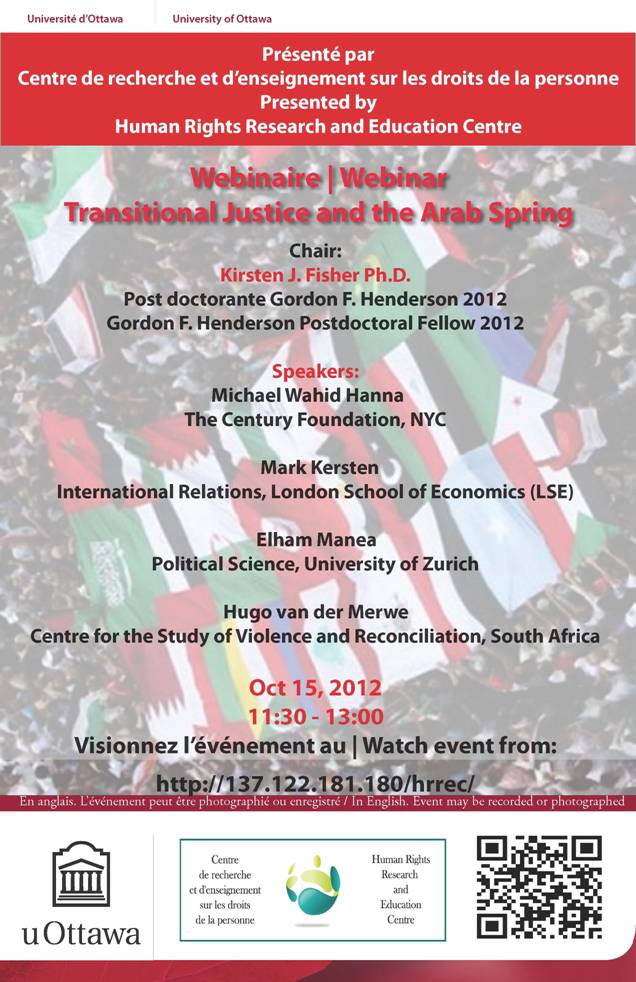
For anyone interested, please tune in to a ‘webinar’ on Transitional Justice and the Arab Spring from 11:30 – 13:00 EST (16:30-18:00 GMT) tomorrow, Monday, October 15. There is a great list of participants and it promises to be an interesting examination of questions regarding the use of transitional justice mechanisms in Arab Spring states. Much of the discussion will center around questions that Kirsten Fisher raised in her two-part post, Distinctly Arab? Questions about Transitional Justice and the Arab Spring (see here and here). I will be presenting findings from my paper, Justice after the War: The ICC and Post-Gaddafi Libya and comment on some new developments, focussing on the admissibility hearings at the ICC last week.

If you’re keen, check out the poster below for more details!

Mark

Transitional justice Arab Spring

Posted in Arab Spring, JiC News, Transitional Justice | 3 Comments

The Politics of International Criminal Justice – A Review

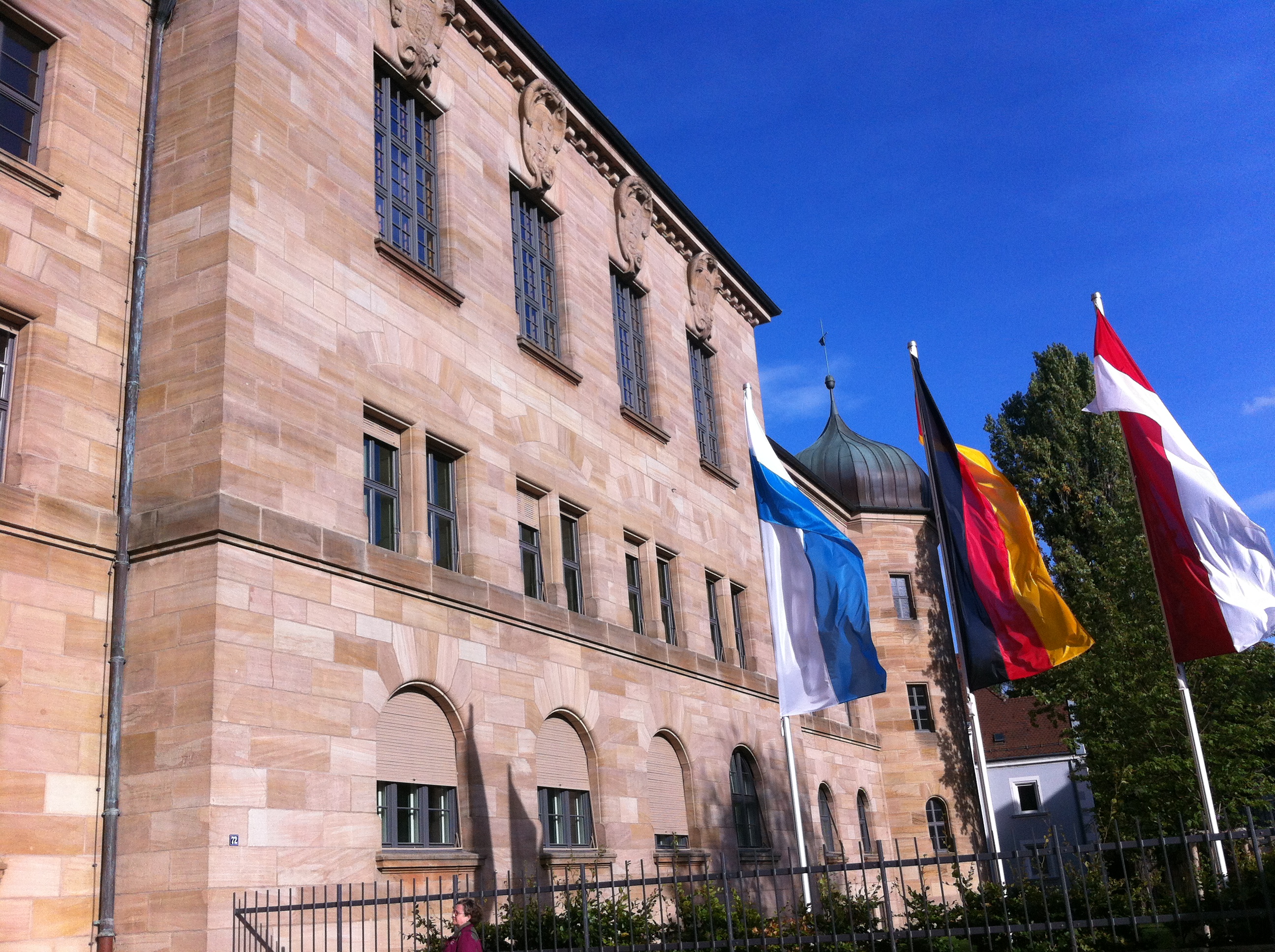
The Palace of Justice, where the Nuremberg Trials were held (Photo: Mark Kersten)

While the International Criminal Court (ICC) is currently celebrating its tenth year anniversary, we still know remarkably little about the Court’s relationship with the international community of states. This is not to say that scholarship has entirely overlooked how states and the ICC get along (or don’t) and why. After all, few issues in the field have received as much attention as the relationship between the ICC and the US. But, as Süddeutsche Zeitung writer Ronen Steinke rightly notes, in The Politics of International Criminal Justice – German Perspectives from Nuremberg to The Hague, that is pretty much where analyses of “[t]he entanglement of international criminal justice with interests of particular State actors” end.

Steinke’s laudable aim is to expand on this literature by examining the peculiar and unique entanglement of Germany with international criminal justice since the end of WWII. This isn’t a well-known story. Indeed, it may come as a surprise to many that Germany was ambivalent, at best, towards international criminal justice following the Nuremberg International Military Tribunal (IMT) trials. As Steinke writes, “in the years after Nuremberg, West German policymakers and legal scholars set out to challenge the authority of the IMT’s narration of the war.” They did so, primarily through a fervent deployment of legal positivism. More specifically, legal scholars and jurists claimed that the Nuremberg tribunals inappropriately applied its jurisdiction retroactively, thus violating the principle that one cannot be tried for a crime that did not exist at the time when it was allegedly perpetrated. They also argued that the selection of cases brought forward at the tribunal did not represent “historical truth”. For these reasons, the trials were largely seen by the German legal community as illegitimate.This attitude remained prevalent until the 1990s, at least in part because “[i]n the 1950s, numerous judges and law professors who had built a career under the Nazis were returning to their former professions” and they were concerned with “their own tainted biographies”.

Since the end of the Cold War, however, Germany has been amongst the most eager proponents of international criminal tribunals as well as the creation of an ICC independent of the political interests of the UN Security Council. It is this political transformation, this volte-face, which has inspired Steinke’s impressive work and should be of interest to all those with an commitment to the politics of international criminal law and justice.

For Steinke, understanding this transformation requires an examination of a confluence of key developments and individuals. The first signs of this conversion occurred following the end of the Cold War, when the West German government viewed the prosecution of East German (GDR) officials as an opportunity to create a historical narrative which delegitimized the GDR regime. The dominance of legal positivism withered and the prosecution of the GDR’s leadership was seen as an opportunity to legitimize German reunification as well as West Germany’s liberation and political take-over of its Eastern counterpart.

With the establishment of the ad hoc tribunals in Rwanda and the former Yugoslavia in the 1990s, Germany warmed up to the idea of international criminal tribunals. According to Steinke, this fact “is highly puzzling from the perspective of realist analysis of the politics of international criminal justice.” After all, what interests did Germany have in Rwanda and especially Yugoslavia? As Steinke points out, Germany had an interest in siding with its three key allies on the UN Security Council – the UK, the US and France, and their particular version of the historical narrative emanating from the Balkans. It also “allowed the newly reunified German State to show itself as a promoter of human rights on the international stage.”

(Photo: UCSB Library Special Collections)

When negotiations on creating a permanent international criminal court began, German diplomats and lawyers took it upon themselves to play a leading role. Steinke’s treatment of Germany’s role in the lead-up of the Rome Conference is particularly rich and worth reading. As he points out, amongst the key factors which propagated German influence in negotiating the creation of the ICC was a single committed individual: Hans-Peter Kaul, to whom the creation of the ICC is highly indebted. According to Steinke, Kaul masterfully convinced “realists” in the German government that the ICC’s principle of complementarity would prevent any German nationals from being prosecuted at the Court and that the Rome Statute would have a restrictive understanding of war crimes which would not create any new legal obligations for the German military. At the same time, as Steinke notes, many skeptics became convinced that the one-state, one-vote system of the ICC’s Assembly of States Parties (ASP) could give Germany a significant degree of political influence at the ICC in nominating individuals for key positions at the Court. In other words, the democratic nature of the ASP could serve Germany’s “realist” political interests.

While Steinke’s analysis of Germany’s role in the creation of the ICC is fascinating and ultimately convincing, the most enjoyable passages come when he shares the rather creative strategies employed by the German delegation to the ICC negotiations. Let me share two. Continue reading

Posted in Germany, ICTY, International Criminal Court (ICC), International Criminal Tribunal for Rwanda (ICTR), International Law, Nuremberg, Nuremberg Trials | Tagged , | 1 Comment