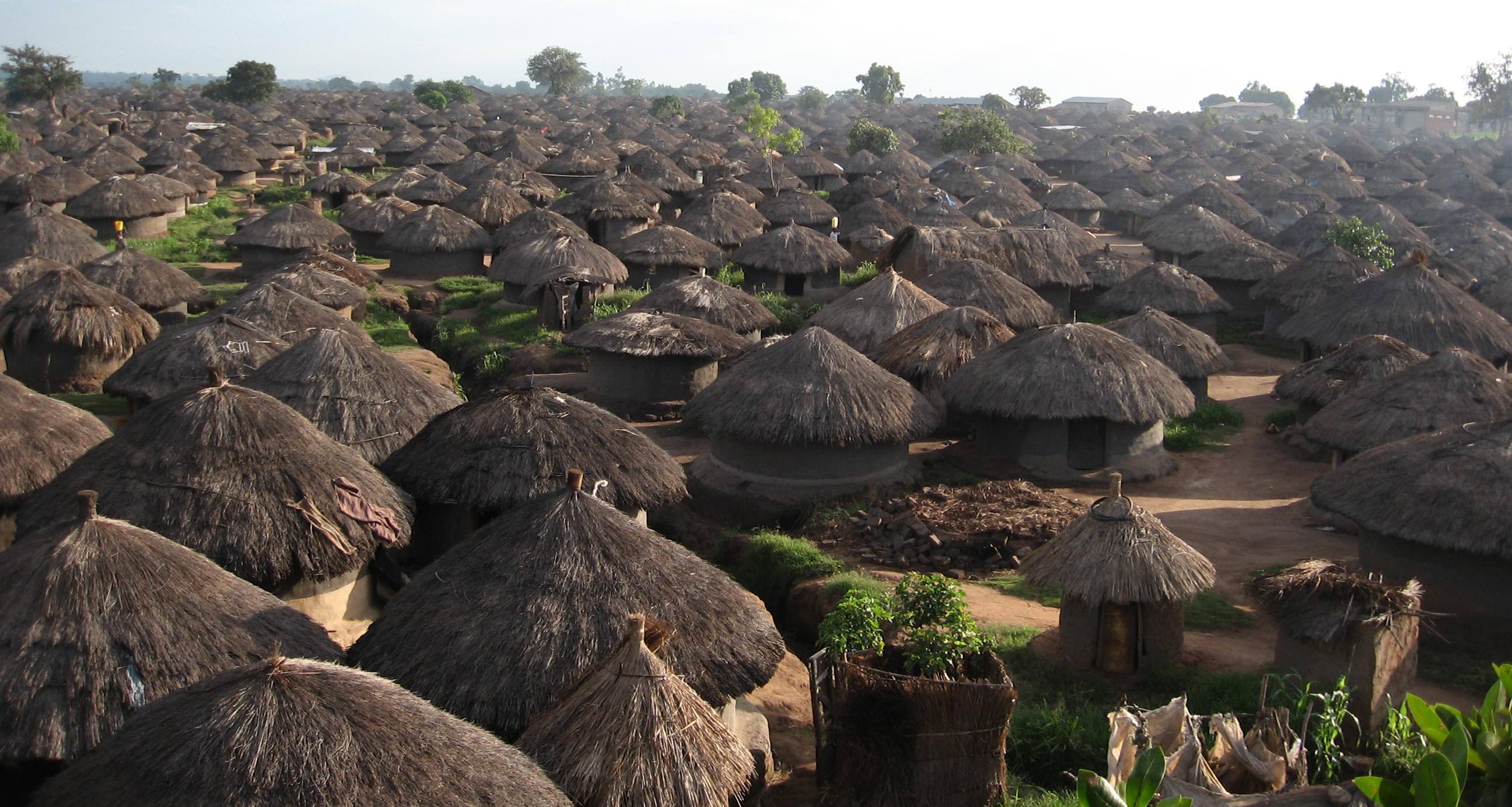
One of the 'protected camps' that were established during the LRA conflict in northern Uganda (Photo: http://joshuadysart.com)
The Lord’s Resistance Army (LRA) conflict effectively ended for northern Uganda in 2006, after 20 years of suffering, when the LRA moved out of Uganda at the start of the Juba Peace Talks. Despite relative peace returning to the area, the multiple legacies of this conflict have still not been fully addressed. One of the most contentious issue is the question of how to deal with human rights violations committed by the Government of Uganda (GoU) and the Uganda People’s Defence Forces (UPDF), as well as its predecessor, the National Resistance Army (NRA). The academic literature on the topic and human rights organisations are pretty clear about the fact that human rights violations were committed, in particular by the NRA in the 80s and 90s. Until this day, northern Ugandan victims call for justice for these crimes while the UPDF claims that it has prosecuted all violations that were committed. The ICC, with its jurisdiction starting in 2002, cannot help in this case, but there are also allegations regularly brought forward in northern Uganda that may fall under the jurisdiction of the ICC and are thus of particular interest.
When the Government of Uganda was not able to beat the LRA militarily, it started to drive the Acholi civilian population into so-called ‘protected camps’ in 1999. Civilians that did not comply were subjected to beatings or random shelling of their villages. In these camps people lived in grievous conditions around UPDF barracks. The army largely failed to protect the civilian population against LRA attacks on the camps. At the same time, diseases like Cholera, Ebola and Aids spread due to lacking hygiene and crowded conditions in the camps. At the height of the conflict 1.8 million people lived in such camps and roughly 1,000 of them were dying each week. Many northern Ugandans – from political and religious leaders to ordinary citizens – have claimed that this UPDF policy amounts to genocide. Only recently, an argument between the retired Bishop of Kitgum Macleod Baker Ochola II and a UN representative ensued at a workshop over whether the camp policy amounts to genocide, as claimed by Bishop Ochola.

Retired Bishop Ochola during the workshop at which he raised the genocide allegations (Photo: Sam Lawino/Daily Monitor)
It is clear that the conditions in the camps were horrendous. Chris Dolan, the Director of the Refugee Law Project in Kampala, Uganda, has fittingly described the camp system as ‘social torture’. According to the UN Office for the Coordination of Humanitarian Affairs the camps violated several rights of the displaced and nearly all UN Guiding Principles on Internal Displacement. Principles violated included, for example, the need to consult the people affected by the displacement (7.3), to minimise the time of displacement (6), to provide basic standards of living and medical care (18, 19), freedom of movement (14), the protection from abuses (11), and the protection of property (21). A diplomat I interviewed compared the IDP camp system to British concentration camp tactics during the Boer Wars in South Africa, and a staff-member of a human rights organisation stated in an interview that the GoU camp policy likely constitutes a crime.
Little doubt remains that the camp policy of the Ugandan Government was inhumane, maybe criminal, but does it amount to crimes under the Rome Statute? The Office of the Prosecutor of the ICC has not made any of the findings from its investigations of alleged UPDF and GoU crimes public, and I am not aware that the legal literature has attempted to clarify this aspect. I would like to give my own assessment of this question in the following paragraphs, stressing that I am not a lawyer and that my analysis might be open to criticism by people more experienced in questions of international criminal law. Continue reading