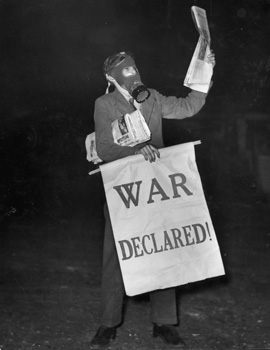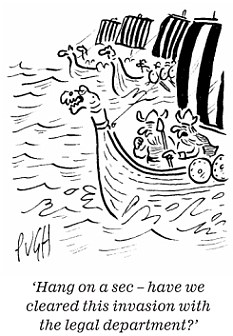
The Crime of Aggression: Beyond Kampala

Teddy Nicholson responds to posts by Patrick and myself on the crime of aggression. Enjoy!
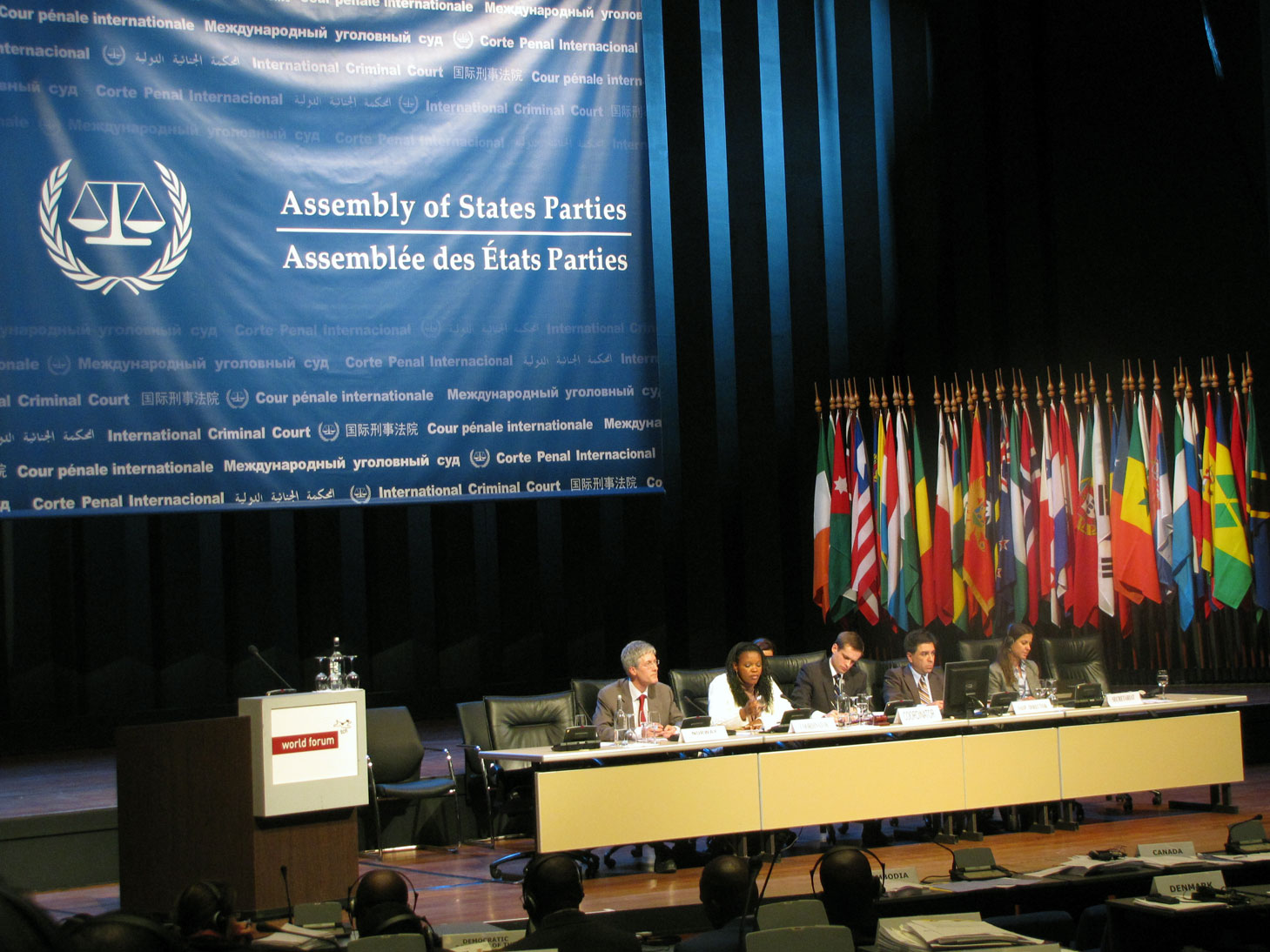
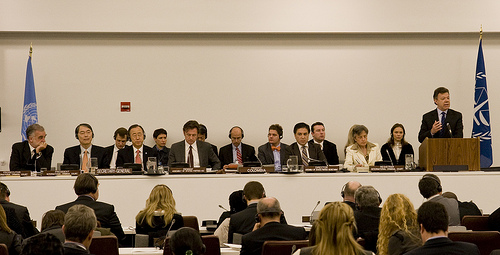
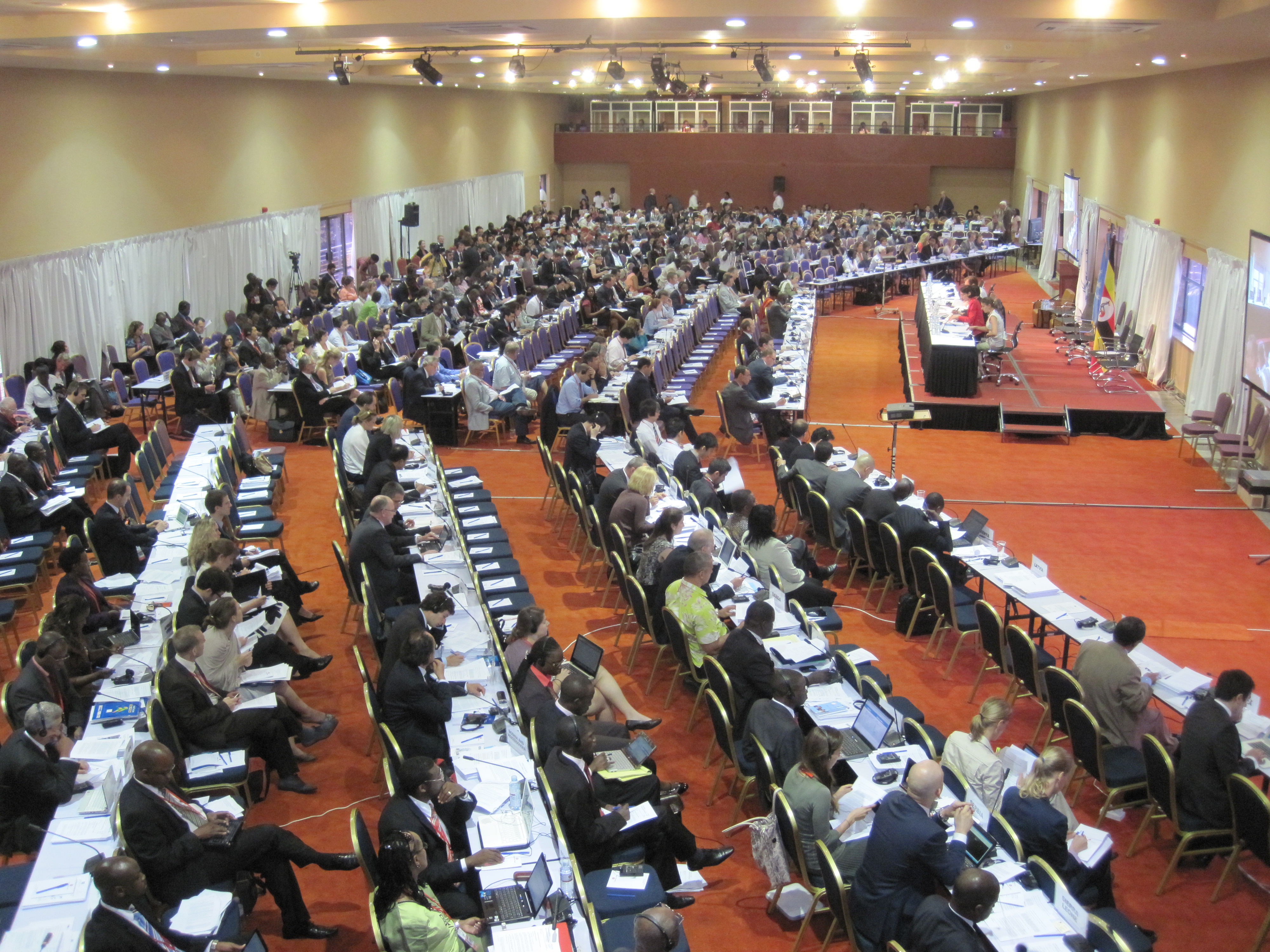
The ICC's Assembly of States Parties to the Rome Statute in 2009 (Photo: Washington University)

I am currently at the Assembly of States Parties to the ICC meeting in New York and, while aggression has not been high on the agenda, there have been one or two very interesting discussions about it. The most notable was on the occasion of the book launch for the Travaux Preparatoires of the crime of aggression, masterfully brought together by Stefan Barriga and Claus Kreß.

At this event – and in several other conversations I’ve had with people here – I am beginning to get an altered view of the real significance of this particular development. There are, as far as I can see, three ways that the Kampala compromise can be seen: First, as an attempt to prosecute and try individual leaders for the crime of aggression at the ICC. Second, as an attempt to fill in a conceptual gap in the legal structure of international society.

These two have both been discussed, but there is a third way: considering aggression through the lens of complementarity.

‘Complementarity’ is one of the most frequently repeated words at the ASP this year. It is constantly mentioned in official statements by ambassadors and ministers at the podium as well as being the subject of detailed side events. The way we normally think about complementarity is as a limiting factor of getting cases to the ICC – it can only prosecute if states are unwilling or unable to do so themselves.

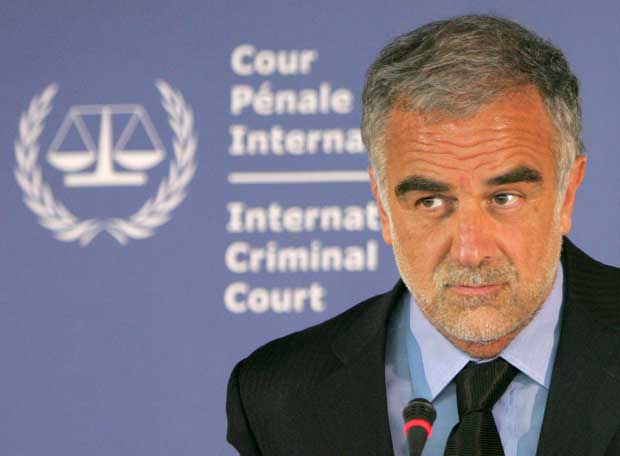
However, it is the other side of complementarity that states are really thinking about now – the domestic criminalization of international crimes, and the development of enhanced capacity to try them nationally. The most quoted line from Luis Moreno Ocampo over the past few days has been “the ICC will be a success when it has no cases.” This does not just mean that it will succeed when there are no crimes, but rather that it will succeed when states can prosecute cases themselves.
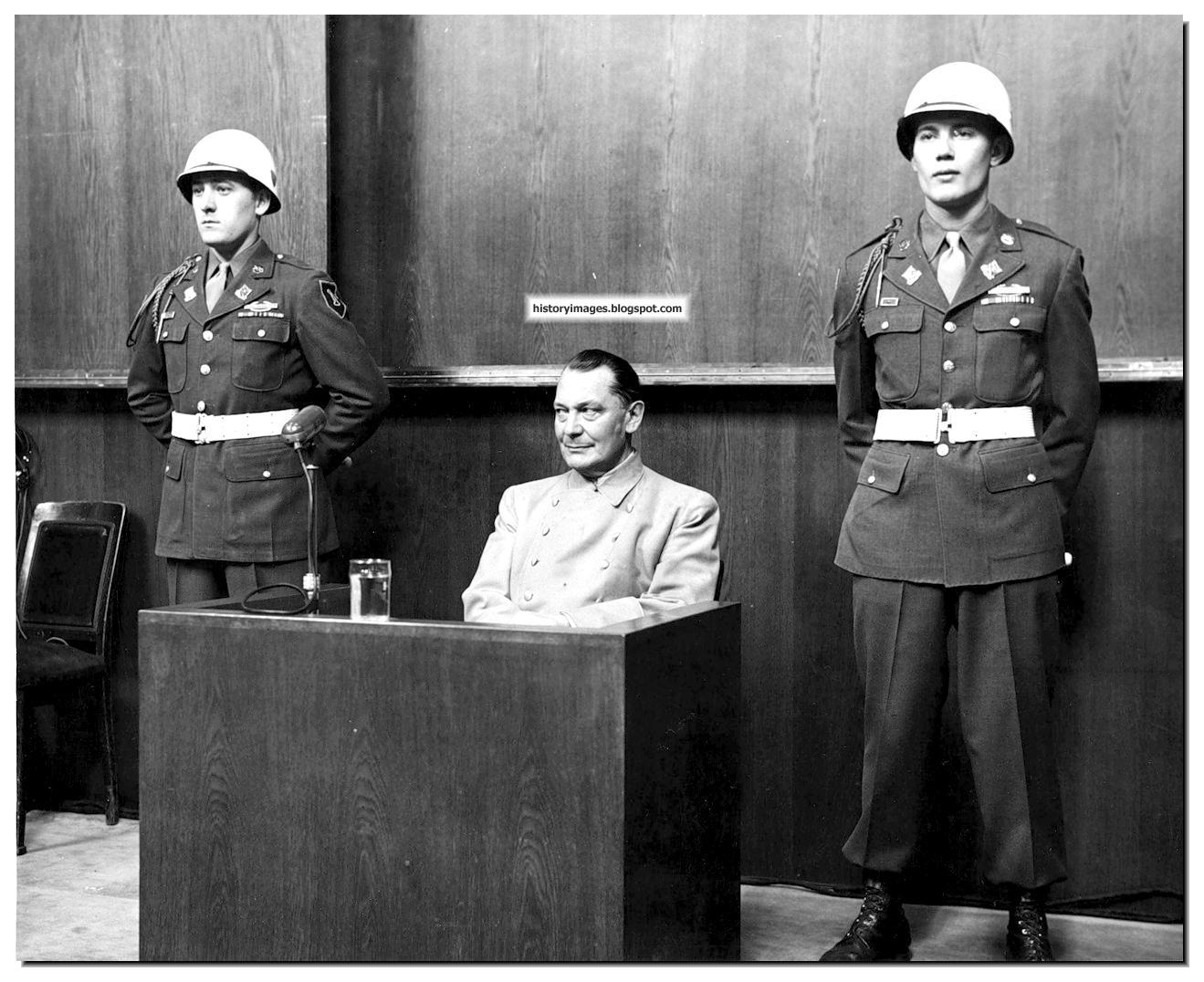
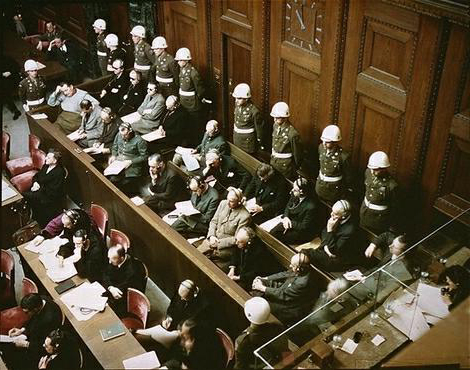
Hermann Goering (center) at the Nuremberg Tribunal.

What, then, of aggression? The message that I am increasingly hearing is that everyone involved at Kampala was somewhat aware that we are not likely to see cases of aggression tried at the ICC any time in the foreseeable future, even if Kampala had been a more comprehensive success. Furthermore, as Patrick Wegner pointed out, it is a crime that inevitably attracts more politicisation than the core three (genocide, war crimes and crimes against humanity) do right now. Continue reading
Posted in Assembly of States Parties, Crime of Aggression, International Criminal Court (ICC) | Leave a comment

A Precarious Silence: North Korea and International Justice

(Photo: TUNIN Source)

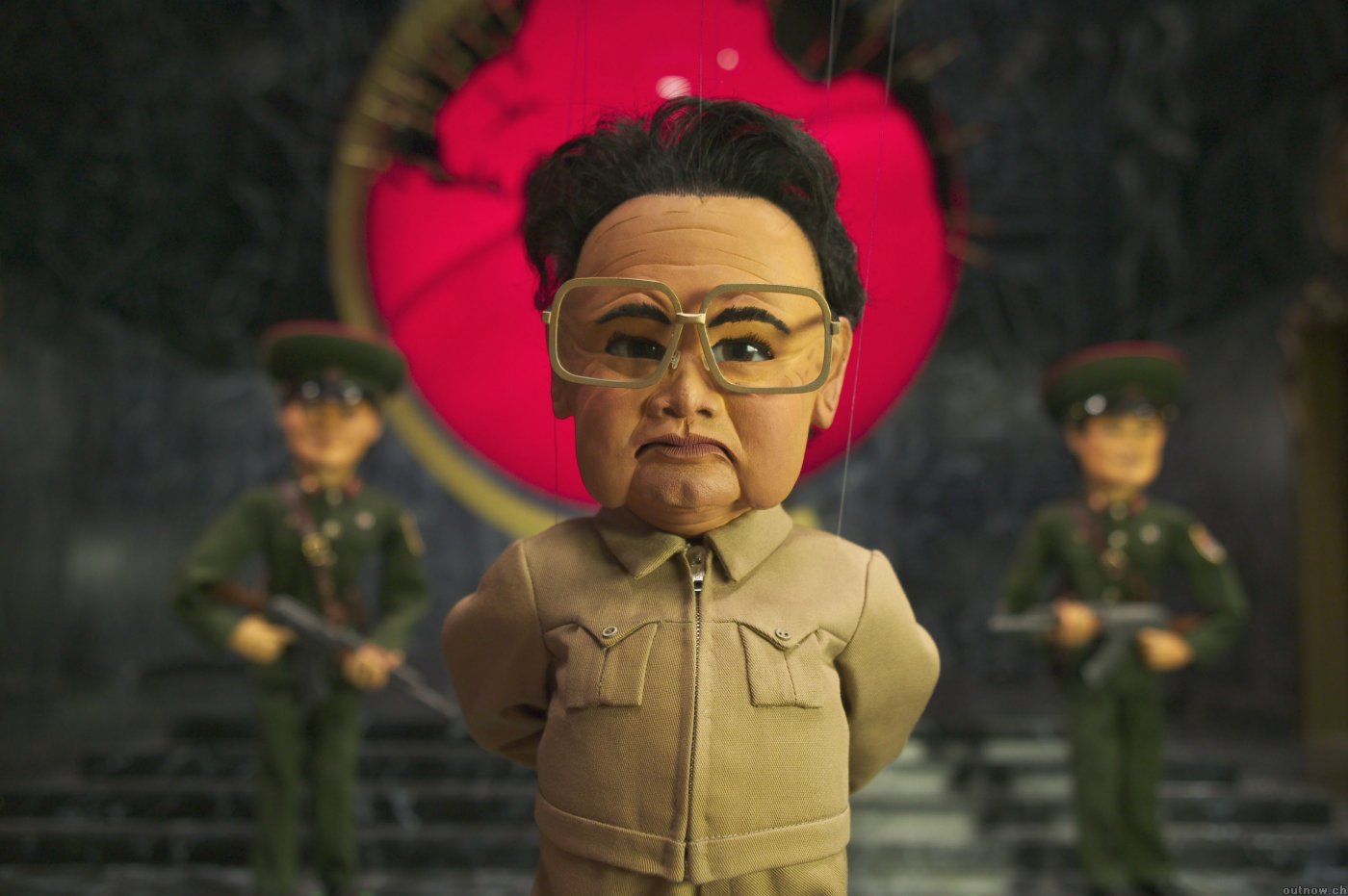
Just about everyone who doesn’t live under a rock will know by now that the mercurial and mysteriously ‘ronery’ North Korean leader, Kim Jong-il, has died. Yet, while the jokes and Team America references proliferate in the wake of Kim Jong-il’s death, the recent history of North Korea is nothing to laugh at. It is a history of massive structural crimes and human rights violations perpetrated against innocent people while the international community watched, preserving a miserable status quo.

Interested readers will remember that some attention was paid last year when the ICC’s Office of the Prosecutor opened a preliminary investigation into possible war crimes committed by North Korea when it shelled Yeonpyeong, a South Korean island. Despite this blip in attention, it remains stunning how little consideration North Korea receives in the context of international criminal justice – especially for the far graver crimes against its own people. Of course, some may argue that North Korea does not receive any attention because its crimes do not fall within the jurisdiction of the Court. But that seems far too weak an explanation – and far too defeatist an attitude for human rights advocates. It certainly hasn’t stopped demands, rushing forward in waves, to investigate crimes in Syria – also outside of the ICC’s jurisdiction.

While the repressive and isolated regime receives a significant share of international scrutiny, rather than putting human rights violations front and center, the attention paid to North Korea typically follows the ebb and flow of developments in its nuclear programme. The reasons for this neglect of North Korea as a potential case for international criminal justice reveal the complexities of politics in the Korean peninsula, yet they may not be all that intricate.

Many diplomats involved in dealing with North Korea understand and believe that the most costly outcome in the Korean peninsula – for them – is the collapse of the isolated, neo-Stalinist state. Since the division of Korea into North and South, the economic, social and political trajectories of the two countries could scarcely have been more divergent. Attempting to bring them together could very well be amongst the most expensive international political projects in recent memory. The refugee flows alone would be astonishing. The World Bank has argued that a reunification of the two Koreas would cost upwards of $2-3 trillion dollars, or some 5-6 times the yearly GDP of South Korea. Given past experiences in unification projects, for example East and West Germany, this is probably a low-ball estimate.

Kim Jong-il in Team America - Sorry, I couldn't help it!

Thus, it would appear that the single, over-arching reason why North Korea has been allowed to develop nuclear arms is because the status quo – which includes the repression of millions – is better (read: less costly) than reunification or a “free” North Korea. The North Korean leadership has always understood this realpolitik treatment and has consequently engaged in remarkably successful black-mail policies: it threatens regional states and stability, receives the political attention it seeks, and key states give it concessions and aid in exchange for a return to the status quo of quiet and reclusive, but unthreatening, tyranny and repression. Sanctions have proved largely ineffective – at least insofar as human rights standards are concerned.

If there is any doubt about the above, let me put it more bluntly: the international treatment of North Korea encourages the continued existence of the North Korean regime and, by extension, reinforces the conditions in which millions of North Koreans are subjected to systematic and systemic human rights violations. It is an embarrassing diplomatic back-and-forth that leaves civilians susceptible to hardship and horror. It is also a terrible indictment of the efforts to maintain and enforce global human rights standards. Continue reading

Posted in Crimes against humanity, Czech Republic, Famine, Human Rights, International Criminal Court (ICC), Justice, North Korea | Leave a comment

No Limits for Justice? Universal Jurisdiction and the Case of Former Chadian President Hissene Habré

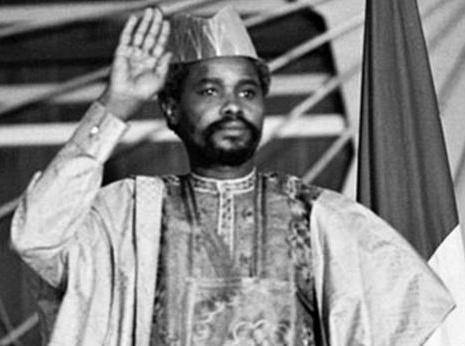
Hissene Habré was President of Chad between 1982 and 1990 and is accused of serious human rights violations during his regime

When we talk about justice in conflicts there is a potentially unlimited array of transitional justice mechanisms that could be brought to use in order to deal with atrocities committed during armed conflict. The first measures that come to mind are the ‘trinity’ of transitional justice: trials, truth commissions and amnesties. But there is a lot more to transitional justice. Mechanisms range from compensation over traditional reconciliation ceremonies to different forms of memorialisation in museums, through monuments, or even graffiti. But even among the best known mechanisms there are some variations that are not very well known and have received less attention. One of them is the possibility to pursue international trials of war criminals in third states, based on universal jurisdiction.

The idea of universal jurisdiction is grounded in the notion that there are some norms in public international law which are important enough to bind everyone (jus cogens) and the violation of which is considered a crime against everyone. These so called erga omnes norms include, for example, genocide, slavery, torture and racial discrimination. The most famous case pursued on the principle of universal jurisdiction was the indictment of the former Chilean dictator Pinochet for serious human rights violations committed during his regime. The indictment was issued by the Spanish magistrate Baltasar Garzón and Pinochet was arrested in London despite his immunity as a senator-for-life in Chile. Pinochet’s extradition to Spain was finally turned down by the British House of Lords on health grounds, but still, the case carried a huge symbolical message that those responsible for human rights violations are in danger of being pursued by third states at any time.

The former Chilean Dictator Pinochet only escaped international justice thanks to his bad health (ElPais)

Broad national provisions on universal jurisdiction in countries like Belgium and Spain quickly led to a wave of complaints against US and Israeli officials for alleged violations of erga omnes norms, e.g. in Guantanamo Bay or during ‘Operation Cast Lead’ by the Israeli Army. The diplomatic repercussions of these investigations led Spain and Belgium to limit the possibilities of pursuing cases based on universal jurisdiction in national courts. Even though the reach of universal jurisdiction has now been limited in many places, it still remains relevant in a number of cases. Germany has issued a law on international criminal law (Völkerstrafgesetzbuch) and is currently prosecuting the political leadership of militias in the Democratic Republic of Congo that have been living in exile in Germany. Another interesting case is the attempt to prosecute the former President of Chad, Hissene Habré, for crimes committed during his regime. Continue reading

Posted in African Union (AU), Democratic Republic of Congo, Exile, Israel, Torture | Tagged , , , , , , , , , , | 3 Comments

Thoughts from the 10th Session of the Assembly of States Parties to the ICC

Teddy reports for JiC from New York, where the Assembly of States Parties’ meetings are currently under way. His focus in this post is on the complex process of electing six new ICC judges. Enjoy! 

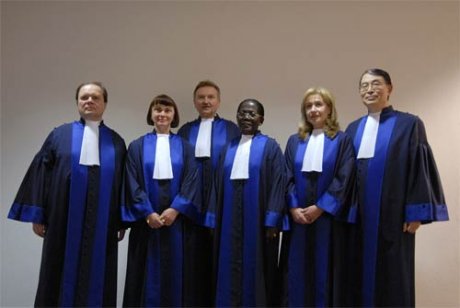
A group of ICC Judges (Photo: ICC)

Thoughts from the 10th Session of the Assembly of States Parties to the ICC

It’s Monday afternoon and I’m sitting in a windowless conference room that is half full, with diplomats wandering in and out and interns sitting dotted about watching a video about the ICC that is supposed to be keeping everyone entertained for this break in the proceedings. Every desk surface in sight is covered with fliers, sweets and some other more lavish gifts all designed for one purpose – to persuade the 120 states parties of the Rome Statute to vote for one or another candidate running for the position of ICC judge.

This is the break in proceedings while the secretariat members count the ballots from the first round of voting. There will almost certainly be another three or four rounds to come over the next few days before we know which of the eighteen candidates will fill the six spots available on the ICC bench.

The voting system is spectacularly complex. It was constructed by an official from Liechtenstein in 2002 and is designed to meet two conflicting needs in the elections: the first is to have an open election that delivers the best candidates, and the second is to deliver a result that takes into account the geographical origin, gender and background of candidates.

The ASP, meeting in 2010 (Photo: Coalition for the ICC)

The system essentially goes as follows: there is a minimum voting requirement for each region. So, for instance, for Latin America and the Caribbean, everyone has to vote for at least two candidates. However, the group is required to put up at least four candidates (they have put up five this time). This means that it is extremely likely that there will be a number of Latin American candidates elected, but it is not guaranteed.

If that seems complex, then hold on because we’re just getting going. The same minimum voting requirement exists for the nature of candidates they are, defined by the terms “List A” and “List B”. List A candidates are those with a background in criminal law, List B candidates are those with a background in general international law, and there are minimum requirements for each category. Continue reading

Posted in Assembly of States Parties, Elections, International Criminal Court (ICC) | Leave a comment

Transitional Justice and Graffiti in Libya

It may not be as ‘sexy’ as international trials or even truth commissions. It’s not as political or high-stakes either. Memorialization, however, is an essential element of transitional justice. In this context, a fascinating debate is taking place about what to do with the vibrant graffiti that has blossomed on the hitherto barren and depoliticized walls of Libyan cities and towns.

It might be a stretch for some readers to hear that graffiti is an integral part of transitional justice. But if transitional justice, the definition of which has never really been clear, can be broadly understood as the decisions and efforts of a society to reckon and deal with the past, then Libyan graffiti amounts to a very visceral element of transitional justice in Libya. As the International Center for Transitional Justice wrote in a 2007 report:

“In vastly different contexts communities see public memorialization as central to justice, reconciliation, truth-telling, reparation, and coming to grips with the past.”

In the emerging study of transitional justice, memorialization has received uneven and inadequate attention. The immediate artistic expression of struggle for freedom, democracy and justice has received even less attention. Yet, in the case of Libya, graffiti is, to a remarkable extent, Libya’s first moment of democratic expression.

The amount of graffiti across Libya is astonishing and suggests a deep-seated need to express both disdain for the past Gaddafi regime and the hopes for a new future. According to one report, “[p]erhaps the most spontaneous expression of the uprising can be seen on the street, with graffiti covering so many surfaces at some point the new government eventually may have to place some limits.”

It’s not always pretty – most of it is unimpressive and simple. But numerous graffiti murals are beautifully detailed and satirical. More importantly, the graffiti is a symbol of resistance and the drive to a free and just Libya. Remarkably, during the conflict, Libyans  in Gaddafi-held areas even took the risk to ruin pro-Gaddafi murals with graffiti.

Below I have included a gallery of some of the artwork that was created during the conflict. Many of the pieces evoke the impassioned and desperate desire for a better life and a life beyond a tyrannical police state. Painted over cracks in the wall, they represent amongst the first – and certainly the most colourful – cracks in Gaddafi’s rule. Less than a year ago, expressing such anti-Gaddafi sentiments would surely have guaranteed their authors’ imprisonment, torture or death.

The graffiti sprayed across Libyan cities is in itself a symbol of breaking with the past. As Rana Jawad writes:

“The graffiti and street art in post-revolution Libya is a constant reminder of what most fought for this year – to topple 42 years of tyranny.”

Art often captures the shared values and sentiments of a society much better than politics or violence. The graffiti splayed across Libyan cities is no different. Yet while many pieces should be celebrated and preserved, much of it also betrays the nastier side of post-conflict Libya. Many murals entail vicious glorifications of violence. Some are anti-semitic and racist. Less violent, but perhaps still problematic, others reify the fractured and fragile tribal divisions in the country. Over the coming weeks and months, Libyans authorities will have the difficult task of deciding which murals will become memorials and which will have their images and messages wiped away. Continue reading

Posted in Libya, Memorialization, Peace Processes, Transitional Justice | 6 Comments

The Crime of Aggression: A Step into the Wrong Direction?

This is the third piece of a short series of posts on the provisions concerning the crime of aggression which were passed at the Rome Statute Review Conference in Kampala in May 2010. You will find the first post by Teddy Nicholson here, and Mark’s answer to it here.

Defendants at the Nuremberg Trial (Wikimedia Commons)

Teddy Nicholson is very right in seeing the crime of aggression as fulfilling the true legacy of the International Military Tribunal (IMT) in Nuremberg. As he points out, the German leadership was not prosecuted for war crimes, crimes against humanity and the genocide of European Jews, Sinti, Roma and all those who did not meet the ‘requirements’ of Nazi ideology. Rather, the prosecution followed an idealist and deeply political quest to make war illegal by creating ‘crimes against peace’.

Former US Supreme Court judge and US Prosecutor at the IMT Robert Jackson was a driving force behind this ‘mission’. One result of this political focus was a certain lack of attention for the victims. The crimes against ordinary people that had been tortured, raped, forced to labour, or killed by German soldiers, militias and officials were not the main issue of the trials. From my point of view this particular aspect of the legacy of the Nuremberg Trials is deeply flawed, despite an overall very positive contribution of the trials to bringing the leaders of Nazi Germany to account and pushing an agenda of getting to terms with the past (‘Vergangenheitsbewältigung’) in Germany.

The politicized nature of the IMT was acceptable in the context of its time. It was the first attempt to try crimes of an unspeakable and unprecedented magnitude on an international level. Nothing like this had been done before, and the necessary provisions were not in place. It was the right thing to go forward with the trials and set an example for the future. The lack of attention for the crimes committed against the victims can be excused on similar grounds.

Yet, international criminal law has moved on since the Nuremberg Tribunal. The International Criminal Court prides itself to be a victim centred court, which is a departure from the Nuremberg legacy that very few would criticize. Along the same lines, the ICC should move forward and not slide back to Nuremberg times in terms of avoiding political justice. From my point of view, the concept of the crime of aggression opens the door for a further politicisation of the ICC.

Review Conference of the Rome Statute in Kampala, Uganda

Let us have a look at the compromise struck in Kampala first. The main question was whether the UN Security Council would trigger the jurisdiction of the ICC or if a Chamber of the ICC itself would decide whether the Office of the Prosecutor could start an investigation in a case. The UN Security Council already plays a role in the jurisdiction of the Court as it has the power to refer cases to the ICC (as happened with Darfur and Libya) or to defer them for 12 months if the Council deems it necessary. I have criticized the role of the UN Security Council as a trigger for ICC jurisdiction in the past, because I believe it brings political considerations into the system. Continue reading

Posted in Crime of Aggression, Iraq, Kuwait, Nuremberg Trials, UN Security Council | Tagged , , , , , , , | Leave a comment

The Crime of Aggression: Why (Not) Care?

As promised, here is my response to last week’s post on the crime of aggression. I had intended to have it ready earlier, but the dramatic events of last week (see here, here and here) have kept me occupied. I should note that this isn’t my area of expertise and welcome any comments from readers.

(Photo: Getty Images)

The Crime of Aggression: Why (Not) Care?

In his reflections on the definition of the crime of aggression, agreed to at the ICC’s Kampala Review Conference, legal scholar William Schabas concluded:

“Legal academics like myself will be eternally grateful to the Review Conference for providing us with such complicated and at times incoherent provisions. They will provide us with fodder for journal articles, books and conferences for many years to come.”

Yet, as Teddy suggests, there is something of a winter sleep over the subject and the silence is rather perplexing. It could simply be that, given that this category of crime only becomes operational in 2017, there’s just no rush to talk about it. It is not as if the events of the past year haven’t provided observers with enough to talk, argue and write about. And, as for international criminal lawyers, they’re no doubt busy with other things at the moment!

In his post, however, Teddy suggests that there is something altogether more pervasive that has stunted interest in the crime of aggression:

“I have become increasingly convinced that this is because those who work in or around the Court on a regular basis tend to see the core mission of the ICC as fitting in with a human rights agenda and don’t know how to deal with the crime of aggression.”

Is it possible that the focus on human rights in international criminal justice causes those interested in the ICC to ignore the crime of aggression? My short answer is yes, it is possible. A case could be made that the crime of aggression is ignored because of the narrow focus of human rights on the individual, more generally, and individual responsibility in particular.

Underpinning the human rights regime and the development of international criminal justice has been a myopic focus on the individual. I have previously argued that this is the result of the rise of liberal cosmopolitanism: the belief that all individual humans form part of a global community with the same basic and inalienable rights.

In this context, the crime of aggression sits uncomfortably between individual and collective state accountability. If we accept this to be true, it would be possible to argue that the focus of the human rights regime and the ICC on the individual makes it difficult for human rights and international criminal justice advocates to “deal” with the crime of aggression – a crime that is perpetrated by states and not individuals.

However, it seems unlikely that human rights or international criminal justice advocates would have a problem pursuing individual accountability for crimes that are, to a significant extent, collective in nature. Despite some criticism from scholars, the international criminal justice project has not hesitated to attribute individual responsibility to crimes that are very collective.

My longer answer, however, as to why the crime of aggression has not received much attention since its codification is because, as it stands, its potential to “revolutionize” the conduct of aggressive war is minimal at best, and hypocritical at worst.

While many celebrate the fact that states have agreed to a definition of the crime of aggression, it was rather telling that, in reaction to the agreement, Christian Wenaweser, president of the assembly of state parties of the International Criminal Court didn’t exactly sound ecstatic: Continue reading

Posted in Crime of Aggression, Human Rights, International Criminal Court (ICC), Justice | 3 Comments

Justice in Bangladesh: What to Expect

Dawood Ahmed joins JiC for this post to update readers on judicial proceedings at the Bangladesh War Crimes Tribunal. You can find his introductory piece on the subject here. Enjoy!

The Bangladesh War Crimes Tribunal (Photo: RNW)

Justice in Bangladesh: What to Expect 

Bangladesh appears to be powering ahead with its war crimes tribunal, established to try those who collaborated with the Pakistan army in committing war crimes during the 1971 independence war. On Nov. 20th, its first suspect, Delwar Hossain Sayedee was charged. I wrote here about the historical context in which the tribunal was established.  The Bengali government has also now upped its ante by demanding a formal apology from Pakistan, although it is not clear whether this is forthcoming.

The tribunal has been welcomed by many as a late but useful tool to “set the record straight”, so to speak. Nevertheless, though many were killed or suffered in other ways that year, the fact still remains that the tribunal is thought to be a kangaroo court.

A major criticism relates to case selection. Although the tribunal claims comprehensive jurisdiction to “try and punish any individual or group of individuals, or any member of any armed, defence or auxiliary forces, irrespective of his nationality, it is not prosecuting Pakistani soldiers or members of the Bangladesh military. It is chasing only easy targets, members of the opposition parties comprising the Bangladesh Nationalist Party and the Jamaat-e-Islami – indeed all seven defendants who are currently under investigation are elderly members of the opposition, some of whom were clearly against the creation of Bangladesh, but membership in itself does not, of course, make one necessarily guilty.

True, trying only political opponents reeks of strategic behavior, but not trying Pakistani soldiers or members of the military can hardly be said to be an unreasonable strategy. In an ideal world, it would no doubt be a good deterrent if everyone would internalize the costs of their crimes through punishment, but perhaps the government simply wants to achieve a symbolic closure and understandably not let the ‘perfect’ be the enemy of the ‘good’.

Bangladesh, like Pakistan, has seen the military overthrow the elected government a number of times in its relatively short history; the most recent coup was in 2007. Who then can blame the government for not wanting to upset the military?

(Photo: RNW)

In relation to trying Pakistani soldiers, it is wishful thinking that this was ever a possibility. Even after the war, when Bangladesh had access to Pakistani suspects and could collect fresh evidence against them (a video of the surrender is here for those interested in history), they could not succeed in doing so. So, what makes critics think that, 40 years later, Pakistan, would hand over some of its soldiers (many are dead, some are retired now) to be tried in Bangladesh for absolutely nothing in return – and frankly, what could Bangladesh offer to convince them? Continue reading

Posted in Bangladesh, Justice, Transitional Justice, United States, War crimes | 3 Comments

Fifth ICC Warrant in Darfur Case Announced – Sudanese Minister of Defence Indicted

The ICC Prosecutor seeks a warrant against the Minister of Defence of Sudan, Abdelrahim Hussein

It is a busy week for criminal justice and for Sudan in particular. On Monday, the Kenyan High Court issued a domestic arrest warrant against Sudanese President Omar al-Bashir. Today, Friday 2nd of December 2011, Luís Moreno-Ocampo requested the Pre-Trial Chamber I of the ICC to issue an arrest warrant for the Sudanese Minister of Defence, Abdelrahim Mohamed Hussein. After warrants had been issued for the then Minister of State for the Interior, Ahmad Muhammad Haroun, and Janjaweed leader Ali Kushayb in 2007 as well as for Sudanese President Omar al-Bashir in 2009 and 2010, this is the fifth arrest warrant that the Chief Prosecutor pursues in the Darfur case (three rebel commanders that were allegedly responsible for an attack on an African Union Mission in Sudan based in Haskanita all received summonses to appear). The application for a warrant of arrest for Hussein includes charges of war crimes and crimes against humanity committed in Western Darfur from August 2003 to March 2004. Hussein was Minister of the Interior during that time and was in charge of the Darfur file as Representative of the President in Darfur. Hussein in turn appointed Haroun as Head of the Darfur Security Desk. The Office of the Prosecutor (OTP) has thus now indicted the entire chain of command for atrocities allegedly committed in Darfur. It starts with the Janjaweed leaders on the ground that allegedly implemented the orders coming from the Government of Sudan, represented by Ali Kushayb. It then moves up through Haroun, who allegedly coordinated the Janjaweed attacks, and Hussein, who was in charge of Darfur in the Government of Sudan, all the way to the top until reaching President al-Bashir, who allegedly condoned and steered the whole campaign.

For those not familiar with the Darfur conflict, the Government of Sudan has been accused of orchestrating a brutal counter-insurgency campaign targeting the alleged supporters of ‘African’ rebel groups in Darfur who took up arms against the ‘Arab’ domination of Sudan and Darfur. The Government of Sudan allegedly recruited Arab militias, the so-called Janjaweed, to attack ‘African’ villages and displace their inhabitants. The Sudanese Armed Forces were either directly involved in the attacks with ground troops or supported the Janjaweed with gunships and Antonov planes bombing the villages. Hussein is accused of overseeing these government operations in Western Darfur.

A group of Janjaweed militia fighters

The indictment of Hussein does not come as a big surprise. The OTP had already announced publicly that it was conducting a third phase of investigations in Darfur. Hussein’s role in the Sudanese counter-insurgency campaign in Darfur was also widely known before today’s application for an arrest warrant. Human Rights Watch included him on a list of national government officials responsible for atrocities in Darfur in December 2005. Indeed, many experts doubted the wisdom of directly indicting President al-Bashir instead of taking somebody further down the chain of command first. Chances are that the ICC could have received support from the African Union for an arrest warrant against the Minister of Interior if it had not rushed for the grand price by indicting al-Bashir. Instead the al-Bashir warrants caused a rift between the ICC and the African Union that complicated the Court’s work in later cases like Kenya and Libya. I doubt that the OTP was completely surprised by the strong reactions. Staff members told me that they think the international community did not react to remarks by Moreno-Ocampo that he was moving up the chain of command because nobody was expecting him to go directly for the President.

Why take the step to indict President al-Bashir if a controversial reaction was to be expected? The answer is simple: Moreno-Ocampo started pursuing a strategy of public shaming against the Government of Sudan after he failed securing the arrests of Haroun and Kushayb. In this context, going for a public arrest warrant including the crime of genocide against the head of state was an extreme but logical choice. This strategy has again been confirmed in the OTP announcement concerning the warrant for Hussein. It says: After careful consideration, the Office of the Prosecutor has decided to publicly seek a warrant against Mr. Hussein to encourage further public focus on Government of the Sudan policy and actions, and promote cooperation […].’ After the Darfur conflict had been increasingly overshadowed by developments in Libya and Syria, the Office of the Prosecutor apparently decided it was time to heighten the pressure on Sudan again. The application for a warrant notably comes shortly before Moreno Ocampo’s next briefing on the Darfur case at the UN Security Council on December 15th.

A burning village in Darfur

Moreno Ocampo’s motivations behind pursuing the new warrant are not hard to guess. First, he wants to show that the ICC has not lost the tug-of-war with al-Bashir. After visits by the President to several Member States of the ICC, the Court had started looking like a toothless institution. The warrant is an announcement that the ICC is not giving up on Darfur. Second, as shown above, indicting Hussein is the logical conclusion of the investigations so far carried out in Darfur since the warrants would now cover the whole chain of command involved. Ocampo did not want to leave unfinished business, he was also eyeing his legacy at the ICC in the Darfur case when applying for this warrant. Third, and in a similar vein, Moreno-Ocampo might be reacting to some of the criticism leveled against the Court during its Darfur investigations. Jumping directly to al-Bashir had been a controversial decision. Indeed, Human Rights Watch recently called on Moreno-Ocampo to indict senior officials below President al-Bashir in a critical report about his legacy at the OTP, again explicitly naming Hussein. In many ways the Darfur investigations during the era of Moreno-Ocampo came to their logical conclusion through this application for a warrant of arrest for the Minister of Defence.

That the warrant could change anything about the lack of cooperation of the Government of Sudan or could serve to focus international pressure on Sudan is doubtful though. The European debt crisis and the situations in Iran and Syria are currently binding most resources of the international community. Considering its history of sucessfully deceiving the international community for years, I doubt that the Government of Sudan is too worried that the new warrant could lead to some kind of coordinated action by the international community at the moment.

Posted in African Union (AU), Crimes against humanity, Darfur, ICC Prosecutor, International Criminal Court (ICC), Sudan, UN Security Council, War crimes | Tagged , , , , , , , , , | Leave a comment

A Done Deal: Bensouda is Next ICC Prosecutor

Fatou Bensouda: the ICC's next top Prosecutor.

According to Colum Lynch and a few other observers, Fatou Bensouda will become the next top Prosecutor at the International Criminal Court.

Earlier this week, the ICC announced that the four short-listed candidates (Robert Petit of Canada; Andrew Cayley of the UK; Mohamed Chande Othman of Tanzania; and Fatou Bensouda of Gambia), had been whittled down to two.

It has become apparent that the ICC’s Assembly of States Parties wanted to avoid an election by deciding on a “consensus candidate.” Kevin Jon Heller, at Opinio Juris, suggested that the ICC likely conducted informal polling which made clear that a consensus had formed around having an African Prosecutor. Othman subsequently decided to step aside, allowing Bensouda to emerge as the sole candidate for the job. In all likelihood, Othman understood his chances were slim-to-none given that the African Union – which had decided to support an African candidate for Prosecutor – endorsed  Bensouda.

Many readers of JiC will know that Bensouda has long been the favoured candidate to replace outgoing Prosecutor, Luis Moreno-Ocampo. Her name was consistently and emphatically mentioned by observers of the Court. This past September, I argued that the stars had aligned for Bensouda – she had the ICC’s top job “in the bag.” Bensouda clearly satisfied all of the political and merit-based criteria to become the ICC’s chief Prosecutor.

The selection of Bensouda as a consensus candidate is important for a number of reasons. Here are a few:

First, the selection of Bensouda, just weeks prior to the day originally set for an election, removes the possibility of a highly political election. Of course, this isn’t necessarily a good thing. An election would have created additional buzz and discussion about key issues surrounding the ICC and its first decade of work.

How will the legacy of current ICC Prosecutor, Luis Moreno-Ocampo, be judged?

Second, Bensouda becomes the first African Prosecutor at the ICC. This fact will almost surely garner the most media attention. The African Union has been adamant that an African candidate would be selected, and they got their wish. It will now be very interesting to see how the AU deals with an African Prosecutor. The AU has often expressed frustration and, at times, outright hostility towards the Court for what it, and many of its member states, see as undue bias towards African nations and leaders. Now that the AU has its chosen candidate, will its attitude and rhetoric change?

Third, Bensouda’s ascension to the top job is another remarkable feat for gender parity in international institutions and international politics. The United Nations has never had a female Secretary General. The World Bank has never had a female President.

Fourth, the ICC not only has a lot on its plate, but the number of courses being served is ever-increasing. In the past year alone, two additional situations (Ivory Coast and Libya) were added to the growing list of contexts in which the Court is conducting official investigations and prosecutions. It is not out of the question that others, like Syria, will join Libya, Ivory Coast, Kenya, the Democratic Republic of Congo, Sudan, the Central African Republic, and Uganda, in the near future. It would seem sensible to suggest that, as the Court’s current Deputy Prosecutor, continuity will serve Bensouda well. States didn’t want to mess with the AU on this one.

Fifth, and related to the last point, by all accounts Bensouda is a much more low-key prosecutor than Moreno-Ocampo. Her selection would thus appear to confirm the desire among states parties to select someone who will be more of a ‘secretary’ than a ‘general’ – a prosecutor who won’t ruffle as many feathers.

With Bensouda claiming the single most visible position in the international criminal justice firmament, attention will begin to shift back towards the tenure of the Court’s current Prosecutor. As the ICC’s first Prosecutor, Moreno-Ocampo’s time has been replete with controversy. But he also put the Court on the map and spotlight of international politics, in the face of nay-sayers, critics and a plethora of hostile forces. In the coming weeks, it will be interesting to read and hear retrospectives on a man who, arguably more than anyone else, has shaped the politics and pursuit of international criminal justice.

***********************************************

UPDATE: on the issue of “secretary or general”, there has been a bit of confusion as to what this means. It is a phrase, developed to distinguish between UN Secretary Generals, intended to describe the style of their work, not the substance. As I suggested in an earlier post, readers and diplomats should not be fooled into thinking that Bensouda will shy away from the most difficult issues and getting things done, even if that means stirring the pot.

Posted in Fatou Bensouda, ICC Prosecutor, International Criminal Court (ICC), Next ICC Prosecutor | 9 Comments