International Criminal Law and Deterrence – A Pointless Endeavour?

Can the prospect of ending up in a courtroom really deter perpetrators of atrocities in conflicts?

One of the main arguments of advocates of international criminal law is that indicting and trying perpetrators of war crimes, crimes against humanity and genocide will contribute to stopping similar violations in the future. The Chief Prosecutor of the International Criminal Court (ICC) is a vocal supporter of this thesis. In a speech during a 2008 conference in Nuremberg he claimed: ‘Experience has taught us that […] law is the only efficient way to prevent recurrent violence and atrocities.’ Critics of international criminal tribunals and courts, however, are critical of such claims. John Bolton, former US Envoy at the United Nations and voice of ICC critics in the US made the following statement ‘Why should anyone imagine that bewigged judges in The Hague will succeed where cold steel has failed? Holding out the prospect of ICC deterrence to the weak and vulnerable amounts to a cruel joke.’

Deterrence is a very complicated concept and its effectiveness is debated even in  national criminal law. The principle of deterrence rests on the assumption that perpetrators follow a rational calculus when deciding to commit crimes. For this very reason there are serious doubts whether the threat of punishment can really deter someone from committing a crime, particularly as perpetrators of serious crimes often commit them under the influence of drugs or while being emotionally unstable.

Coffins of the victims of the Srebrenica Massacre

Critics have a wealth of cases to pick from when trying to prove that deterrence in the international context does not work in practice. The Srebrenica Massacre happened when Ratko Mladić and Radovan Karadžić, two of the main perpetrators, had already been indicted by the International Criminal Tribunal for the former Yugoslavia. Bosco Ntaganda has continued committing crimes in the DRC after being indicted by the ICC, and in Sudan reports of human rights violations in the new conflict zones in Abiyei, Blue Nile and Southern Kordofan are a steady trickle despite the ICC warrant issued for President Omar al-Bashir. One of the ICC suspects in Sudan, Ahmed Haroun, the now-governor of Southern Kordofan, has even been personally implicated in these crimes. Authors have pointed out that the reason for this deterrence failure may be that those who commit atrocities are high risk personalities or simply evil, willing to accept even death as a possible sanction to their actions. Additionally, rebels involved in conflicts just have more immediate worries of survival while they are fighting in the bush and may thus disregard possible sanctions for war crimes.

Still, there are voices in the debate trying to explain the bad track record brought forward by critics while upholding deterrence claims. Some say that deterrence may not have worked in the context of the former Yugoslavia because the ICTY had not enough time to establish itself, others say that ethnic hate speech just overrode the deterrent effect. Juan Méndez, Special Advisor to the ICC presented graphs with mortality figures for ICC situation countries at the Rome Statute Review Conference that also seemed to point towards a deterrent effect of the investigations. Especially in the cases of Uganda and Darfur, mortality figures slumped sharply after the Court had taken up its work. The figures have to be taken with a grain of salt though. In the case of Darfur, the Government of Sudan and its allied Janjaweed militias had stopped the approach of attacking villages of the Fur, Masalit and Zaghawa tribes at the point when the ICC had started its work. The situation had developed to one of low-intensity conflict and banditry in which the Government of Sudan allegedly started to target ‘African’ tribes in Darfur through hampering humanitarian aid to  displaced persons. In the case of Uganda, the graph shows only the numbers of deaths in Uganda. Since the Lord’s Resistance Army moved from Uganda to the DRC, the Central African Republic and Southern Sudan some time after the warrants were issued, casualties largely occurred in the neighbouring countries.

Numbers of killings reported in the Darfur conflict according to Méndez

So, what do these facts tell us about the potential deterrent effect of international trials in conflict situations? There are arguments supporting both sides of the debate. The truth is, at least in the case of the ICC, it is probably too early to tell. The effectiveness of deterring particular conflict actors depends on the strength of overall deterrence, meaning on the number of people that have so far been effectively indicted, arrested and sentenced. Since the ICC is just about to finish its first trial, we would not yet expect to see the full results of deterrence. The deterrent effect of criminal justice might be systematically underrated as long as overall deterrence does not kick in.

As mentioned, deterrence relies on at least a bounded rationality of potential perpetrators in order to work. While the commanders of the parties involved in a conflict are arguably taking rational and goal oriented decisions to organise the large scale of atrocities, followers can be intoxicated or motivated by blind hatred or hedonistic urges when committing crimes. In other cases, they might be fighting for bare life and thus not react to deterrence. Since the rank and file is prone to act irrationally, deterring them might be more difficult. These are some of the difficult questions we have to take into consideration when evaluating the claims surrounding deterrence in international criminal law.
Posted in Darfur, Deterrence, International Criminal Court (ICC), Southern Sudan, Sudan, Uganda | Leave a comment

The Death of Gaddafi and the “Injustice Cascade”

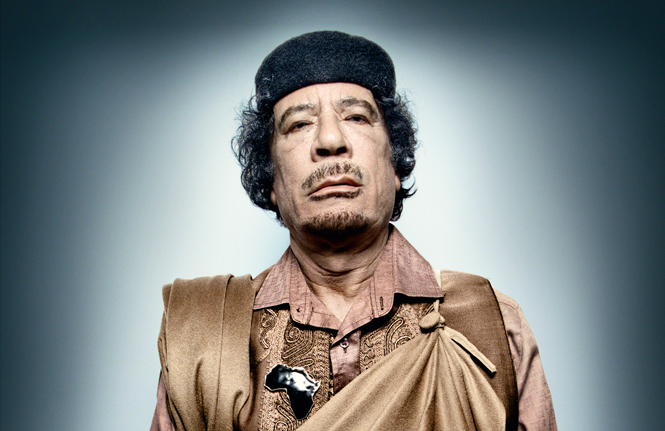
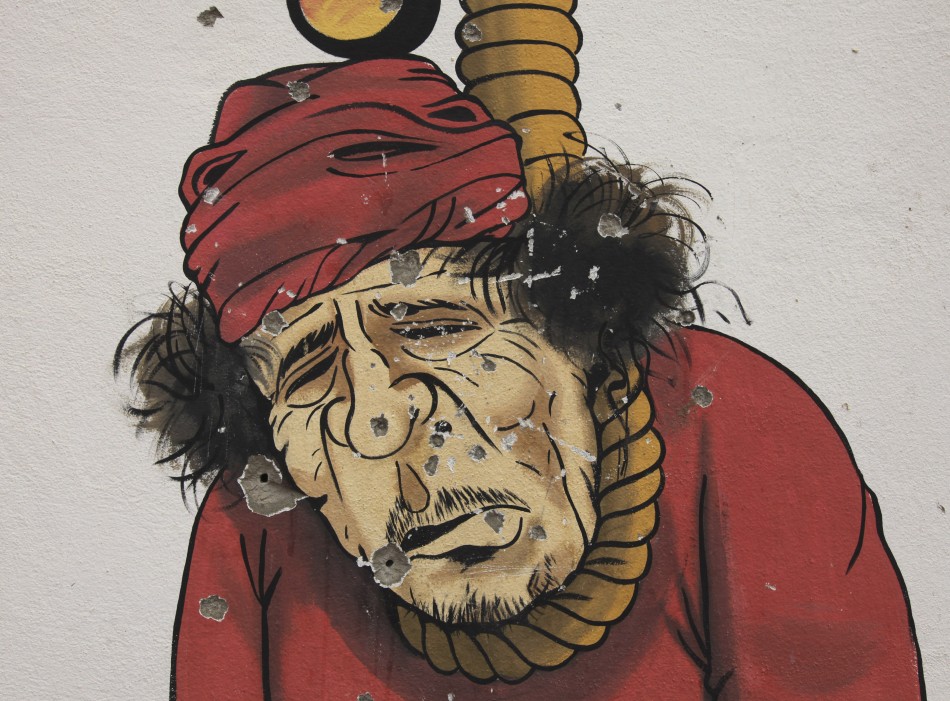
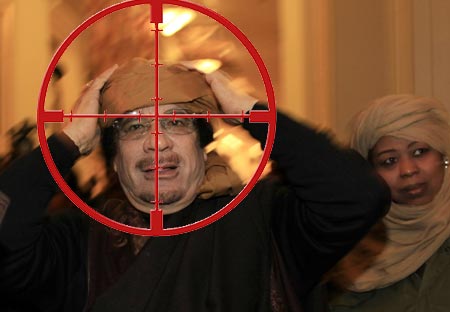
Is this the face of "justice"?

Many a practitioner, scholar and layman has argued that we live in a world where holding leaders accountable for committing international crimes – genocide, war crimes and crimes against humanity – has become a norm. The world has no place for impunity. Humanity and the international community, so it goes, no longer question whether to pursue justice and individual accountability for leaders like Muammar Gaddafi, Slobodan Milosevic or Charles Taylor, but how to achieve it.

Kathryn Sikkink has dedicated much of her academic life to communicating precisely this type of narrative. According to Sikkink there exists what she calls a “justice cascade” – the apparent increase in holding individuals accountable in states transitioning to democracy. Through this idea of the “justice cascade”, Sikkink is saying that, one, we increasingly expect and pursue individual accountability and two, that we indeed should. In short, holding individual leaders who commit large-scale human rights violations accountable is an entrenched element of international politics – it has become a norm.

Last night I had the opportunity to attend a keynote speech given by Sikkink, addressed to a crowd of international relations theorists at the annual Millennium Conference. In the address, Sikkink promoted her new book, bearing the name of her above-stated hypothesis: “The Justice Cascade”. In the question and answer period, Professor David Chandler challenged Sikkink by suggesting that actual state practice points to precisely the opposite of a “justice cascade” and, in fact, rather approximates an “injustice cascade.”

In his challenge Chandler summarized a rather disturbing trend in international criminal justice: Milosevic was given a trial, and while critics have exposed some flaws in the trial, Milosevic’s was largely a fair trial in the sense that he was given the opportunity to argue his case. Subsequently, in 2004/2005, Saddam Hussein was put on trial in Iraq, a process that is largely recognized as having been little more than a sham trial. His hanging, the result of a death penalty handed down to him by the Iraqi tribunal hearing his case, is often criticized as having denied Hussein the opportunity to demonstrate how the US had cooperated with him in the past. Of course, we now have Gaddafi who never reached the courtroom, despite having been captured alive.

My question is simple: does this trajectory suggest a knee-jerk reaction and challenge to the so-called norm of individual criminal accountability?

As I have argued previously, it is worth wondering – and being concerned about – whether the killing of individuals like Osama bin Laden and Gaddafi, as well as the dramatic increase in the use of drone strikes by the US is symptomatic of a shift in practice towards eliminating enemies rather than bringing them to the dock. What has disturbed many observers more than anything about this growth in extra-judicial killings is that it is being framed as “justice” and thus brings the “justice” served by assassinating and killing enemies into the same moral space as the “justice” served by holding individuals to account by trial for their role in orchestrating and perpetrating atrocities. Continue reading

Posted in International Criminal Court (ICC), Justice, Libya, Libya and the ICC, NATO, Osama bin Laden, Osama bin Laden and international law, Slobodan Milosevic, The Tripoli Three (Tripoli3) | 8 Comments

Gaddafi’s Death: What now? What Justice?

Gaddafi is dead (Photo: Gaddafi: Our Best Enemy)

When Col Muammar Gaddafi said earlier this year that he would “fight to the death” in the face of the revolution taking place in Libya, he wasn’t joking around. Flashing across the screens of virtually every news program today have been images of the fallen dictator who died today after his last Libyan holdout of Sirte fell.

Gaddafi, as readers of JiC will know well, was being pursued by the International Criminal Court. His death – once independently verified – will bring the ICC’s investigation into his role in the brutal oppression during the Libyan “Arab Spring” to an end. His death also saves the West and Libya from dealing with some very difficult questions and embarrassing revelations. But is it justice?

The NTC Celebrates Tonight

For Libya, it makes the question of holding Gaddafi to account a moot point. The country’s National Transitional Council (NTC) had said it would try Gaddafi in Libya, something met with skepticism by many in the human rights and international law community. With his death, the pesky question of how and when to try Gaddafi is irrelevant.

It is also important to remember that key members of the NTC were very close to Gaddafi during his brutal rule. Some of their shady secrets will now surely lie with their former boss, six feet under.

A fighter loyal to Gaddafi lays, killed near the drain pipe where Gaddafi allegedly was found hiding (Photo: AFP)

However, killing Gaddafi may have been a missed opportunity to demonstrate – to Libyans and the world – that the rule of law would be a cornerstone of the new, post-Gaddafi Libya. While throngs of Libyans are understandably elated with news of their tyrant’s demise, they would surely have been similarly thrilled to see him in the dock, facing his victims.

The West Sleeps Well Tonight

For the international community, particularly Western states, there’s little doubt that they would find some comfort in knowing Gaddafi will never be in the dock. The dreadful irony of the conflict in Libya is that precisely the same states that have intervened to remove Gaddafi from power on behalf of humanity had been responsible for propping up his regime for years. These Western states have artfully dodged any serious scrutiny into their role in ensuring that Gaddafi had the military, political and economic capacity to oppress the people of Libya. Further, the conflict has shed light on serious breaches of conscience by the US and the UK in particular.

By killing Gaddafi, the obvious truth is that he will never appear before any court to defend his actions or to explain them. He will thus never have the chance to disclose how so many of the weapons and so much of the money he had, he received from the West. Moreover, Gaddafi’s death will, in the popular imagination and amongst most Western polities, close the book on Libya’s transition and, in so doing, put to rest any public scrutiny into the West’s role in pre-revolution Libya.

Libyans celebrate Gaddafi's demise (Photo: AFP)

What Really Happened?

The amount of contradictions in accounts regarding Gaddafi’s death are worrying. While the videos proliferating around the internet have not been independently verified as authentic, they do appear to confirm that Gaddafi was captured alive. They also squash any notion that he was being taken in an ambulance to be treated. Most worryingly, the videos show Gaddafi being kicked and dragged through the streets of Sirte – whether dead or alive, it’s not clear. Continue reading

Posted in Human Rights, International Criminal Court (ICC), Justice, Libya, Libya and the ICC, Middle East, Osama bin Laden, Osama bin Laden and international law, The Tripoli Three (Tripoli3), United Kingdom, United States, War crimes | 8 Comments

Revisiting the Peace-Justice Debate in northern Uganda

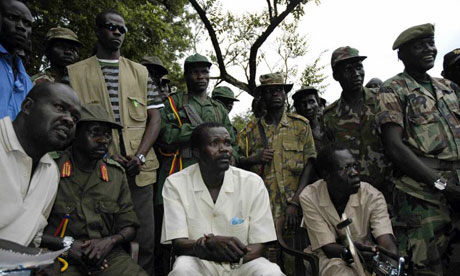
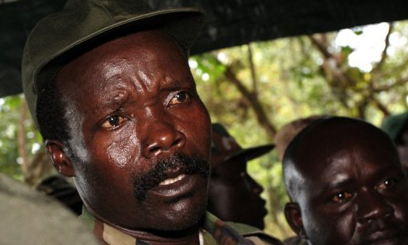
LRA leader Joseph Kony surrounded by senior LRA combatants. This photo was taken as peace negotiations to resolve the conflict in northern Uganda were ongoing.

Perhaps no nation has witnessed so impassioned a debate on the relationship between peace and international criminal justice as Uganda. Northern Uganda, a case many believed the Court could “cut its teeth” on, sparked a fierce discussion, popularly referred to as the “peace versus justice debate”. This debate not only animated domestic politics but also the international discourse grappling with the effects of pursuing international criminal justice on the establishment of peace.

The debate on the relationship between peace and justice largely remains harshly dichotomous and black-and-white. Either international criminal justice fundamentally disrupts the potential for creating peace or it is an absolute necessity for it. The attempted middle-ground which calls the peace-justice dichotomy “false” rarely offers any explanation as to why it’s false. Northern Uganda may beour best opportunity to move beyond the rigidity of the peace versus justice debate. This post is an attempt to explain why this is the case by making two broad arguments: first, that the effects of the ICC on narratives regarding the dynamics and causes of conflict has profound implications on attitudes towards the relationship between peace and justice; and second, that the effects of the ICC on pre-negotiation dynamics as well as on negotiations themselves are distinct and should be analyzed as such.

On Narratives, Justice and the Dynamics of Conflict

The LRA are vile and brutal terrorists led by a mystical and crazed socio-path, named Joseph Kony. They have waged an atrocity-ridden war against a legitimate, democratic government with a liberal economy and which is a trusted regional partner in the war on terrorism. In a nutshell, that is the mainstream narrative of the 25-year old war in northern Uganda. It combines grains of truths and blatant misrepresentations, but I’ll be damned if it doesn’t sound convincing. This narrative clearly lays out who is to blame, who is guilty and who we ought to support. But it simply does not resonate with the people of northern Uganda nor reflect their lived experiences. It also does not make much sense to those who have critically examined the conflict between the government and the LRA.

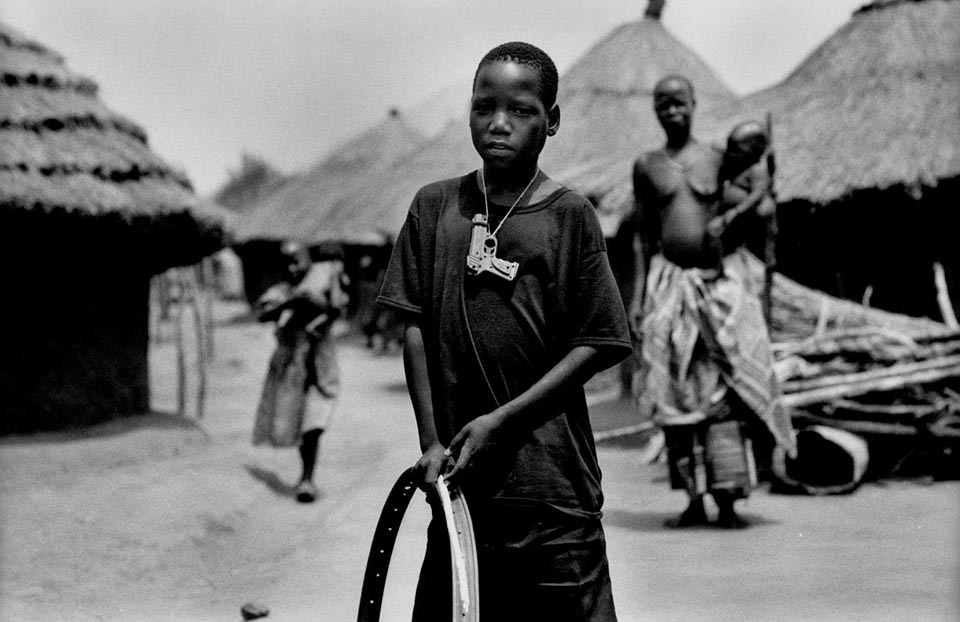
An Acholi child plays with an old bicycle in one of Uganda's internally displaced camps (Photo: Thomas W Morley)

There is zero doubt that the LRA have conducted war with the most vicious and egregious tactics. This is beyond contention, even amongst the harshest critics of the ICC’s involvement in Uganda. Adam Branch, an outspoken opponent of the Court’s role in the conflict, has maintained that the LRA is guilty of “terrorist subjugation” and “unambiguously evil” and is “synonymous with a reign of terror against children”. Yet, it is impossible to study the subject and not come across vivid accounts of government atrocities and human rights abuses. However, to date, there is no evidence that these crimes have been properly investigated by the ICC’s Office of the Prosecutor.

It may be that many (although not all) of the government’s worst violations of international criminal law were committed prior to 2002, beyond which point the ICC cannot investigate. This, however, brings up its own political problem for the ICC: should the Court investigate crimes committed in conflicts with origins and dynamics reaching far before 2002?

As I have argued before, the ICC should think twice about investigating situations with roots long before July 1st 2002. If the ICC is understood as an institution which needs both legal and political legitimacy in order to be successful, investigating only the last bits of a conflict may be a recipe for disaster. It may make sense to international lawyers and diplomats in their New York offices that ICC investigations of events prior to July of 2002 are impossible. But it is nothing short of arbitrary to the citizens of northern Uganda. Surely that matters.

The result of the decision by the ICC to intervene in a complex conflict which long precedes 2002, and not investigating the Government of Uganda has played into the misinformed narrative outlined above. The LRA, in this context, are not only brutal terrorists but international criminals fighting against an internationally supported government. The attention brought by the Court’s involvement in the situation in Uganda and especially its arrest warrant for Kony were no doubt important in drawing the attention of otherwise disinterested parties to the conflict. But in the world of conflict resolution, starting with an inaccurate premise of the nature and dynamics of a conflict is surely a recipe for failure.

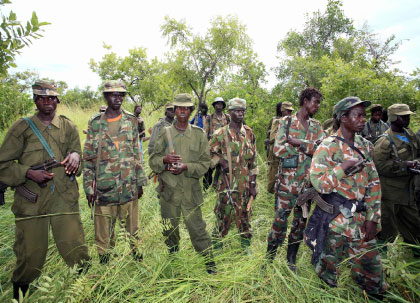
LRA rebels in "the bush"

Before and After: Justice and Peace Negotiations

How does justice affect the possibility of getting warring parties to hold official peace talks? How does it affect what happens at the negotiating table? It is my contention that, while the “peace versus justice” debate paints no distinction, these phases in a peace process are affected by the pursuit of international criminal justice in clearly different ways. Continue reading

Posted in Human Rights, International Criminal Court (ICC), Justice, Lord's Resistance Army (LRA), Peace Negotiations, Peace Processes, Peacebuilding, Transitional Justice, Uganda | 8 Comments

US Sends 100 Troops to Uganda to Hunt Kony: Some Thoughts

LRA leader, Joseph Kony

Late last week, President Obama informed the Speaker of the House of Representatives, John Boehner, that he had ordered 100 troops to be deployed to Uganda with the mission of “removing” the Lord’s Resistance Army leader Joseph Kony from the battlefield. The announcement has sparked quite a bit of confusion about why Obama would choose to deploy these troops now and what it means for American foreign policy as well as the war against the LRA. The ensuing response from media outlets and observers has been a number of contradictory statements most of which ignore key questions surrounding America’s latest African foray. This is a rough attempt to enter the fray and bring up some issues that have been neglected in opinions offered so far.

A Contradiction of Responses

On the one hand, some have said the provision of troops is unusual and remarkable. The Independent has a piece which characterizes Obama’s decision as a “surprising intervention.” Max Fisher maintains that it is a small but important shift in US foreign policy, because the Obama administration doesn’t have security interests in Uganda. As Fisher sees it, the US has no interests in what happens to Kony since the LRA “could go on killing and enslaving for decades — as they well might — and the American way of life would continue chugging along.” Others argue that Obama’s decision is symbolic of a new interventionist attitude with the finger prints of “liberal hawks” – Secretary of State Hilary Clinton, US Ambassador to the UN Susan Rice, and adviser Samantha Power – all over it. In contrast, Joshua Keating believes Obama’s “announcement is actually a bit less than meets the eye” given the long-standing cooperation between the US and Uganda in regional military affairs.

So, who is right? Does this mark an important shift in the “hunt for Kony” or is this just another unremarkable development? My short answer is that it’s impossible to tell at this time but a healthy dose of skepticism is warranted. There are more questions to be asked at this point than answers to be given.

It is important to place Obama’s decision in context. The US recognizes the LRA as a terrorist organization and consequently views the Government of Yoweri Museveni as an important ally in the Global War on Terror. As such, the US has provided tens of millions of dollars worth of military “aid” to Uganda and “non-lethal military training”, which the Ugandan government has used not only to fight the LRA but to engage in areas where the US has resisted engaging in militarily, notably Somalia. As Matt Brown of the Enough Project concedes:

“The U.S. doesn’t have to fight al-Qaida-linked Shabab in Somalia, so we help Uganda take care of their domestic security problems, freeing them up to fight a more dangerous – or a more pressing, perhaps – issue in Somalia. I don’t know if [the Enough Project] would necessarily say that but it’s surely a plausible theory.”

The timing of Obama’s announcement was quite interesting and may be indicative of shifting political tides in Uganda. Acting Foreign Minister Henry Okello Oryem maintains that Uganda has been asking for US assistance for 20 years. So why did they manage to get it now?

US training session in Nairobi, Kenya

Hey G.I. Joe – Welcome to Uganda but Don’t Slip on the Oil

Uganda has recently found large oil reserves in the country and in recent months, President Museveni has tightened his grip on an emerging industry which, estimates suggest, may produce between 2.5 billion  to 6 billion barrels of oil. Uganda’s oil has been directly linked to the country’s security. According to an astute report in Uganda’s Independent, ‘Oil Could Cause War‘, significant deposits of oil in the Western part of the country are close to LRA-active regions of the DRC. Further, a WikiLeaks cable (dated March 13, 2008) describes a request by the Ugandan government to the US government “for assistance to train and equip a lake security force which could enforce Uganda’s territorial waters, protect Uganda’s oil assets, and reduce violent incidents.” While it was almost entirely ignored, allowing commentators like Fischer to conclude that the US has no interests in Uganda, it would not be surprising if oil played an important role in the US government’s decision to send troops to Uganda. As the co-director of Foreign Policy in Focus, Emira Woods, stated:

“It goes back to one thing: oil. Lets remember Uganda has oil. It changes the calculus always with US foreign policy when it is a country that seems to be rich with this resource that has become almost an addiction for the US and the global economy.”

Be Careful: This is No Easy Mission

Don’t expect miracles just yet. Even if we discount reports that Kony is in Darfur (something former LRA rebel commanders confirmed to me), the areas of South Sudan, the Democratic Republic of Congo (DRC) and the Central African Republic (CAR), where he may be, has amongst the least developed infrastructure and is perhaps the most lawless region in the entire world. While early reports suggest that the troops may travel outside of Uganda (something they would have to do to track Kony), it’s important to remember that they will need agreements with neighbouring states – not just Uganda – to do so. While the four LRA-affected countries have agreed to work together to fight the rebel group and appeared to welcome the decision to deploy American troops, it’s not yet clear to what extent US soldiers will be allowed operate on their soil. Additionally, the mainstream narrative which calls Kony a “lunatic”, “mystic” and a “bizarre terrorist” belies the LRA’s remarkable ability to avoid capture and death for almost thirty years. Getting one hundred troops into LRA affected areas to find Kony is like expecting to find a needle in a hay stack. Continue reading

Posted in Economics of Conflict, Justice, Lord's Resistance Army (LRA), Uganda, United States | 11 Comments

ICC Complementarity, Positive Peace and Comprehensive Approaches in Transitional Justice

Dealing with the legacy of violent conflicts is full of challenges. The photo shows human bones and skulls of victims of the Khmer Rouge in Cambodia. (Heng Sinith/Associated Press)

Even though much of the literature on Transitional Justice still focuses on unhelpful dichotomies like peace versus justice or trials versus amnesties the concepts that are being applied to tackle the legacies of violent conflicts in practice are increasingly comprehensive. With comprehensive approaches I mean transitional justice concepts that acknowledge the need for different approaches to meet the various challenges that societies in transition from conflict face. Key issues that are often named in the context of transitions from conflicts are reconciliation, reintegration, accountability, creating a historical record, meeting the needs of victims etc. Recognising these issues and dealing with them is seen as important to advance towards a durable peace. This approach is in line with the notion of positive peace originally introduced by Johan Galtung.

Positive peace is more than the absence of violence. It also takes into consideration in how far the root causes of conflicts have been tackled and whether the relationship between former conflict parties has become constructive instead of confrontational. Still, there is no consensual definition of positive peace. Scholars agree that positive peace is incompatible with all forms of terror, atrocities and arbitrariness. In its widest definitions it excludes all forms of personal or structural violence and demands justice, integration and satisfaction of the fundamental needs of the people. To meet this threshold of positive peace, the issues of reconciliation, accountability and so on mentioned above have to be dealt with. This is increasingly being recognised by international actors like the United Nations. For example, then Secretary-General Kofi Annan stated in his report on ‘The rule of law and transitional justice in conflict and post-conflict societies’:

‘Our experience confirms that a piecemeal approach to the rule of law and transitional justice will not bring satisfactory results in a war-torn or atrocity-scarred nation.’

Kofi Annan was among the first international actors to acknowledge the need for comprehensive approaches to transitional justice

When it comes to meeting the needs of societies emerging from conflicts, most authors agree today that particular mechanisms are more suitable to meet specific needs. For example, a well conducted truth commission with a comprehensive and widely circulated report is probably better suited to contribute towards creating a truthful historical record of past abuses and conflicts than a criminal trial. After all, the decision whether information on past abuses is included in the courtroom is taken on the basis of whether it contributes towards clarifying a particular case and not in how far it represents a historically correct picture. Accountability on the other hand is arguably better delivered by formal judicial proceedings that end in a verdict or an acquittal. As a consequence, it is becoming increasingly clear that focusing on a single transitional justice mechanism, like only having trials or only declaring an amnesty, is not enough. The situation in northern Uganda serves as a useful example how such comprehensive concepts of transitional justice could work in the future. Continue reading

Posted in Amnesty, Complementarity, International Criminal Court (ICC), Justice, Lord's Resistance Army (LRA), Traditional Justice Mechanisms, Transitional Justice, Truth and Reconciliation Commissions, Uganda | 4 Comments

South Asia’s First War Crimes Criminal Tribunal

JiC is happy to welcome Dawood Ahmed as a guest-poster. Dawood is a Solicitor (non-practicing) and a research associate at the Center on Law and Globalization. In his first post at JiC, Dawood introduces some of the key challenges facing the International Crimes Tribunal of Bangladesh. Enjoy!

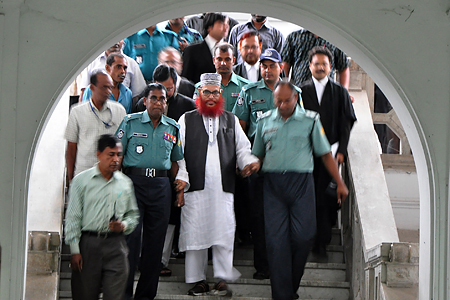
Jamaat-e-Islami leader Delwar Hossain Sayadee, center, leaves the International Criminal Tribunal for Bangladesh (Photo: AFP/Getty Images)

As the eyes of the international justice industry focused on Syria and Libya in these past few months, a rather important development in South Asia has remained under-discussed. After much delay, the aptly named International Crimes Tribunal of Bangladesh has this week charged its first suspect, Delwar Hossain Sayadee, with alleged war crimes committed during the country’s 1971 civil war, a conflict that eventually led to the secession from then West Pakistan (present day Pakistan).

For those unfamiliar with the history of Bangladesh, the country existed until 1971 as the eastern flank of Pakistan. During the independence war of that year, widespread inter-ethnic atrocities including rape, murder, arson and torture were carried out against the population of Bangladesh (or East Pakistan at the time); although in most cases, the main protagonist was the West Pakistani army and its ‘Razakar’ allies, it is true that the Mukti Bahini (Bengali liberation fighters) and their Indian supporters too carried out a significant number of atrocities against those of non-Bengali descent. While total estimates of numbers killed range between 26,000 (per Pakistani sources) and 3 million (per Bangladeshi sources), historians now generally agree that what transpired in those nine months of civil war can be labeled as genocide.

The tribunal has been established to try those who committed war crimes during that bloody conflict.

From a policy perspective, the tribunal is of particular interest because it marks a first in two important respects: it is not only the first war crimes tribunal to ever be established in a Muslim majority country but it is also the first such institution in all of South Asia, a region that is home to many under-reported but systematic human rights violations; examples being the Indian army’s suppression of the Kashmiri independence movement, Pakistan’s repression in Baluchistan and Sri Lanka’s human rights violations during its civil war against the LTTE.

Nevertheless, for all of its promise of setting a regional precedent, one must approach the issue of the court with a healthy dose of skepticism.

The initial criticisms leveled against the tribunal are many. First, there is the question of a less than transparent policy reversal: after the 1971 civil war, opportunities did indeed arise for trying those suspected of committing war crimes but these were deliberately forgone in the interests of achieving sovereign recognition and peace: 195 surrendered Pakistani officers were identified as suspected war criminals but were later repatriated to Pakistan without charge as part of a bilateral political compromise (Shimla Agreement) agreed between India and Pakistan. Continue reading

Posted in Amnesty, Asia, Bangladesh, Human Rights, Justice, War crimes | 2 Comments

Justice and Diamonds in Zimbabwe: Saving Kimberley from Itself

Andrew Jillions joins us again to discuss the Kimberly Process of diamond certification in the context Zimbabwe. As Andrew explains, the case of Zimbabwe risks undermining a process which, for all its faults, remains the best way to prevent the use of diamonds to fuel conflict and human rights abuses.

Zimbabwe Kimberly Process

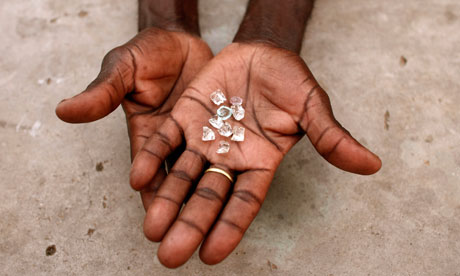
(Photo: Goran Tomasevic/Reuters)

For all the progress that has been made in enforcing international justice, there’s plenty of work still to do in making sure institutions designed to advance human rights protection actually do so. In this guise, look out for a ‘rolling set of salvos’ to be delivered in the coming weeks against the Kimberley Process by civil society groups. (The Kimberley Process (KP) is a joint initiative by governments, industry and civil society to halt the flow of conflict diamonds, instituting a certification scheme (KPCS) that imposes requirements on its members to enable them to certify shipments of rough diamonds as ‘conflict-free’).

The opening shot was the walk-out of the last meeting in June and the decision to boycott the upcoming plenary meeting. The trigger for this has been the organisation’s approval of the sale of diamonds from Zimbabwe’s Marange region, where there is evidence of widespread and systematic killings and “torture camps” run by the security services. This excellent Panorama documentary provides a harrowing account of this, as well as a depressing picture of the limits of international justice.

Zimbabwe Mugabe

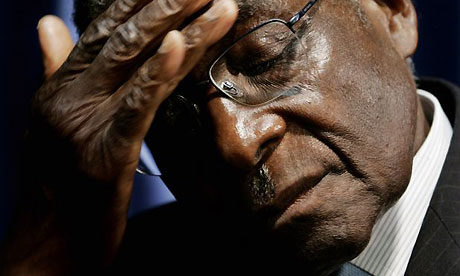
President of Zimbabwe, Robert Mugabe (Photo: Ed Betz/AP)

The current saga goes back to a roundly criticized November 2009 report by the KP’s man in Harare. Despite the evidence to the contrary, it concluded that there had been a ‘visible and verifiable’ improvement in the government’s record of compliance. Revealingly, as far as the KP was concerned, the fact that a review took place at all was occasion to celebrate. The effect of the report was first to allow two auctions of Marange diamonds in August and September 2010, and more recently to unilaterally lift the ban on Marange diamonds, despite opposition from the EU and US. This stamp of legitimacy opened the door to selling Marange diamonds on the open market. And things are moving quickly: the KP has since certified more than $200 million of Marange diamonds, with estimates that the decision will generate something like $334 million over the course of this year. Continue reading

Posted in Economics of Conflict, Human Rights, Justice, Kimberly Process, Zimbabwe | 2 Comments

No Surprise: Why Libya but not Syria

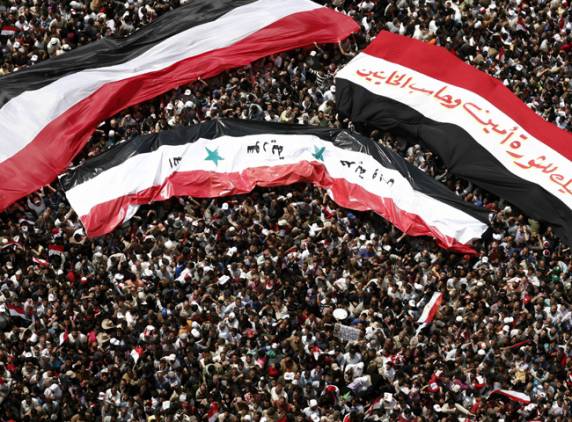
Syria justice

That the UN Security Council was unable to pass a resolution condemning Syria's crackdown on civilians may be disappointing but, sadly, comes as no surprise (Photo: AFP)

Despite high rhetoric being flung across the Security Council yesterday, Russia and China’s vetoing of the European-drafted resolution condemning Syria’s brutal crackdown on civilians should come as no surprise.

There are a number of political-tuned reasons to explain why this Resolution failed. The first relates to the disappointment and anger expressed by China and Russia at the intervention in Libya. Both have largely been shut out of any post-Gaddafi economic windfall and it is quite clear that they did not want to see a repeat performance. Second, unlike the case of Libya, there is very little regional support for any intervention – legal, military, economic or political – in Syria. In Libya, the Arab League, along with key African states initially stood behind the momentum to stop Gaddafi. Even key Libyan diplomats supported Western intervention. This regional support created an irresistible opportunity to create a new partnership with the Arab League and regional states through a common military and political engagement. This has not been the case in Syria. On the contrary, while Russia’s and China’s vetoing has garnered the most attention, the abstention by Syria’s neighbour, Lebanon (which holds the presidency of the Security Council) was just as illuminating.

Apart from these key differences in the dynamics of the cases of Syria and Libya, there is another, more nuanced issue to consider. Why is it that anyone would, indeed, expect UN Security Council member states to successfully agree to condemn or sanction Syria? The answer seems to me to be that there is a prevalent belief that because it happened in Libya, it was feasible for it to happen in Syria. This, however, relies on seeing Libya as a moment of fundamental change, rather than as an outlier, in the practice of international politics.

The extent of upheaval caused by the ‘Arab Spring’ is beyond doubt. But many (myself included) translated the social and political change in Tunisia, Egypt, Libya, Yemen, Bahrain and so on, into change in the behaviour of the world’s most powerful states. This didn’t appear to be a stretch: the citation of the Responsibility to Protect and the unanimously supported referral of Libya to the ICC were remarkable. Surely, this represented a new dawn in international politics and international justice! Continue reading

Posted in Bahrain, China, Crimes against humanity, Egypt, Human Rights, International Criminal Court (ICC), Justice, Libya, Libya and the ICC, Russia, Tunisia, UN Security Council, Yemen | Leave a comment

Broadening Horizons: Ecocide, Famine and the “Other” Crimes

If you can’t see it, it can’t and doesn’t really matter that much. That seems to be the attitude of many of us to key issues of international concern. Take for example, a core contradiction in many people’s hesitation to support the adoption of a carbon tax to combat climate change: it’s fine to tax the trash we put out on the curb, but it’s not fine to tax the trash we put in the air.

The state of international criminal law privileges direct forms of violence. This is an extension of the dominant understanding of peace as negative peace, the absence of large-scale, direct forms of violence. The holy trinity of international crimes – war crimes, crimes against humanity and genocide – constitutes physical violence perpetrated against victims.

While the criminalization of some acts which “shock the conscience of humanity” is surely one of the most important developments in contemporary international politics, it has, perhaps inevitably, come at the expense of more structural or indirect forms of violence. Famine becomes something to support with donations and sympathy but not an issue for which anyone can be held responsible. Neglecting to protect vulnerable populations in the wake of environmental disasters becomes a challenge for humanitarian aid rather than an issue of criminal neglect. The real and potential destruction of peoples’ livelihood through environmental degradation becomes a matter of business, job-creation and green politics and not a matter of justice – even when it risks eviscerating entire nations.

Indeed, what about the more silent killers which threaten the life and livelihood of millions of people?

There are those who have begun to challenge the monopoly of international crimes as direct forms of violence. This past week in London, a mock trial was held at the British Supreme Court where top lawyers played out two cases: one concerning the extraction of oil in Canada’s notorious tar sands and one regarding BP’s disastrous oil spill in the Gulf of Mexico. The charge? Ecocide, defined by its most forceful champions, Polly Higgins as:

“The extensive damage, destruction to or loss of ecosystems of a given territory, whether by human agency or by other causes, to such an extent that peaceful enjoyment by the inhabitants of that territory has been severely diminished.”

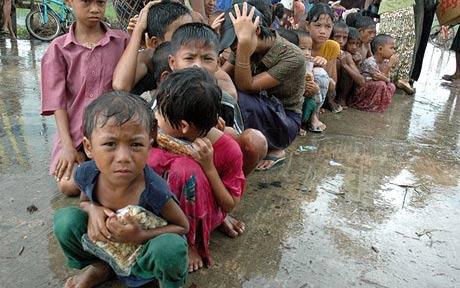
Burma crime against humanity

(Photo: AFP/Getty)

While the notion of ecocide is an attempt to criminalize large-scale environmental degradation, it is critical to highlight, in this context, how environmental degradation can create human death and suffering. This is not to be anthropocentric. But a much under-examined reality within international justice is the indirect, structural violence that is inflicted when states shirk their responsibilities to protect citizens from the effects of environmental trauma – whether from ecocide or natural disasters.

Continue reading

Posted in al-Shabaab, Burma/Myanmar, Crimes against humanity, Ecocide, Environment, Famine, Human Rights, Justice, North Korea | 4 Comments