Justice in Syria: Underground Funding of the ICC

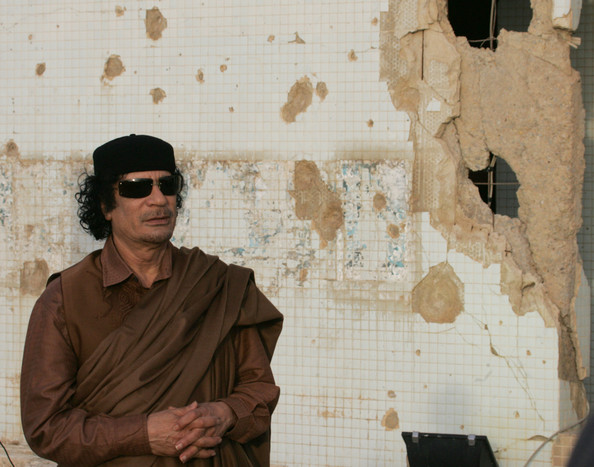
Brothers in arms, and crimes? (Photo: http://www.presidentassad.net)

According to Borzou Daragahi of the LA Times, at least one unnamed Western government is funding a fact-finding operation in Syria in order to gather evidence which may eventually be used against Syrian President Bashar Assad in a case before the International Criminal Court.

When considering why Libya and not Syria was referred to the ICC, it is hard not to be stumped. There is no good answer. After all, if we are to believe what human rights groups say – that a crime against humanity is a crime against humanity, regardless of where it takes place –  then surely the treatment of international crimes across contexts should be similar. Does the divergent treatment of the gravest of crimes, with only a chosen few subjected to international justice, not demonstrate the uncomfortable reality that some forms of suffering and violence are more important and worthy of attention than others? In the wake of indictments issued by the ICC against the Tripoli Three, even the Gaddafi regime appeared to have noticed this uneven application of justice.

There has been no shortage of speculation on the reasons for the divergent (some would simply describe it as hypocritical) international responses to the alleged atrocities being committed in Libya and Syria: the Western powers have spent their political capital on intervening in Libya; there is little support from regional organizations for an intervention in Libya; perhaps the ICC is experiencing “judicial overstretch” with its ever-expanding case-load; and the ICC simply doesn’t have enough money to investigate crimes, particularly in the wake of new investigations in Libya and Ivory Coast.

Syria ICC

(Photo: © Sham News Network)

It is in this context of a general lack of international political will and a lack of funds that reports regarding a clandestine funding of a fact-finding mission in Syria have emerged:

“At least one Western government is bankrolling a project to gather evidence that could be used to indict Syria’s President Bashar Assad at an international tribunal over his crackdown on the country’s democracy movement, said a jurist leading the effort and a diplomat whose government is sponsoring it.

The fact-finding mission mostly involves assembling testimony from Syrian refugees that conforms to standards of international law necessary to sustain a war crimes trial at the International Criminal Court

Continue reading

Posted in Funding, Human Rights, ICC Prosecutor, International Criminal Court (ICC), Libya, Libya and the ICC, Syria | 8 Comments

JiC News: Looking for Guest Bloggers; Help Choose JiC’s Logo

Dear friends,

Just a quick notice that JiC is looking for guest posters and guest bloggers. Plans are underway to introduce a few new writers who will hopefully become regular contributors. If you are interested in writing a single post or become a more regular contributor, send an e-mail to: mark.s.kersten[at]gmail[dot]com and please copy JiC’s editor, Elke Schwarz on the e-mail at: elkeschwarz[at]mac[dot]com

Your proposal should include a little bit about your background and details regarding your experience with issues concerning conflict resolution, international justice or related areas and at least one suggested topic you would like to write a post about. We look forward to reading your submissions!

On another note, I have designed a few possible logos for JiC (see photos, below). I would be grateful if you could share your feedback on them and which you think should be selected. You can vote on the logos below. Also, if you would like to follow JiC on Facebook, now you can (click here)!

JiC Logo 1

JiC Logo 2

JiC Logo 3

JiC Logo 4

Posted in JiC News | 1 Comment

An Argentinean Judge Judy: Moreno-Ocampo’s Retirement Plans?

Judge Judy Judge Ocampo?As many readers will know, this coming December the International Criminal Court’s Assembly of States Parties (ASP) will come together to elect a new Prosecutor. Posts here at JiC have considered the criteria of the next Prosecutor and some potential candidates.

But while many, including myself, are asking: who will be the next ICC Prosecutor, few are asking what the current Prosecutor, Luis Moreno-Ocampo, will do next.

Remarkably, the following clip has escaped my knowledge for the few years that I have been following the ICC. Prior to becoming the ICC’s Prosecutor, Luis Moreno-Ocampo was many things. He was a deputy prosecutor on one of the biggest war crimes trials in history in his native Argentina. He was also a professor at Harvard. For a time he was even legendary soccer player/footballer/diva Diego Maradona’s lawyer. However, as this clip attests, perhaps the best and most widely known and high-profile international prosecutor in all of time, was once the Argentinean version of Judge Judy, which – if I understand correctly – is titled “Forum: The People’s Court” (Thanks Mariana!):

This is just a little mid-week humour. I promise something more serious soon!

Posted in Argentina, Humour, ICC Prosecutor, International Criminal Court (ICC), Next ICC Prosecutor | 4 Comments

Peace, Justice and Libya – the Gaddafi who Threatens it All?

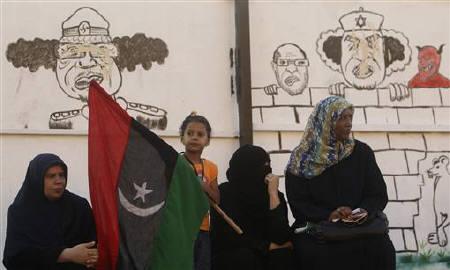
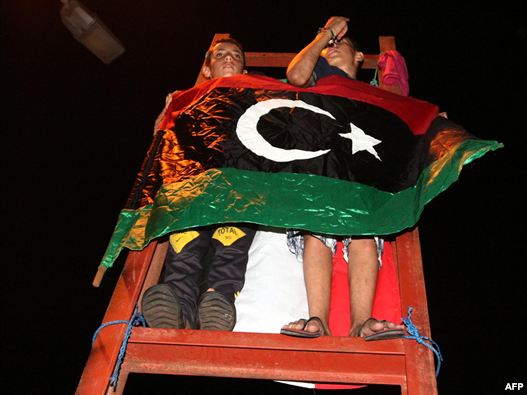
A mural depicting Col. Muammar Gaddafi being "kicked out" of Libya (Photo: AFP)

It is nothing short of stunning how little we hear about Gaddafi these days. Articles in papers, posts on blogs, discussions amongst friends – virtually everywhere, even in discussions about peace and justice in Libya, Gaddafi is no where to be seen or heard. It is just bizarre.

I realize that, in reading the above, readers may think that I have gone off the deep-end. After all, few people have commanded so many headlines in recent weeks and months as Gaddafi! The focus of this post, however, is not Colonel Muammar Gaddafi but rather his son, LSE alumnus and fellow ICC-indictee Saif al-Islam Gaddafi. It is not simply that his role in peace negotiations and his fate in a post-conflict Libya remain unclear – Saif’s role and fate have been entirely ignored.

Many observers have been increasingly agitated by the about-face of the Western states in Libya. Where once they presented themselves as stewards of international criminal justice, demanding that Col. Gaddafi be detained and brought to the ICC, now they are suggesting Gaddafi can remain in Libya with a de facto amnesty. In a New York Times op-ed, Richard Dicker, the director of Human Rights Watch, tackled the issue:

“After setting the wheels of justice in motion, all Security Council members — and these three countries in particular — should be reaffirming the message that impunity is no longer an option, instead of proffering a get out of jail free card to end a military stalemate.”

The International Criminal Court predictably takes a similar stance.

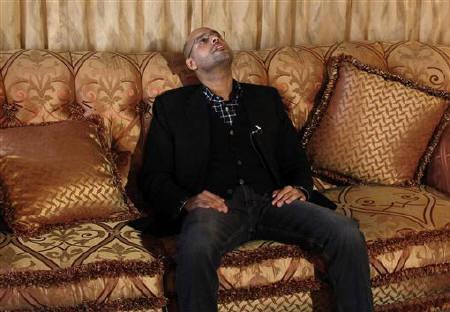
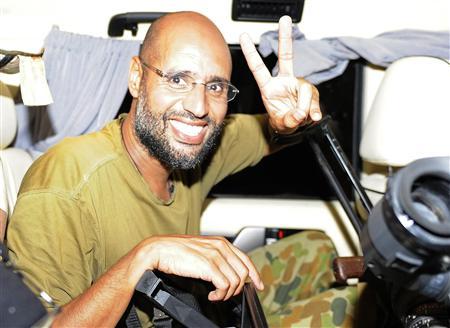
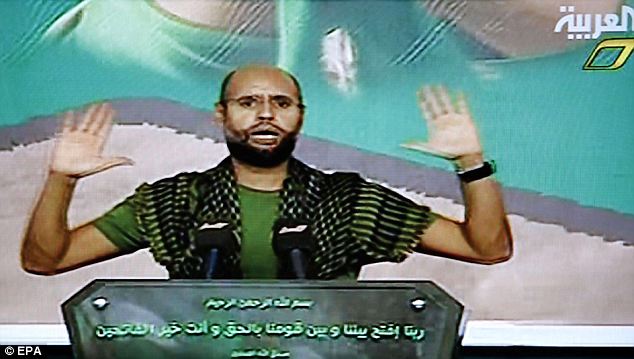
Will Saif al-Islam Gaddafi find himself on the other side of the negotiating table? (Photo: Chris Helgren/Reuters)

Unfortunately, both Dicker and the ICC fall into the same trap as so many other observers and reporters – exclusively focussing on the fate of Col. Gaddafi. While the world zeros in on father Gaddafi, however, it is his son, Saif al-Islam who may pose the greatest threat to international justice.

Continue reading

Posted in Amnesty, Crimes against humanity, France, International Criminal Court (ICC), Libya, Libya and the ICC, The Tripoli Three (Tripoli3), United Kingdom, War crimes | 4 Comments

The Kwoyelo Trial: Sorting out this Amnesty Business

Thomas Kwoyelo during his second hearing at the International Crimes Division of the High Court of Uganda, Gulu (Photo: Edward Echwalu)

Thomas Kwoyelo during his second hearing at the International Crimes Division of the High Court of Uganda, Gulu (Photo: Edward Echwalu)

An LRA Commander on Trial. But Should He Be?

Even before it started, the trial of former LRA commander Thomas Kwoyelo was controversial. His “day in court” was delayed for months; his application to the Government for amnesty was never answered; the claim that he had committed crimes in the context of an international conflict seemed at best unclear and at worst legally dubious, at least to some observers. But could Kwoyelo’s trial finally bring clarity to the amnesty question in northern Uganda?

There is little doubt that the single issue to cause the most controversy has been the question of amnesty. After being captured by government forces, Kwoyelo applied for amnesty under Uganda’s 2000 Amnesty Act. In brief, the Act was passed as a result of pressure from local civil society groups in northern Uganda in order to provide rebel fighters with an incentive to come out of the bush. The hope is that the promise of forgiveness through amnesty rather than punishment – legal or otherwise – can lure perpetrators back into society. Since its inception, thousands of combatants have received amnesty certificates although the number has dwindled to little more than a trickle in the past three years.

Fueling controversy in Kwoyelo’s case is the fact that the government’s Amnesty Commission has never provided Kwoyelo with an answer as to whether he can or cannot receive amnesty. Instead, his application is “pending”. Making matters worse – and more legally precarious – the same organization, the Directorate of Public Prosecutions (DPP) is both in charge of deciding whether Kwoyelo receives amnesty and prosecuting Kwoyelo. The conflict of interest is palpable.

As explained in a previous post, Kwoyelo’s lawyers believe that the prosecution has violated Kwoyelo’s constitutional right to equality before the law. Other LRA commanders of a similar rank have received amnesty and if Kwoyelo is tried, so too should other LRA commanders who have returned from the bush.

Last week, in the second, jam-packed hearing of Kwoyelo’s case at the International Criminal Division of the Ugandan High Court in Gulu, northern Uganda sided with the defense. After, by all accounts, less than pretty machinations by the defense team, the judges agreed that the interpretation of the Amnesty Law should be referred to the Constitutional Court.

Internally Displaced Persons Camp, Uganda

An Internally Displaced Persons Camp in northern Uganda (Photo: FBaroni06)

Ugandans have been rather quiet about the Kwoyelo trial and their opinions about his fate. Many follow the case with keen interest but expectations aren’t particularly high and there is an ever-present skepticism about the trial.

If Kwoyelo is successfully tried and thrown in the can for the rest of his life, most Ugandans I have spoke to wouldn’t be surprised. But many won’t see it as justice because of the amnesty question. The word “scapegoat” and phrase “used as an example” are often used.

If Kwoyelo isn’t tried and walks free, many say that justice too will not have been served. Even some of those who see Kwoyelo as a scapegoat will argue, in the next breath, that at least someone is in the dock and that just seeing Kwoyelo in cuffs is a relief to victims and survivors.

But in a twist of irony, the Kwoyelo case may yet give Ugandans a gift: finally sorting out the country’s amnesty law – who it applies to, who it doesn’t apply to, and why.

Amnesty in International Law: Crystalizing but not Crystalized 

While human rights organizations bemoan the use of amnesty laws, their standing in international criminal law remains unclear. Rather than a crystalized duty requiring all perpetrators to be prosecuted, many of these organizations are in the midst of what might be described as talking norms into reality.

With the creation of the International Criminal Court, it is often argued that amnesties for “those most responsible” are a violation of international law. But it’s worth noting that even the ICC’s Rome Statute is silent on the issue of amnesty laws, something which did not escape its authors.

Continue reading

Posted in Amnesty, Human Rights, International Criminal Court (ICC), Justice, Kwoyelo Trial, Lord's Resistance Army (LRA), Peace Negotiations, Uganda | 2 Comments

Law versus Politics in International Criminal Justice

Dear readers,

I am pleased to introduce to you Patrick Wegner. Patrick is a PhD student at the University of Tübingen and at the International Research School for Successful Dispute Resolution of the Max-Planck-Institute for Comparative Public Law and International Law in Heidelberg. He writes about the impact of ICC investigations on ongoing conflicts. Patrick has graciously agreed to guest-post at JiC on the nexus of international criminal justice, law and politics. Enjoy! 

‘There is little hope for the promotion of the rule of law internationally if the most powerful international body makes it subservient to the rule of political expediency.’ – Former ICTY Chief Prosecutor Louise Arbour

ICC Prosecutor at UNSC

ICC Chief Prosecutor Moreno Ocampo reports to the UN Security Council concerning the investigations in Darfur (Photo: http://wn.com/Sudan_ICC)

Law versus politics in international criminal justice

One of the most contested issues in pursuing justice in conflicts is the question to what extent political calculations play into the decision whether to prosecute or not in a particular case. This question is of special relevance for the work of the International Criminal Court (ICC), as it can not only decide whether or not to prosecute particular individuals, but also whether or not to start investigations in a particular conflict at all. Most people would say that legal and political considerations should be completely divorced when international criminal law is being applied. After all, fairness is a main criterion of justice which can only be guaranteed if the same rules are applied to similar cases irrespective of other considerations. But in international relations it might be difficult to guarantee that.

Unlike on the national level there is no overarching state power that guarantees the prosecution of crimes in the international arena. Whether investigations are initiated and whether they lead to arrests depends to a large part on a couple of powerful states within the international community. These states have their own priorities and interests, and international courts and tribunals are often merely one factor in their overall equation. The policies of these states have an impact on the prosecutions, and international prosecutors have to decide how to arrange themselves with these powers. An obvious example is the ICC’s dependency on its donor countries. Some say this dependency contributes to a selective approach in prosecutions, excluding allies of major donors. This is problematic since powerful states might try to use the ICC and other courts and tribunals as instruments to further their own aims. For example, there have been attempts to use both the International Criminal Tribunal for the former Yugoslavia (ICTY) and the ICC as levers of Western powers to apply political pressure on states like Serbia and Sudan. In the case of the Special Court for Sierra Leone (SCSL) the US is believed to have pressured Liberian President Sirleaf to support the indictment of former President Charles Taylor. While the prosecutors depend on the support of these states, close cooperation might lead to perceptions of a biased and political court, which will in turn have negative repercussions for the investigations. This is the case as the credibility of an international investigation in an ongoing conflict depends on being seen as neutral. If it is seen as a one-sided endeavour, it quickly becomes a contested issue among the parties and thus part of the conflict.

Charles Taylor in the Hague

Charles Taylor at his trial in the external facilities of the Special Court For Sierra Leone in The Hague (Photo: AP)

Already there are several authors like Mark Drumbl and Ramesh Thakur who criticise that international criminal law is championed by Western states but applied elsewhere, pointing out the de-facto impunity of the United States. This problem is further exacerbated because decisions to support investigations in conflicts are increasingly motivated by the moral indignation of citizens living in powerful Western states. The global media coverage of crimes committed in conflicts has led to growing demands of civil society groups all over the world to ensure criminal accountability for these crimes. Both in the case of the ICC investigations in Darfur as well as in northern Uganda there are strong domestic civil society movements in the US, pushing their government to intervene on behalf of the victims and to support the ICC.

Save Darfur

Civil society movements like Save Darfur mobilise domestic support in the US to call for more interventions in conflicts.

Continue reading

Posted in Darfur, Human Rights, ICC Prosecutor, ICTY, International Criminal Court (ICC), International Criminal Tribunal for Rwanda (ICTR), Justice, Serbia, Special Court for SIerra Leone (SCSL), Sudan, Transitional Justice, Uganda, UN Security Council, United States | 4 Comments

Negotiating Peace in Libya: What Happens to Justice?

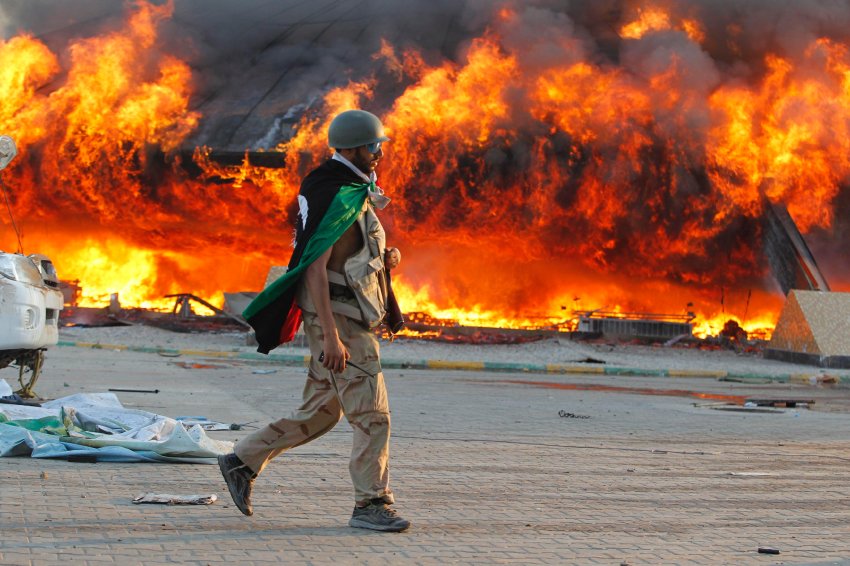
Waiting: a Libyan rebel stands as wreckage caused by a NATO attack burns behind him (Photo: Reuters)

Waiting: a Libyan rebel stands as wreckage caused by a NATO attack burns behind him (Photo: Reuters)

While diplomats from all interested parties may not be willing to describe it as such, the crisis in Libya has reached the negotiation phase. Foreign ministers crisscrossing around the world, dropping in on various national capitals, testing the waters by suggesting things like “Gaddafi can stay in Libya but not in power” and “he can be in an adjacent room during negotiations” – all of this is setting the table for the parameters of negotiations and setting the tone for what now appears to be an inevitable series of peace talks between the Gaddafi regime and the rebels’ National Transitional Council (NTC).

On some level, it is hard not to welcome peace negotiations in Libya with open arms and optimism. The crisis has dragged on for four months now and, should it continue to drag on, the only obvious and predictable dynamic will be that every day more Libyans will be killed and more of the country will be destroyed. To all parties involved, from NATO to the AU, the rebels and pro-Gaddafi forces, the only way this spiral of violence can be arrested is by negotiating a resolution to the conflict.

But the emergent zeal for a negotiated settlement also carries with it less optimistic elements. First of all, even if Western diplomats won’t admit it, the enthusiastic mobilization for peace talks means that the international community has lost confidence in the ability of the rebels to emerge victorious, even with NATO support. This may be because they believe the rebels are inherently incapable of successfully taking over Tripoli or because the sun is setting on NATO’s mission in Libya. As has been reported, tensions and cleavages have quickly emerged within NATO powers and amongst its regional allies. Regardless, the result, it would seem, is that the international community believes that some form of power-sharing agreement between the rebels and Gaddafi’s regime must be negotiated.

It is in this context that the waters are being tested for peace negotiations and the boundaries of potential negotiations are being drawn. The most pressing boundary is the role of Col. Gaddafi in the negotiations and his fate once talks have concluded. Both the rebels and the Western powers have drawn their line in the sand: Gaddafi cannot directly partake in negotiations nor can he remain in power following a resolution to the crisis.

Burning bus in Libya

The only guarantee, if the crisis in Libya continues, is that people will lose their lives and the country will continue to be destroyed (Photo: AP)

What to do about justice? As I have argued previously, to date there was no evidence that the ICC was in tension with peace in Libya. But with the onset of peace negotiations, the potential tensions between peace and international criminal justice become more obvious, clear and precarious.

In Libya, these tensions have begun to emerge on four levels:

1. Let’s Get this Straight: The Contradiction of Western Power Positions

A number of Western states involved in the conflict, notably France and Britain, have begun to refine their “exit solution” for Col. Gaddafi, saying that while he cannot be allowed to retain power, he may be allowed to remain in Libya.

Meanwhile, these governments have declared that Gaddafi must be arrested and brought to the Hague – although, dubiously, never in the same statements regarding peace negotiations. They were at the vanguard of the UN Security Council’s resolution to refer the situation in Libya to the ICC. It bears asking whether the persuasion of states like the UK and France in support of the referral was the result of a desire to instrumentalize the Court in efforts to put pressure on and marginalize Gaddafi rather than because of any steadfast conviction of the need to bring Gaddafi to justice. Regardless, by simultaneously holding these two contradictory and apparently mutually exclusive positions, these governments undermine the pursuit of international criminal justice.

Continue reading

Posted in African Union (AU), Amnesty, France, International Criminal Court (ICC), Libya, Libya and the ICC, NATO, Peace Negotiations, The Tripoli Three (Tripoli3), United Kingdom | 2 Comments

Transitional Justice: “Paradigm Shift or Hot Air?”

I recently attended the IASFM conference on forced migration outside of Kampala, at a picturesque resort perched above Lake Victoria (yes, there is irony there!). At the conference, numerous scholars presented pieces on “transitional justice” or “TJ”. Disarmament Demobilization and Reintegration (DDR) was “TJ”. Security Sector Reform (SSR) was “TJ”. Forced migration and resettlement, even, was referred to as “TJ”.

The term “transitional justice” has salience in describing particular historical periods and dilemmas. It was first used to describe the transitions in Latin America where authoritarian regimes fell, democratic forces took their place and there was a struggle regarding how to achieve justice in the transition from violence to peace. Today, however, “transitional justice” has seemingly lost this specific meaning. Instead, the term is now defined, as per the International Center for (you got it!) Transitional Justice (ICTJ) as:

“a response to systematic or widespread violations of human rights. It seeks recognition for victims and to promote possibilities for peace, reconciliation and democracy. Transitional justice is not a special form of justice but justice adapted to societies transforming themselves after a period of pervasive human rights abuse. In some cases, these transformations happen suddenly; in others, they may take place over many decades.”

Paradoxically, transition is no longer needed for transitional justice!

There is little doubt that transitional justice is developing as a discipline as well as a lens with which to explore and analyze issues of accountability in conflict and post-conflict settings. Transitional Justice now has its very own academic journal, its own center (ICTJ, as above) and numerous “networks” including the London Transitional Justice Network, of which I am a member. However, it is worth considering and indeed questioning whether this is not unproblematic.

Transitional Justice has exploded as an issue in international politics, with various centers dedicated to it, a journal and networks of academics and practioners.

At IASFM Brian Kagoro rather poetically declared that:

“There is no transitional justice in Africa because Africa has always been in a state of transition.”

Continue reading

Posted in International Criminal Court (ICC), Justice, Traditional Justice Mechanisms, Transitional Justice, Truth and Reconciliation Commissions, Truth Commission | 2 Comments

International Justice Day: Some Thoughts on The Year Ahead for the ICC

Greetings from Gulu, northern Uganda and happy International Justice Day to readers of Justice in Conflict!

Predicting which issues the Court will face in the next year may be a futile effort. Who, at this time last year, would have said that Ivory Coast and Libya would be under investigation by the ICC, that Tunisia, free of President ben Ali, would become a member of the Court, and that a regional conference on the ICC in Doha would see vehement proclamations of support for the Court from numerous Arab states? The past six months have perhaps been the most remarkable and dramatic in the ICC’s short history.

Here are a few thoughts on some of the challenges I believe that the Court will face in the next year as well as a few predictions.

1. Getting Indicted Leaders in the Dock
Whenever they are asked about why particular individuals like Gaddafi, al-Bashir and Kony remain free, the ICC and its most vehement supporters have typically fallen back on a line to the effect of: “Whether it’s tomorrow, in 10 days, 10 months or 10 years, these people will be brought to justice.” It is fanciful rhetoric and, indeed, many have given the ICC, as a novel institution, the benefit of the doubt. This leniency, however, will eventually run out if the Court is unable to put its biggest fish in the fishbowl that is an ICC courtroom. This is not only a challenge for the next year but a challenge that is ever-present at the Court.

I believe that over the next year, the ICC will put its first former head of state in the dock. Now, don’t go making travel plans to see Sudan’s Omar al-Bashir or Libya’s Muammar Gaddafi facing judges in the Hague. My prediction, rather, is that the former President of Ivory Coast, Laurent Gbagbo, will be brought to the ICC. The Court’s Pre-Trial Chamber is still deliberating on whether to open an investigation in Ivory Coast, but it would be politically irresistible for the ICC not to accept. Gbagbo has already been detained, meaning a transfer to the ICC would be relatively easy. The Office of the Prosecutor would no doubt rejoice in the ability to say: “the Court is able to Prosecutor head’s of state – just look at Gbagbo!” Given the nature of the post-election violence in Ivory Coast, particularly the fact that serious crimes were allegedly committed by both sides of the conflict, one-sided justice remains, of course, an ever-present danger.

2. Living with International Politics
The vast majority of the challenges which the ICC faces boil down to how the Court functions in a highly charged international political context. With two situations referred to it by the UN Security Council, the ICC’s relationship with the Council has never been more important. It is not obvious that the UN Security Council has not left the ICC “hanging” – referring difficult situations to the Court but doing little else to support or enhance the Court’s initiatives. Complicating matters further is that the ICC, rather than the Security Council, is the typical target for blame for the failure to achieve peace in Darfur and Libya.

Continue reading

Posted in Elections, Fatou Bensouda, Funding, Human Rights, ICC Prosecutor, International Criminal Court (ICC), Ivory Coast / Côte d'Ivoire, Justice, Libya, Libya and the ICC, Middle East, Next ICC Prosecutor, Peace Negotiations, The Tripoli Three (Tripoli3), UN Security Council | Leave a comment

Uganda’s Controversial First War Crimes Trial: Thomas Kwoyelo

Kwoyelo Trial

Thomas Kwoyelo, seen here after his capture, began his trial in Gulu on July 11 2011 (Photo: New Vision)

On July 11, I had the opportunity to attend some of the beginning of the first trial of Uganda’s International Crimes Division of the High Court, in Gulu, Northern Uganda. On the stand is Thomas Kwoyelo, a former senior Lord’s Resistance Army combatant. He is being tried on 12 counts and 53 charges dating between 1996 and 2009. So exhaustive is the list that it took almost two hours to read out as Kwoyelo stood subdued and at times appearing exhausted. A legal observer suggested that the prosecution “piled on” the charges against Kwoyelo in order to guarantee he is convicted on at least some counts, given that it will be difficult to prove many of the charges.

The trial began rather oddly. There were hundreds of people awaiting Kwoyelo’s appearance at the Court. He came in on a convoy. The first truck was filled to the brim with police officers and other alleged criminals heading to the Court. An extraordinarily odd moment unfolded with the presence of a marching band (see below). Here’s a clip of his arrival:

The International Crimes Division of Uganda’s High Court was set up in the wake of the Juba Peace Talks (2006-2008), the latest attempt to resolve the seemingly intractable conflict between the Lord’s Resistance Army and the Government of Uganda. In the context of widespread fears that LRA leader Joseph Kony would not sign the peace agreement unless the ICC arrest warrant against him was dropped, the International Crimes Division was viewed as an institution which could circumvent the need to bring LRA leaders to the ICC. In the end, however, Kony refused to sign the final Juba Peace Agreement. Nevertheless, the Government of Uganda moved forward and established the Division. Kwoyelo, who was captured in 2009, is the Division’s first defendant.

The biggest controversy at the trial has to do with whether or not Kwoyelo should receive amnesty. In 2000, the Government of Uganda passed the Amnesty Act which was intended to provide protection from prosecution as an incentive to LRA combatants who defected. The record of the Amnesty Act remains uncertain – some say it has been effective in getting LRA combatants to defect; others disagree. It has been a rather confused process. Those “most responsible” for atrocities in the LRA, including Joseph Kony, have been offered full amnesty by the government only to have it revoked and then offered again.

Continue reading

Posted in Amnesty, Human Rights, International Criminal Court (ICC), Kwoyelo Trial, Lord's Resistance Army (LRA), Southern Sudan, Sudan, Transitional Justice, Uganda, War crimes | 12 Comments