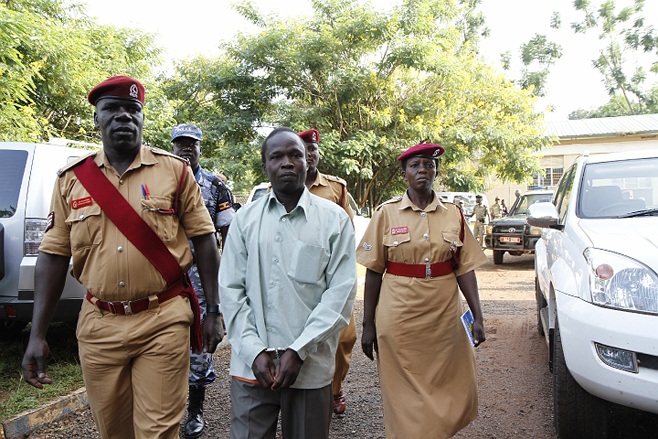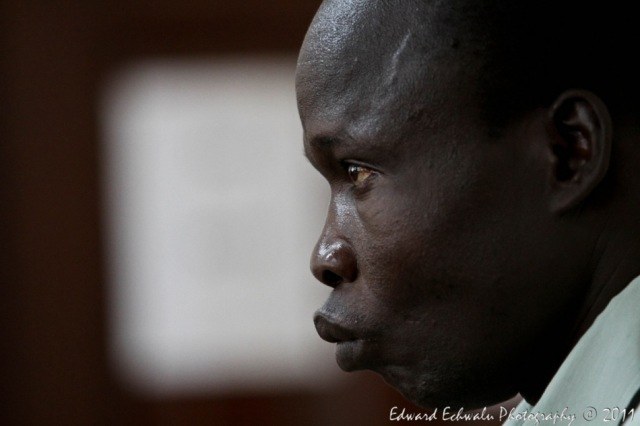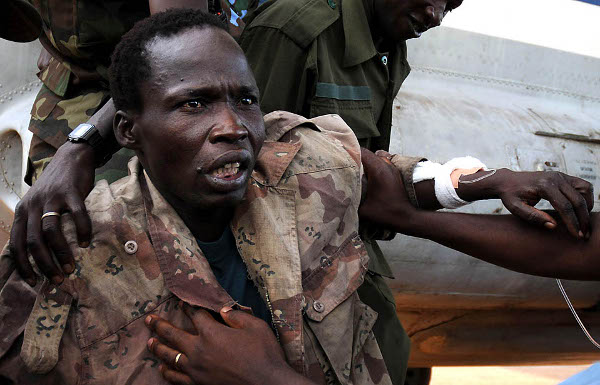

Judges at Uganda's Constitutional Court have ordered Thomas Kwoyelo to be granted amnesty and set free (Photo: Michele Sibolini, AFP)
This past summer, Uganda did something it had never done before: it put a rebel from the notorious Lord’s Resistance Army (LRA) on trial for international crimes. The trial of Thomas Kwoyelo marked yet another fascinating twist in Uganda’s experience of confronting past atrocities. The government’s Directorate of Public Prosecutions alleged that Kwoyelo was guilty of 12 charges of grave breaches of the fourth Geneva Convention and 53 counts of violating Uganda’s penal code. Last week, however, judges deemed prosecuting Kwoyelo unconstitutional and ordered him to be set free.
The primary obstacle to trying any former rebels in Uganda is the state’s Amnesty Law (2000) which was passed with the backing of powerful local northern Ugandan leaders. It effectively guarantees that any individual who either escaped or was captured and subsequently renounced rebellion can be granted reprieve from any prosecution. The trial of Kwoyelo raised, once again, unresolved issues about the use of amnesty laws in societies emerging from violent political conflicts characterized by widespread atrocities.
During three months of research, I had the opportunity to attend much of Kwoyelo’s trial and speak to many of those involved and affected by his case. From its inception, there was always something peculiar and uncomfortably political about the proceedings. The case opened, quite literally, to the tune of a marching band.
While rather clumsy in their approach – much to the chagrin of the presiding judges – Kwoyelo’s defense team argued that prosecuting their client was unconstitutional. Because other former combatants, including some who were senior to Kwoyelo, had been granted amnesty, trying Kwoyelo constituted an infringement of his right to fair treatment and equality before the law. Not being able to decide on the constitutionality of the case, the ICD referred it to the Constitutional Court, which agreed with the defense and ordered Kwoyelo to be granted an amnesty and be released:
“We are satisfied that the applicant has made out a case showing that the Amnesty Commission and the Director of Public Prosecutions have not accorded him equal treatment under the Amnesty Act. He is entitled to a declaration that their acts are inconsistent with Article 21(1) (2) of the Constitution and thus null and void. We so find.
We order that the file be returned to the court, which sent it with a direction that it must cease the trial of the applicant forthwith.”
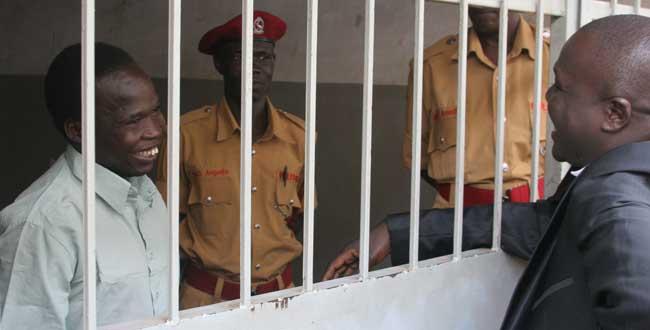
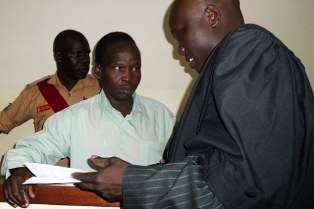
Kwoyelo speaking with one of his lawyers, Caleb Alaka, a former LRA delegate in the Juba peace negotiations (Photo: Arne Doornebal)
The importance of the Kwoyelo trial, both legally and politically, is rather obvious. Had Uganda successfully tried and convicted Kwoyelo (and they still might), it would have given the government a plank upon which to build a complementarity challenge to the ICC’s jurisdiction, something the government had expressed interest in doing. However, the spectre of a successful trial also instigated fears in northern Uganda. Former senior rebel commanders explained their uneasiness of potentially becoming the Government’s next targets for trial if Kwoyelo was denied amnesty. The instability incurred by revoking thousands of amnesties would be absolutely devastating to a region and people eager to move forward.
Of course, the granting of an amnesty and the defeat of the government’s case against Kwoyelo is equally as controversial. International human rights groups sent representatives to monitor the trial and provide assistance to government lawyers. Predictably, Human Rights Watch argued that amnesties “for crimes such as war crimes and crimes against humanity run counter to international law and practice.” In the wake of the Kwoyelo verdict, Amnesty International released a statement which declared that:
“What we are witnessing here is simply pervasive impunity for serious crimes and human rights violations…Neither Thomas Kwoyelo, nor others accused of committing war crimes should be granted amnesty.”
Human rights groups and fervent human rights advocates and scholars have been engaging in what amounts to talking amnesties out of reality. They claim not only that it is morally and legally wrong to grant amnesties but ominously warn that doing so is to risk ever becoming a functioning, liberal democracy.