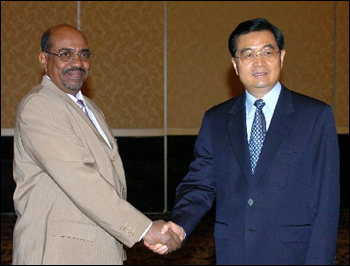
Chinese President Hu Jintao with Bashir
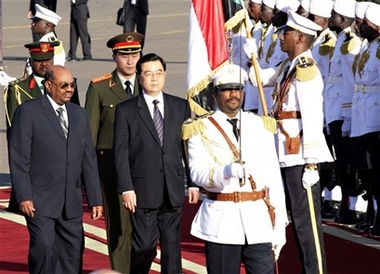
While Sudan’s President Omar al-Bashir won’t be visiting Malaysia due to “other engagements,” it looks very likely that he will, in fact, be visiting China. The Chinese Foreign Ministry has confirmed that Bashir, wanted by the ICC for his role in the crisis in Dafur, would visit later this month. The US has implicitly supported the decision.
That Bashir is seeking to make an official visit to another country, despite the ICC arrest warrant against him is, of course, nothing new. But, for a number of reasons, his upcoming China visit is much different than his foreign forays to Kenya, Chad, Djibouti and so on.
This post is an attempt to examine this potential trip in the context of the relations between all four key actors involved: China, Sudan, the ICC and the US.
China and Sudan
If Bashir visits China, it will be the first time since the warrants were issued that he has visited a member-state of the UN Security Council. Implicit in this is the fact that this will also be the first time he visits a state with international power of this magnitude . He will also be visiting one of the single largest investors in Sudan, especially when it comes to oil (see also here). There is a general trend – little analyzed and rarely considered in mainstream coverage of Chinese relations in Africa – that China often increases its dealings with states that the West has deemed illegitimate economic and political partners. China does not face such pressure. This is, at least in part, due to China’s repression of domestic human rights groups combined with the fact that its human rights advocates, understandably, focus on domestic respect for human rights. In short, this means that little focus is left for questionable international dealings by China. As such, it appears that every time the “West” closes up shop in states which fail to protect their own people, China sees an opportunity. This reality and the economic relationship between China and Sudan is central to any informed discussion on Bashir visiting China and future peace in Sudan – both in Darfur and between the South and North.

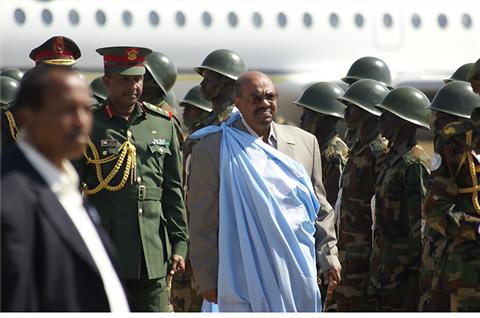
Bashir and Jintao
For China, the calculus seems pretty simple. It wants to protect its investments in China. To do so it needs two things. First of all, it needs good relations with the government. Second, and something rarely conceded by critics of Chinese foreign policy, it needs peace. With the exception of war economies, it is never good to do business while bullets fly and bombs fall. As the US State Department spokesperson rightly noted with regards to the visit and China’s privileging of economic interests over peace:
“it’s hard to have money and oil when there’s no peace.”
In a statement a Chinese Foreign Ministry spokesman said that:
“China would like to play a positive role in promoting Sudan’s peace and reconciliation, boosting the implementation of the Comprehensive Peace Agreement and safeguarding regional peace and stability”
This is very much true but omits: “…because our investments depend on it.”
China’s role in the international community is at a cross-roads. Its ventures into Africa, impressively chronicled by Chris Alden, have brought its traditional principles of national sovereignty and non-intervention into conflict with its increasingly overt political role. While the country’s advocacy of these principles may have always been more “myth than reality”, China will not be able to escape questions as to its increasingly frequent and ever-more politically intrusive international forays.
China and the ICC
The common view in the West is that China is a country to be weary of. There are uninformed undertones of paranoia that China will take over the world and destroy the liberal, democratic and human rights-respecting international system the West has painstakingly built following WWII. Much of this comes from a displacement of attitudes following the Cold War. The West, especially the US, no longer had an arch-enemy. Little understood and ever-growing, China presented – and continues to present – a perfect target for the politics of fear.
Drawing on these conceptions of China, there is a prevailing view that China is fundamentally opposed to the International Criminal Court. This popular presumption of China’s attitude feeds on the mainstream accounts of human rights violations in China, of which there are undoubtedly many, and on China’s consistent declarations that it holds the principles of national sovereignty and non-intervention as golden rules in the game of international politics. However, as I have explained before, China’s relationship with the ICC has at times been productive and positive.
China, of course, is not a member state of the ICC and it was one of only four states to vote against the Rome Statute in 1998. China has had significant disagreements with the Court over various issues, including the definitions of crimes under its mandate, the role of the UN Security Council, the powers of the Court’s Prosecutor, as well as its jurisdiction. Many of China’s dissenting views have been reconciled with the notable exception of its fear that the Court could become a political tool, something that – perhaps ironically – the Court’s greatest advocates also fear. During the Rome Statute negotiations in 1998, China participated actively. Since then, it has been an engaged partner in the ICC’s Assembly of States Parties and has, on occasion, voiced impressive political support for the Court. China has stated that it believes that the Court should play a role in contributing to international peace and security. In this contest, it’s important to keep in mind that China voted in support of referring the situation in Libya to the ICC. While this may come as a surprise to many, China has even suggested that its accession to member-state status is a realistic possibility.
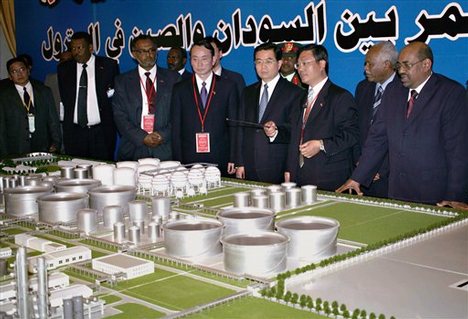
Jintao and Bashir (plus some other guys)
Continue reading →














 Justice in Conflict