The Curious Timing of Announcements at the ICC

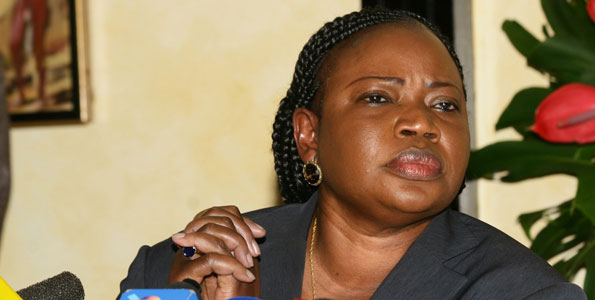
ICC Chief Prosecutor Fatou Bensouda at a media availability (Photo: Nation File)

ICC Chief Prosecutor Fatou Bensouda at a media availability (Photo: Nation File)

International institutions, political parties and big companies. Something all of these have in common is their interest in sharing good news when the world is paying attention and bad news when it isn’t. The logic is simple: the sharing of ‘wins’ should be planned to coincide with the most advantageous moment in the news cycle, when they will get the most coverage; ‘losses’, on the contrary, should be shared when global scrutiny is lowest – at the end of the week, weekends, or when bigger news items, like the Super Bowl or a presidential election, will dominate the headlines. This doesn’t always work out in pretty ways.

As a young student, I will never forget the a story told by Roméo Dallaire, the Canadian general who bravely attempted but ultimately failed to ensure that the United Nations intervened to end the slaughter of the 1994 Rwandan genocide. Dallaire recounted the story of a humanitarian evacuation organised by the French government. The authorities in Paris requested Dallaire to choose appropriate candidates to be taken, by plane, out of Rwanda. It must have been disturbingly difficult to identify those who were most vulnerable and also those who were likely to be able to survive the long trip from Kigali to Paris. In the end, a few dozen mostly children were loaded onto the plane. The aircraft made a pit-stop somewhere on the African continent (I don’t recall where, exactly). But instead of simply landing, refueling and carrying on its journey, the plane stayed there for hours. During that time, a number of children died. To a stunned crowd, Dallaire explained that the decision to keep the plane grounded was made by French government officials who did not want the plane to arrive at Charles de Gaulle airport in the middle of the night. Instead, they wanted their humanitarian act to be witnessed by journalists and cameramen who, they surmised, would only come to the airport once the sun was up.

Of course, few, if any, public relations decisions are quite as distasteful, nefarious or inhumane. Dallaire’s story is an extreme example of a sick – and sickeningly costly – attempt by a government to take advantage of the media cycle in order to reap political rewards. But seeking to manipulate the news cycle to their benefit is, for better or worse, what all organizations with institutional interests do. The International Criminal Court (ICC) is no different.

Take, for example, the day that prosecutors at the ICC withdrew their case against Kenyan President Uhuru Kenyatta. Even the Court’s proponents admitted that it represented an awful day in the life of the Court, one which threw the institution into “crisis” and exposed its severe limitations in the fight against impunity.

Since at least 2011, prosecutors had insisted that Kenyatta was among those most responsible for the 2007-2008 post-election violence in Kenya. Soon thereafter, a string of controversial yet remarkable developments besieged the trial: the prosecution’s poor construction of the case against Kenyatta; his election in March 2013 as president of Kenya; the intimidation and murder of dozens of witnesses who testified against him. In the end, ICC Chief Prosecutor Fatou Bensouda “decided to withdraw the charges against Mr. Kenyatta after carefully considering all the evidence available”, calling her move “a dark day for international criminal justice”. Her words – and decision – came on a ‘bad news Friday’, when the news cycle was just about retiring for the week.

Now, if institutional ‘losses’ and ‘bad days’ should be dumped onto the media at the end of the work week, surely it holds that ‘wins’ should be shared when the news-cycle is full swing. But a recent ‘win’ by the ICC seems to be at odds with this trend.

Less than two weeks ago, the ICC announced that Ahmad Al Mahdi Al Faqi had been transferred into the Court’s custody from Niger. Al Faqi is alleged to have played a lead role in the destruction of UNESCO-protected religious shrines in Timbuktu. He also represented a number of important firsts for the ICC: the first suspect from Mali to be surrendered to The Hague; the first member of a radical Islamic group, Ansar Dine, to face prosecution at the ICC;  the first person charged with the war crime of destroying cultural monuments to end up at the Court. Just as it is hard to argue that the collapse of the Kenyatta case wasn’t a loss for the ICC, it is nearly impossible to deny that the surrender of Al Faqi wasn’t a ‘win’. Continue reading

Posted in Ahmad Al Mahdi Al Faqi (Abou Tourab), International Criminal Court (ICC), International Criminal Justice, Justice, Kenya, Kenya and the ICC, Mali | Tagged , | 1 Comment

How the Canadian Government’s Pursuit of ‘Justice’ Makes Canadians and the World Less Secure

The scene on Parliament Hill, Ottawa, following a gunman's attack in December 2014 (Photo: Reuters: Chris Wattie)

The scene on Parliament Hill, Ottawa, following a gunman’s attack in December 2014 (Photo: Reuters: Chris Wattie)

Canada currently finds itself in the midst of a historically long election. Perhaps more so than any other campaign in recent memory, the world is paying attention. Will Canadians re-elect a government that has tarnished the country’s global reputation on everything from climate change to human rights? Or will they elect a government dedicated to resuscitating the country’s reputation and impact in the international arena? As of now, it’s anyone’s guess who will get the keys to the Prime Minister’s residence at 24 Sussex. But one issue that deserves greater scrutiny is how the current Conservative government’s policies of justice and accountability have come at the expense of domestic and international security.

Wait a second… Isn’t Prime Minister Stephen Harper, who came into power following the so-called “sponsorship scandal” that decimated the Liberal Party, all about accountability? Isn’t his pitch to Canadians that he is the only leader with a steady hand in uncertain times, the only political leader willing to make the tough decisions to keep Canadians safe from extremism at home and terrorism abroad? That is certainly how Harper wants his track-record and platform to be consumed by Canadians. But it could not be further from the truth.

In the lead-up and during this election, observers have pointed out that the Harper government has implemented policies which essentially establish a form of two-tier citizenship. The Conservative’s most recent effort on this front, Bill C-24, permits the government to withdraw the citizenship of Canadians convicted of terrorism and who have dual-nationality. According to the British Columbia Civil Liberties Association,

As a result of this new law, dual citizens and people who have immigrated to Canada can have their citizenship taken away while other Canadians cannot. The government’s press release last week tried to justify this discriminatory law by raising the threat of “jihadi terrorism”…

Under this law, the only Canadians who can never lose their citizenship are those born in Canada who do not have another nationality (and are not eligible to apply for another nationality). No matter what crimes they may be accused of, these first-class citizens can never have their citizenship taken away. On the other hand, Canadians with another nationality (and those who are eligible to obtain another nationality) now have second-class status, even if they were born in Canada: under Bill C-24, their citizenship can be stripped.

This is undoubtedly an affront to the very meaning of Canadian citizenship and to the Canadian Charter of Rights and Freedoms. Many have rightfully pointed to the moral corruption of the bill as well as the government’s general wrecking-ball approach to balancing civil rights and national security. But what seems to be lost in this debate is how, in practice rather than just in principle, Harper’s approach to justice and accounability is deeply misguided. Indeed, the government’s policies make Canadians and the world less safe.

Consider this all-too plausible scenario. Let’s say that a dual-national is stripped of his citizenship after being convicted of terrorism and supporting ISIS terrorist activities in his birthplace of Syria. The terrorist is consequently stripped of his Canadian citizenship, leaving the individual with only Syrian citizenship. What happens next? Rather than prosecuting the terrorist and putting him in jail, the government would deport him. Where to? Back to Syria where, armed with an emboldened grudge against Canada, the likelihood of him engaging in the kind of terrorist activities that threaten Canadians and the world are enhanced.

How do we know this is true? Because of the government’s record.

In 2011, the government released a list of thirty alleged war criminals believed to be residing in Canada and whom it wanted to see deported – or as the Immigration Minister so primitively put it at the time, “rounded up and kicked out of Canada”. The government relied on Canadians believing that simply getting rid of war criminal was a good in itself. In essence, it was a preposterous and political game of “if we can’t see the problem, it doesn’t exist.” Continue reading

Posted in Canada, Human Rights, International Law, Justice, Terrorism, War crimes | Tagged | 3 Comments

An Agenda for ‘Peace’ in the ‘Peace versus Justice’ Debate

screen-shot-2011-07-09-at-10-19-03As many readers will know, over the past six years, my academic work has focused on the so-called “peace versus justice” debate. The idea behind my research was to re-think how we assess the impact of the International Criminal Court (ICC) on peace processes and conflict resolution. Last year, these efforts culminated in a PhD thesis entitled ‘Justice in Conflict: The ICC in Libya and Northern Uganda’.

I could not be more thrilled that this work will be published by Oxford University Press next year (hopefully in the Spring). In the meantime, I wanted to share with readers and anyone interested, the analytical framework that forms the core of my research. In rejecting the rather stale and recycled claims within the ‘peace versus justice’ debate, the central aim of this framework is to interrogate and re-define the questions that we ask when we investigate the ICC’s impacts on the conflicts in which it intervenes. In subsequent chapters, I use the framework to guide my empirical research into the Court’s effects in Libya and northern Uganda.

Below is the introduction to the paper. The chapter can be accessed and downloaded in its entirety (for free!) here.

Despite a raft of sophisticated arguments regarding the potential positive and negative impacts of the International Criminal Court on the conflicts in which it intervenes, the gamut of arguments within peace-justice debate have proven insufficient in elucidating a clear and rigorous framework for how to study the Court’s effects. Again, there is no doubt that the ICC has complicated conflict resolution. This is not in dispute. But the arguments within the peace-justice debate, as currently conceived, have not provided a sufficient means to identify and analyze how conflicts are shaped by interventions by the Court and what impact this has on potential peace, justice and conflict processes. As a result, despite a desire to move beyond the rigid and dichotomous nature of the debate, a way to do so remains elusive.

Given the amount of time and energy spent on the ‘peace versus justice’ debate, why has a more rigorous research agenda on the effects of international criminal justice on peace processes not emerged? Part of the reason is that the key issues, phases and dynamics that affect and constitute a potential peace process have been neglected. This chapter seeks to fill this lacuna by offering an analytical framework with which to assess and analyze the effects of ICC interventions on ongoing and active conflicts.

Peace in the “Peace versus Justice” Debate   

In assessments of the effects of international criminal justice on peace, peace has generally been held as a constant, defined in its negative variant – the cessation of large-scale, direct forms of physical violence (see, e.g., Lie et al 2006). This is unsurprising. As a concise variable, the reliance on negative peace is “understandable given methodological concerns.” (Höglund and Kovacs 2010, 369). In this context, in order for the ICC to have a positive effect on peace, the work of the Court must be associated with a decrease in, or cessation of, direct, physical violence. Conversely, the effects of the ICC on peace are negative if the Court’s intervention precipitates or is associated with continued conflict or intensified violence. A recent example of this approach is a study conducted by Courtney Hillebrecht (2011), who has measured changes in the incidence of conflict interactions (violence) in Libya against key moments in the ICC’s intervention in Libya.

Peace can also be considered in its positive variant, implying something ‘greater’ than negative peace – social justice and the lack of structural violence (see Galtung 1969, 167-191). Here, the effects of the ICC would be positive if they contributed to the achievement of ‘reconciliation’, and social cohesion in the states in which the Court intervened. The ICC would have negative effects if it prevented such goals from being achieved by, for example, contributing to the entrenchment of social divisions.

Both approaches are problematic. While any finding that the ICC leads actors to respond violently would be important, focusing on negative peace requires the attribution of causality to the ICC for changes in levels of violence. However, by assuming that there is a clear correlation between patterns in violence and the decision-making of the Court, analyses like Hillebrecht’s risk decontextualizing political violence, attributing responsibility for increases and decreases in violence to the ICC without adequately considering other factors which also contribute to levels of violence. They also do not tell us why particular actors may respond to the ICC’s activities with increased or decreased levels of violence. Moreover, an approach focused myopically on violence neglects empirical findings that increases in violence may, however counterintuitively, have positive effects on the potential resolution of a given conflict (see Greig and Diehl 2012, 108-112). In short, such studies cannot adequately demonstrate the complexity of issues and dynamics which affect levels of violent behaviour.

Focusing on positive peace is even more problematic. The achievement of positive peace is undoubtedly a noble and worthy aspiration. However, it is a distant, long-term and sometimes conceptually ‘fuzzy’ goal whose ultimate achievability is unclear. It may be the distant end to which societies aspire but never reach. Moreover, it isn’t clear how the ICC, as a judicial institution, could or should contribute to a society’s pursuit of social justice or the eradication structural violence.

Continue reading

Posted in Academic Articles / Books, International Criminal Court (ICC), International Criminal Justice | 1 Comment

What We Know about the First Islamic Extremist at the ICC

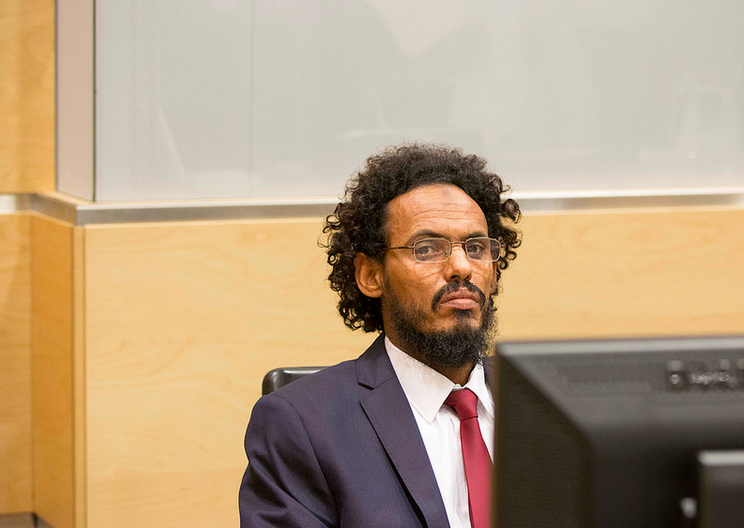
Ahmad Al Faqi Al Mahdi at his first hearing at the ICC (Photo: International Criminal Court)

Ahmad Al Faqi Al Mahdi at his first hearing at the ICC (Photo: International Criminal Court)

From the instant that news emerged that Ahmad Al Mahdi Al Faqi had been surrendered to the International Criminal Court (ICC) on allegations that he was responsible for the war crime of destroying shrines in Timbuktu, Mali, the circumstances around how Al Faqi got to the ICC have been shrouded in mystery. The Office of the Prosecutor’s press release, issued at an ungodly hour last Saturday, was rather short on details. But more and more is becoming clear. Here is what we know about the first-ever Islamic extremist to be shipped off to The Hague to face war crimes charges.

Al Faqi, also known by his nom de guerre Abou Tourab is, by his own admission, approximately 40 years old. Allegedly a member of the radical Islamic group Ansar Dine, he is well educated and, in fact, perhaps once of the most clever individuals ever to come into the custody of the ICC. According to some, only Callixte Mbarushimana may have been more intelligent. In an op-ed in The Guardian, one of Al Mahdi’s teachers described her former pupil as a decent student but as “the wrong man” for the ICC to target in the grand scheme of injustice in Mali:

He gained a passable mark because he did his homework and he learned. He was courteous and respectful, but he had sly eyes and the same beard he must now wear in the corridors of the Dutch court…

…So the masters student was in fact a fundamentalist who was quickly radicalised when the jihadists arrived. But is this man who was handed over to the ICC by the authorities in Niger deserving of the role in which he is being cast – as a major player in the occupation? No, there are many more deserving of justice…

Al Faqi is just a little fish. But in Mali it is the little fish who are caught.

But the observation that Al Faqi is a “little fish” may not be as relevant as first meets the eye. The most recent prosecutorial strategy report from the Office of the Prosecutor has stated that prosecutors will seek, where appropriate, to go after lower- and mid-level perpetrators – and not just those “most responsible” like heads of states or rebel leaders. Moreover, in the coming days and weeks, as suggested below, we may find that Al Faqi was more involved in the perpetration of atrocities than has been suggested to date.

Still, it begs asking: how was this “little fish” caught and brought to The Hague in the first place?

Continue reading

Posted in Ahmad Al Mahdi Al Faqi (Abou Tourab), ICC Prosecutor, International Criminal Court (ICC), International Criminal Justice, Mali | 7 Comments

The ICC Nabs a Perpetrator of Cultural Crimes in Mali

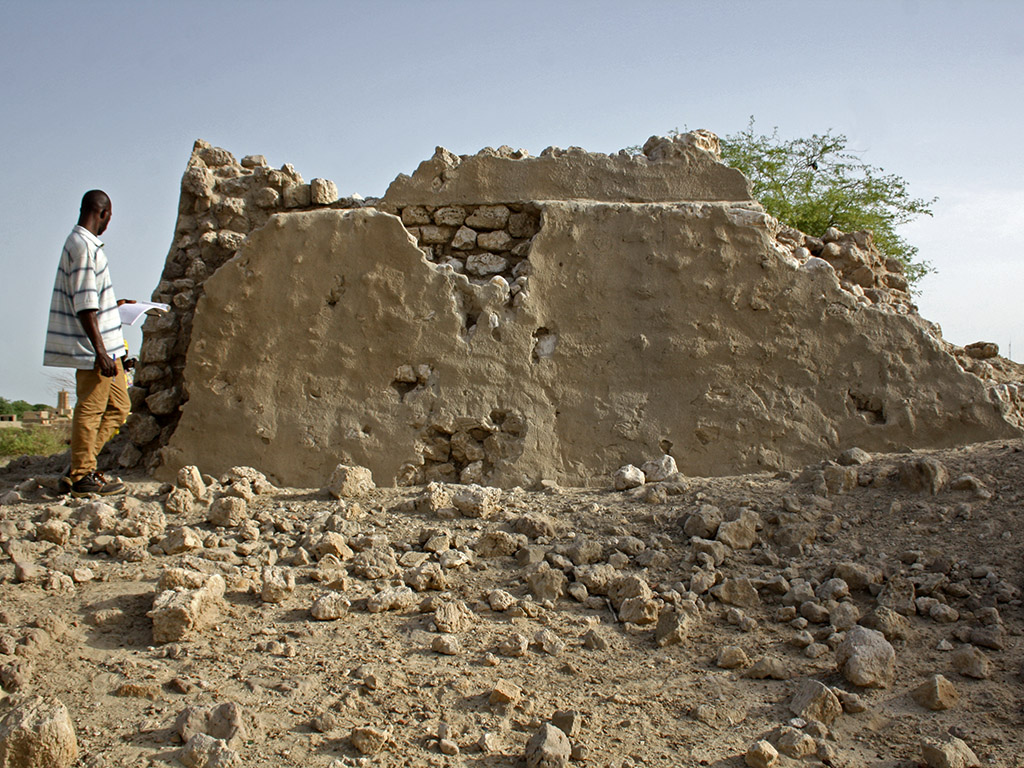
The partially destroyed Alpha Moya mausoleum in Timbuktu in 2013 (Photo: World Monuments Fund)

The partially destroyed Alpha Moya mausoleum in Timbuktu in 2013 (Photo: World Monuments Fund)

It is a fool’s game to predict what will happen next at the International Criminal Court (ICC). Today, the world woke up to news that the ICC had gained custody of Ahmad Al Faqi Al Mahdi, a member of the Ansar Dine group allegedly responsible for the brazen destruction of shrines in Timbuktu, Mali.

It wasn’t that long ago that I wrote that the Court had gone virtually silent with regards to its intervention in Mali. In response to that post, a number of sources with intimate knowledge of the investigation insisted that Mali was not a blindspot for the Court and that there would be important developments announced in the near future. It is never easy deciphering when such claims are sincere but in this case they certainly have been – and how.

In its public statement, rather oddly released in the early hours of Saturday morning when public and media attention is low, the Office of the Prosecutor went to great lengths to emphasize that it considered cultural crimes to be as serious as acts of direct physical violence:

Ahmad Al Faqi Al Mahdi, also known as “Abou Tourab”, is accused of allegedly committing the war crime of intentionally directing attacks against ten buildings dedicated to religion and historic monuments in the ancient city of Timbuktu, Mali.  A zealous member of an armed group, self-proclaimed “Ansar Dine”, he played a predominant and active role in the functioning of the local structure put in place during the group’s occupation of Timbuktu in 2012, as detailed in my Office’s application for the warrant of arrest which led to his surrender.

The people of Mali deserve justice for the attacks against their cities, their beliefs and their communities.  Let there be no mistake: the charges we have brought against Ahmad Al Faqi Al Mahdi involve most serious crimes; they are about the destruction of irreplaceable historic monuments, and they are about a callous assault on the dignity and identity of entire populations, and their religious and historical roots.  The inhabitants of Northern Mali, the main victims of these attacks, deserve to see justice done…

…It is rightly said that “cultural heritage is the mirror of humanity.” Such attacks affect humanity as a whole. We must stand up to the destruction and defacing of our common heritage.

In addition to never having prosecuted a member of an extremist Islamic group, the Court, as it noted in its statement, has never prosecuted cultural crimes. But with the destruction of fifteen revered shrines in Timbuktu and the incessant war against cultural sites by the Islamic State in Syria and elsewhere, attacks on such historical monuments have gained unprecedented international attention. The Prosecutor is clearly interested in meeting at least some of growing international demand that those responsible for the wanton destruction of monuments of cultural and historical relevance be held to account. There should thus be no doubt that the Court’s prosecution of Al Mahdi is a test case for future prosecutions of cultural crimes and will expand how the Prosecutor views her mandate.

The arrest and surrender of Al Mahdi also appears to be a pinnacle moment for ICC-state cooperation. It is no secret that the ICC struggles to gain cooperation from relevant states and that, even when it does, states often seek to instrumentals and manipulate the Court for their own benefit. The surrender of Al Mahdi, however, seems to hint at an altogether a different story.

Continue reading

Posted in Cultural Crimes, ICC Prosecutor, International Criminal Court (ICC), International Criminal Justice, Mali, Niger | 3 Comments

Striking the Right Balance: Truth at the Heart of Transitional Justice in Colombia

Sophie Haspeslagh joins JiC for an analysis of the recent breakthrough on transitional justice in the Colombian peace process. Sophie is a PhD candidate at the London School of Economics where she is researching the engagement of armed groups and the effects of proscription on peace processes.

An awkward handshake but a remarkable breakthrough (Photo: AP)

An awkward handshake but a remarkable breakthrough (Photo: AP)

It wasn’t long ago that the peace process between the FARC and the Colombian government seemed stuck. Little if any progress was being made and the biggest barrier to a final accord – agreeing on how to achieve justice and accountability for past atrocities – was proving impossible to overcome. But just this week all of the parties agreed to a plan to achieve transitional justice. It was undoubtedly a remarkable development. But did Colombia and the FARC strike the right balance between peace and justice?

When I was interviewing the FARC on the peace negotiations in Havana earlier this year, the atmosphere was tense. The FARC, the rebel faction fighting the Colombian government since the early 1960s, responded to renewed military offensive by suspending their unilateral ceasefire. At that moment, reaching an agreement seemed like a distant prospect, despite the fact that the parties had already been negotiating for three years. Energy and stamina were at their lowest point and those closely involved in the negotiations confided that discussions had been at an impasse for over a year on the issue of justice. After having reached substantive agreements on the three previous agenda points (land reform, political participation, and the illegal drug trade), the talks had stalled on the age-old dilemma of peace versus justice.

Fast-forward to this week and President Juan Manuel Santos met with the leader of the FARC, Timoleón Jiménez (in itself an unprecedented event) in Havana, to sign an agreement on the issue of transitional justice and the establishment of the ‘Special jurisdiction for peace’. As the end of the negotiations approaches and the government announces that the final peace agreement will be signed by 23 March 2016, here are some thoughts on how we got to this point and whether the Colombians have succeeded in finding the right balance between peace and justice.

The Victim’s Delegations: An Innovative Scenario

One innovative development during the peace talks has been the efforts to ensure that victims had access to the negotiating table. This is a unique occurrence in peace negotiations across the globe. Five different delegations of victims travelled to Havana to meet and share their stories and recommendations with the negotiating parties. The sixty people who made up the five delegations were chosen based on the principle that they represented a particular category of victimization. They had suffered from all types of crimes (land mines, kidnapping, homicide, threats, extra-judicial execution etc.), from range of armed actors (the FARC, paramilitary and the Colombian army) and came from a diversity of Colombian communities (Afro-Colombian, indigenous, different social-economic classes, human rights defenders etc.).

Not only did these victim’s delegations put a human face on suffering of the 7.6 Million registered victims of Colombia’s conflict, they also had a profound impact on the negotiating parties. Speaking to the FARC in Havana, it was clear to me that they had been deeply moved by their interaction with these delegations. One central message the victim delegations effectively promoted was their demand that the government and the FARC remain at the table until they had an agreement. They also focused on the importance of truth telling so that their experiences and trauma would be recognised.

Indeed, the yearning for truth has been at the centre of the victims’ demands. As Virginia Bouvier points out, a third of the 24,000 proposals put forward by victims have focused on the importance of truth.

‘Special Jurisdiction for Peace’ – Restorative Not Punitive Justice

The FARC had long maintained that they would not allow any of their fighters go to prison. Indeed, why would a group that does not consider itself defeated readily agree to have its members shipped off to jail? Why would they negotiate their way into prison? This has been a central sticking point as a large part of Colombian society rightly expects to see justice achieved, especially for the most heinous crimes committed during the war. Unlike the previous negotiation with other left-wing insurgent groups in Colombia in the late 1990s that led to widespread amnesties, the fact that Colombia ratified the Rome Statute of the International Criminal Court (ICC) in 2002 has meant that a blanket amnesty is no longer an option. Continue reading

Posted in Colombia, FARC, Guest Posts, International Criminal Court (ICC), Transitional Justice | 4 Comments

Laying the Blame: Justice in Syria Just Got a Bit More Likely

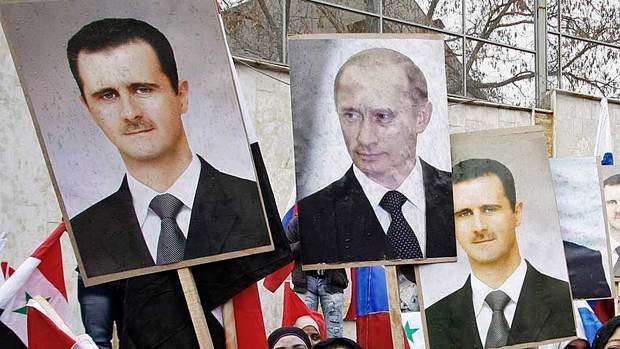
(Photo: Muzaffar Salman / AP)

(Photo: Muzaffar Salman / AP)

Anyone would be excused for believing that things in Syria may get worse before they get better. Millions of civilians live in daily fear for their security. Those who manage to escape do so to a new kind of hell that is migration to and through south-eastern Europe.

Meanwhile, the Western-led intervention against the Islamic State continues unabated without much prospect of success. The Geneva peace process appears moribund. Five years after the Syrian civil war broke out, Russia is now flooding Syria with military hardware, rolling out a programme of drone surveillance over the country, and all the while assuaging Israeli concerns that its support for the regime of Bashar al-Assad won’t strengthen Hezbollah. In short, the situation in Syria is violent and politically messy. It’s likely to remain both for the foreseeable future.

At the same time, during the almost half decade of brutal civil strife, justice and accountability have been severely neglected. An impressive array of commissions, human rights groups, and private organisations have done a remarkable job gathering evidence that might, one day, be used to bring perpetrators of mass atrocities in Syria to account. But the sad truth is there has been no real prospect for criminal accountability in the country. As useful as they may one day prove to be, the investigations that have taken place to date have occurred in the shadows of the war and have often been conducted by individuals taking massive personal risks.

Efforts to set up a body to prosecute perpetrators of crimes in Syria have stalled as well. Every attempt to gain traction for a referral of the situation in Syria to the International Criminal Court (ICC) has been rejected by Russia. No alternative, such as the establishment of a hybrid tribunal, has succeeded either.

In the midst of this inertia, however, a curious thing happened, something that may just make justice in Syria a little bit more likely. After weeks of wrangling, earlier this month Russia dropped its objections to United Nations Secretary General Ban Ki-moon’s plan to create a commission, led jointly by the UN and the Organisation for the Prohibition of Chemical Weapons (OPCW). The inquiry will be mandated not only to determine whether chemical weapons were used against civilians (which is not disputed by any of the warring parties or their proxies). Critically, the three-person commission will also be tasked with determining the individuals responsible for their use.

Laying blame and, by extension, determining liability for a crime is a crucial first step to achieving accountability. Granting the inquiry the mandate to apportion blame for chemical weapons attacks may thus be the single most promising move towards achieving justice for atrocities committed against civilians in Syria. While other institutions, like the International Independent Commission of Inquiry on Syria have previously threatened to ‘name names’, none have had the gravitas of a UN-OPCW investigation, especially one explicitly endorsed by Moscow. Continue reading

Posted in International Law, ISIS, Islamic State, Israel, Justice, Russia, Syria, UN Security Council | Tagged , , | 6 Comments

Announcement: Expert Seminar on ICC Preliminary Examinations and Legacy/Sustainable Exit

Best images for facebook timeline cover Peace Palace by Night Peace,Palace,Night

Dear all,

Below is an announcement for what promises to be a fascinating and productive workshop on ICC Preliminary Examinations and Legacy/Sustainable Exit at the Peace Palace in The Hague.

I will be attending and will provide some comments on the potential impact of preliminary examinations of conflict and peace processes. I look forward to seeing some of you there!

Mark

The Grotius Centre for International Legal Studies and the Centre for International Law Research and Policy are hosting an international expert seminar on 29 September 2015 at the Peace Palace on:

“The Peripheries of Justice Intervention: Preliminary Examination and Legacy/Sustainable Exit”

In contemporary discussions on the impact and effectiveness of international criminal justice, considerable emphasis has been placed on trials, legal procedures and their effects. Less attention has been devoted to the peripheries of justice intervention (the ‘in’ and the ‘out’), namely preliminary examinations (‘PEs’) and exit/legacy strategies. Both activities are crucial for the accomplishment of goals and mandate of international courts and tribunals, but not yet subjected to systematic discourse. This seminar explores four key themes that require further attention in strategy, research and practice:

  • Context, nature and function of Preliminary Examinations,
  • The legal framework of Preliminary Examinations,
  • The methodology of Preliminary Examinations; and
  • ‘Legacy’ and Sustainable Exit after Intervention.

The purpose of this expert seminar is to take stock of policies and practices regarding the peripheries of justice intervention, to review some of the existing approaches, and to identify potential strategies to address underlying tensions and problems. It is held in context of the project on ‘Post-Conflict Justice and Local Ownership’, carried out by the Grotius Centre for International Legal Studies, with support of the Netherlands Organization for Scientific Research.

If you are interested in attending the conference, please contact Ms. Lieneke Louman at l.louman@cdh.leidenuniv.nl. Registration is upon individual confirmation.

Please click here for the concept note and conference programme.

Posted in Conferences, Preliminary Examinations | 1 Comment

The ICC is Free to Investigate Ukraine since 2014. So What Now?

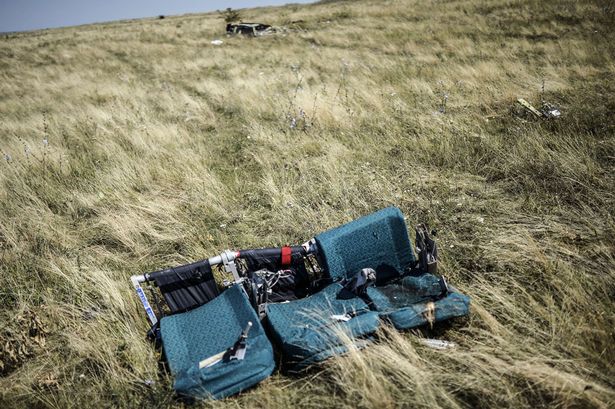
A row of empty seats from flight MH17 lies in a field in eastern Ukraine (Photo: Getty)

A row of empty seats from flight MH17 lies in a field in eastern Ukraine (Photo: Getty)

After months of speculation, Ukraine has finally decided to refer the violence in the country since February 2014 to the International Criminal Court (ICC). The ICC is now free to open a preliminary investigation and, if it finds reason to proceed, an official investigation into alleged crimes committed not only during the chaos on Kiev’s Maidan Square but in the east of the country, especially in the regions of Donetsk and Crimea. Here are a few thoughts on what the potential ICC investigation into Ukraine means – or could mean.

Why not just join the ICC?

Yesterday’s decision marked the second time that Ukraine has opened itself up to an ICC investigation. It previously referred the months of November 2013 to February 2014, a period captured the violence on the Maidan Square, to the Court. Few people close to the situation believed that the first referral would have led to charges as the crimes were unlikely to meet the ICC’s gravity threshold and Kiev likely wanted to avoid a determination by prosecutors that no crimes had been committed in Ukraine, leading to a second referral.

Ukraine’s most recent decision, taken under Article 12(3) of the ICC’s Rome Statute, expands the ICC’s jurisdiction to events since 20 February 2014. But an important question remains: why won’t Ukraine simply ratify the Rome Statute and become a member-state join the Court? The simple answer is that there remain constitutional barriers to doing so – the same that existed when Ukraine first referred the Maidan square events to the ICC. Despite the fact that Ukraine signed the Rome Statute in 2000, a 2001 ruling by Ukraine’s constitutional court found that ratifying the Statute would be unconstitutional. The question that now arises is: will Ukraine ever become a member-state of the ICC and do the two ‘partial’ referrals make a prospective decision to join the Court more or less likely?

Who will the Court target?

In his letter accepting an expansion of the ICC’s jurisdiction in Ukraine, Foreign Minister Pavlo Klimkin declared that the Ukrainian parliament had previously adopted a resolution entitled “On the recognition of the jurisdiction of the International Criminal Court by Ukraine over crimes against humanity and war crimes committed by senior officials of the Russian Federation and leaders of two terrorist organisations – “DNR” and “LNR”- which led to extremely grave consequences and mass murder of Ukrainian nationals.” This language suggests that Ukraine is attempting, as it did with its first referral, to direct the Court towards exclusively prosecuting its Russian, and Russian-affiliated, adversaries.

This is not the first time a state has sought to refer its enemies – rather than a conflict situation or situation of mass atrocity – to the ICC. The government of Uganda infamously referred the Lord’s Resistant Army to the Court in 2004. As with that case, the ICC will surely interpret the referral as providing jurisdiction to investigate all international crimes committed on the territory of Crimea, irrespective of who committed them.

However, the ICC will also face a familiar quandary. If it does open an official investigation into the situation in Ukraine, the Court will almost certainly be dependent on Ukrainian officials for witness protection, witness testimonies and the collection of other relevant evidence. That may, as it has in the past, lead prosecutors to focus on only one side of the war (Russia and Russian-backed rebel groups) whilst neglecting the alleged crimes of Ukrainian forces. Given increasing evidence of serious crimes committed by Ukrainian troops and government-backed groups, this would make a mockery of the pursuit of impartial justice.

Russia comes under the ICC Microscope – Again

An ICC intervention into Ukraine would not mark the first time that Russia has come under the Court’s scrutiny. It has also been a focus of the ICC’s preliminary examination into the 2008 war in Georgia which is, according to many sources, inching towards official investigation status. And as with the case of Georgia, Russia may not mind – and believe that they could benefit from the ICC’s involvement. Russia could also decide to selectively cooperate with the ICC. Indeed, Moscow will likely flood the ICC’s Office of the Prosecutor with documentation in an attempt to point the Court’s finger in Ukraine’s direction – or at least delay any real action or arrest warrants being issued. Continue reading

Posted in International Criminal Court (ICC), International Criminal Justice, Russia, Ukraine | Tagged | 15 Comments

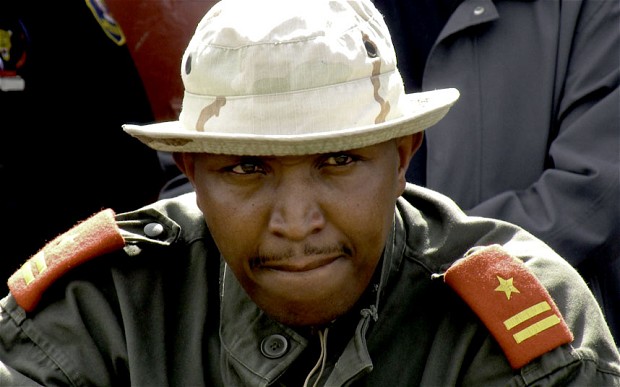
Bosco ‘The Terminator’ Ntaganda Goes on Trial: Should Kagame Be Afraid?

Bosco Ntaganda (Photo: Alain Wandimoyi / EPA)

Bosco Ntaganda (Photo: Alain Wandimoyi / EPA)

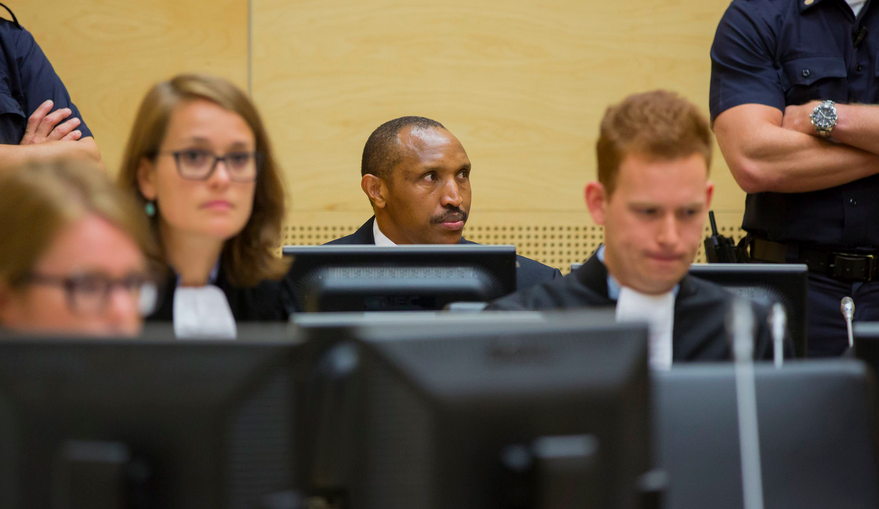
Nine years after he was originally indicted and over two years after he shocked the world by walking into the American Embassy in Kigali, Rwanda, and asking to be hauled off to The Hague, the trial of Bosco ‘The Terminator’ Ntaganda has finally began at the International Criminal Court (ICC). Ntaganda, a chief warlord in a panoply of rebel movements in the eastern Ituri Province of the Democratic Republic of Congo (DRC) faces thirteen charges of war crimes and five charges of crimes against humanity. Born in Rwanda, Ntaganda also happens to have been a pawn and partner of the Rwandan government, raising the question: does his trial at the ICC pose a threat to the regime of Rwandan President Paul Kagame?

For years now, there has been a growing cohort of scholars, advocates and political figures pushing for investigations into the alleged atrocities committed or sponsored by Rwandan government forces and agents. Their efforts can be divided into three broad aims: one, accountability for alleged mass atrocities committed by Kagame’s Rwandan Patriotic Front (RPF) prior to and in the wake of the 1994 Rwandan Genocide, as laid out in detail in a 2010 United Nations report; two, accountability for aiding and abetting the commission of atrocities by rebel factions in the region; and three, accountability for repressive and violent tactics, including targeted assassinations and torture, deployed against domestic opponents of the Kagame government. Through it all, Kagame has been somewhat of a teflon man. No charges have stuck and, to date, no efforts at a thorough and independent investigation have led to much more than a series of false starts.

Rwanda has proven to be a rather curious case for international justice. While it is the focus of a tribunal that bears its name, the International Criminal Tribunal for Rwanda (ICTR) has a highly restricted temporal jurisdiction which is limited to 1994, the year the Genocide took place. The ICTR, based in Arusha, Tanzania, has experienced a quixotic and often fraught relationship with Kigali despite the fact that it has focused exclusively on the regime’s former enemies – Hutu perpetrators of the genocide. Periodic attempts to expand the reach of the tribunal have been met with sharp condemnation from Kagame and rebukes from the international community. Former Chief Prosecutor of the ICTR Carla Del Ponte has written that she was effectively fired from her position by the UN Security Council after she pushed for investigations into RPF crimes.

Many blame the lack of progress on the accountability front in Rwanda on what they see as the West’s shielding of the Kagame regime. There is little doubt that Rwanda is seen as an ‘African success story’, particularly in the US and the UK, and that there isn’t much appetite to upset this narrative. Domestically, the suggestion that the RPF or any factions associated with Kagame committed mass atrocities is often interpreted as genocide denial.

At the same time, the average well-being of Rwandans is incomparably better today then it was in the mid-1990s. Progress has been stunning and those members of the international community in the strongest position to push for accountability are also those most wont to do so lest Rwanda’s progress be undermined. I will never forget speaking to a senior jurist on the allegations dogging the Rwandan government and the various calls for justice and accountability. His response could be summed up as: ’Perhaps. But they have WiFi everywhere now!’

Bosco Ntaganda plead not guilty earlier this week at the International Criminal Court (Photo: ICC)

Bosco Ntaganda plead not guilty earlier this week at the International Criminal Court (Photo: ICC)

Still, in recent years, efforts to break through the impunity gap seem to have gained steam. Along with the UN report detailing alleged RPF atrocities after the genocide, General Karenzi Karake, the head of Rwanda’s intelligence services was recently detained in the UK after a Spanish judge charged him with war crimes and crimes against humanity allegedly committed in Rwanda and the DRC between 1990 and 2002. Moreover, when it became blatantly clear that the Kigali was supporting, perhaps even controlling, the Ntaganda-led M23 rebel group in the DRC, Rwanda’s’s traditional Western proponents wavered in what had, until then, been assumed to be unquestioned support. US Ambassador for War Crimes Issues Stephen Rapp went so far as to assert that Rwanda could be open to the war crimes charge of aiding and abetting the M23, comparing the role of Kagame to that of Charles Taylor, the former Liberian President convicted of war crimes in 2013:

There is a line that one can cross under international law where you can be held responsible for aiding a group in a way that makes possible their commission of atrocities.

Charles Taylor never set foot in Sierra Leone, and aided and abetted, and was convicted of aiding and abetting, the Revolutionary United Front with assistance that was substantial and, the judges said, without which the RUF could not have committed the atrocities to the extent they did commit them. Because of that evidence, Charles Taylor was convicted and sentenced to 50 years.

…if this kind of thing continued and groups that were being armed were committing crimes … then I think you would have a situation where individuals who were aiding them from across the border could be held criminally responsible.

As Kevin Jon Heller pointed out at the time,”Kagame’s response to Rapp’s statement was completely predictable: to blame the West for forgetting about the genocide.” However, as Heller right added: “Remembering the genocide, however, does not mean ignoring Kagame’s authoritarian rule or overlooking his government’s [alleged] crimes.”

But precisely because of the public uproar, combined with a rare willingness on the part of Western states to openly criticize Kagame’s government, many thought that the trial of Ntaganda would open the floodgates and expose Kigali’s alleged role in destabilizing and perpetuating violence in the eastern DRC. For at least two reasons, this is unlikely to ever occur. Continue reading

Posted in Bosco Ntaganda, Democratic Republic of Congo, International Criminal Court (ICC), International Criminal Justice, International Criminal Tribunal for Rwanda (ICTR), Rwanda, Rwandan Genocide | Tagged , , , | 8 Comments