Bashir in South Africa: Defeat, Victory or Both for International Criminal Justice?

JiC is thrilled to welcome Kurt Mills for this guest-post on the implications of Sudanese President Omar al-Bashir’s visit to South Africa. Kurt is a Senior Lecturer in International Human Rights at the University of Glasgow and the author of the forthcoming book International Responses to Mass Atrocities in Africa: Responsibility to Protect, Prosecute and Palliate.

Omar al-Bashir South Africa

Omar al-Bashir upon his return to Khartoum from the AU Summit in South Africa (Photo: Reuters)

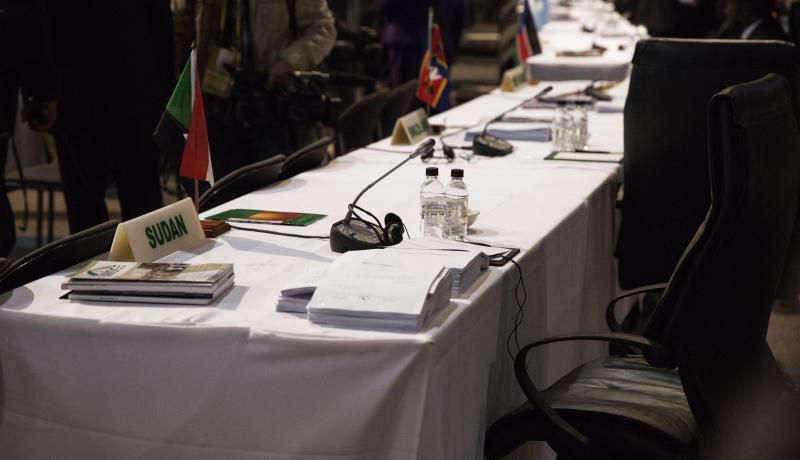
A remarkable scene played out in South Africa on 14 and 15 June. Over the course of two days, global and regional geopolitics were pitted against international justice norms as a wanted war criminal – President Omar al-Bashir of Sudan – defiantly came to the country to attend an African Union summit and stealthily fled ignominiously in fear of being arrested.

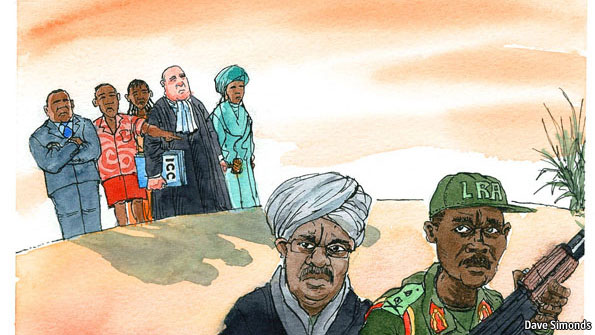
In 2005, the UN Security Council referred the situation in Darfur, where Bashir’s government has been accused of committing and supporting war crimes, crimes against humanity, and genocide,, to the International Criminal Court (ICC). An arrest warrant was issued by the ICC in 2009. While African countries were some of the strongest supporters of the ICC from the beginning, and there are 34 African states which are members of the Court, the case against Bashir has played out against the backdrop of accusations of bias on the part of the ICC against Africa and charges of neo-colonialism. The African Union has asked (to no avail) that the Security Council suspend the case against Bashir (as well as those against the President and Deputy President of Kenya) and called on African states not to cooperate with the ICC. Some African leaders have called for a mass withdrawal from the Rome Statute of the International Criminal Court.

Yet, while various statements from the AU appear to project a unanimous antipathy to the ICC on the part of African States, the reality is more complicated. Indeed, South Africa has asserted a number of times that it would arrest Bashir if he came to South Africa. But because of a number of regional and global dynamics, South Africa, like many other African countries, is in a difficult position with a contradictory relationship to the ICC and human rights more generally and is pulled in multiple directions simultaneously. Two issues, in particular, are most relevant here.

First, there has been a sea-change globally with regard to the relationship between human rights and state sovereignty; it has been recognised that States cannot do whatever they want to their people and that sovereignty entails responsibilities toward citizens. The AU Constitutive Act has specifically recognised the right of the AU to intervene when states commit mass atrocities against their people. Yet many leaders are having a hard time accepting that they and their colleagues in other countries are not immune to charges of mass atrocities.

Second, (many) African states are torn between supporting human rights and pan-African solidarity. When faced with supporting global human rights norms or showing support for a fellow African leader, two aspects of contemporary African politics come into conflict.

In the current situation, South Africa, even though it has repeatedly stated that it would arrest Bashir, appears to have chosen African solidarity over its global human rights obligations.

On 14 June, the South Gauteng High Court, in response to an application by the South African Litigation Centre, ordered the government to temporarily prevent Bashir from leaving South Africa until a full hearing could be held on the request to arrest Bashir and send him to The Hague. On 15 June, the court held a brief hearing and then adjourned for an hour at the request of government lawyers who argued they needed more time to review documents. Minutes later, Bashir was allowed to leave on his plane, which had been moved from a civilian airport to a military base. The court, before being informed of Bashir’s departure, subsequently called the government’s actions unconstitutional and ordered it to arrest Bashir.

A village in Darfur burns following an attack (Photo: Eric Reeves)

A village in Darfur burns following an attack (Photo: Eric Reeves)

What are the implications of what appears to be a blatant disregard for the rule of law and international legal obligations?

First, the fact that Bashir was forced to surreptitiously leave the AU summit early demonstrates that the ICC does, in fact, have an effect. Bashir has been delegitimised and is on the run like a common criminal. He had twice previously refrained from coming to South Africa because of fear of arrest. This time it appears that he decided to try to test the ideational power of the ICC. The South African Government tried to endow Bashir – and all other leaders attending the AU summit – with immunity. It argued that this is based on general principles of international law, but an exception to head of state immunity has developed in cases of the commission of international crimes. Further, the Rome Statute clearly indicates that nobody is immune to prosecution. Although Sudan is not party to the Rome Statute, the Security Council referral gave the ICC jurisdiction and removed Bashir’s immunity in this situation. Continue reading

Posted in African Union (AU), Darfur, Guest Posts, Human Rights, International Criminal Court (ICC), International Criminal Justice, South Africa, Sudan | Tagged , | 2 Comments

Silver Linings: Bashir’s Visit to South Africa
 and its Implications for the ICC

There has been much speculation over the controversial trip by Sudan’s President, Omar al-Bashir to South Africa this week and its implications for the International Criminal Court (ICC). Here are some of my thoughts on subject. This article was originally posted at the Monkey Cage Blog here.

Omar al-Bashir earlier this week in South Africa (Photo: BBC)

Omar al-Bashir earlier this week in South Africa (Photo: BBC)

When Sudanese President Omar al-Bashir decided to attend the recent African Union (AU) Summit in South Africa, he must have thought it presented yet another opportunity to escape his pariah status. Bashir holds the notorious distinction of being the only person whom the International Criminal Court (ICC) indicted for the unholy trinity of international crimes — crimes against humanity, war crimes and genocide.

South Africa has been a traditional defender of the ICC and has previously insisted that it would arrest Bashir if he stepped foot on its territory. His visit to South Africa with impunity seemingly sent a powerful signal that the ICC’s indictment no longer constrains his movements. Instead, South African courts moved to ban Bashir from exiting the country as they considered whether and how to fulfill its legal obligation to arrest him and turn him over to The Hague. Thus, while Bashir managed to escape the country and the ICC’s credibility was certainly taken a hit, there are also positives to take from the Sudanese president’s visit — and the responses to it.

Bashir was first indicted by the ICC in 2009 for his alleged role in ordering mass atrocities in Darfur. The fact that he has never been tried for those crimes and has successfully traveled to several countries including Saudi Arabia, Kenya and the Democratic Republic of Congo, is an ongoing stain on the court’s record and an insult to the victims of atrocities in Darfur. To date, however, South Africa is the most diplomatically influential ICC member-state to host the Sudanese president. Had his visit passed smoothly, other states may have felt emboldened to host Bashir in the future. That would have been potentially catastrophic for the ICC and its champions. However, the outcome of Bashir’s South African visit was something very different.

While his arrival took observers by surprise, given the ICC warrants against Bashir, coverage of the AU Summit was dominated by questions over the wisdom and legality of hosting Bashir. The South African government was forced to consider whether it was obliged to arrest the Sudanese president — and to legally justify its position. Further, the government felt it necessary to identify legal loopholes, such as having Bashir depart from a military, rather than civilian, airport, in order to guarantee his safe passage out of South Africa. In other words, it is wrong to assume that South Africa could simply do whatever it wished. The ICC had an impact on the country’s political and legal calculus — even if the results left much to be desired.

The AU Summit will also help to clarify the complex and dynamic relationship between African states and the ICC. South African diplomats and lawyers have argued that there are ambiguities with regards to their obligation to arrest Bashir and that they are torn between their obligations to the ICC and those they have to the African Union. In time, those arguments will be tested and judged. Moreover, African states and diplomats continue to play an indispensable role in supporting the work of the ICC. What we have witnessed in the past few days is an outpouring of criticism of the government of South Africa, not only from Western states but, most importantly, from across Africa. It will be increasingly implausible for African governments not to clarify their positions regarding their support of, and obligations to, the court.

The plane said to be carrying Bashir takes off from a military airport in Pretoria (Photo: AP)

The plane said to be carrying Bashir takes off from a military air base near Pretoria (Photo: AP)

Although Bashir has already left South Africa, the order of arrest from a court in Pretoria will also help set a precedent and clarify the precise obligations states have toward the ICC. By hosting Bashir, the South African government unwittingly raised the costs of its insolence. Not only are they in violation of their legal obligations to the court but they have been, in essence, found to have violated domestic law as well. The likelihood of a repeat visit has surely been diminished.

While fears over the repercussions of Bashir’s visit have received the majority of public and media attention, African leaders’ support for the ICC has also been on full display. Just days before the summit, Tanzanian President Jakaya Mrisho Kikwete visited the court to declare that: “Our support for the ICC is based on the important work that the Court is doing.” That followed Malawi’s decision to undermine any attempts by Zimbabwean President Robert Mugabe to push for an Africa-wide pull-out from the ICC at the AU Summit. In response to Bashir’s arrival to the summit, Sidiki Kaba – who is the president of the Assembly of States Parties of the ICC as well as the justice minister of Senegal – exclaimed his “hope that South Africa, which has always contributed to strengthening the court, will spare no effort to ensure that the warrants of arrest are executed.” In short, there was no shortage of support for the court and anti-ICC sentiment in Africa is far from universal. Continue reading

Posted in African Union (AU), Darfur, Genocide, International Criminal Court (ICC), International Criminal Justice, South Africa | Tagged | 6 Comments

The ICC and ISIS: Be Careful What You Wish For

Over the past few weeks, JiC has covered issues pertaining to international justice and accountability in Syria and Iraq, including the wisdom of a United Nations Security Council referral of the Islamic State to the International Criminal Court (ICC). This post continues that conversation, and considers whether a referral of ISIS to the ICC would be useful in achieving justice and peace. This article was originally posted at ISN Zurich.

ISIS ICC

A fighter from ISIS in this still from a propaganda film released by the group.

A growing number of voices have called for the International Criminal Court (ICC) to investigate the mass atrocities and human rights violations committed by the Islamic State. In a New York Times op-ed John Bellinger III, a former official in the George W. Bush administration, insisted that an ICC investigation of ISIS was warranted and that the Court was the best venue for bringing ISIS combatants to justice. On the very same day, the New York Times editorial board declared its support for a United Nations Security Council referral of ISIS to the ICC. More recently, the U.S. Commission on International Religious Freedom has added its voice, recommending that the ICC investigate and prosecute ISIS members in Iraq and Syria.

ISIS is precisely the type of terrorist organization that proponents of international criminal justice had in mind when the ICC became a functioning entity in 2002. For many, putting senior ISIS figures on trial – rather than venturing into additional and legally questionable military forays or expanding an already nefarious drone programme – would be a great victory for international justice.

Indeed, so many groups and figures have thrown their support behind an ICC intervention against ISIS that the Court’s chief prosecutor, Fatou Bensouda, felt compelled to publicly clarify that her office 1) did not have jurisdiction to investigate senior ISIS leaders in Iraq or Syria, and 2) would not do so without a referral from the UN Security Council.

But the reality is that a UN Security Council referral of ISIS to the ICC would be disastrous – for both the interests of international justice and the prospects for peace in the region.

Bad for Justice and Accountability

Few things have hobbled the ICC’s reputation as much as the perception that it is selective. Critics of the Court point to the fact that the ICC has only ever intervened in African states. But even if one believes, as many do, that all of the situations in which the Court has intervened warrant ICC investigation, the Court has also shown a propensity to only target one side of a conflict and not the other.

Consider, for example, the case of northern Uganda. In 2004, the President of Uganda, Yoweri Museveni, met with then-ICC Chief Prosecutor Luis Moreno-Ocampo in London to finalize the terms of Uganda’s self-referral. Despite a twenty-year civil war in which both government and rebel forces had committed mass atrocities, the end product was a declaration that referred only the Government’s adversaries, the Lord’s Resistance Army (LRA), to the ICC. This was eventually amended in order to cover all alleged crimes committed in northern Uganda but, in many respects, the damage had already been done. By meeting publicly with Museveni and initially accepting a referral that exclusively focused on the LRA, the ICC was seen as biased against the rebels and partial towards the Government. This is a reputation that it has never been able to shake in the affected areas of northern Uganda.

The example of northern Uganda has inspired an ongoing debate regarding the legality of restricting the ICC’s jurisdiction to groups like ISIS or the LRA. But irrespective of its legality, accepting a referral of ISIS – or of any group for that matter n would do nothing but undermine the Court’s legitimacy and independence. Such a referral would have to reflect UN Security Council politics to the point of making a mockery of international criminal justice.

Continue reading

Posted in ICC Prosecutor, International Criminal Court (ICC), International Criminal Justice, Iraq, ISIS, Justice, Libya, Libya and the ICC, Middle East, Syria, UN Security Council, War crimes | 11 Comments

Changing the Way We Talk To, and About, Each Other: Nation-Building and Aboriginal Abuses in Canada

A hockey team from a residential school in Maliotenam, Quebec, in 1950 (Photo: Archives Canada / PA-212964)

A hockey team from a residential school in Maliotenam, Quebec, in 1950 (Photo: Archives Canada / PA-212964)

The statistics are shocking, the numbers unbecoming of a modern, liberal, and democratic state like Canada. And yet, when Canada’s Truth and Reconciliation Commission released its long-awaited report last week, many Canadians were likely surprised to be confronted with the harrowing details of systemic and systematic atrocities perpetrated against indigenous communities as a matter of government policy.

The Commission outlined the Canadian government’s 120-year policy of forcibly displacing tens of thousands of Aboriginal children and assimilating them via Residential Schools. Many were subsequently mentally, physically, and sexually abused. Some six thousand perished. The odds of a child dying in a Residential School were greater than the odds of a Canadian soldier perishing in WWII. In 2013, Andrea Russell described just some of the horrors that emanated from the testimonies of victims and survivors:

Government planes flew into remote Aboriginal villages without notice and departed mere minutes later with all of the village children on board, heading to new lives at the residential schools. Children as young as five were severely beaten for speaking their native language at the schools, or for refusing to eat food that was completely foreign to them. Students taken from their parents and who returned home up to twelve years later were completely changed and unable to communicate with their families. Many other children never returned at all, with at least 3,000 of them dying of disease or during ill-fated escapes through wintry northern landscapes… The underfunded system of ‘schools’ was staffed by unscreened and untrained teachers and guardians, a frightening number of whom regularly sexually molested and physically assaulted the children.

Beyond outlining a sickening succession of abuses and crimes, however, the Commission’s report also exposes certain dilemmas and opportunities for a country confronting its violent past and reconciling uncomfortable facts with a vision and version of Canada that is widely seen as incommensurable with the systemic abuses perpetrated against Aboriginal communities.

Seeking justice for past crimes inevitably exposes a host of dilemmas. Amongst the most salient is how to effectively recognize both the individual and collective nature of the crimes committed. By virtue of the fact that all human life is social life, mass atrocities inevitably include some element of collective or communal violence. In Canada, this has been recognized by the ongoing debate over whether the treatment of Aboriginals in the Residential School System constitutes “cultural genocide”, a crime which necessitates an appreciation of not only the violence committed against the individual children who were torn apart from their communities but also the consequent and devastating tears in the social fabric of indigenous communities and cultures. The current discourse around the Truth and Reconciliation Commission’s findings thus reveals the dual-nature of violations committed by the Canadian state against Aboriginal communities – the violation committed by the seizure and mistreatment of the child via the Residential School System as well as the residual violation incurred by the affected communities.

The complex nature of such crimes also makes them remarkably difficult to address. Beyond issuing reparations to affected individuals and communities, perhaps the most meaningful and long-lasting measure that Canada can take, and one described at length by the Commission, is to re-imagine how Canadians learn of the Residential School System and the wider oppression of Aboriginal communities.

The observation that Canada’s education system has failed to adequately cover the history and treatment of indigenous peoples is nothing new. In response to the Commission’s report, John Ralston Saul echoed what has been vocalized on many previous occasions:

We know that the curricula in schools and universities do not reflect the reality of the country. Curricula are always intellectual constructs, often ideological interpretations. Ours, for example, largely exclude the fundamental building block of our society – that is, the indigenous reality, past and present.

Canadian students have regularly insisted that they don’t learn or engage sufficiently with the historical abuses of aboriginal communities. Courses generally still privilege the successes of Canadian state formation, romanticize the emergence of a country via British-French military battles and political negotiations, elevate our country’s growth as a power punching above its weight in the world wars and the post-WWII era, and celebrate our contributions to global democracy, human rights, and peacekeeping. Canadians harnessed the wild and toiled in near-impossible circumstances to create a fair, equitable, and democratic state. All of this is true. But it has come at a cost. At best, the treatment and history of aboriginal peoples dips in and out of this dominant version of history. At worst, the role of indigenous peoples are relegated to the neglected footnotes and margins of this grand narrative. Continue reading

Posted in Canada, Truth and Reconciliation Commissions, Truth Commission | Tagged , , | 5 Comments

Addressing the Economic Dimensions of Mass Atrocities: International Criminal Law’s Business or Blind Spot?

Carl von Clausewitz, a Prussian general and military theorist (Photo: Quotessays.com)

Prussian general and military theorist, Carl von Clausewitz (Photo: Quotessays.com)

The past few decades have witnessed a burgeoning literature examining the economic dimensions of modern warfare. Indeed, if Prussian general and military theorist Carl von Clausewitz could argue in 1832 that war is merely a continuation of politics by other means, more recent studies seem to suggest that modern conflict is often as much, if not more, a continuation of economics by other means.

For international criminal lawyers, the question that naturally arises from such studies is the extent to which international criminal law can and should address the economic dimensions of mass atrocity situations. With this question in mind, this post summarises three perspectives from which scholars and practitioners have been examining the potential and limits of international criminal law as a response to the political economy of mass atrocity situations.

The Critical Perspective: Illuminating the Structural Economic Causes of Violence

Beginning with the most critical literature, a number of studies have sought to illuminate the economic aspects of conflicts that international criminal law is least equipped to confront: the structural economic causes of violence. Structural causes of conflicts, whether political or economic, often fall beyond the purview of international criminal law since they are generally too remote to be of legal relevance to the culpability of the defendants on trial.

As such, international criminal law has tended to be blind to factors as diverse as land distribution, extreme poverty, demographics, social marginalisation, and widespread economic injustice, all of which may be brought about by the normal operation of the global economy. As Mégret has provocatively put it, international criminal law has been at permanent risk of grossly underestimating “such trivialities as the world’s billion poor, 800 million hungry, 2.4 billion without sanitation, or 90 million children without basic education”. Whilst these forms of extreme structural violence are generally not sufficient causes of mass atrocities, it is widely accepted that deeply embedded inequalities have often pre-existed the onset of violent conflict.

Continue reading

Posted in Economics of Conflict, ICC Prosecutor, ICTY, International Criminal Court (ICC), International Criminal Justice, International Criminal Tribunal for Rwanda (ICTR), Justice, Special Court for SIerra Leone (SCSL) | 3 Comments

Justice and Accountability in Syria: The Limited Options at Hand

Shikha Dilawri and Mark Lattimer join JiC for this guest-post on the options available for achieving justice and accountability in Syria. Mark is the Director of the Ceasefire Centre for Civilian Rights and co-editor of Justice for Crimes Against Humanity. Shikha works with the Ceasefire Centre for Civilian Rights and Minority Rights Group International.

(Photo: Freedom House, Creative Commons)

(Photo: Freedom House, Creative Commons)

Atrocities continue to mount in Syria and the situation has become no less critical a year after the UN Security Council failed to pass a resolution to refer the situation to the ICC. Answers remain elusive, with different parties to the conflict continuing to perpetrate war crimes and crimes against humanity – including massacres of civilians, indiscriminate aerial bombardment, enforced disappearances, systematic torture, rape, and the use of children in hostilities. Meanwhile, the heavy focus on ISIS or Da’ash has detracted international attention from the broader humanitarian disaster, now turning the Mediterranean into yet another site of the Syrian tragedy.

Evidence continues to be collected assiduously by groups such as the Syria Justice and Accountability Centre and the Commission for International Justice and Accountability, the latter’s efforts sparking the claim a few weeks ago that enough evidence had potentially been accumulated to indict Bashar al-Assad and other high-ranking government officials. Yet the impact of this development is tempered by current political realities which seem to dictate that the possibility of firmly holding the regime to account will depend either on a transition in government, a political about-face within the Security Council – or both. With no end in sight to the ongoing atrocities in Syria or the political stalemate at the Security Council, it seems that for Syrians, akin to Kafka’s man before the law, access to justice under international law will remain unattainable in the foreseeable future.

With a transition in doubt, there is growing recognition of the need to explore alternative avenues towards securing justice in Syria and to move beyond the somewhat myopic focus on a Security Council referral of the situation to the ICC, and the assumption that the Court is the only game in town.

Against this backdrop, the joint report recently launched by the Ceasefire Centre for Civilian Rights and the Syria Justice and Accountability Centre evaluates the feasibility and potential impact of the various current accountability options for crimes under international law committed in Syria. Acknowledging that the pursuit of justice does not take place within a vacuum, the analysis teases out the practical and ethical challenges presented by these options by briefly exploring how different approaches to justice and accountability could interact with conflict dynamics and affect a future transition in Syria.
As mentioned above and explored in detail elsewhere, there are constraints on the practicality and efficacy of the most prominent mechanisms for securing justice in Syria. The current realities generally forestall the use of domestic prosecutions, which will likely only become a widespread option in the distant future. An ICC investigation with jurisdiction over the entire Syrian situation does not appear to be possible now or in the near-term. However, as the report details, involvement of the ICC is still hypothetically an option, as the Court could still exercise jurisdiction over the thousands of nationals of states parties to the ICC who are fighting in Syria. Still, even if a high-ranking foreign member of an opposition group or senior Syrian official with dual nationality came under the ICC’s jurisdiction, this would raise the thorny question of how such a limited investigation might affect Syrian perceptions of international justice in general and the ICC in particular, especially if those most culpable are seen to be out of reach of prosecution.

More recently, the debate on securing justice has turned to the possibility of developing a special or hybrid tribunal for Syria, an option that has gained ground since the drafting of the ‘Chautauqua Blueprint’ in August 2013. Proponents have emphasised the flexibility and reach of hybrid tribunals, institutions which can combine international and domestic laws while also potentially allowing for a greater number of prosecutions than at the ICC. Yet, as the report suggests, a hybrid tribunal in the present context would not be a particularly feasible or prudent route towards achieving accountability for victims of the Syrian crisis. Absent the possibility of developing such a tribunal in Syria at present, there is the potential to do so in a neighbouring country – for example, Turkey or Jordan – or within an internationally protected buffer zone in Syria if one was to be created (which appears unlikely). Nevertheless, attempts to develop a hybrid tribunal now would be met with the practical challenges of transcending UN political dynamics, as well as potential difficulties convincing a neighbouring state to take on the political, financial, and logistical burdens that such a tribunal would impose. In all likelihood, a premature hybrid tribunal would be dismissed by many Syrians due to its lack of impartiality – whether in fact or as a matter of Syrian perceptions – and scupper the chances for a more effective tribunal in the transitional period.

The report also points out that a less explored accountability option is the use of foreign courts outside Syria to pursue criminal prosecutions and civil actions. In a context where the prospect of a more comprehensive approach towards securing justice appears bleak, foreign courts may prove a useful first step towards accountability. National prosecuting authorities in foreign (particularly European) countries may be able to pursue criminal investigations into crimes in Syria so long as they fall under one of the several principles of extraterritorial jurisdiction. For example, Sweden recently applied universal jurisdiction to the Syria conflict, convicting a Syrian rebel fighter of war crimes. Civil courts, on the other hand, could provide monetary redress to those seeking justice for violations perpetrated during the conflict. Continue reading

Posted in Guest Posts, ISIS, Justice, Syria, Transitional Justice | Tagged , , , | 3 Comments

When International Criminal Justice and FIFA Collide

FIFA President, Sepp Blatter, with former Liberian President, Charles Taylor, convicted by the Special Court for Sierra Leone for aiding and abetting war crimes in Sierra Leone.

FIFA President, Sepp Blatter, with former Liberian President, Charles Taylor, convicted by the Special Court for Sierra Leone for aiding and abetting war crimes in Sierra Leone.

They may seem like bizarre bedfellows, but the worlds of international criminal justice and football / soccer have collided on a number of rather awkward occasions. In light of all the hoopla from last week’s dramatic arrest of a handful of FIFA officials in Switzerland on allegations of corruption, I thought it might be timely to take a look at two curious cases, one in which football’s fiefdom came face to face with a notorious perpetrator of mass atrocities and another when FIFA (almost) joined hands with the former chief prosecutor of the International Criminal Court (ICC).

Blatter Canoodles with a Warlord

One might assume that Charles Taylor would have been a bit busy in 1999. After all, planning murder and plunder takes time and energy, all the more so when such crimes are committed in a neighbouring country. The Liberian President was embroiled in a long-standing civil war in Sierra Leone. For his role in the civil war and, specifically, for aiding and abetting war crimes, Taylor was eventually indicted and convicted to a fifty-year sentence by the Special Court for Sierra Leone. Still, in between stoking a war in which people allegedly devoured other people, rebels maimed innocent civilians, and thousands of lives were destroyed, Taylor arranged an opulent dinner with FIFA’s all-too-eager boss, Sepp Blatter.

One might assume that Sepp Blatter wouldn’t meet with autocrats intimately implicated in the commission of mass atrocities. But then again, that’s probably not true – no one would assume that. Last week’s arrests and the cloud of corruption allegations around FIFA have only confirmed what we have known for at least the last ten years: there is no low Blatter won’t stoop to if it keeps him in power.

According to one report, during Blatter and Taylor’s opulent meetings in Monrovia, the FIFA President was awarded with Liberia’s highest honour, the Humane Order of African Redemption. In return, Liberia faithfully promised its enduring support for Blatter as FIFA President. But that transaction, questionable as it may be, was apparently just the beginning of their cozy relationship. When Taylor was forced to step down as Liberian President and subsequently fled to Nigeria, FIFA apparently paid for the head of Liberia’s Football Association and Taylor’s son-in-law, Edwin Snowe, to flee the country, pocket a $250,000 FIFA grant, and enroll in a Sports Management and Entertainment Events programme at a college in Denver, Colorado. You can’t make this stuff up.

It bears repeating. Even if he had yet to be convicted, in 1999, the world was well aware that Taylor deserved to be held accountable for unspeakable atrocities in Sierra Leone. But to Blatter, a man of moral fiber akin to an over-ripe banana peel, Taylor’s crimes were irrelevant. Yes – that’s the same Blatter who was just re-elected as FIFA President last week.

Former ICC Chief Prosecutor Almost Investigates FIFA

Of course, allegations of corruption are old hat for FIFA. For years headlines have exclaimed that the organization sells its World Cup tournaments to the highest bidder, that FIFA exercises authority as a shadowy bastion of corruption, and that it all amounts to a private club and ruse to enrich its members (one of which was so absurdly wealthy that, while not bothering to make any tax claims in his native US, rented a private apartment in New York’s Trump Tower for his cats!). Continue reading

Posted in ICC Prosecutor, International Criminal Court (ICC), International Criminal Justice, International Law, Justice, Liberia, Sierra Leone, Special Court for SIerra Leone (SCSL) | Tagged , , , , | 7 Comments

What Happened to the ICC in Mali?

A Malian soldier in Gao (Photo: Joel Saget / AFP / Getty Images)

A Malian soldier in Gao (Photo: Joel Saget / AFP / Getty Images)

Given how seldom it is mentioned these days, it may actually be surprising to recall that the International Criminal Court (ICC) still has an ongoing investigation into war crimes and crimes against humanity allegedly committed in Mali since 2012. The ICC in Mali is something no one really seems to talk about anymore. Search ‘ICC’ and ‘Mali’ on Twitter, and the results are remarkably sparse. One news site’s timeline of the crisis in Mali doesn’t even bother to mention the ICC’s intervention. So what gives? What happened to ICC justice in Mali?

In the wake of brutal violence and the destruction of UNESCO protected sites in the north of Mali, ICC Chief Prosecutor Fatou Bensouda opened an investigation into Mali in July 2013. At the time, the Prosecutor appeared convinced that a host of international crimes had been committed in Mali, declaring that:

there is a reasonable basis to believe the following crimes were committed: (i) murder; (ii) mutilation, cruel treatment and torture; (iii) intentionally directing attacks against protected objects; (iv) the passing of sentences and the carrying out of executions without previous judgement pronounced by a regularly constituted court; (v) pillaging, and (vi) rape.

According to Human Rights Watch – which, like other major human rights NGOs, has also been remarkably quiet on issues pertaining to the ICC and Mali, investigators from the Court “conducted several missions to the country”. Nearing the third anniversary of Mali’s self-referral, however, the prosecutor interest in Mali appears to have waned. In private, some insiders even suggest that the Office of the Prosecutor (OTP) has essentially ‘hibernated’ its investigations. The ICC’s own situation page for Mali is, to put it bluntly, essentially empty. But what explains this lack of action and interest in international criminal justice in Mali?

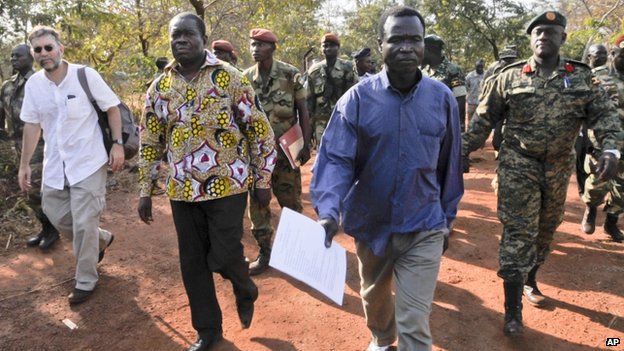
One possible reason that Mali has been put on the prosecutor’s back burner is that the OTP simply has too much on its plate. Given its limited resources, the ICC is at or close to the maximum number of active investigations and cases it can feasibly handle. Recent developments – especially the surrender of the former senior commander of the Lord’s Resistance Army, Dominic Ongwen, as well as the opening of a preliminary investigation into alleged crimes committed in Palestine – have stretched the Court even thinner. As a result, Mali may simply have received the short end of the ICC’s prosecutorial stick and has likely been bumped down the OTP’s list of priorities.

Another reason for the lack of ICC action may be the ongoing efforts to negotiate a comprehensive peace agreement between the warring factions in Mali. Earlier this year, a number of rebel groups and the government signed an agreement to end hostilities. However, key parties, notably the Coalition of Azawad Movements, decided against signing the agreement, and violence has resumed in parts of central and northern Mali. According to the International Crisis Group, the peace agreement is deeply flawed and offers little-to-no change for the people of Mali:

Although no agreement is perfect, the proposed document has clear shortcomings… It prioritises the restoration of order and stability rather than aiming to meet a desire for genuine change that runs deep among northern populations. The agreement makes scant mention of issues like the access to basic social services, jobs or justice – concerns at the heart of popular demands.

With peace talks in flux and a return to civil war a distinct possibility, the ICC prosecutor may be flexing her powers of prosecutorial discretion, choosing to be sensitive to Mali’s peace process and opting for a wait-and-see approach to the negotiations. Continue reading

Posted in International Criminal Court (ICC), Mali, Peace Negotiations, Peace Processes | 6 Comments

The Master of Confessions – Thierry Cruvellier on the ECCC’s Duch Trial

Chris Tenove is a semi-regular Justice in Conflict blogger, and a Postdoctoral Research Fellow at the University of Toronto. He reported on the Duch trial at the ECCC for Macleans’ magazine and Radio Netherlands.

S-21 Prison (Photo: Andrew / Flickr https://www.flickr.com/photos/willposh/)

S-21 Prison (Photo: Andrew / Flickr https://www.flickr.com/photos/willposh/)

When the Khmer Rouge were driven from Phnom Penh by Vietnamese and Cambodian forces in early 1979, they left behind an institution that has come to illustrate the regime’s cruelty and paranoia. At the S-21 prison, now the Tuol Sleng Genocide Museum, the liberators found 14 recently-executed prisoners as well as rooms full of chains, shackles, a waterboarding apparatus, and other instruments of torture. They also found a vast archive, with thousands of photographs of terrified men and women, along with the confessions that were extracted from them. The documents showed that while the activities were barbaric, the institution operated with bureaucratic discipline. Scrawled across many of the documents were terse orders from the prison’s commandant, Kaing Guek Eav, known as Duch. On one interrogation record he wrote: “Beat [the prisoner] until he tells everything, beat him to get at the deep things.”  Beside a list of names: “Kill every last one.”

In 2009, Duch became the first person tried at the Extraordinary Chambers in the Courts of Cambodia (ECCC). Every day of the trial, Thierry Cruvellier came to the courtroom on the outskirts of Phnom Penh and carefully watched Duch, along with the lawyers and judges arrayed around him, and the witnesses who took the stand. Cruvellier has established himself as the preeminent journalist of international criminal justice. He has reported on trials in Arusha, The Hague, Sarajevo and Freetown; edited the International Justice Tribune; and authored the excellent Court of Remorse: Inside the International Criminal Tribunal for Rwanda. He believed that the Duch trial would offer something new, the chance to examine at length the mind and motives of a senior perpetrator of atrocity crimes.

The result is The Master of Confessions: The Making of a Khmer Rouge Torturer (originally released in 2011 as Le maître des aveux). Among its many virtues, Cruvellier’s book is a master-class in how to evoke characters through description, and none are drawn more sharply that Duch himself. The book also shows what gets missed when researchers (like myself) study international criminal justice without attending trials in their entirety. We forget about the many storylines a trial can offer. These include the competing visions of the crimes – and of justice itself – advanced by lawyers, judges and defendants. They also include the dramatic arcs of individual testimonies, as witnesses respond to questions and to their roiling memories and emotions.

I recently spoke with Cruvellier about his book, about the ECCC, and about lessons from the Duch trial that might apply to future international criminal trials.

Chris Tenove: Why did you believe that the Duch trial would be exceptional?

Thierry Cruvellier: I came to Cambodia after covering international tribunals for 10 years, when I was starting to feel like I should move to a new topic. But I realized the Duch trial would be a unique circumstance. Because of the legal system that applied [the ECCC follows France’s civil law system], there would be no plea-bargaining. So even though Duch was essentially pleading guilty, he would have a full trial.

I realized it would be an opportunity to finally hear in detail the voice of the perpetrator. Anyone who covers war crimes tribunals becomes interested in this voice. Only the perpetrator can tell us how that very specific crime – a political crime – actually works. How is it that individuals like Duch, who had not been criminals before this period and would probably never be a criminal after, get involved in a violent machine like S-21?

Did you ever worry that Duch wasn’t worth an entire book? That maybe he wouldn’t reveal enough, or wouldn’t be interesting enough, to warrant such attention?

That was the only real mystery for me. I knew this trial could be exceptional, but I didn’t know if the accused would be ‘up to the task’.’

Duch proved to be a really unusual man. He was intelligent, talkative, and endowed with an exceptional memory. He could be stiff, he could be arrogant, he could be obsequious or irritating. He could also be charming, in a way, and he had a sense of humor. He also had an incredible capacity to protect himself from dangerous emotions, so during the trial he would break down but never break apart.

And he could be sometimes subtle in his thoughts. He was capable of reflecting on himself and on the ideology he had served. So yes, he was a rich character.

In most trials, the defendant rejects the criminal acts that allegedly took place, or tries to justify those acts according to political ideology or circumstances. But Duch admitted to the acts, claimed responsibility and criticized the Khmer Rouge ideology. So what was the trial about?

The trial was so interesting because, through his detailed responses to every bit of evidence, we could get – not a full understanding – but a closer understanding of how “we” might become Duch. And also, once we have become Duch, how we might live with it.
The trial identified some of the steps an individual might go through to become a mass murderer – and that includes the fact that he experienced the social injustice and oppression of the Sihanouk regime, and was imprisoned by it. That’s part of his story. In no way does it make us forgive what he’s done, but it helps show how he got involved in mass murder.

The expert psychologists were also very important. They brought a sort of reasonable and scientific understanding about how human beings function in extreme circumstances. It’s impossible for most people to understand how Duch could kill hundreds of children at S-21 during the very time that two of his own children born. But the psychologists could understand and explain this, and tell us about the kinds of mechanisms that we can develop. Continue reading

Posted in Cambodia, Extraordinary Chambers in the Courts of Cambodia (ECCC), Hybrid Tribunals, International Criminal Justice | 3 Comments

Why Central African Republic’s Hybrid Tribunal Could be a Game-Changer

People shelter around a derelict plane at a temporary camp for internally displaced persons at the airport in Bangui, Central African Republic (Photo: Reuters)

People shelter around a derelict plane at a temporary camp for internally displaced persons at the airport in Bangui, Central African Republic (Photo: Reuters)

A new international criminal tribunal is born. Following pressure from international human rights groups and the United Nations, the Central African Republic (CAR) has established a hybrid tribunal with the aim of prosecuting atrocities committed by Séléka and anti-Balaka forces during the country’s latest spate of political violence. As readers will know, the International Criminal Court (ICC) is already investigating crimes in CAR. But if the Special Criminal Court (SCC) of CAR emerges as something more than a stillborn institution or paper tiger, it could set new precedents for shared responsibility between domestic and international institutions in prosecuting international crimes.

When the ICC became a reality in 2002, there was a widespread sense that the institution would be a court to end all courts. Proponents were convinced that the ICC was the solution to what had been, until then, piecemeal international criminal justice. With a permanent ICC, there would be no need for ad hoc tribunals. Whatever ad hoc or hybrid tribunals would otherwise investigate would now be handled by the ICC.

In recent years, however, the idea of the ICC being the only game in town has slowly withered. Where the prospects of ICC interventions are slim, members of the international community have instead called for the creation of ad hoc or hybrid tribunals. This has been the case in Syria and, more recently, South Sudan.

The potential hybrid tribunal in the CAR, however, is an altogether different beast insofar as it represents an attempt to complement an ICC intervention rather than present an alternative to the Court.

A number of the SCC’s features have now been clarified. In line with being a hybrid tribunal, key positions at the SCC will be divided amongst domestic and international actors. The court will have twenty-seven judges: 14 from the CAR and 13 from abroad. It will have an international “special prosecutor”, but its chief judge will come be a citizen of CAR. Its jurisdictional reach will extend to all war crimes and crimes against humanity committed on the territory of the Central African Republic since 2003. Crucially, it will not compete with the ICC for cases. Senior officials in CAR have consistently reiterated they will cooperate with the ICC. Those perpetrators from both the anti-Balaka and Séléka forces deemed to be “most responsible” and who are eventually indicted by the ICC will be sent to The Hague.

Of course, important and unresolved questions remain. First, early versions of the law that created the Special Criminal Court included provisions which would prohibit the granting of immunities, presumably via government-issued amnesties. However, these provisions are no longer present, suggesting that the government may offer immunity from prosecution in certain cases. What remains unclear is whether and why Bangui is planning on bartering accountability for peace with some anti-Balaka or Séléka fighters. Moreover, under what conditions will the CAR grant amnesties and will such offers of immunity be conditional on, say, participation in a Truth Commission?

Second, it remains unclear exactly how the SCC will be funded and, as importantly, who will fund it. The CAR is a desperately impoverished state and international criminal justice doesn’t come cheap. It seems almost certain that the lion’s share of funding will have to come via external sources. This, however, comes with certain risks, namely leaving the tribunal susceptible to political manipulation by interested international actors which may seek to guide the tribunal’s focus by tugging on its purse strings. To avoid this fate, international funding must be transparent and should go through the United Nations rather than directly from states. Continue reading

Posted in Amnesty, Central African Republic (CAR), Hybrid Tribunals, International Criminal Court (ICC), Special Criminal Court | 23 Comments