Innovating Justice: The Mobile Apps Aiming to Transform How We Respond to Situations of Mass Atrocity

Christof Heyns, Special Rapporteur on extrajudicial, summary or arbitrary executions, recently released a report on the use of information and communication technologies to secure the right to life (photo: OHCHR)

Christof Heyns, UN Special Rapporteur on extrajudicial, summary or arbitrary executions (photo: OHCHR)

International criminal courts have often been a source of inspiration for technological innovation. At Nuremberg, the trial of the leading Nazis was facilitated by the creation of a pioneering interpretation machine by IBM, which enabled the simultaneous translation of the proceedings into English, Russian, French and German. In addition, the prosecution took the unprecedented step of relying on a documentary film, Nazi Concentration Camps, to provide a visual register of the unimaginable atrocities that had been perpetrated under Nazi rule.

Fast-forward seventy years, however, and the field of international criminal justice is struggling to keep apace with the lightning speed at which new information and communication technologies (ICTs) have been developing. In 2010, Philip Alston, then-UN Special Rapporteur on Extrajudicial Executions, observed that the use of ICTs in human rights work was “only at a nascent stage”. In a new report released in April this year, Alston’s successor Christof Heyns revealed that the full potential of these new technologies is still yet to be systematically investigated or internalised by the human rights community.

Nonetheless, recent evidence suggests that the tide may be beginning to turn. Initiatives such as the Satellite Sentinels Project and Amnesty International’s Eyes on Darfur campaign have begun to reveal both the possibilities and limitations of leveraging the power of high-resolution satellite imagery to document and deter the commission of atrocities in Sudan. Similarly, in response to the 2007-08 post-election crisis in Kenya, the Ushahidi crowdsourcing platform was created to visually map the violence by accumulating reports submitted by Kenyans from all around the country via text or email. As these developments suggest, the age of digital humanitarianism has very much arrived and the field of international criminal justice is beginning to take note.

(Photo: Satellite Sentinel Project)

(Photo: Satellite Sentinel Project)

Arguably one of the most revolutionary technological developments of recent years has been the rise of smartphone applications. Recognising the potential of these new technologies, a range of organisations have been hard at work developing humanitarian apps that aim either to enhance the documentation of atrocities or raise awareness of applicable legal frameworks. With these developments in mind, this post takes a closer look at three humanitarian apps that are currently under construction or have recently been launched. After providing a brief overview of how each app works, the post concludes with a discussion of some of the risks that may arise from their deployment in practice.

Continue reading →

Posted in Activism, International Criminal Justice, Journalism, Justice, Sexual Violence, Uncategorized | 3 Comments

Making Human Rights Violations Visible: The UN Commission of Inquiry on Sri Lanka

Thamil Ananthavinayagan joins JiC for this guest post on the UN Commission of Inquiry of Sri Lanka’s soon-to-be released report and the challenges in achieving justice and accountability. Thamil is PhD researcher at the Irish Centre for Human Rights at NUi Galway and where his work focuses on the UN Human Rights Council.
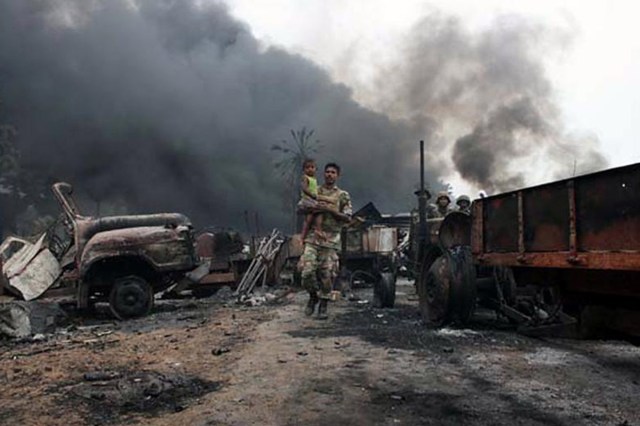
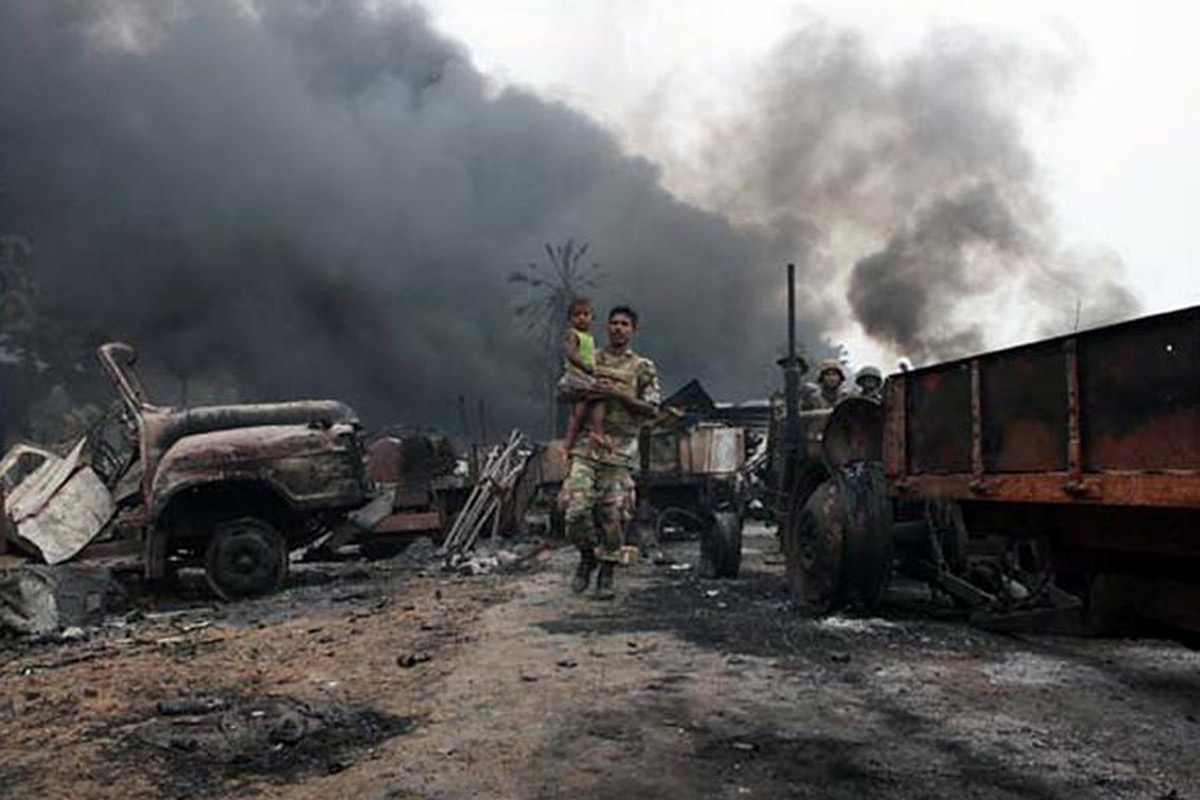
A soldier carries a small child during the Sri Lankan civil war (Photo: Reuters)

A soldier carries a small child during the Sri Lankan civil war (Photo: Reuters)

“Only the dead have seen the end of war.”
– George Santayana

In the concluding phases of their thirty-year civil war, Sri Lankan security forces and the Liberation Tigers of Tamil Eelam (LTTE) repeatedly committed mass atrocities. Although both sides had committed atrocities throughout the conflict, the scale and nature of violations radically worsened in the final five months that led up to the government’s declaration of victory in May 2009, resulting in the deaths of thousands of civilians and the displacement of more than 350,000 people. This post explores the consistent failure of the Sri Lankan government to adequately respond to these violations and points to recent developments that suggest how the tide may finally be beginning to turn.

Sri Lanka’s Culture of Impunity

In light of mounting pressure for an international inquiry into alleged crimes committed during the civil war, in June 2010 Secretary-General Ban Ki-moon set up a Panel of Experts to advise on accountability issues relating to violations of international human rights and humanitarian law in the final stages of the Sri Lankan civil war. The Panel, whose members included Marzuki Darusman of Indonesia (chair), Yasmin Sooka of South Africa and Steven Ratner of the United States, identified credible reports that war crimes had been committed by both the Sri Lankan security forces and the LTTE during the conflict.

Despite these conclusions, to date no credible domestic investigations have been initiated to examine the alleged commission of international crimes; similarly, there has been a notable lack of domestic efforts to prosecute suspects. Nonetheless, in the face of immense international pressure, the now-former Sri Lankan President, Mahinda Rajapaksa, did agree to appoint a Lessons Learnt and Reconciliation Commission (LLRC) which, in its final report, finally acknowledged that serious human rights violations had been committed. Yet, despite the LLRC making a number of valuable recommendations, the Sri Lankan government has failed to implement most of them. Moreover, the government has also refused to conduct any independent investigations into alleged war crimes, thereby fostering a broad culture of impunity for crimes committed during the civil war – and since.

The International Community Takes Action: The UN Commission of Inquiry on Sri Lanka

Against this background, the international human rights community decided to take action. In light of the idleness of the Sri Lankan government, a Commission of Inquiry on Sri Lanka was established by the United Nations Human Rights Council (UNHRC). The creation of the Commission was spearheaded by the United States and was in operation for a 10-month period beginning in mid-June 2014. It was staffed by 12 commissioners, including two forensic experts, a legal analyst, a gender specialist, and investigators.

In the past, the UNHRC has established numerous commissions of inquiry and fact-finding missions covering a range of human rights crises, including Cote d’Ivoire, Syria, Lebanon, North Korea, and Gaza. These commissions are innovative vehicles, specifically designed to investigate urgent human rights situations; they are temporary, non-judicial mechanisms, crucial for promoting human rights, deterring future human rights violations and ensuring respect for the rule of law.

One of the major challenges faced by any commission concerns impediments experienced by its members with respect to access and cooperation; lack of cooperation can include governments refusing to speak with or provide information to these bodies or refusing Commission members entry to a country or particular areas where the incidents under investigation allegedly took place.

In the case of Sri Lanka, the government not only consistently refused to cooperate, but also waged a war of words on the Commission, branding its investigators unprofessional, selective and biased for refusing to divulge details of their witness interviews. UN High Commissioner for Human Rights, Zeid Ra’ad al-Hussein felt compelled to counter these allegations in an official statement, declaring with unaccustomed sharpness that the government of Sri Lanka had “refused point blank” to cooperate with the investigation, instead creating “a wall of fear” to deter people from submitting evidence to the commission.
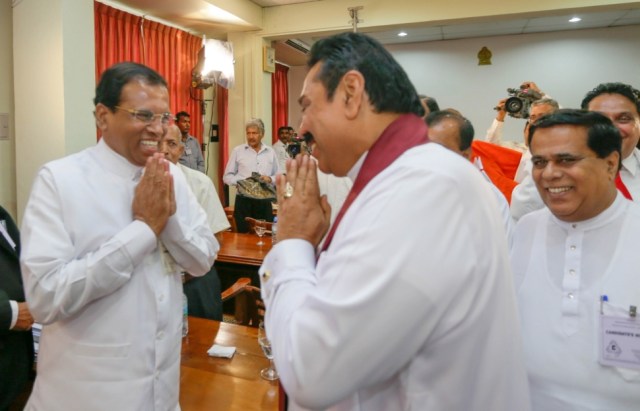
Change? The current and former Presidents are formerly close allies.

Change? The current and former Presidents are formerly close allies.

The Sri Lankan Presidential Election 2015: A Turning Point?

In a surprise election outcome in early January 2015, voters shocked themselves by dismissing Mahinda Rajapaksa, whose administration had led the country to the brink of authoritarianism. The new president, Maithripala Sirisena, has promised to restore freedom of the press, independence of judges, and the rights of religious and ethnic minorities. Moreover, after weeks of intense lobbying by the new Sri Lankan government, the UNHRC has agreed to hold off its consideration of the long-awaited report of the Commission of inquiry until September 2015 as part of a “one time only” deferral in the words of UN Human Rights Commissioner Zeid Ra’ad Al Hussein. At the same time, the new President of Sri Lanka has indicated that his new administration will consult the United Nations concerning plans to set up a domestic inquiry into the worst crimes committed in the final stages of the war. This move has been received as both surprising and welcome, particularly given the bitter encounters that had marked the previous administration in Sri Lanka.

However, Sri Lanka is going to face tremendous challenges and also hindrances: firstly, one should not ignore that the political elite is -despite all assurances- interdependent and interwoven. Mr. Sirisena was acting defence minister during the last stages of the war. This gives rise to the question if the people of Sri Lanka can expect impartiality and genuine conduct of war crimes investigation. One should also not ignore the strong support Mr. Rajapakse is enjoying among politicians and the rural Sinhala voters. Secondly, Sri Lanka is still a polarized nation, where Sinhala nationalism is still on the rise; the majority of the Sri Lankan political and social elite is Sinhala, while the minorities are left as social outcasts. Reconciliation is key for making the country a united nation, rather than a nation of communities. After years of erosion of the rule of law, a proper investigation into the alleged war crimes can establish confidence and set the first steps towards true reconciliation. Continue reading →

Posted in Guest Posts, Sri Lanka, UN Commission of Inquiry on Sri Lanka | Tagged , , | 8 Comments

What will define Bensouda’s tenure? We’re still waiting

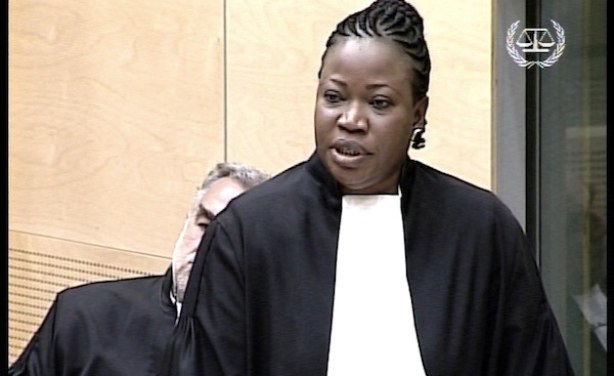
Fatou Bensouda with her predecessor, Luis Moreno-Ocampo (Photo: ICC)

Fatou Bensouda with her predecessor, Luis Moreno-Ocampo (Photo: ICC)

It has been three years since Fatou Bensouda assumed her position as chief prosecutor of the International Criminal Court (ICC). When the Gambian lawyer took over the post from Luis Moreno-Ocampo, it was widely believed that she would strike the right balance between continuity and change. While Bensouda had been Moreno-Ocampo’s loyal deputy prosecutor, her election also held out the promise of a shift in tone and substance.

One-third of the way through her tenure, there has been a palpable and seismic shift in the atmosphere within the Office of the Prosecutor (OTP). It is more open and transparent. It is a less hostile institution to outsiders, and there’s an absence of distracting and salacious rumours swirling through the Office’s halls. While the Court can never avoid media attention – and it shouldn’t – there has not been a single instance when Bensouda has brought disrepute or embarrassment to her Office. But here’s the catch: it still isn’t clear what the defining features of Bensouda’s tenure are or will be.

Consider this: with the exception of indictments issued for Jean-Pierre Bemba and his legal team on what amount to counts of obstructing justice, Bensouda’s office has yet to issue a single arrest warrant in three years. What explains this recalcitrance?

One hypothesis that certainly can’t explain the lack of new arrest warrants is opportunity. Under Bensouda, a number of official investigations have been launched, including in the Central African Republic and Mali. Preliminary examinations have also been opened in Ukraine and Palestine. Moreover, ongoing examinations have inched towards official investigations in Afghanistan and Iraq. The results of these decisions could very well come to define Bensouda’s tenure, but they haven’t yet. Still, these various interventions and potential interventions do point to an Office that has its fingers in a number of different pies and that isn’t lacking for work.

Relatedly, it is impossible to explain any decision made by the OTP without reference to the Office’s resource constraints. The OTP has a smaller budget than organisations like Human Rights Watch or Amnesty International and it is either at, or very close, to its maximum case and trial capacity. Taking many more cases would require a dilution of resources that would hinder the justice and accountability the Court can hope to deliver.

Still, the ICC doesn’t always have control over when its docket fills up. During Bensouda’s tenure, the Court surprisingly managed to get its hands on a number of suspects, mostly notably the Lord’s Resistance Army commander Dominic Ongwen, the former Democratic Republic of Congo rebel leader Bosco Ntaganda, and former President of the Ivory Coast Laurent Gbagbo. In other words, Bensouda’s hands have been full as her office enjoys the fruits of the Moreno-Ocampo era’s labour.

Of course, we can’t dismiss the mess of an institution that Bensouda inherited and, as the former deputy prosecutor, she has some responsibility for this situation. There is widespread recognition that the OTP under Moreno-Ocampo prioritised the impact of having arrest warrants issued over building cases strong enough to result in convictions. In Libya, the Court issued arrest warrants within just a matter of weeks of opening an official investigation.There have long been questions about the strength of the evidence against the prosecutor’s targets there. As a result of hastily constructed cases, the ICC’s first-ever trial – that of Thomas Dyilo Lubanga – almost collapsed on two occasions. At the same time, even if allegations of witness intimidation prove to be true, the case of Uhuru Kenyatta also collapsed in late 2014, at least in part because the structure of the case against the Kenyan President was weak. Continue reading →

Posted in Fatou Bensouda, ICC Prosecutor, International Criminal Court (ICC), International Criminal Justice, Luis Moreno-Ocampo | 3 Comments

A Funny Aside to the Whole Bashir-South Africa Debacle

(Photo: White House photo / Pete Souza) This official White House photograph is being made available only for publication by news organizations and/or for personal use printing by the subject(s) of the photograph. The photograph may not be manipulated in any way and may not be used in commercial or political materials, advertisements, emails, products, promotions that in any way suggests approval or endorsement of the President, the First Family, or the White House.

And then he said : “we’re not even a member of the ICC!” (Photo: White House / Pete Souza)

With the exception of basically everything written at Wronging Rights, “transitional justice jokes“, and occasional pieces from The Onion, the world of international criminal justice rarely produces funny moments. Franky, it would have shocked exactly no one if there wasn’t an ounce of humour to be found in the whole debacle that was Sudanese President Omar al-Bashir’s recent visit to South Africa in defiance of international and domestic law. But then there was a rather hilarious exchange between journalists and Jeff Rathke spokesperson for the US State Department. As with all humour, it’s the truthiness of the subject matter that has the best comedic effect (but I’ll let the transcript speak for itself):

QUESTION: What makes South Africa different from other countries where Bashir has traveled to before?

MR RATHKE: Do you have some specific —

QUESTION: You want me to speculate or what?

QUESTION: He was also in Egypt.

MR RATHKE: No, the specifics. I said you —

QUESTION: He – for example, the Secretary was recently in Nigeria for an inauguration. He was on the same VIP tribune as Bashir. There was no call to take action then. Is South Africa special, or you expect more of them than other African countries?

MR RATHKE: Well, I’ll let the South Africans speak to their own —

QUESTION: No, I’m asking about you.

MR RATHKE: — to their standards.

QUESTION: I’m not asking about South Africa.

MR RATHKE: Right, but —

QUESTION: I’m asking why you ask – demand this from South Africa in this instance, but you don’t demand it in other instances.

MR RATHKE: Well, again, we set —

QUESTION: That has nothing to do about South Africa.

MR RATHKE: We strongly support the ICC’s efforts to hold those accountable who are responsible for genocide, for crimes against humanity, and for war crimes.

QUESTION: Except when they go to Nigeria?

MR RATHKE: Well, I don’t have the detail of every place where President Bashir may have traveled, so I’m not —

QUESTION: He was there. You’re – I mean, the Secretary of State was there probably within 10 meters of him.

MR RATHKE: Well, I mean —

QUESTION: I was there.

And then it actually gets even better:

QUESTION: And then just to follow up to what Matt was saying, do you believe he should have been arrested?

MR RATHKE: Well, again, the – we strongly support the ICC’s efforts to hold those accountable who are accused of crimes like genocide, war crimes, crimes against humanity. So we certainly are disappointed that no action was taken.

QUESTION: So why is it that you haven’t joined up?

MR RATHKE: Pardon?

Continue reading →

Posted in Humour, International Criminal Court (ICC), South Africa, Sudan | Tagged | 3 Comments

Bashir in South Africa: Defeat, Victory or Both for International Criminal Justice?

JiC is thrilled to welcome Kurt Mills for this guest-post on the implications of Sudanese President Omar al-Bashir’s visit to South Africa. Kurt is a Senior Lecturer in International Human Rights at the University of Glasgow and the author of the forthcoming book International Responses to Mass Atrocities in Africa: Responsibility to Protect, Prosecute and Palliate.

Omar al-Bashir South Africa

Omar al-Bashir upon his return to Khartoum from the AU Summit in South Africa (Photo: Reuters)

A remarkable scene played out in South Africa on 14 and 15 June. Over the course of two days, global and regional geopolitics were pitted against international justice norms as a wanted war criminal – President Omar al-Bashir of Sudan – defiantly came to the country to attend an African Union summit and stealthily fled ignominiously in fear of being arrested.

In 2005, the UN Security Council referred the situation in Darfur, where Bashir’s government has been accused of committing and supporting war crimes, crimes against humanity, and genocide,, to the International Criminal Court (ICC). An arrest warrant was issued by the ICC in 2009. While African countries were some of the strongest supporters of the ICC from the beginning, and there are 34 African states which are members of the Court, the case against Bashir has played out against the backdrop of accusations of bias on the part of the ICC against Africa and charges of neo-colonialism. The African Union has asked (to no avail) that the Security Council suspend the case against Bashir (as well as those against the President and Deputy President of Kenya) and called on African states not to cooperate with the ICC. Some African leaders have called for a mass withdrawal from the Rome Statute of the International Criminal Court.

Yet, while various statements from the AU appear to project a unanimous antipathy to the ICC on the part of African States, the reality is more complicated. Indeed, South Africa has asserted a number of times that it would arrest Bashir if he came to South Africa. But because of a number of regional and global dynamics, South Africa, like many other African countries, is in a difficult position with a contradictory relationship to the ICC and human rights more generally and is pulled in multiple directions simultaneously. Two issues, in particular, are most relevant here.

First, there has been a sea-change globally with regard to the relationship between human rights and state sovereignty; it has been recognised that States cannot do whatever they want to their people and that sovereignty entails responsibilities toward citizens. The AU Constitutive Act has specifically recognised the right of the AU to intervene when states commit mass atrocities against their people. Yet many leaders are having a hard time accepting that they and their colleagues in other countries are not immune to charges of mass atrocities.

Second, (many) African states are torn between supporting human rights and pan-African solidarity. When faced with supporting global human rights norms or showing support for a fellow African leader, two aspects of contemporary African politics come into conflict.

In the current situation, South Africa, even though it has repeatedly stated that it would arrest Bashir, appears to have chosen African solidarity over its global human rights obligations.

On 14 June, the South Gauteng High Court, in response to an application by the South African Litigation Centre, ordered the government to temporarily prevent Bashir from leaving South Africa until a full hearing could be held on the request to arrest Bashir and send him to The Hague. On 15 June, the court held a brief hearing and then adjourned for an hour at the request of government lawyers who argued they needed more time to review documents. Minutes later, Bashir was allowed to leave on his plane, which had been moved from a civilian airport to a military base. The court, before being informed of Bashir’s departure, subsequently called the government’s actions unconstitutional and ordered it to arrest Bashir.

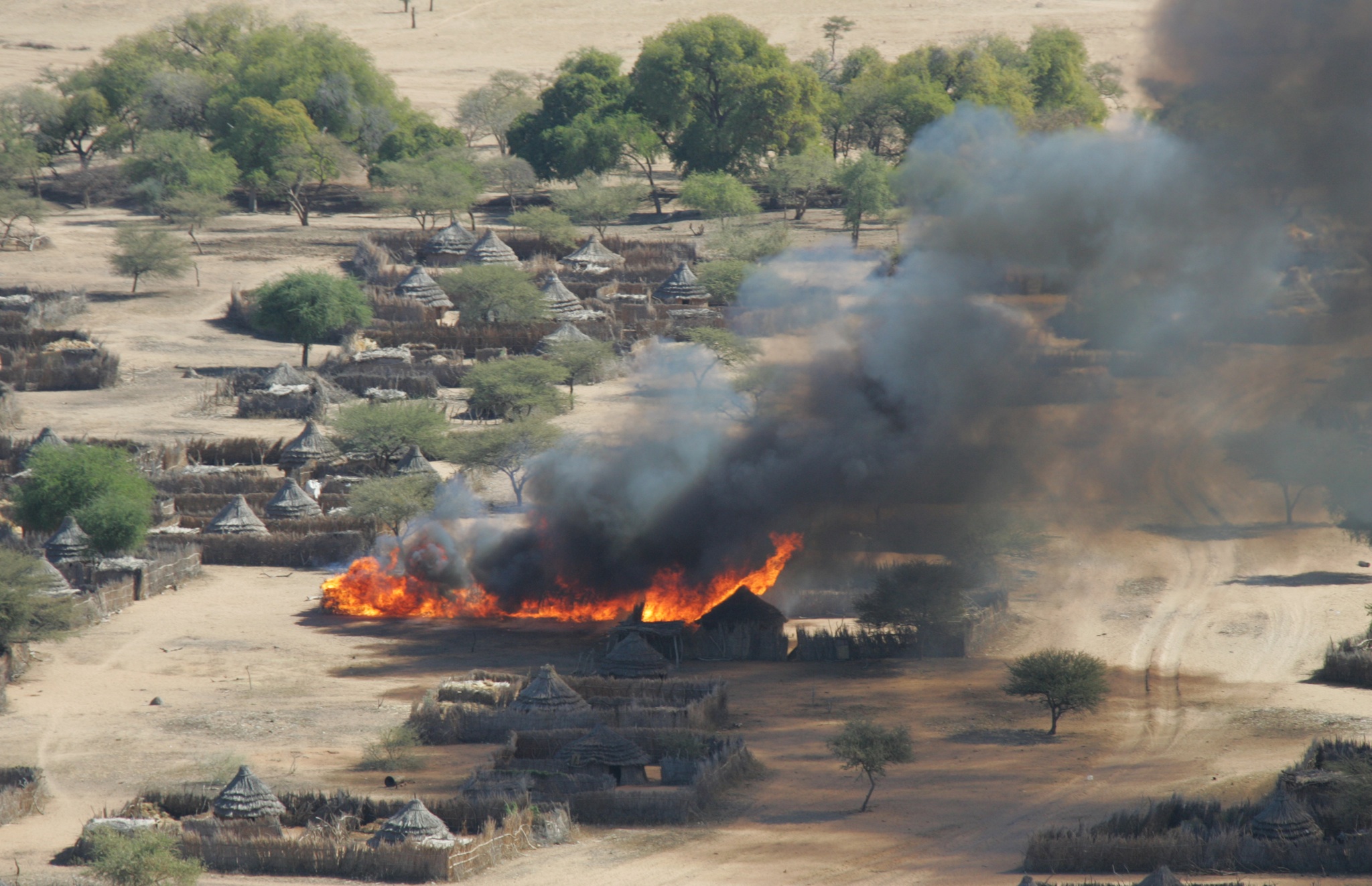
A village in Darfur burns following an attack (Photo: Eric Reeves)

A village in Darfur burns following an attack (Photo: Eric Reeves)

What are the implications of what appears to be a blatant disregard for the rule of law and international legal obligations?

First, the fact that Bashir was forced to surreptitiously leave the AU summit early demonstrates that the ICC does, in fact, have an effect. Bashir has been delegitimised and is on the run like a common criminal. He had twice previously refrained from coming to South Africa because of fear of arrest. This time it appears that he decided to try to test the ideational power of the ICC. The South African Government tried to endow Bashir – and all other leaders attending the AU summit – with immunity. It argued that this is based on general principles of international law, but an exception to head of state immunity has developed in cases of the commission of international crimes. Further, the Rome Statute clearly indicates that nobody is immune to prosecution. Although Sudan is not party to the Rome Statute, the Security Council referral gave the ICC jurisdiction and removed Bashir’s immunity in this situation. Continue reading →

Posted in African Union (AU), Darfur, Guest Posts, Human Rights, International Criminal Court (ICC), International Criminal Justice, South Africa, Sudan | Tagged , | 2 Comments

Silver Linings: Bashir’s Visit to South Africa
 and its Implications for the ICC

There has been much speculation over the controversial trip by Sudan’s President, Omar al-Bashir to South Africa this week and its implications for the International Criminal Court (ICC). Here are some of my thoughts on subject. This article was originally posted at the Monkey Cage Blog here.

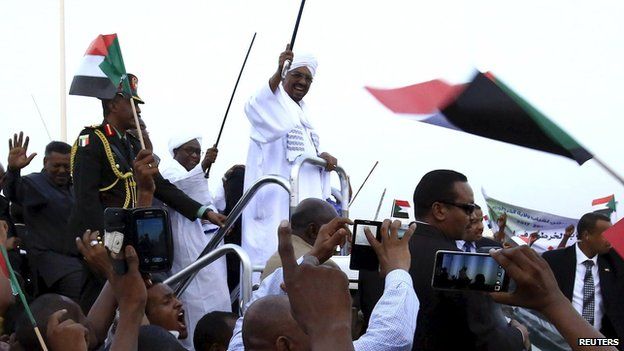
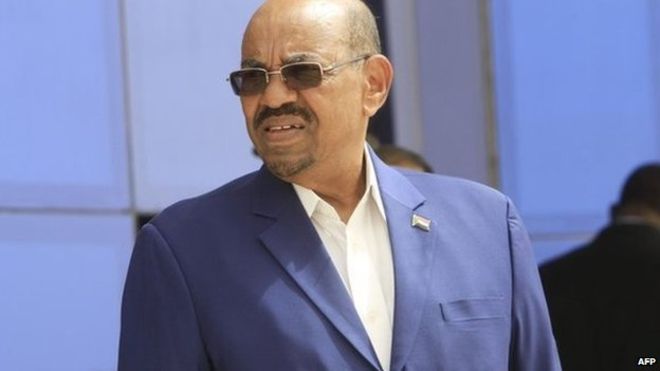
Omar al-Bashir earlier this week in South Africa (Photo: BBC)

Omar al-Bashir earlier this week in South Africa (Photo: BBC)

When Sudanese President Omar al-Bashir decided to attend the recent African Union (AU) Summit in South Africa, he must have thought it presented yet another opportunity to escape his pariah status. Bashir holds the notorious distinction of being the only person whom the International Criminal Court (ICC) indicted for the unholy trinity of international crimes — crimes against humanity, war crimes and genocide.

South Africa has been a traditional defender of the ICC and has previously insisted that it would arrest Bashir if he stepped foot on its territory. His visit to South Africa with impunity seemingly sent a powerful signal that the ICC’s indictment no longer constrains his movements. Instead, South African courts moved to ban Bashir from exiting the country as they considered whether and how to fulfill its legal obligation to arrest him and turn him over to The Hague. Thus, while Bashir managed to escape the country and the ICC’s credibility was certainly taken a hit, there are also positives to take from the Sudanese president’s visit — and the responses to it.

Bashir was first indicted by the ICC in 2009 for his alleged role in ordering mass atrocities in Darfur. The fact that he has never been tried for those crimes and has successfully traveled to several countries including Saudi Arabia, Kenya and the Democratic Republic of Congo, is an ongoing stain on the court’s record and an insult to the victims of atrocities in Darfur. To date, however, South Africa is the most diplomatically influential ICC member-state to host the Sudanese president. Had his visit passed smoothly, other states may have felt emboldened to host Bashir in the future. That would have been potentially catastrophic for the ICC and its champions. However, the outcome of Bashir’s South African visit was something very different.

While his arrival took observers by surprise, given the ICC warrants against Bashir, coverage of the AU Summit was dominated by questions over the wisdom and legality of hosting Bashir. The South African government was forced to consider whether it was obliged to arrest the Sudanese president — and to legally justify its position. Further, the government felt it necessary to identify legal loopholes, such as having Bashir depart from a military, rather than civilian, airport, in order to guarantee his safe passage out of South Africa. In other words, it is wrong to assume that South Africa could simply do whatever it wished. The ICC had an impact on the country’s political and legal calculus — even if the results left much to be desired.

The AU Summit will also help to clarify the complex and dynamic relationship between African states and the ICC. South African diplomats and lawyers have argued that there are ambiguities with regards to their obligation to arrest Bashir and that they are torn between their obligations to the ICC and those they have to the African Union. In time, those arguments will be tested and judged. Moreover, African states and diplomats continue to play an indispensable role in supporting the work of the ICC. What we have witnessed in the past few days is an outpouring of criticism of the government of South Africa, not only from Western states but, most importantly, from across Africa. It will be increasingly implausible for African governments not to clarify their positions regarding their support of, and obligations to, the court.

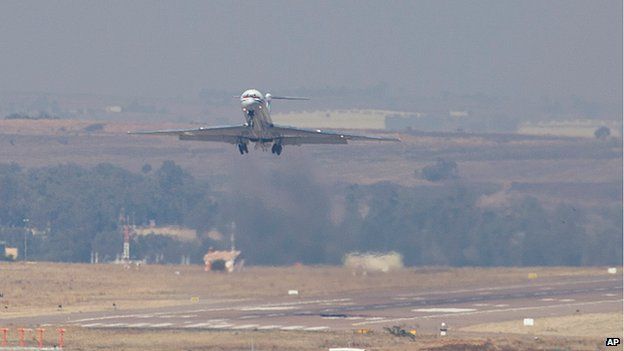
The plane said to be carrying Bashir takes off from a military airport in Pretoria (Photo: AP)

The plane said to be carrying Bashir takes off from a military air base near Pretoria (Photo: AP)

Although Bashir has already left South Africa, the order of arrest from a court in Pretoria will also help set a precedent and clarify the precise obligations states have toward the ICC. By hosting Bashir, the South African government unwittingly raised the costs of its insolence. Not only are they in violation of their legal obligations to the court but they have been, in essence, found to have violated domestic law as well. The likelihood of a repeat visit has surely been diminished.

While fears over the repercussions of Bashir’s visit have received the majority of public and media attention, African leaders’ support for the ICC has also been on full display. Just days before the summit, Tanzanian President Jakaya Mrisho Kikwete visited the court to declare that: “Our support for the ICC is based on the important work that the Court is doing.” That followed Malawi’s decision to undermine any attempts by Zimbabwean President Robert Mugabe to push for an Africa-wide pull-out from the ICC at the AU Summit. In response to Bashir’s arrival to the summit, Sidiki Kaba – who is the president of the Assembly of States Parties of the ICC as well as the justice minister of Senegal – exclaimed his “hope that South Africa, which has always contributed to strengthening the court, will spare no effort to ensure that the warrants of arrest are executed.” In short, there was no shortage of support for the court and anti-ICC sentiment in Africa is far from universal. Continue reading →

Posted in African Union (AU), Darfur, Genocide, International Criminal Court (ICC), International Criminal Justice, South Africa | Tagged | 6 Comments

The ICC and ISIS: Be Careful What You Wish For

Over the past few weeks, JiC has covered issues pertaining to international justice and accountability in Syria and Iraq, including the wisdom of a United Nations Security Council referral of the Islamic State to the International Criminal Court (ICC). This post continues that conversation, and considers whether a referral of ISIS to the ICC would be useful in achieving justice and peace. This article was originally posted at ISN Zurich.

ISIS ICC

A fighter from ISIS in this still from a propaganda film released by the group.

A growing number of voices have called for the International Criminal Court (ICC) to investigate the mass atrocities and human rights violations committed by the Islamic State. In a New York Times op-ed John Bellinger III, a former official in the George W. Bush administration, insisted that an ICC investigation of ISIS was warranted and that the Court was the best venue for bringing ISIS combatants to justice. On the very same day, the New York Times editorial board declared its support for a United Nations Security Council referral of ISIS to the ICC. More recently, the U.S. Commission on International Religious Freedom has added its voice, recommending that the ICC investigate and prosecute ISIS members in Iraq and Syria.

ISIS is precisely the type of terrorist organization that proponents of international criminal justice had in mind when the ICC became a functioning entity in 2002. For many, putting senior ISIS figures on trial – rather than venturing into additional and legally questionable military forays or expanding an already nefarious drone programme – would be a great victory for international justice.

Indeed, so many groups and figures have thrown their support behind an ICC intervention against ISIS that the Court’s chief prosecutor, Fatou Bensouda, felt compelled to publicly clarify that her office 1) did not have jurisdiction to investigate senior ISIS leaders in Iraq or Syria, and 2) would not do so without a referral from the UN Security Council.

But the reality is that a UN Security Council referral of ISIS to the ICC would be disastrous – for both the interests of international justice and the prospects for peace in the region.

Bad for Justice and Accountability

Few things have hobbled the ICC’s reputation as much as the perception that it is selective. Critics of the Court point to the fact that the ICC has only ever intervened in African states. But even if one believes, as many do, that all of the situations in which the Court has intervened warrant ICC investigation, the Court has also shown a propensity to only target one side of a conflict and not the other.

Consider, for example, the case of northern Uganda. In 2004, the President of Uganda, Yoweri Museveni, met with then-ICC Chief Prosecutor Luis Moreno-Ocampo in London to finalize the terms of Uganda’s self-referral. Despite a twenty-year civil war in which both government and rebel forces had committed mass atrocities, the end product was a declaration that referred only the Government’s adversaries, the Lord’s Resistance Army (LRA), to the ICC. This was eventually amended in order to cover all alleged crimes committed in northern Uganda but, in many respects, the damage had already been done. By meeting publicly with Museveni and initially accepting a referral that exclusively focused on the LRA, the ICC was seen as biased against the rebels and partial towards the Government. This is a reputation that it has never been able to shake in the affected areas of northern Uganda.

The example of northern Uganda has inspired an ongoing debate regarding the legality of restricting the ICC’s jurisdiction to groups like ISIS or the LRA. But irrespective of its legality, accepting a referral of ISIS – or of any group for that matter n would do nothing but undermine the Court’s legitimacy and independence. Such a referral would have to reflect UN Security Council politics to the point of making a mockery of international criminal justice.

Continue reading →

Posted in ICC Prosecutor, International Criminal Court (ICC), International Criminal Justice, Iraq, ISIS, Justice, Libya, Libya and the ICC, Middle East, Syria, UN Security Council, War crimes | 11 Comments

Changing the Way We Talk To, and About, Each Other: Nation-Building and Aboriginal Abuses in Canada

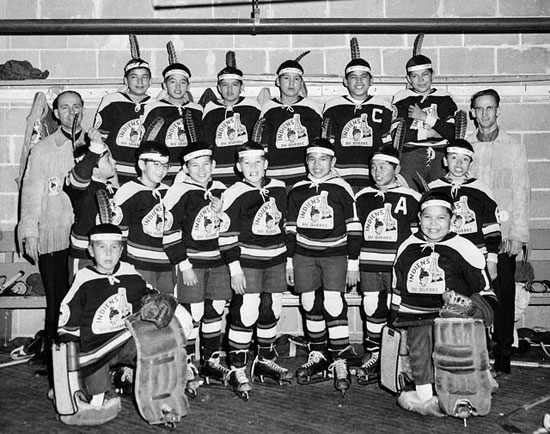
A hockey team from a residential school in Maliotenam, Quebec, in 1950 (Photo: Archives Canada / PA-212964)

A hockey team from a residential school in Maliotenam, Quebec, in 1950 (Photo: Archives Canada / PA-212964)

The statistics are shocking, the numbers unbecoming of a modern, liberal, and democratic state like Canada. And yet, when Canada’s Truth and Reconciliation Commission released its long-awaited report last week, many Canadians were likely surprised to be confronted with the harrowing details of systemic and systematic atrocities perpetrated against indigenous communities as a matter of government policy.

The Commission outlined the Canadian government’s 120-year policy of forcibly displacing tens of thousands of Aboriginal children and assimilating them via Residential Schools. Many were subsequently mentally, physically, and sexually abused. Some six thousand perished. The odds of a child dying in a Residential School were greater than the odds of a Canadian soldier perishing in WWII. In 2013, Andrea Russell described just some of the horrors that emanated from the testimonies of victims and survivors:

Government planes flew into remote Aboriginal villages without notice and departed mere minutes later with all of the village children on board, heading to new lives at the residential schools. Children as young as five were severely beaten for speaking their native language at the schools, or for refusing to eat food that was completely foreign to them. Students taken from their parents and who returned home up to twelve years later were completely changed and unable to communicate with their families. Many other children never returned at all, with at least 3,000 of them dying of disease or during ill-fated escapes through wintry northern landscapes… The underfunded system of ‘schools’ was staffed by unscreened and untrained teachers and guardians, a frightening number of whom regularly sexually molested and physically assaulted the children.

Beyond outlining a sickening succession of abuses and crimes, however, the Commission’s report also exposes certain dilemmas and opportunities for a country confronting its violent past and reconciling uncomfortable facts with a vision and version of Canada that is widely seen as incommensurable with the systemic abuses perpetrated against Aboriginal communities.

Seeking justice for past crimes inevitably exposes a host of dilemmas. Amongst the most salient is how to effectively recognize both the individual and collective nature of the crimes committed. By virtue of the fact that all human life is social life, mass atrocities inevitably include some element of collective or communal violence. In Canada, this has been recognized by the ongoing debate over whether the treatment of Aboriginals in the Residential School System constitutes “cultural genocide”, a crime which necessitates an appreciation of not only the violence committed against the individual children who were torn apart from their communities but also the consequent and devastating tears in the social fabric of indigenous communities and cultures. The current discourse around the Truth and Reconciliation Commission’s findings thus reveals the dual-nature of violations committed by the Canadian state against Aboriginal communities – the violation committed by the seizure and mistreatment of the child via the Residential School System as well as the residual violation incurred by the affected communities.

The complex nature of such crimes also makes them remarkably difficult to address. Beyond issuing reparations to affected individuals and communities, perhaps the most meaningful and long-lasting measure that Canada can take, and one described at length by the Commission, is to re-imagine how Canadians learn of the Residential School System and the wider oppression of Aboriginal communities.

The observation that Canada’s education system has failed to adequately cover the history and treatment of indigenous peoples is nothing new. In response to the Commission’s report, John Ralston Saul echoed what has been vocalized on many previous occasions:

We know that the curricula in schools and universities do not reflect the reality of the country. Curricula are always intellectual constructs, often ideological interpretations. Ours, for example, largely exclude the fundamental building block of our society – that is, the indigenous reality, past and present.

Canadian students have regularly insisted that they don’t learn or engage sufficiently with the historical abuses of aboriginal communities. Courses generally still privilege the successes of Canadian state formation, romanticize the emergence of a country via British-French military battles and political negotiations, elevate our country’s growth as a power punching above its weight in the world wars and the post-WWII era, and celebrate our contributions to global democracy, human rights, and peacekeeping. Canadians harnessed the wild and toiled in near-impossible circumstances to create a fair, equitable, and democratic state. All of this is true. But it has come at a cost. At best, the treatment and history of aboriginal peoples dips in and out of this dominant version of history. At worst, the role of indigenous peoples are relegated to the neglected footnotes and margins of this grand narrative. Continue reading →

Posted in Canada, Truth and Reconciliation Commissions, Truth Commission | Tagged , , | 5 Comments

Addressing the Economic Dimensions of Mass Atrocities: International Criminal Law’s Business or Blind Spot?

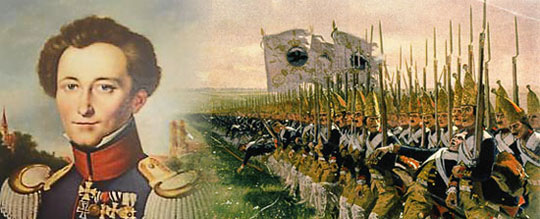
Carl von Clausewitz, a Prussian general and military theorist (Photo: Quotessays.com)

Prussian general and military theorist, Carl von Clausewitz (Photo: Quotessays.com)

The past few decades have witnessed a burgeoning literature examining the economic dimensions of modern warfare. Indeed, if Prussian general and military theorist Carl von Clausewitz could argue in 1832 that war is merely a continuation of politics by other means, more recent studies seem to suggest that modern conflict is often as much, if not more, a continuation of economics by other means.

For international criminal lawyers, the question that naturally arises from such studies is the extent to which international criminal law can and should address the economic dimensions of mass atrocity situations. With this question in mind, this post summarises three perspectives from which scholars and practitioners have been examining the potential and limits of international criminal law as a response to the political economy of mass atrocity situations.

The Critical Perspective: Illuminating the Structural Economic Causes of Violence

Beginning with the most critical literature, a number of studies have sought to illuminate the economic aspects of conflicts that international criminal law is least equipped to confront: the structural economic causes of violence. Structural causes of conflicts, whether political or economic, often fall beyond the purview of international criminal law since they are generally too remote to be of legal relevance to the culpability of the defendants on trial.

As such, international criminal law has tended to be blind to factors as diverse as land distribution, extreme poverty, demographics, social marginalisation, and widespread economic injustice, all of which may be brought about by the normal operation of the global economy. As Mégret has provocatively put it, international criminal law has been at permanent risk of grossly underestimating “such trivialities as the world’s billion poor, 800 million hungry, 2.4 billion without sanitation, or 90 million children without basic education”. Whilst these forms of extreme structural violence are generally not sufficient causes of mass atrocities, it is widely accepted that deeply embedded inequalities have often pre-existed the onset of violent conflict.

Continue reading →

Posted in Economics of Conflict, ICC Prosecutor, ICTY, International Criminal Court (ICC), International Criminal Justice, International Criminal Tribunal for Rwanda (ICTR), Justice, Special Court for SIerra Leone (SCSL) | 3 Comments

Justice and Accountability in Syria: The Limited Options at Hand

Shikha Dilawri and Mark Lattimer join JiC for this guest-post on the options available for achieving justice and accountability in Syria. Mark is the Director of the Ceasefire Centre for Civilian Rights and co-editor of Justice for Crimes Against Humanity. Shikha works with the Ceasefire Centre for Civilian Rights and Minority Rights Group International.

(Photo: Freedom House, Creative Commons)

(Photo: Freedom House, Creative Commons)

Atrocities continue to mount in Syria and the situation has become no less critical a year after the UN Security Council failed to pass a resolution to refer the situation to the ICC. Answers remain elusive, with different parties to the conflict continuing to perpetrate war crimes and crimes against humanity – including massacres of civilians, indiscriminate aerial bombardment, enforced disappearances, systematic torture, rape, and the use of children in hostilities. Meanwhile, the heavy focus on ISIS or Da’ash has detracted international attention from the broader humanitarian disaster, now turning the Mediterranean into yet another site of the Syrian tragedy.

Evidence continues to be collected assiduously by groups such as the Syria Justice and Accountability Centre and the Commission for International Justice and Accountability, the latter’s efforts sparking the claim a few weeks ago that enough evidence had potentially been accumulated to indict Bashar al-Assad and other high-ranking government officials. Yet the impact of this development is tempered by current political realities which seem to dictate that the possibility of firmly holding the regime to account will depend either on a transition in government, a political about-face within the Security Council – or both. With no end in sight to the ongoing atrocities in Syria or the political stalemate at the Security Council, it seems that for Syrians, akin to Kafka’s man before the law, access to justice under international law will remain unattainable in the foreseeable future.

With a transition in doubt, there is growing recognition of the need to explore alternative avenues towards securing justice in Syria and to move beyond the somewhat myopic focus on a Security Council referral of the situation to the ICC, and the assumption that the Court is the only game in town.

Against this backdrop, the joint report recently launched by the Ceasefire Centre for Civilian Rights and the Syria Justice and Accountability Centre evaluates the feasibility and potential impact of the various current accountability options for crimes under international law committed in Syria. Acknowledging that the pursuit of justice does not take place within a vacuum, the analysis teases out the practical and ethical challenges presented by these options by briefly exploring how different approaches to justice and accountability could interact with conflict dynamics and affect a future transition in Syria.
As mentioned above and explored in detail elsewhere, there are constraints on the practicality and efficacy of the most prominent mechanisms for securing justice in Syria. The current realities generally forestall the use of domestic prosecutions, which will likely only become a widespread option in the distant future. An ICC investigation with jurisdiction over the entire Syrian situation does not appear to be possible now or in the near-term. However, as the report details, involvement of the ICC is still hypothetically an option, as the Court could still exercise jurisdiction over the thousands of nationals of states parties to the ICC who are fighting in Syria. Still, even if a high-ranking foreign member of an opposition group or senior Syrian official with dual nationality came under the ICC’s jurisdiction, this would raise the thorny question of how such a limited investigation might affect Syrian perceptions of international justice in general and the ICC in particular, especially if those most culpable are seen to be out of reach of prosecution.

More recently, the debate on securing justice has turned to the possibility of developing a special or hybrid tribunal for Syria, an option that has gained ground since the drafting of the ‘Chautauqua Blueprint’ in August 2013. Proponents have emphasised the flexibility and reach of hybrid tribunals, institutions which can combine international and domestic laws while also potentially allowing for a greater number of prosecutions than at the ICC. Yet, as the report suggests, a hybrid tribunal in the present context would not be a particularly feasible or prudent route towards achieving accountability for victims of the Syrian crisis. Absent the possibility of developing such a tribunal in Syria at present, there is the potential to do so in a neighbouring country – for example, Turkey or Jordan – or within an internationally protected buffer zone in Syria if one was to be created (which appears unlikely). Nevertheless, attempts to develop a hybrid tribunal now would be met with the practical challenges of transcending UN political dynamics, as well as potential difficulties convincing a neighbouring state to take on the political, financial, and logistical burdens that such a tribunal would impose. In all likelihood, a premature hybrid tribunal would be dismissed by many Syrians due to its lack of impartiality – whether in fact or as a matter of Syrian perceptions – and scupper the chances for a more effective tribunal in the transitional period.

The report also points out that a less explored accountability option is the use of foreign courts outside Syria to pursue criminal prosecutions and civil actions. In a context where the prospect of a more comprehensive approach towards securing justice appears bleak, foreign courts may prove a useful first step towards accountability. National prosecuting authorities in foreign (particularly European) countries may be able to pursue criminal investigations into crimes in Syria so long as they fall under one of the several principles of extraterritorial jurisdiction. For example, Sweden recently applied universal jurisdiction to the Syria conflict, convicting a Syrian rebel fighter of war crimes. Civil courts, on the other hand, could provide monetary redress to those seeking justice for violations perpetrated during the conflict. Continue reading →

Posted in Guest Posts, ISIS, Justice, Syria, Transitional Justice | Tagged , , , | 3 Comments