Luis Moreno-Ocampo’s Lands a New Job – at the World Bank

(Photo: RNW)

We thought he was going to FIFA to investigate ethical breaches and corruption. He had wanted the post but, at the last moment, lost the job. Now, however, the World Bank is apparently set to hire Luis Moreno-Ocampo, former Chief Prosecutor at the ICC. From Reuters:

“The former chief prosecutor of the International Criminal Court will lead a review of Bangladesh’s investigation of alleged corruption tied to a major bridge project, the World Bank said late on Friday.

Luis Moreno Ocampo will head the three-member panel and deliver a report to the World Bank, one of several steps necessary for the Washington-based development institution to resume its $1.2 billion line of credit. Ocampo sought to prosecute individuals for crimes against humanity at the ICC, located in The Hague, Netherlands.

The World Bank canceled funding for the Padma River development in Bangladesh in June, saying it had “credible evidence” of high-level corruption among Bangladeshi government officials.

The Padma Multipurpose Bridge, at 4 miles long, would be the longest water crossing in the country, linking the underdeveloped south with the capital Dhaka and the main port of Chittagong.

The bank said it would resume financing of the project once agreed measures with the government were implemented.

These include an outside panel of experts to assess the credibility of the government’s investigation into allegations of corruption in the bridge project by the specially appointed Anti-Corruption Commission of Bangladesh (ACC).

Joining Ocampo on the panel are Timothy Tong, the former commissioner of the Independent Commission Against Corruption in Hong Kong, and Richard Alderman, former director of Britain’s Serious Fraud Office.”

As always, it will be interesting (and likely entertaining!) to see how Moreno-Ocampo performs in his new position.

For Bangladesh – as it would have been for FIFA and President Sepp Blatter – it never looks good to have a former Prosecutor of war crimes, crimes against humanity and genocide investigating the government’s decision-making and policies. But it certainly does make it appear to the wider public that the issue of corruption is being taken seriously.

In comparison to the FIFA job, heading the panel is small peanuts, especially for an individual who has a penchant to seek the spotlight and clearly adores public attention. That being said, Moreno-Ocampo’s inclusion as the head of panel has the potential to bring much greater media and international focus to issues of development and corruption in Bangladesh. That may be bad for certain figures in Bangladesh’s government but it may be very good for accountability.

Interestingly, there is also a Libyan and Canadian connection to the story. According to the Reuters report,

“Two former executives from Canadian engineering company SNC-Lavalin Group Inc, which bid to supervise the contractor on the bridge project, appeared in a Toronto court in July accused of bribing officials in Bangladesh.

Canada launched an investigation last year into allegations of corruption in the bridge bidding process after the World Bank brought the issue to their attention.”

SNC-Lavalin has been rocked by scandals in recent months after it was revealed that the company had very close ties to the Gaddafi regime.

Posted in ICC Prosecutor, International Criminal Court (ICC) | Tagged , , | 3 Comments

Intervention in Mali: Does R2P Apply?

James P. Rudolph joins us for this fascinating guest-post on the need to respond to the ongoing crisis in Mali. James is an attorney in Washington, D.C. and California where his work focuses on international law. In this post he guides us through the various political, economic and legal responses available to the international community, focusing in particular on the potential for an R2P-response to the violence in Mali. 

A family in Bamako, escaping violence in Gao (Photo: Joe Penney/Al Jazeera)

Six months ago, a coup d’état toppled President Amadou Toumani Toure (“ATT”), the democratically elected leader of Mali, and soon thereafter ATT went into exile; armed groups in the north, inspired by a strict and austere interpretation of Islam and the desire to impose Sharia law on the entire country, have engaged in jihadism, terrorism and arms trafficking; and many of Mali’s cultural treasures and riches have been destroyed by the same armed groups who consider much of modern civilization – i.e., the West – to be decadent and depraved and thus in need of purification.

Lamentably, most of these developments – marauding and irredentist Islamists linked to al-Qaeda in the Islamic Maghreb, the destruction of cultural relics and objet d’art, threats to World Heritage sites – have been overlooked or ignored. To be sure, some outlets – notably The New York Times and the BBC – have done their part to sound the alarm, and Alain Juppé, the former foreign minister of France, was told in March that if these groups gained control of the north, Mali would be turned into another Afghanistan.

Nevertheless, much of the world’s reaction has been subdued or nonexistent. This is regrettable, for what is happening in Mali has the potential to turn into a full-blown civil war with international peace and security implications. That is, certain regional organizations – namely, the Economic Community of West African States, or Ecowas – have already been sucked into the vortex of violence and armed conflict. Obviously, the situation is more than an internal disturbance, with Mali’s neighbors worried about contagion and France positioning troops in the Sahel. That this is of concern is not doubted.  But when it comes time to settling on an appropriate response to this ostensibly internal conflict, the international community seems stuck. In an effort to contribute to a workable solution, this essay proposes that there already is a framework for thinking about the crisis in Mali.  It’s called the Responsibility to Protect (R2P), and it offers, at a minimum, a way forward.

R2P entails, interestingly, more than the responsibility to protect. Indeed, the concept has built within it three responsibilities: the responsibility to prevent, the responsibility to react and the responsibility to rebuild. As the situation in Mali seems already to have passed the point where prevention would be effective, the real focus must now be on the responsibility to react. Notwithstanding this conclusion, and to ward off any confusion concerning the use of force, the responsibility to react also has preventive steps to take before coercive, non-consensual force is used. To be sure, military force is part of the responsibility to react, but it is always a last resort and only if it is likely to do more good than harm.

Thus, the focus must first be on the other options within the reaction “toolbox,” and only if these fail can we seriously consider the use of force. These other steps include political and/or diplomatic responses; constitutional and/or legal responses; economic and social responses; and security-sector measures. We will take these in turn.

Members of Ansar Dine in Gau, northern Mali (Photo: Reuters)

Political and diplomatic responses are actually divided into political incentives and political sanctions. Incentives include things like diplomatic recognition, membership in international organizations, cancellation of debt, etc. In the case of Mali, we are dealing with a bifurcated country (with two-thirds of the country controlled by Islamists), so these incentives are unlikely to work, because the real issue is how to get the government in Bamako, the capital, back in control of the north.  Likewise, political sanctions (things like withdrawal of diplomatic recognition, expulsion from international organizations, travel bans) are, like political incentives, of dubious utility.

The next option, therefore, is the constitutional/legal option, but to be precise, the constitutional option is really about long-term, structural changes tailored to prevent atrocities in the first place, so the focus here is on legal options. In short, this means criminal prosecution. First and foremost, national governments continue to play the primary role in enforcing international law, and this includes prosecution for crimes subject to universal jurisdiction like piracy, genocide, torture, crimes against humanity, etc. It is only when the state is unable or unwilling to prosecute (other than referrals by the Security Council) that institutions like the International Criminal Court (ICC) get involved. Unfortunately, the government in Bamako, which lost control of two-thirds of the country, seems unable to mount an effective prosecution of the crimes being committed in the north. Indeed, Mali is seeking international help by, among other things, asking the ICC to launch an investigation into possible war crimes, signaling its intent to rely on outside help. But launching an investigation and actually apprehending suspects are two different things, as the case of Omar al-Bashir in Sudan so painfully reminds us.

Continue reading

Posted in Justice, Mali, Responsibiltiy to Protect (R2P), UN Security Council, United Nations, War crimes | Tagged | 7 Comments

A Quiet Injustice: Degenerating health conditions in the Gaza Strip

The following is a guest-post from Megan Norbert, who is currently the Legal Advisor for the Palestinian Centre for Human Rights in the Gaza Strip, as well as an external PhD Candidate at Tilburg University in the Netherlands. In this timely post Megan tackles the ongoing injustice and potential international crime that is the deteriorating health conditions in the Gaza Strip. Enjoy!

(Photo: Rafah Today)

Most people are familiar with the Palestinian-Israeli conflict and, rightly so, a great deal of attention is paid to the attacks occurring there against civilians and civilian property. However, beyond the drama of the conflict, a number of other injustices are occurring, that escapes notice, particularly in the Gaza Strip. Amongst the most pressing of violations of international humanitarian and human rights law is the quickly degenerating health conditions in the Gaza Strip, which are a direct result of the conflict between Israel, the West Bank and the Gaza Strip.

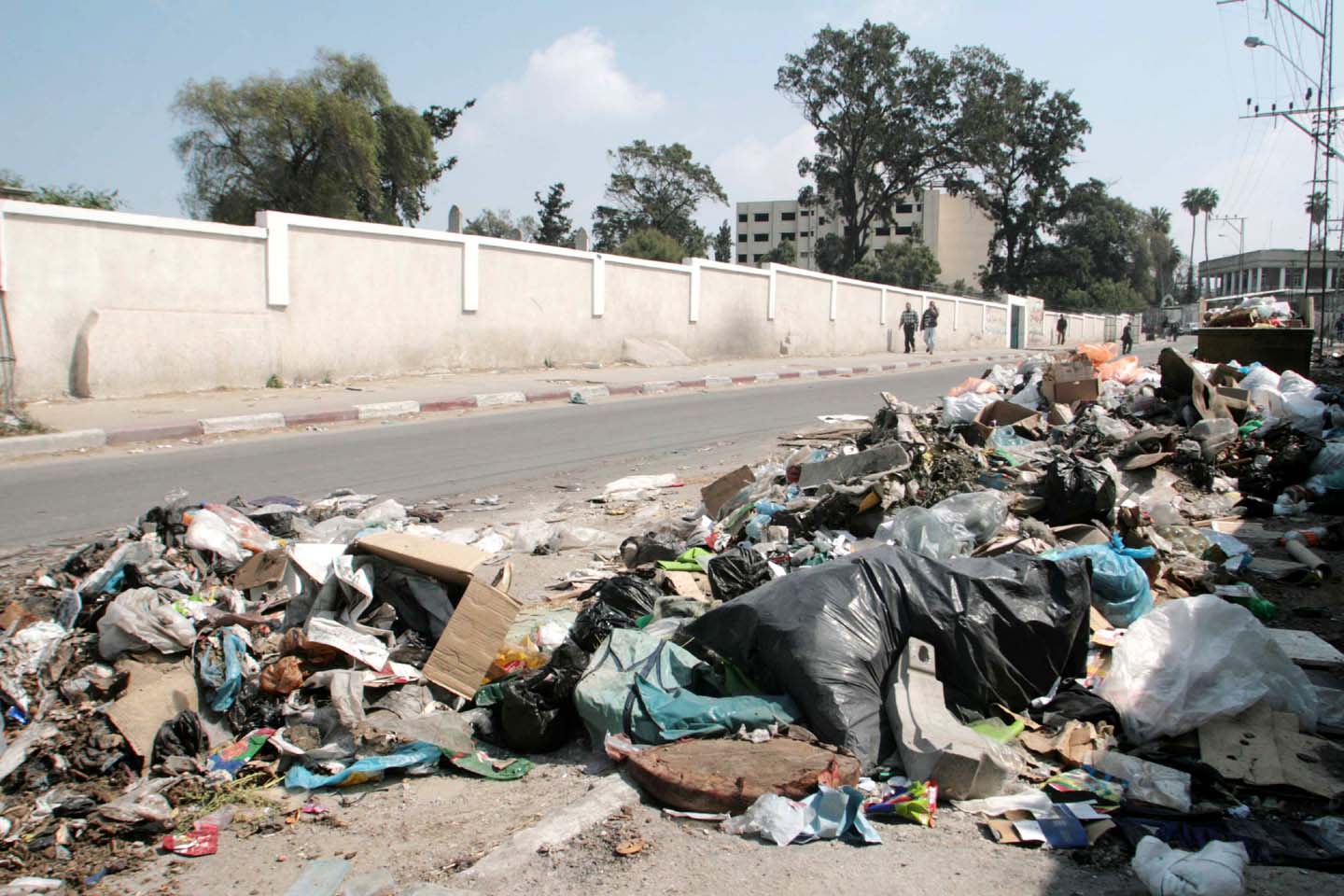
With the current population of 1.7 million crammed into just 365 square kilometres (141 square miles), the Gaza Strip is one of the most densely populated regions in the world. But, with no landfill, piles of garbage line the streets, in even the best neighbourhoods of Gaz. Sewage flows freely in the streets and a swim in certain parts of the Gaza Sea guarantees a parasite souvenir, thanks to the sewage being pumped into it. Ninety percent of the water in the area is undrinkable without treatment and the vast majority of citizens drink mildly polluted water filled with feces, parasites, pesticides, metals and other pollutants.

Children and the elderly live in constant risk of serious illness and death. Maternal health in Gaza is a serious problem, due to the deplorable health conditions and lack of adequate health care. There may be an increase in cancer amongst the Gaza Strip population, though exact statistics are not yet kept. There is a significant level of diabetes amongst Gazans. In essence, a myriad of health problems requiring medicine and care affect the people of the Gaza Strip.

Moreover, when an illness is discovered, there is no guarantee that appropriate health care will be available to those who require it in the Gaza Strip. There is often an insufficient level of necessary medicine, while expertise and equipment is not always found in Gaza. As a result, permission to travel to Israel, the West Bank and Egypt can make the difference between life and death for many ill Gazans – permission which is often thwarted by the actions of Israel, the Palestinian Authority or Egypt.

The root of the problem in Gaza is two-fold: Israel does not allow the import of proper equipment, prevents an essential supply of electricity, prevents patients from travelling for health care and has wilfully attacked civilian objects, exacerbating the situation. Moreover, the Palestinian Authority, fractioned from Gaza’s elected government, Hamas, prevents medication from reaching the Gaza Strip. Both parties, Israel and the Palestinian Authority, have an obligation to ensure Gazans have access to health care.

(Photo: Sipa Press /Rex Features)

First, Israel, as the Occupying Power, is obligated under Articles 38(2) and 56 of the Fourth Geneva Convention to ensure health care for protected persons, which is defined as the following under Article 4 of the same Convention:

“those who, at a given moment and in any manner whatsoever, find themselves, in case of a conflict or occupation, in the hands of a Party to the conflict or Occupying Power of which they are not nationals.”

Gazans, as citizens currently under the occupation of the State of Israel, fit the definition of protected persons.

Under Article 56, the Occupying Power is obligated:

“To the fullest extent of the means available to it … the duty of ensuring and maintaining, with the cooperation of national and local authorities, the medical and hospital establishments and services, public health and hygiene in the occupied territory,” so that, under Article 38(2), protected persons “shall, if their state of health so requires, receive medical attention and hospital treatment to the same extent as the nationals of the State concerned.”

This positive duty requires Israel to ensure the maintenance of health services in the Gaza Strip so that appropriate healthcare will be available when needed.

Based on the separation of duties between Israel and the Palestinian Authority, Israel’s obligations fall under the maintenance of services designed to promote public health. This would include the maintenance of the water treatment and the supply of electricity to ensure that hospitals can run properly. It would also include facilitating the travel of patients if necessary to make sure that Gazans receive the same health care as that of the Occupying Power.

Israel’s primary excuse is their need to vehemently protect their national security. They claim that allowing the import of materials to repair the water treatment plants might, in some unexamined way, result in attacks against Israel. Similarly, the rejection of patients needing to travel to Israel for medical treatment is on the grounds of national security – this vague term that is never explained but often used. Israel’s blanket rejection of necessary goods to fulfill their obligations under international law amounts to collective punishment, which is prohibited under Article 33 of the Fourth Geneva Convention. Continue reading

Posted in Human Rights, Israel, Justice, Palestine | Tagged , , | 6 Comments

Justice After the War: The ICC and Post-Gaddafi Libya

(Photo: Amr Abdallah Dalsh)

Dear readers,

I wanted to alert you to a new article I recently wrote and have posted at Academia.edu. The draft chapter, Justice After the War: The ICC and Post-Gaddafi Libya, was prepared for a forthcoming book edited by Kirsten Fisher and Robert Stewart, entitled ‘Transitional Justice and the Arab Spring.

The draft chapter offers a critical review of the tumultuous relationship between the International Criminal Court and Libya since the death of Gaddafi in October 2011. It includes analyses of efforts to arrest and prosecute Saif al-Islam Gaddafi and Abdullah al-Senussi, the debacle that was the arrest and detention of ICC Defense Counsel in June/July 2012, and efforts by Libya’s National Transitional Council to address questions of transitional justice through various laws passed in May 2012. Focused around an examination of the relationship between the ICC and Libya, the chapter argues that numerous missed opportunities to cooperate effectively, imprudent decision-making on both sides and an increasingly acrimonious relationship, are likely to undermine the aims and interests of both Libya and the ICC – not to mention the pursuit of justice itself.

I hope some of you find it interesting. As always, comments are very much welcome!

Posted in Complementarity, Defense Counsel, ICC Prosecutor, International Criminal Court (ICC), International Law, Libya, Libya and the ICC, The Tripoli Three (Tripoli3), Transitional Justice | 1 Comment

Distinctly Arab? Questions about Transitional Justice and the Arab Spring (Part II)

This is the second of a two-part post on transitional justice and the Arab Spring, by Kirsten Fisher. In her first post, Kirsten placed the Arab Spring and transitional justice in a historical context and posed critical questions regarding how the experience of the Arab Spring may affect the practice of transitional justice itself. In this second post, Kirsten asks what sets the Arab Spring apart and what are its implications on the future of transitional justice.

(Cartoon: Zapiro)

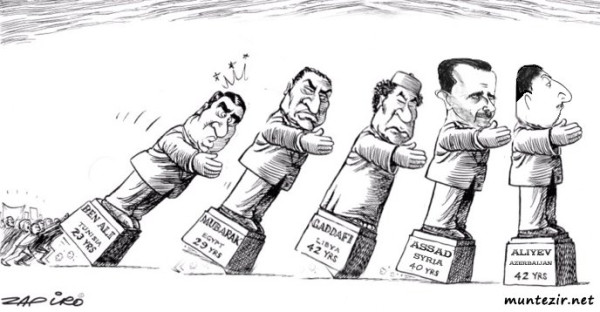
My previous post showed some of the waves of adjustment that the field of transitional justice underwent as massive regional transitions grappled with various political backdrops, different types of human rights violations, and diverse challenges and cultures. It invited readers to contemplate the possible ways in which Arab Spring transitions might invite thinking anew about transitional justice based on their unique features and challenges.

This post asks: What will transitional justice discussions and processes in Arab Spring countries bring to the table that will set them apart and nudge the field of transitional justice forward on a different path, demanding new ways of thinking about the field and its options?

It is likely too early to make any definitive claims about the effect Arab Spring transitions will have on the field of transitional justice. However, it is not necessarily too early to expose some of the unique features and challenges of this regional transition and perhaps even to speculate about what some of the implications might be.

In the Arab Spring countries, the primary focus has been on prosecutions. Although there is talk about the possibility of truth commissions in some Arab Spring countries, transitional justice debates have revolved not around the options of restorative, retributive or restitutive justice, but on how best to promote retributive justice. Questions are not “what processes should we employ?” but “who should be prosecuted?” and “in what forum?”. This, in and of itself, is an interesting development, and it invites its own questions such as: Are prosecutions the best approach in this context? Why has this focus emerged – is it a result of the nature of the previous regime (overwhelmingly authoritarian) or is it due to other factors, perhaps political, social or economic? Is this focus for reason particular to the regional/national context or might it be reflective of more fundamentally changing perceptions of the aims of transitional justice and obligations under international law?

Criminal justice has always had support as the paramount form of justice, the best means of holding wrongdoers accountable while the employment of non-retributive measures usually demanded an explanation for why it was necessary to sidestep trial justice. Other regional transitions, however, grappled more readily with alternative forms of securing peace and attempting to account for the past.

Arguably, despite the continued use of amnesty laws and restorative measures that do not promote or satisfy retributive pursuits, international law is moving towards a prohibition on the use of amnesty in transitional justice. This might account for part of the retributive focus in Arab Spring countries, an attempt to satisfy international obligations. It seems likely, however, that there is more to this focus than international obligations promoted primarily by the International Criminal Court (ICC) of which no Arab Spring country besides Tunisia is a member state. Continue reading

Posted in Arab Spring, Egypt, Guest Posts, International Criminal Court (ICC), Justice, Libya, Libya and the ICC, Middle East, Syria, Transitional Justice, Truth Commission, Tunisia | 2 Comments

Distinctly Arab? Questions about Transitional Justice and the Arab Spring (Part I)

Kirsten Fisher joins JiC for this timely and fascinating two-part post on the Arab Spring and Transitional Justice. Kirsten is the Gordon F. Henderson Post Doctoral Fellow at the University of Ottawa’s Human Rights Research and Education Centre and an affiliated research fellow at the Erik Castrén Institute of International Law and Human Rights at the University of Helsinki. She is also the author of Moral Accountability and International Criminal Law (Routledge 2012) and co-author and co-editor of Transitional Justice and the Arab Spring (with Robert Stewart, forthcoming in Routledge’s Transitional Justice series). Enjoy!

(Photo: Amr Nabil / AP)

Is the pursuit of transitional justice after the Arab Spring different than other attempts to find justice after mass violations of human rights and systemic violence? If so, what do the differences tell us?

The Arab Spring and the related political transitions are turning the Middle East and North Africa on their heads. Rulers have been forced from power in Egypt, Libya, and Yemen, while Algeria, Bahrain, and Syria have experienced major upheaval that challenges the political status quo. The Arab Spring has opened the way for these countries to address histories of oppression and mass human rights violations, including those committed during the Arab Spring itself. How best to address these histories, offer justice to the victims and heal as societies are questions with which each state must grapple. Enter the field of transitional justice, the name given to the study and practice of trying to establish principled justice after atrocity by employing a range of approaches, including both judicial and non-judicial measures to help address a legacy of mass human rights abuses. Arguably, the Arab Spring is also ushering in new ways of thinking about the goals and instruments of transitional justice.

In a relatively short period of time, the field of transitional justice has experienced a number of waves as different regions have undergone transitional justice processes in different ways and each occurrence has made academics and policy makers think about the goals of transitional justice in a slightly different way, consider different options, and reflect on the challenges and opportunities for transitional justice processes. The Arab Spring transitions are likewise presenting new challenges, new considerations and opportunities to evaluate the foundational goals that ground transitional justice, and should thrust the study and practice of transitional justice forward.

This post, the first of two, lays the background for questions regarding how Arab Spring transitions might influence the general field of study of transitional justice. It demonstrates how earlier regional transitions (in Latin America, Eastern Europe and Africa) have invited new features and challenges and therefore new ways of thinking about the goals and means of transitional justice.

Transitional justice debates usually concern how best to pursue accountability for those individuals most responsible, whether prosecutions are appropriate or useful for bringing about the cessation of violence and preventing further instances, how to go about discovering and promulgating the truth about what happened, and how to compensate for harms endured, among other topics. Optional approaches include different levels of criminal justice, truth commissions, reparations, memorials, lustration, and amnesties in order to allow everyone to ‘move on’.

(Photo: Wail Gzoly)

Decades before academics or policy makers began speaking in the language of transitional justice, principled justice after atrocity began in the form of criminal justice. After WWII, the Nuremberg and Tokyo tribunals were established to prosecute the leaders considered most responsible for the systemic atrocities committed during the war. There have been other transitions that have relied heavily on international criminal justice as the main process for transitional justice: including those of the former Yugoslavia and Rwanda which had international tribunals created for them, as well as Cambodia, East Timor, Liberia and Sierra Leone. Drawing from domestic practice, criminal prosecutions have long been the main mechanism of justice. Elsewhere, although the possibility of prosecutions or even the existence of criminal justice processes were part of transitions, criminal justice was pitted against, discounted for or overshadowed by other processes such as truth telling mechanisms or memorials. Continue reading

Posted in Arab Spring, Lustration, Transitional Justice, Truth and Reconciliation Commissions, Truth Commission | 7 Comments

Taking Bensouda’s Reins: Who Will Take Over as the ICC Deputy Prosecutor?

(Photo: sixandahalfstitches)

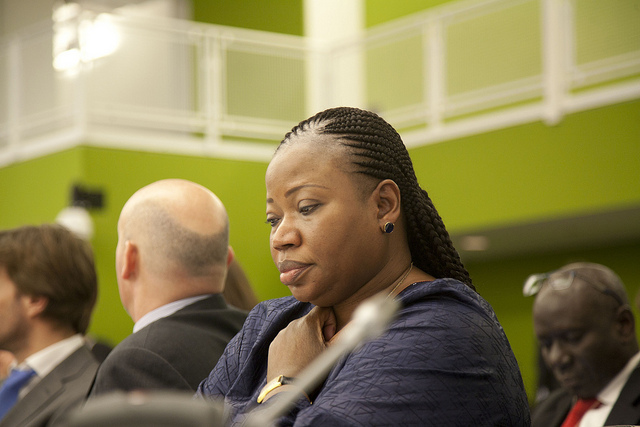
Readers are likely well aware that Fatou Bensouda became the ICC’s Chief Prosecutor earlier this year. Before becoming Prosecutor, Bensouda had previously served as the ICC’s Deputy Prosecutor under Luis Moreno-Ocampo. Now, however, it is time for the Office of the Prosecutor (OTP) under Bensouda to decide who will fill her shoes – and they’re big shoes to fill at that.

Today, Bensouda issued her short-list of candidates to replace her:

Today, International Criminal Court (ICC) Prosecutor Fatou Bensouda, in accordance with article 42 paragraph 4 of the Rome Statute, treaty founding the ICC, has submitted to the Assembly of States Parties the names of the three candidates she is nominating for the position of Deputy Prosecutor. The candidates were selected from a pool of 126 applicants. The Prosecutor’s nomination is a culmination of an extensive interview process conducted with assistance from other tribunals. The process, which started in May 2012, included an initial screening, written test, oral presentations, face-to-face interviews as well as interaction with Senior Managers and Trial Lawyers within the Office.

All nominees meet the requirements of article 42 paragraph 3 of the Statute. In providing the Assembly of States Parties with a list of three nominees, the Prosecutor expressed her satisfaction with the process of identifying the candidates and said that all interviewed candidates were of a very high quality. Taking into account her vision of the Office, she selected the candidates that possess the capabilities and qualities of an excellent Deputy Prosecutor.

The successful candidates are: Ms Raija Toiviainen (Finland); Mr Paul Rutledge (Australia); and Mr James Stewart (Canada).

Who will fill Bensouda’s shoes as Deputy Prosecutor? (Photo: CICC/Solal Gaillard)

Lucky for us, the great folks at IntLawGrrls have compiled a brief bio of each contender: 

  • Raija Toiviainen, State Prosecutor and since 1997 Head of the International Unit for Finland’s Prosecutor General. In 2009 Toivianen led Finland’s 1st universal jurisdiction prosecution for genocide. The Finnish court trial against François Bazaramba, a Rwandan who had sought asylum in Finland, was conducted not in Finland, but rather in Tanzania. The case ended with a conviction and life sentence, both affirmed on appeal. She’s a member of the Executive Committee of the International Association of Prosecutors and of the Bureau for a Council of Europe entity, the Consultative Council of European Prosecutors.
  • Paul Rutledge, an Australian with 30 years’ experience, working since 2010 as an advisor on management issues to the Public Prosecutor for Papua New Guinea and the Director of Public Prosecutions for the Solomon Islands. He’s also acted as the Solomon Islands’ Deputy Director of Public prosecutions. Before that, he served 8 years as the Deputy Director of Public Prosecutions for the state of Queensland in northeast Australia.
  • James K. Stewart, since 2007 General Counsel for the Crown Law Office-Criminal, at Canada’s Ministry of the Attorney General. Previously, Stewart served as: Senior Appeals Counsel and then Chief of the Appeals and Legal Advisory Division for the Office of the Prosecutor at the International Criminal Tribunal for Rwanda, where he led early cases like Akayesu. In additional, in 2 separate stints, as Chief of the Prosecutions Division, and as Chief of Prosecutions at the International Criminal Tribunal for the former Yugoslavia.

The ICC’s Assembly of States Parties will elect the next Deputy Prosecutor in an election in November.

Here are three quick thoughts on the election: Continue reading

Posted in Elections, ICC Prosecutor, International Criminal Court (ICC) | Tagged , , , , , | 2 Comments

Buying Justice: The Cost of Justice in Libya

(Photo: Reuters)

In my last post, I noted that there was little-to-no information, much less verified information, about what convinced Mauritania to extradite Muammar Gaddafi’s former right-hand man, Abdullah al-Senussi, to Libya. After being held in the capital of Nouakchott (in a luxury villa no less) since March, Senussi was extradited to Libya late last week. With Mauritania having given absolutely no indication that it intended to give Senussi up, the move caught just about every observer (including yours truly) by surprise. Indeed, not even the penchant rumour mill, so characteristic of post-Gaddafi Libya, suggested that the transfer was looming. So why, then, did Mauritania do it or, perhaps more accurately, how did Libya convince Mauritania to change its tune?

Having reached out to various contacts to see whether anyone knew what had changed Mauritania’s mind, a number of individuals quickly responded that there was only one possible motivation: money. While certainly not far-fetched, I thought there must be something else to the story – economic cooperation, perhaps some oil concessions, or the development of stronger geopolitical ties. Turns out I was wrong and it had everything to do with money.

According to numerous sources, including Der Spiegel and the Libyan Herald, Libya paid 200 million US dollars in order to guarantee Senussi’s transfer. While some Libyan officials have denied that there was any direct transfer of cash, rumours persist that the money was transfered to Mauritania via an off-shore account.

Importantly, the buying the custody of a former Gaddafi regime official would be in line with recent practice. The extradition of former Libyan Prime Minister, Baghdadi Al-Mahmoudi, in June was guaranteed by a payment of “a sum of $100m and another $100m as an interest-free loan” to Tunisia. Interestingly, Libya’s Finance Minister, Hassan Zaglam, was on the plane that brought Senussi back to Libya. This fact has only fueled speculation that Libya paid Mauritania off. After all, it is certainly uncommon for Finance Ministers to be involved in extradition negotiations. Continue reading

Posted in Justice, Libya, Libya and the ICC, Mauritania | Tagged | 1 Comment

Senussi Extradited to Libya: Some Thoughts on What it Means

The first images of Abdullah al-Senussi since the end of Libyan revolution littered social media sites yesterday as the Gaddafi regime’s “eyes and ears”, “blackbox” and “henchman” arrived in Libya after being extradited to Libya from Mauritania. There he was, somewhat disturbingly smiling as he disembarked from a helicopter amongst a crowd that chanted “the blood of the martyrs will not go in vain.”

As many readers will know, Senussi is widely believed to be responsible for a bevy of the Gaddafi regime’s worst excesses, including the Abu Salim Massacre (1996), the Lockerbie bombing (1988), the murder of  Yvonne Fletcher (1984), and the regime’s wider sponsorship of international crime and terrorism. If not fully responsible, as Gaddafi’s internal and external intelligence chief, it is beyond evident that Senussi has intimate knowledge of who and how these crimes were orchestrated.

Of course, Senussi was also a key actor in the crackdown against civilians during the Libyan revolution, for which he was indicted by the ICC in June 2011. However, as Tripoli fell to Libyan rebels and the Gaddafi regime splintered, Senussi went on the run. After false reports that he had been arrested near Sabha, in the desert expanses of southern Libya, it was reported in March that Senussi had been detained in Nouackchott, the Mauritanian capital. His arrest, the result of a joint operation between Mauritanian and French special forces, was followed by a tug-of-war over his custody by Libya, France and the ICC.

France had originally sought Senussi in connection with the bombing of UTA Flight 772 (he had also previously been convicted for the bombing). The ICC wanted him surrendered in order to face charges for alleged crimes in the Libyan revolution. For Libyans, many have wanted to see Senussi face justice for years, if not decades for reigning terror on Libyans at home and abroad. Yesterday, Libya won the “Senussi sweepstakes“.

Notably, just weeks ago this development seemed utterly impossible. In early August, Senussi was charged in Mauritania. At the time, President Mohamed Ould Abdel Aziz said Senussi would not be extradited but instead put on trial for illegally entering the country. Many (including myself) thought the charges were brought against Senussi in order to buy Mauritania time. What changed in Mauritania’s political calculus in recent weeks remains unclear. While The Guardian quoted an unnamed source as saying that Senussi “was extradited to Libya on the basis of guarantees given by Libyan authorities”, what exactly those guarantees were remains unknown. Nevertheless, clearly something rather significant convinced Mauritania to extradite Senussi to Libya.

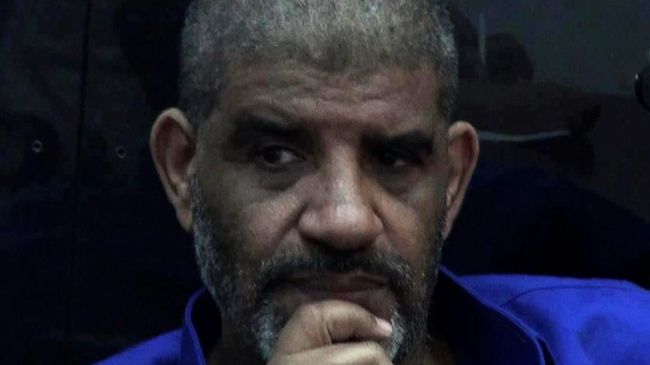
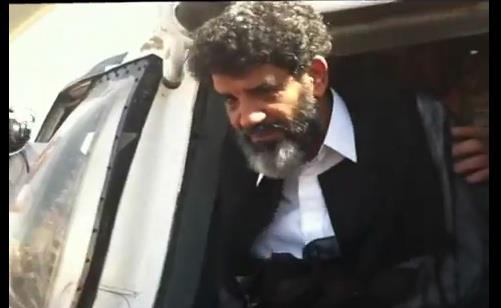
A heavily bearded Abdullah al-Senussi upon his return to Libya

Of course, the extradition will have important implications for Libya’s admissibility challenge at the ICC. Defence Counsel at the Court had argued that ICC judges should reject Libya’s request to try Saif and Senussi in Libya on the basis that neither Saif nor Senussi were in Libyan custody. Under Article 17(3) of the ICC’s Rome Statute, a state must be able to obtain the accused (Saif and Senussi), in order to win an admissibility challenge. With Senussi on its soil and in its custody, Libya can argue that it has now obtained both, even if Saif remains in the detention of a Zintani militia. Of course, nothing is written in stone and judges in the ICC’s Pre-Trial Chamber may still rule against Libya’s request to try Saif and Senussi domestically. But, as Kevin Jon Heller argues, Senussi’s repatriation

“makes it far more likely that Libya’s admissibility challenge to the ICC’s case against al-Senussi will succeed.  Libya is obviously no longer unable to obtain the accused’ for purposes of Article 17(3) of the Rome Statute.”

Continue reading

Posted in Admissibility, Complementarity, International Criminal Court (ICC), Justice, Libya, Libya and the ICC, Mauritania | Leave a comment

A Little Less Isolated and a Lot More Troubling: Ban Ki-moon Meets Bashir

An Sudanese Liberation Army soldier rests near an unexploded bomb dropped by the Sudanese military in North Darfur, 2007. (Photo: Shane Bauer)

Attempts to isolate and marginalize Sudanese President Omar al-Bashir have been mixed at best. The man many people believe is ultimately responsible for the violence and misery of Darfur – and who has been indicted by the International Criminal Court (ICC) for it – has worked tirelessly to show that, as a head of state, he can still galavant across the globe to international conferences and state meetings.

Of course, Bashir hasn’t always been able to go wherever he wants. He hasn’t visited a ‘Western’ state since he was indicted by the ICC in 2008. While he has visited ICC member-states, notably Chad and Kenya in 2010, he is still severely constrained in his movements and Malawi, a member-state which originally let him visit in 2011, has since declared that he is unable to do so again.

As many readers will know, the marginalization of perpetrators of atrocities is a central argument for proponents of international criminal justice. In brief, the argument suggests that investigations and the issuance of arrest warrants against international criminals will isolate them, both within their networks of power such as a government or a rebel group as well as within the international context. In the long-run, it is hoped that this marginalization can ultimately fill the docks of international criminal tribunals and deter the commission of crimes.

With Bashir’s travels across the globe, critics have been quick to point out that  international criminal justice is impotent. They often hold up a handful of examples of places Bashir has visited which, they maintain, run counter to any marginalization effect. Thus, they say: ‘there you have it: the marginalization effect of international criminal justice doesn’t work.’ On the other hand, proponents often seek alternative examples where marginalization appears to have been successful. The best – and most popular – example of this are the cases of Ratko Mladic and Radovan Karadzic, who were indicted by the International Criminal Tribunal for the Former Yugoslavia (ICTY) and effectively marginalized from the Dayton peace process. Despite fears that they would spoil the peace process, both Mladic and Karadzic were eventually arrested and are now facing trial at the ICTY in The Hague.

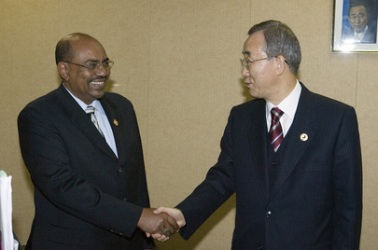
Omar al-Bashir with Ban Ki-moon. This photo was taken in 2007, before the ICC issued an arrest warrant for Bashir in relation to alleged crimes committed in Darfur. (UN/file)

The problem is this: like the other effects of international criminal justice, the marginalization/isolation function is bound to have mixed results. This is because the ICC, or any other tribunal, cannot create effects within a vacuum. Other factors, especially political factors, calibrate the effects of international investigations and arrest warrants.

In Bashir’s case, he is able to travel to some states and not to others. Indeed, traveling outside of Sudan is likely more important to him now than before the ICC arrest warrants against him were issued as he can claim that his international visits illustrate his standing as a sovereign head of state and marginalizes the Court rather than himself or his regime. That being said, Bashir’s travel plans are undoubtedly curtailed by the ICC. But his marginalization is also affected by international politics. Not all states care equally about the ICC’s warrants against Bashir or about alleged crimes in Darfur, for that matter. China certainly had no qualms about inviting Bashir to visit and in investing huge sums into Sudan’s economy. The US has been willing to work with Bashir’s regime, in part to ensure the peaceful separation of South Sudan from the North. After receiving considerable support from Khartoum during the Revolution, Libya’s National Transitional Council was quick to welcome Bashir after the fall of Gaddafi while the rest of the world remained virtually silent. Of course, if we consider the self-interests of states who welcome Bashir, the Sudanese President’s visits are unsurprising. But the same can’t be said if a UN Secretary General were to meet Bashir.

Continue reading

Posted in Darfur, Genocide, International Criminal Court (ICC), Sudan, United Nations | Tagged , | 1 Comment