Go for it: Assad Supporters ask ICC to Investigate Syria

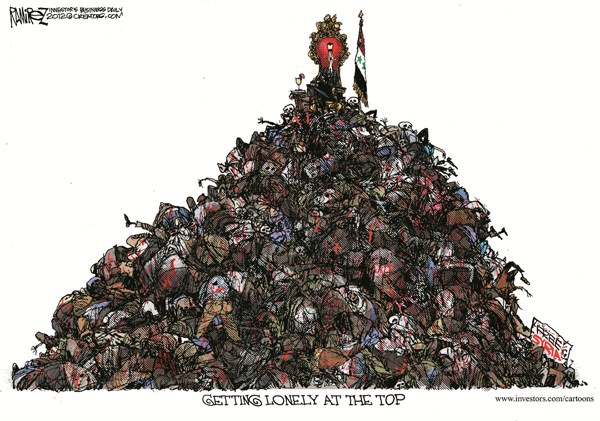
(Cartoon: Ramirez)

Few doubt the need for justice in Syria. After a year and a half of unrest, escalating violence, forced displacement and thousands of deaths, the case for a judicial intervention, by the International Criminal Court (ICC) or some other international tribunal, isn’t particularly hard to make. Indeed, the fact that Syria has not been referred to the ICC by the UN Security Council is a rather obvious reminder of the deep-seated politics and selectivity of international criminal justice. After all, the violence in Syria is at least comparable to, if not more devastating than situations where the ICC has recently intervened, including Libya, Côte d’Ivoire and Mali.

Still, the current global political climate and the stalemate in the Security Council suggest that no such intervention into Syria is forthcoming. After being utterly used by intervening powers and then quietly abandoned in Libya, this may be a good thing for the ICC. But calls for an ICC intervention into Syria will only grow louder as the conflict bloodily drags on with no peaceful end in sight.

Of course, we would expect that the voices demanding that the ICC investigates atrocities in Syria would emanate from supporters of the forces fighting the regime of President Bashar al-Assad. After the Libyan experience, where the Security Council tapped the ICC to investigate ongoing atrocities in Libya just days before approving the no-fly zone that opened the floodgates for NATO’s intervention, it seems that many – both for and against international intervention – view the invocation of the ICC as a first, and perhaps necessary, step to concrete international action in Syria. For this reason it was remarkable, and certainly a surprise, to see Assad supporters declare that they would like to see the ICC investigate Syria.

The call to have Syria referred to the ICC came in the form of a hacked message plastered on Amnesty International’s blog. In another reminder that the internet and social media aren’t always the warm and fuzzy liberal forces that many assume (see here), Assad supporters posted articles which blamed the ongoing violence in Syria on rebels fighting the regime. The false information was then propagated via Twitter and other social media, even after it had been taken down. According to the Washington Post, it was widely promulgated that the posts came from Amnesty International investigators “who no longer can handle the lies and outright propaganda of media outlets.”

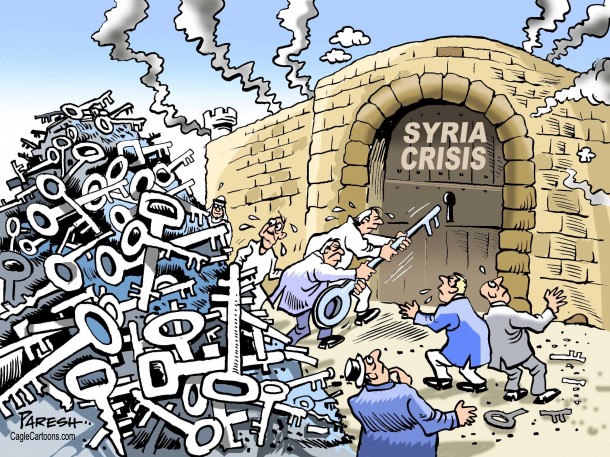
(Cartoon: Paresh)

Here is the relevant passage, calling on Syria to be investigated by the ICC:

“Russia must immediately use its influence to end this violence and support the UN Security Council to end NATO’s reign of terror upon Syria and refer the situation in Syria to the International Criminal Court. Amnesty supporters have not forgotten the people of Syria and will continue to demand accountability for these horrific crimes against humanity.”

The statement is notable for a number of reasons. First, it looks to Russia, Syria’s stalwart patron and protector, to do its bidding in pushing for a Security Council referral to the ICC. Russia, however, is more than a little ambivalent in its position to ICC referrals, viewing the ICC as the possible beginning of a slippery slope towards military intervention. Continue reading

Posted in International Criminal Court (ICC), Syria | 3 Comments

The US and the ICC: Why a Closer Relationship isn’t Necessarily a Good Thing

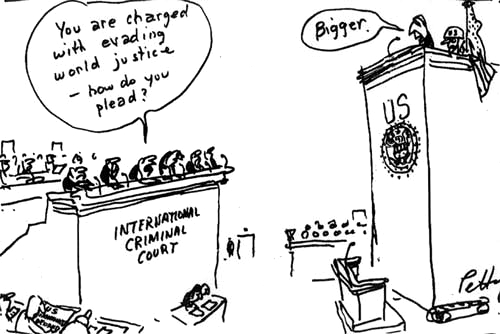
(Cartoon: Bruce Petty)

Few issues have captured as much attention in the politics of international criminal justice as the relationship between the International Criminal Court (ICC) and the United States. Indeed, it is ironic that as much, if not more, time has been spent on examining the relationship between a non-state party (the US) and the ICC than on the Court’s relationship with any of its member-states. Regardless, the debate generally breaks down as follows: critics suggest that the ICC is little more than a paper tiger without “the most powerful state on the planet”, while proponents respond that, despite the fact that the US is not a member-state of the ICC, it has been increasingly engaged and cooperative with the Court. It is impossible to deny that the relationship has grown closer over the lifespan of the ICC. But is that necessarily a good thing?

The history of the ICC-US relationship is beyond the scope of this post but, in brief, has been defined by a mixture of open hostility, reluctant acceptance and, now, an apparently genuine effort to engage with the Court. The general view has been that the rapprochement between the two in recent years marks a positive shift towards the US taking international criminal justice seriously. In a recent op-ed outlining this trend, David Scheffer argued that

“The US has become a de facto member of the International Criminal Court…In recent years the Obama administration has engaged the International Criminal Court on so many levels that the days of Washington seeking to undermine the ICC are over…America’s de facto membership in the ICC may not be the best possible means to achieve international justice, but it nonetheless should be recognized as a win-win for everyone other than tyrannical regimes and indicted war criminals.”

Scheffer’s argument is common place – indeed, I have argued precisely the same thing on this blog. The problem, however, is that this argument relies on a narrative which translates any progression in the relationship between the US and the ICC into good progression. The danger is obvious: that the selectivity of the US’s political interests becomes entrenched in the functioning of the ICC itself. Consider three cases in which the US has engaged with the ICC.

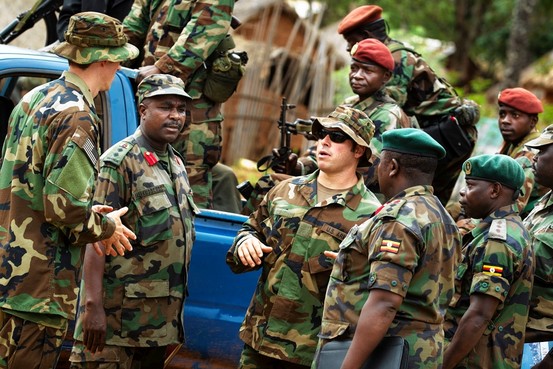
In northern Uganda, the US declared Joseph Kony and his Lord’s Resistance Army a terrorist group and has subsequently spent millions of dollars to provide non-lethal training to Uganda’s military in order to capture or kill Kony. Most recently, the Obama administration has fervently declared its support for the capture of Kony and sent 100 troops to achieve it.

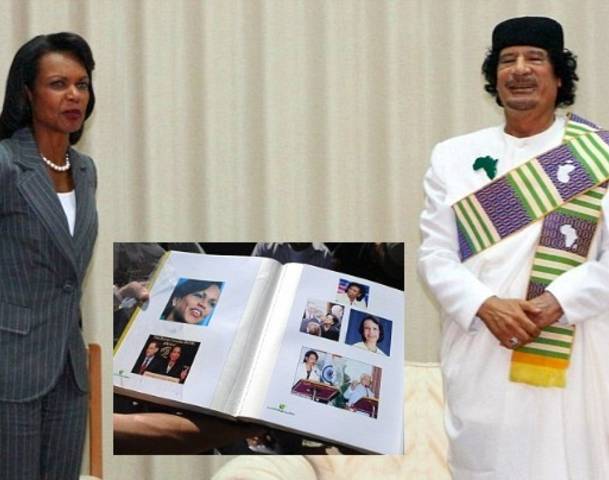
Condoleezza Rice and Muammar Gaddafi (Photo: AFP)

In the case of Darfur, the polar opposite has occurred, despite many ICC advocates suggesting that Darfur is a “good case” in the US-ICC relationship. After abstaining and thus allowing a UN Security Council referral of Sudan to the ICC to pass in 2005, the US has not only done virtually nothing to support the ICC’s investigations and indictments against President Omar al-Bashir and his coterie, it has actively explored avenues which would undermine the mandate of Court. In its attempts to secure a peaceful break-up of North and South Sudan, the US incentivized Khartoum’s “good behaviour” by offering to push for a deferral the ICC’s arrest warrant against Bashir for a year under Article 16 of the Rome Statute. Moreover, when President Bashir travelled internationally in recent years, the US has generally remained silent. When Bashir visited China, for example, the US government refused to voice its support for the ICC’s warrant against him, paying deference to China’s sovereign decision-making instead. Continue reading

Posted in Darfur, International Criminal Court (ICC), Justice, Libya, Libya and the ICC, Rome Statute ratifications, Uganda, United States | 19 Comments

The Best Evidence Yet that Kony is in Darfur?

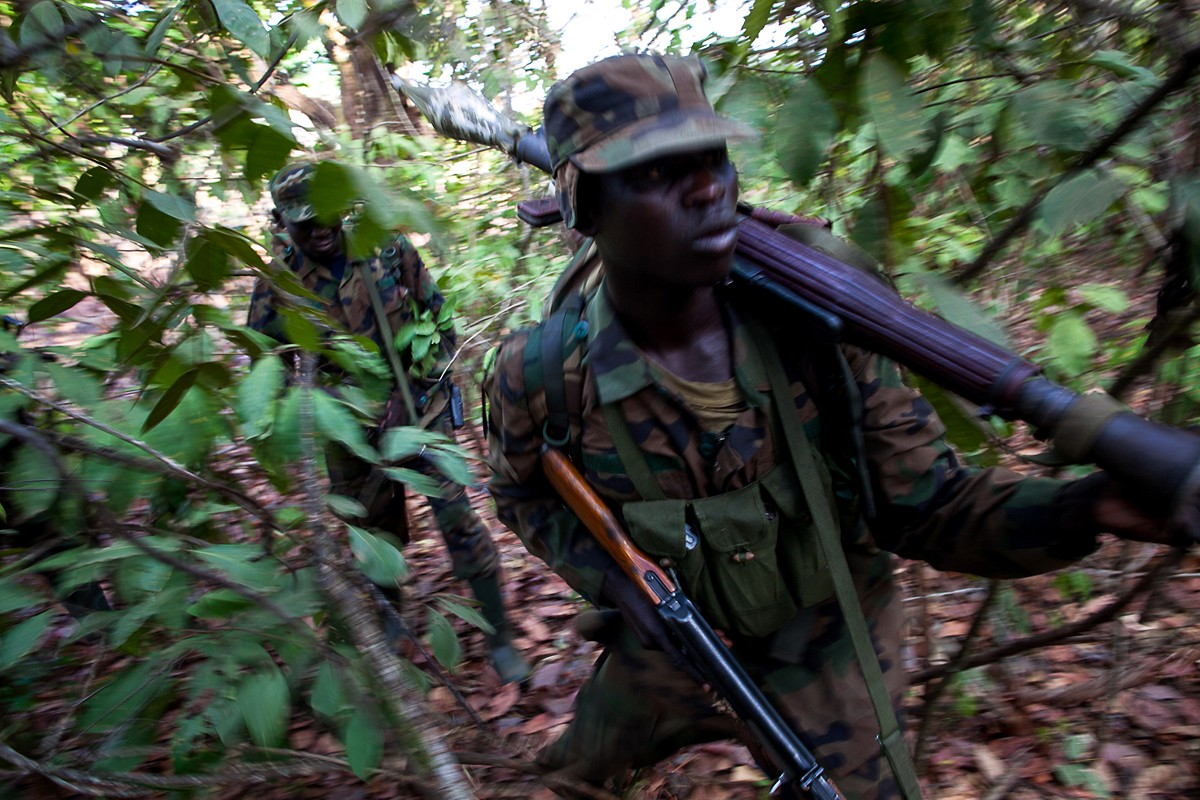
The hunt for Kony (Photo: Trevor Snapp / Pulitzer Center for Newsweek)

As the hunt for Joseph Kony continues, all signs indicate that the notorious leader of the Lord’s Resistance Army (LRA) won’t be found – at least not where regional East African military forces are currently looking for him. More persuasive evidence has emerged that Kony is hiding in Darfur.

It has long been an open secret that the Khartoum government has been a patron of Kony and the LRA. Over almost two decades, the regime of Omar al-Bashir has both supported the LRA and wielded it as a proxy force against South Sudan. It has been said before, but it is for this reason that so many scholars and observers have reiterated that the LRA situation can only be resolved with a solution that addresses regional governance issues.

Of course, the current constellation of Kony hunters is, in fact, regional in nature. It includes troops from LRA-affected areas: Uganda, the Democratic Republic of Congo, the Central African Republic and South Sudan. It also famously includes a gaggle of US troops providing assistance in tracking down Kony.

What few seem to realize is that this latest mission is only the most recent iteration in a long lineage of apparent attempts to kill or capture Kony. Regional forces have been periodically hunting down Kony for almost a decade. Moreover, the US support is not unprecedented. American troops have provided “non-lethal” support to the Ugandan People’s Defence Forces (UPDF) since the early 2000s.

But one issue which has consistently hindered attempts to capture or kill Kony has been Khartoum’s support for the LRA. And, once again, the regional forces hunting down perhaps the world’s most notorious war criminal do not include Sudan. So what would you do if you were Kony? Move to safe ground and wait out the storm. Translation: head to Sudan, lay low and survive until the hunting party loses interest.

(Photo: AP)

Over the past few months, JiC has covered emerging evidence that supports the belief that the LRA is receiving support and hiding out in Darfur (see also here): I wrote earlier this year that former senior LRA commanders had informed me that Kony was, in fact, living in Darfur. In April, a Sudanese rebel grouped said that Kony and the LRA were moving around Darfur. In May it appeared that a detained LRA rebel had been found with a Sudanese uniform. A few weeks ago, perhaps the most intriguing evidence emerged, as the UN Security Council discussed renewing its mission in Darfur (UNAMID). From the Sudan Tribune:

Continue reading

Posted in Central African Republic (CAR), Democratic Republic of Congo, Human Rights, Humanitarian Intervention, Lord's Resistance Army (LRA), South Sudan, Southern Sudan, Sudan | Tagged | 3 Comments

Prosecuting crimes against cultural property in Northern Mali: Why it Matters

Jelia Sane joins us for this must-read post on the ICC’s investigation of cultural crimes in Mali. Jelia holds an LLM in Public International Law from University College London and has previously interned at the Appeals Chamber of the ICC, the Centre for Justice and International Law in Argentina, and the  Office of the Co-Prosecutor at the Extraordinary Chambers in the Courts of Cambodia.

On 1st  July 2012, Fatou Bensouda, the ICC’s newly appointed Prosecutor,  declared that the destruction of Sufi shrines in Timbuktu constituted a war crime under the Rome Statute. Three weeks later, following Mali’s self-referral to the Court, the Office of The Prosecutor (OTP) officially launched a preliminary examination into the violence that has engulfed the country since January 2012.

The focus of this post is not whether the OTP can legally intervene in Mali under the terms of Article 53(1) Rome Statute, nor does it seek to question the wisdom of the ICC taking on yet another African case. Rather,  it will consider why the ICC should concern itself with cultural property crimes in the midst of a civil war that has had a devastating impact on the local population.

It only took three days for members of the islamist  Ansar Dine (“Defenders of the Faith”) rebel group to methodically destroy half of Timbuktu’s legendary Sufi mausoleums and shrines, along with the city’s great Sidi Yahyia mosque. Much like the Taliban’s widely condemned destruction of the Bamiyan Buddhas  in 2001, this attack is in no way justified by the exigencies of war. Rather, it seems to be rooted in the desire to eradicate religious symbols that Ansar Dine has deemed contrary to its strict Salafist interpretation of Islam.

The repercussions of this assault have been felt far beyond the local community and Mali itself,  for Timbuktu is no ordinary place. Founded in the 5th century AD, the “City of 333 Saints” gained prominence in the 15th and 16th centuries as one of Africa’s great spiritual, intellectual and commercial capitals. Its three grand mosques – Sidi Yahyia, Djingareyber, and Sankore- were instrumental in spreading Islam throughout the continent and, with the prestigious koranic Sankore University, bear witness to its  glorious past. During its golden age, Timbuktu also served as a major trading centre for the salt and gold trade,  attracting merchants from across the region and the Arab world. In recognition of its historical significance and “outstanding universal value” it was designated as a World Heritage Site by UNESCO in 1988.

And so, the international community – having days before placed Timbuktu on UNESCO’s  list of Endangered World Heritage Sites – watched in horror as one of  humanity’s treasures was ransacked. Irina Bokova, the organisation’s  Director-General, described the acts as an “attack against humanity”. Governments across the globe, including the US, the UK, France and Russia, swiftly condemned the  attack and, to no avail, urged Ansar Dine to stop the destruction.

Whilst the events in Timbuktu were undeniably shocking, the fabled city is by no means the only victim of Mali’s brutal civil war. Over the last eight months, killings, abductions and rapes have become commonplace in the north of the country. Non-combatants have been summarily executed and child soldiers forcibly recruited. An  unmarried couple was recently stoned to death by Islamist militants. According to the UN’s Office for the Coordination of Humanitarian Affairs, over 400 000 civilians have been displaced by the violence.

Is it appropriate to weep for buildings in the face of such human suffering? Does this not displace concern from the civilian population? Would the ICC’s limited resources not be better spent on investigating, prosecuting and trying those responsible for the above crimes ?

(Cartoon: Chappatte)

By and large, the adjudication of international crimes – genocide, war crimes and crimes against humanity – has focused on a narrow set of underlying egregious violations of core civil and political rights, mostly related to physical integrity or personal freedom. That there is a need to deliver justice in the wake of mass murder, torture or sexual violence is clear, given the particularly heinous nature of these acts. Continue reading

Posted in International Criminal Court (ICC), International Law, Mali | Tagged , , | 9 Comments

Libya vs. The ICC: Stalemate over Saif and Senussi

I recently had the opportunity to write a piece for the great folks at Think Africa Press on the ongoing battle between the ICC and Libya over the custody of Saif al-Islam Gaddafi and Abdullah al-Senussi. It covers much of the ground that I’ve focused on in recent posts but I figured it would be of interest to readers regardless. Enjoy!

(Odd Andersen/AFP/Getty Images)

The debate over who should try Saif al-Islam Gaddafi and Abdullah al-Senussi began even before the grisly demise of Colonel Muammar Gaddafi. In June 2011, Senussi, the former Libyan military intelligence chief, and Saif, Colonel Gaddafi’s son and one-time heir-apparent, were indicted by the International Criminal Court (ICC) for their alleged roles in crushing the Libyan uprising.

Deciding where they are tried goes to the very heart of the ICC’s complementarity regime, wherein the court can only investigate and prosecute when a state is unable or unwilling to do so itself. This principle is premised on the belief that while it is best to deal with atrocities where victims and survivors live, states emerging from, or still mired in, violent political conflict often do not have the capacity or interest to investigate these crimes themselves. If this is deemed to be the case, the duty is transferred to the ICC.

Libya’s admissibility challenge

After four decades of autocratic rule under Gaddafi, many argue that Libya is unprepared and unable to legitimately, effectively, and impartially prosecute Saif or Senussi. Libya’s National Transitional Council (NTC), however, has claimed that both must be tried in Libya, under Libyan law, by Libyan judges. In May 2012, the NTC issued an admissibility challenge at the ICC in which it claimed that the ICC’s case against Saif and Senussi was “inadmissible on the grounds that its national judicial system is actively investigating Mr Gaddafi and Mr al-Senussi”. At the same time, in an effort to demonstrate that it was prepared for trial, Libyan authorities unveiled a refurbished courtroom in Tripoli as well as a luxurious prison complex on the outskirts of the capital where it was suggested that Saif would be held during his trial.

Problematically, however, Libya still does not have custody over Saif or Senussi. Despite numerous declarations by the NTC that he would be transferred to Tripoli, Saif remains in the hands of the Zintan brigade that arrested him in November 2011, who have refused to surrender Saif to Libya’s national authorities. It is also widely believed that the Zintan militia used their custody of Saif as leverage to get local commander Osama al-Juwali appointed as Libya’s interim defence minister.

More recently, the Zintan brigade has insisted that Saif be tried in Zintan rather than Tripoli. Libyan authorities appear to have conceded to this position as the chief Libyan prosecutor in Saif’s case, Milad Abdul-Nabi Dekali, confirmed that Colonel Gaddafi’s son would be tried in Zintan. Given the unwillingness of the Zintan brigade to cooperate with the NTC, it is far from clear that Libyan authorities themselves would be able to conduct the trial. The NTC handed power over to a newly elected national assembly on August 8, but it is unclear at this early stage whether this will make a difference to negotiations around the trials.

Custody of the accused

Senussi is even farther away from being transferred into Libyan custody. In March 2012, the former intelligence chief was arrested in a joint operation between French and Mauritanian authorities in Nouakchott, the Mauritanian capital, where he remains after the NTC failed to convince Mauritania to extradite him to Libya.

One Mauritanian source suggested that Senussi’s transfer to Libya “looks like wishful thinking by the Libyans”. Meanwhile President Mohamed Ould Abdel Aziz of Mauritania declared that Senussi, Gaddafi’s “black box”, would not be extradited before facing charges of illegal entry in Mauritania. Continue reading

Posted in Admissibility, Defense Counsel, ICC Prosecutor, International Criminal Court (ICC), Justice, Libya, Libya and the ICC | Tagged , , , | 1 Comment

Reparations for Lubanga’s Victims: What the ICC Can Do

Photo: Reuters

Earlier this week, the International Criminal Court released the Trial Chamber’s decision on the principles and procedures to be applied to reparations following from Thomas Lubanga Dyilo’s war crimes conviction for enlisting and conscripting child soldiers and using them to participate actively in hostilities in the Democratic Republic of the Congo.

Various international laws and conventions have affirmed that victims have a right to reparations, which include compensation, restitution, and rehabilitation. But in comparison to past international tribunals, the ICC has considerably elevated the priority of reparations as means of justice for victims. The ad hoc courts for Rwanda and Yugoslavia have a miserable, if not non-existent, record in providing reparations and this was considered a failing and lost opportunity. Typically, devising, funding, and implementing reparations awards have been the responsibility of states. Yet even in cases where there have been robust transitional justice institutions, like Rwanda, East Timor Sierra Leone, and South Africa, domestic authorities lack capacity and/or political will to provide meaningful reparations.

Lubanga was sentenced to 14 years – far short of the 30 years asked for by the Chief Prosecutor. His conviction is, however, only a small measure of justice for victims. While the direct, individual victims of Lubanga’s crimes are child soldiers, reparations are also intended to be more collective in nature in order to affect the relevant the families and communities of victims in the DRC as well.  To date, only 85 victims have individually applied for reparations in the Lubanga case.

It’s important to note that the judges’ decisions summarized below only lay out the general principles and procedures for reparations – it will be left to the ICC’s Trust Fund for Victims (TFV) to determine what will constitute reparations and to implement them. In its own words, the TFV:

“addresses and responds to the physical, psychological, or material needs of the most vulnerable victims. It raises public awareness and mobilizes people, ideas and resources. It funds innovative projects through intermediaries to relieve the suffering of the often forgotten survivors. The TFV works closely with NGOs, community groups, women’s grassroots organisations, governments, and UN agencies at local, national, and international levels. By focusing on local ownership and leadership, the TFV empowers victims as main stakeholders in the process of rebuilding their lives.”

What the ICC Can Do: Decisions and Recommendations

Various parties participated in reparations proceedings and submitted their recommendations. These parties included NGOs, such as Avocats san Frontieres, Women’s Initiatives for Gender Justice, and the International Center for Transitional Justice, UNICEF, and the ICC’s Registry and Trust Fund for Victims.

The recommendations reflect several debates that are common to transitional justice policy-making, specifically the value of material versus symbolic reparations and individual versus collective reparations. Other critical issues include the identification of victims and determining the scope of beneficiaries, ensuring access to reparations, and ensuring that reparations “do no harm” by creating social divisions within communities and stigmatizing victims. What follows is a brief and selective summary of the salient points in the judges’ decisions and instructions.

Turning Victims into Beneficiaries

  • Beneficiaries are the direct and indirect victims of the crimes, including the victims’ family members, and legal entities; priority should be given to vulnerable victims, particularly those of sexual and gender violence and those in need or urgent assistance.
  • Reparations will not be limited only to those who participated in the trial proceedings or those that applied for reparations.
  • Reparations may be awarded to individual victims or groups of victims, which are not mutually exclusive and can be awarded concurrently
  • A collective approach will ensure that those many victims who have not yet been identified are reached and included
  • Victims, and their families and communities, should participate in the reparations process and the Court should engage in outreach and consultation.

What Constitutes Reparations

  • Reparations constitute restitution, compensation, and rehabilitation, but may also be symbolic, preventative, and transformative.
  • Restitution:
  • Should restore victims to his or her circumstances (e.g. returning to family, home, school, employment, etc.) before the crime was committed, which is likely unachievable for most child soldiers
  • Compensation:
  • Should be considered when i) economic harm is sufficiently quantifiable; ii) an award of this kind this would be appropriate and proportionate; and iii) the available funds mean this is feasible.
  • Is a form of economic relief that is aimed at addressing, in a proportionate and appropriate manner, the (material, physical, and psychological) harm that has been inflicted.
  • Rehabilitation:
  • Shall include the provisions of medical services and healthcare (particularly in order to treat HIV and AIDS); psychological, psychiatric and social assistance to support those suffering from grief and trauma; and any relevant legal and social services.
  • Should facilitate the reintegration needs of child soldiers.

Reparations from Lubanga?

  • The convicted person (Thomas Lubanga Dyilo) has been declared indigent and no assets or property have been identified that can be used for the purposes of reparations and therefore can only contribute to non-monetary reparations.
  • Any participation on his part in symbolic reparations, such as a public or private apology to the victims, is only appropriate with his agreement.

Funding and Implementation

  • The TFV has indicated that reparations to be funded by the TFV with its own resources will tend to be collective in nature or they will be made to an organisation pursuant to Regulation 56 of the Regulations of the TFV.
  • The Chamber endorses this suggestion of the TFV that a community-based approach, using the TFV’s voluntary contributions, would be more beneficial and have greater utility than individual awards, given the limited funds available and the fact that this approach does not require costly and resource intensive verification procedures.
  • The Chamber support’s the TFV’s Five Step Plan to:
  1. Establish which localities should be involved in the reparations process
  2. Consult with these localities
  3. Assess harm with team of experts
  4. Arrange public debates in localities
  5. Collect proposals for collective reparations
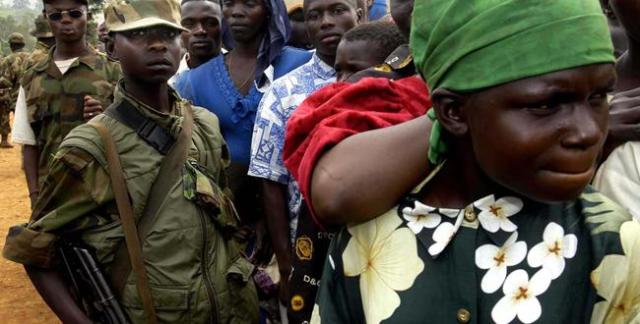
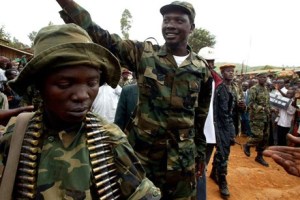
UPC child soldiers. Photo: AFP

Reconciliation and “Do No Harm”

Reparations have backward looking functions to address underlying causes and provide justice through restitution, and forward looking functions to affect reconciliation and prevent future crimes. The Trial Chamber’s decisions provide a striking statement of the high expectations of reparations in this regard:

“Reparations in the present case must – to the extent achievable – relieve the suffering caused by these offences; afford justice to the victims by alleviating the consequences of the wrongful acts; deter future violations; and contribute to the effective reintegration of former child soldiers. Reparations can assist in promoting reconciliation between the convicted person, the victims of the crimes and the affected communities.”

The judges also agree with the recommendations of the participating NGOs, victims’ representative, and Court organs that reparations should “do no harm” in their implementation. Individual reparations awards can further stigmatize victims in their communities, “replicate discriminatory practices,” exacerbate social tensions, and isolate them. Keeping in mind that child soldiers may also be viewed as perpetrators of crimes in their communities, reparations should also “secure reconciliation” between the convicted person and the victims and the affected communities.

Reparations a Measure of Success in International Justice

For victims and their communities, reparations will be the most tangible manifestation of justice from international courts. The International Criminal Court has the mandate to make remarkable progress in this regard. The TFV can only be effective, however, with financial and political support. Most international justice advocacy and diplomacy is geared towards cooperating with the ICC on arrest warrants and ascribing to a discourse that prioritizes trial and punishment of war criminals. Equally important is the international community’s support for restorative and redistribute forms of justice that reparations can affect. The Trust Fund for Victims’ implementation of reparations and impact on communities will be an important measure of the ICC’s success in the years to come.

Posted in Child Soldiers, Democratic Republic of Congo, International Criminal Court (ICC) | Tagged , , , , | 3 Comments

Saif wants to be tried at the ICC – But that’s not all

Melinda Taylor Zintan

Melinda Taylor and Helene Assaf in Zintan following their release (Photo: AFP)

Late last week, the Office of Public Counsel for the Defence (OPCD), which has been representing Saif al-Islam Gaddafi at the ICC, filed its official response to Libya’s admissibility challenge at the ICC. The impressive report, a whopping 92-pages long, should be read in its entirety. It includes an in-depth account of the arrest and detention of Melinda Taylor and the ICC4. Kevin Jon Heller at Opinio Juris has covered the most controversial and pertinent bits of the report (see here and here) and has posted a must-read piece on the relevance of the failure to provide Saif with due process in Libya’s admissibility challenge. Here are a few things that I found particularly interesting and important.

Saif prefers a trial in Libya – but can’t get a fair one

The world’s media, with a few exceptions, appear to have read the first two pages of the report and stopped there. Perhaps that’s the downside of a 92-page report replete with pertinent information. Still, it is worth noting that most media actually misleadingly reported the first pages of the report, which constitute a statement given by Saif. Stories ran a headline suggesting that Saif is seeking a trial at the ICC. They presumably refer to a passage in Saif’s statement that reads:

“Over a year ago, representatives of the NTC asked the international community to intervene so that the Libyan people could have justice, I am asking for exactly the same thing – the only way for Libya and the Libyan people to have justice is for the ICC to try this case in a fair, impartial and independent manner, and, in so doing, set standards, which Libya can follow on its future path to democracy and the rule of law.”

However, reports have completely ignored a preceding passage, where Saif suggests that his preference, ideally, is to be tried in Libya:

“I would have liked to have been tried in Libya by Libyan judges under Libyan law in front of the Libyan people. But what has been happening in my case cannot be called a trial.”

Saif thus appears to be making precisely the same case that many human rights and international legal observers have made, namely that trial justice is best served where alleged atrocities have taken place, but that in the absence of a functioning judiciary and political stability, this ideal is overridden by the interests of achieving justice. Somewhat oddly, then, it appears that Saif, his Defence Counsel and human rights groups form a camp in favour of a trial at the ICC, while Libyan authorities and the Office of the Prosecutor have defended Libya’s right to try Saif domestically.


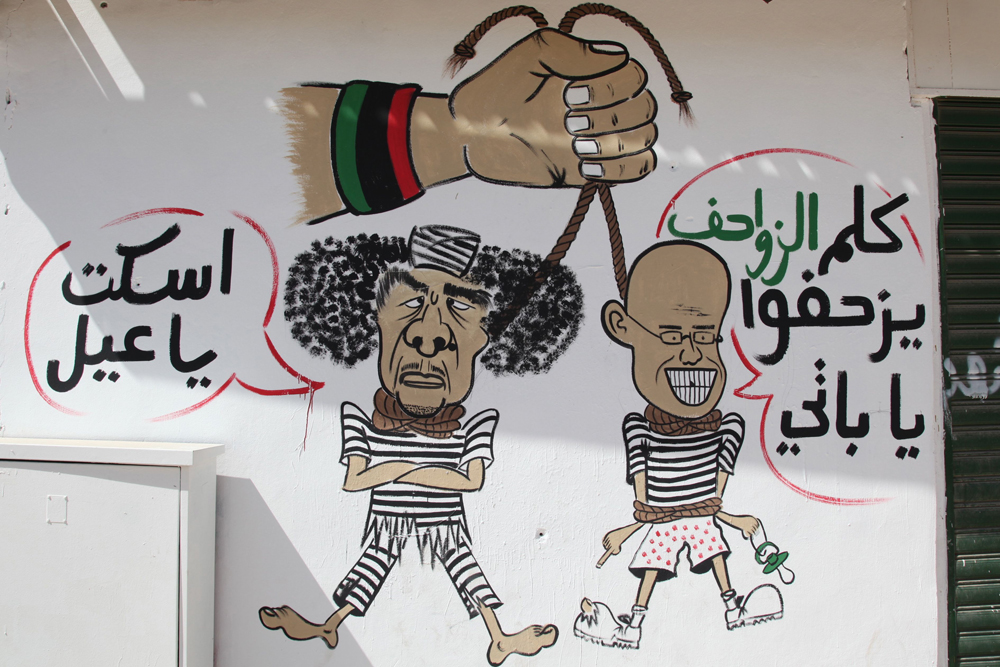
Saif graffiti

(Photo: 12ozProphet)

The Other ICC4 Staff Members were not Allowed to Leave

One of the more curious aspects of the illegal arrest and detention of OPCD staff members Melinda Taylor, Helene Assaf, Alexander Khodakov, and Esteban Peralta Losilla, were reports that only Taylor and Assaf had been arrested by the Zintani militia, while Khodakov and Peralta were told they were free to leave but had stayed behind to provide “moral support“. Indeed, in a July 18 letter to the UN Security Council, the Libyan government stated that:

“The Prosecutor-General’s office decided to release the other two members of the delegation, however, they willingly decided to stay in solidarity with their colleagues.” Continue reading

Posted in Defense Counsel, Libya, Libya and the ICC, The Tripoli Three (Tripoli3) | Tagged , , , , , , | 5 Comments

Colombia and the International Criminal Court: New Prosecutor, New Standards?

Mariana Rodriguez-Pareja and Salvador Herencia-Carrasco join us again for this guest-post on the ICC and Colombia. Mariana is the Director of the Human Rights Program at Asuntos del Sur. Salvador is an LL.M. University of Ottawa, a human rights lawyer based in Lima, Peru. Enjoy!

FARC child soldiers (Photo: Resistance Studies)

Now that the International Criminal Court (ICC) has just rendered its first sentencing for Lubanga for the recruitment and use of child soldiers in the armed conflict in Uganda, it might be adequate to talk about Colombia, a situation that has been under the ICC radar since 2006.

Back then, the Office of the Prosecutor (OTP) declared it was “examining alleged crimes within the jurisdiction of the Court and investigations/proceedings conducted in Colombia against the allegedly most serious perpetrators, paramilitary leaders, politicians, guerrilla leaders and military personnel.”

Later, the OTP added it was also analyzing allegations of international networks supporting armed groups committing crimes in Colombia. The Court has not formally commenced any investigation because of the complementarity assured by the Rome Statute, and Colombia is classified as a “situation under analysis.”

The primary responsibility of investigating grave crimes remains under the jurisdiction of the Colombian tribunals and the Court considers the local judiciary capable and willing to carry out investigations of the crimes under the ICC’s jurisdiction. But, NGOs have reported that the Revolutionary Armed Forces of Colombia (FARC) and the National Liberation Army (ELN) continue to perpetrate grave abuses against civilian populations.

Child Soldiers and Landmines

HRW reported that Colombia is among 14 countries worldwide (beyond Central and West Africa) that use child soldiers. In the case of Colombia, the report adds that the FARC have recruited children as young as 7 and forced them into combat. They execute fighters who try to desert. There are no arrest warrants, no trials and no convictions for the recruiters.

Antipersonnel landmines and other banned weapons are still being used by the FARC and the ELN, HRW’s World Report states. They also note that 16 civilians were killed and 104 were injured by landmines and unexploded munitions between January and August 2011.

Gender Crimes

Furthermore, it is reported that gender violence has been employed as a weapon of war. Unfortunately, the international community has continually failed to prevent the widespread and systematic violence against women in the context of armed conflicts. Colombia is not an exception of this tragic rule.

The Constitutional Court, in a 2008 decision, recognized that sexual violence against women was “a habitual, extended, systematic and invisible practice in the context of the Colombian armed conflict … [perpetrated] by all illegal armed groups, and, in some isolated cases, by individual agents of the public security forces.”

Last year, a Symbolic Court Against Sexual Violence within the Colombian Armed Conflict met in Bogotá to deal with a range of cases related to sexual violence committed by armed groups in the internal Colombian conflict.

(Photo: AFP Photo / Raul Arboleda)

The Court was conceived as a place “aimed at making visible to the public the impact sexual violence has had in the context of armed conflict, especially emphasizing the rights of victims and the need to overcome the impunity that has characterized these crimes, and demand timely and effective attention by the state.” The Tribunal made some recommendations urging the Colombian state to uphold their international obligations regarding the prevention, investigation, prosecution and judgment of gender violence. Continue reading

Posted in Colombia, Guest Posts, Justice, Latin America, Sexual Violence | Tagged , , , | 1 Comment

The Impact of the Taylor Trial in Sierra Leone and Liberia

Annie Gell joins us with this guest-post on the impact of the Charles Taylor trial in Sierra Leone and Liberia. Annie is the Leonard H. Sandler fellow in the International Justice Program at Human Rights Watch (HRW). Immediately before joining HRW, Annie lived and worked in Port-au-Prince supporting grassroots women’s groups fighting the epidemic of gender-based violence in post-earthquake Haiti. 

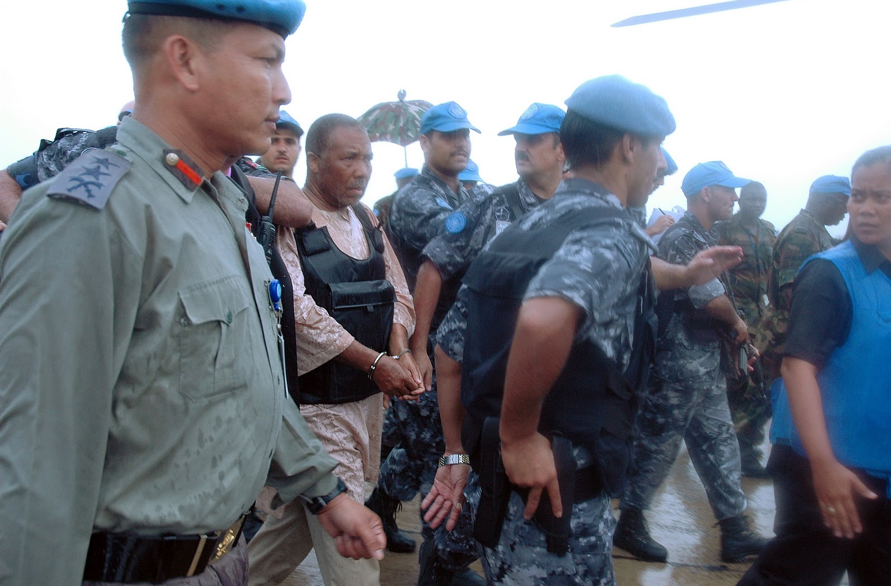
Charles Taylor handcuffed

Charles Taylor shortly after being arrested in 2006 (Photo: BBC)

This week, Human Rights Watch released the report “Even a ‘Big Man’ Must Face Justice”: Lessons from the Trial of Charles Taylor.  The report is based on interviews in The Hague, London, Washington, DC, Sierra Leone, Liberia, New York, as well as a review of expert commentary, trial transcripts, and daily reports produced by trial observers. This post focuses on Human Rights Watch’s findings regarding the trial’s initial impact in affected communities and provides recommendations for achieving a fuller realization of justice in Sierra Leone and Liberia.

In May 2012, the Special Court for Sierra Leone (SCSL) sentenced Taylor, former president of Liberia, to 50 years in prison for aiding and abetting the 1991-2002 armed conflict in neighboring Sierra Leone. While it has been a long road, the successful conclusion of the trial phase was a landmark for war victims, West Africa, and efforts to ensure perpetrators of the gravest crimes are held to account. However, the trial also highlighted that major accountability gaps remain for serious crimes committed during Sierra Leone and Liberia’s brutal armed conflicts.

Findings on the Impact of the Taylor Trial

The trial’s impact must be understood within the contexts of Sierra Leone and Liberia. After the devastating armed conflicts, both countries have sought to distance themselves from their violent past. Even as neighboring Guinea and Côte d’Ivoire face significant challenges across porous borders, Sierra Leone and Liberia are attempting to build rights-respecting democracies. Yet the institutions that underpin the rule of law—including the police and judiciary—remain extremely weak and other persistent problems, such as corruption, risk undermining hard-won gains.

Consideration of the impact of the trial is constrained by at least three factors: first, the Trial Chamber only handed down its verdict in April 2012 and it could be years before the trial’s full impact is realized; second, there are inherent challenges to isolating the trial’s impact because, though significant, it is one factor of many in a complex social and political landscape; and third, analysis of the trial’s impact in this report is based on information drawn from interviews with civil society members, former combatants, members of government, journalists, and war victims in Monrovia and Freetown. No large-scale or quantitative surveys were conducted.

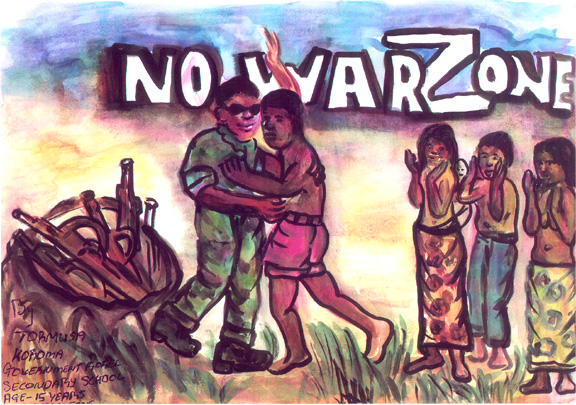
No War Zone Tormusa Koroma, Sierra Leone

No War Zone (Drawing: Tormusa Koroma, Sierra Leone)

Despite these limitations, several noteworthy observations can be made. First, many people from affected communities are aware of the trial and have reflected on its significance. Since its inception, the Special Court has demonstrated an institutional commitment to conducting outreach within affected communities. Its outreach efforts provide a strong model for other trials, particularly those held far from the location of the crimes, as will typically be the case at the International Criminal Court. Among other activities, court staff created audio and video summaries of the trial in local languages for dissemination in Sierra Leone and Liberia, and facilitated visits to the court in The Hague by civil society members from these countries. Continue reading

Posted in Liberia, Sierra Leone, Special Court for SIerra Leone (SCSL) | Tagged | 3 Comments

Music on Trial: Genocide and Musicians

The following is a unique and fascinating guest-post by Catherine Baker,  a Lecturer in 20th Century History at the University of Hull (from August 2012). Catherine is the author of Sounds of the Borderland: Popular Music, War and Nationalism in Croatia since 1991 (Ashgate, 2010) and of a number of articles on international intervention and on popular culture. Enjoy!

inciting genocide through musicThe charges of inciting ethnic violence laid against three Kikuyu singers this month by Kenya’s National Cohesion and Integration Commission represent the latest attempt to extend the reach of post-conflict justice beyond physical perpetrators – by holding musicians and music broadcasters responsible for their complicity in ethnopolitical conflict.

National and international lawyers dealing with the aftermath of the 2007–08 post-electoral conflict in Kenya are following the precedent of the International Criminal Tribunal for Rwanda (ICTR) which, at the trial of Simon Bikindi in 2006–2008, became the first war crimes tribunal to indict a musician for incitement to genocide.

Bikindi’s songs calling for Hutu solidarity against Tutsis had been repeatedly played before and during the genocide in 1994 by the broadcaster Radio Télévision Libre des Mille Collines (RTLM). Earlier cases at the ICTR had convicted RTLM speech broadcasters of incitement (an approach the International Criminal Court has extended to Kenya by indicting the radio broadcaster Joshua arap Sang in 2011), and the prosecution at the Bikindi trial argued that a musician could be held liable on the same basis.

The evidence of his songs alone and texts recorded before the genocide was not enough for the ICTR to convict Bikindi of incitement (judgement, PDF). Convicting him on the basis of his lyrics would have required the prosecution to prove that Bikindi shared the intent of the génocidaires when he composed the songs and that to avoid liability after the violence began he should have asked RTLM to stop playing his music (see Snyder 2006). However ,his conviction for incitement rested instead on an incident where he had broadcast a speech calling for violence from his car.

Legal scholars have offered several sets of extended criteria for proving incitement in the wake of Bikindi in support of thenotion that songs can be considered actionable speech. Did the speaker – or the performer – use dehumanising rhetoric during or soon after acts of violence against the target group? What channels of communication were used and how responsible was the performer for the dissemination of the speech or song?

Though musicians have been put on trial for their songs under many regimes (see Côté 2011), subjecting the creative work of musicians to criminal responsibility within a transitional justice framework is an innovation of the ICTR. Transitional justice after the Yugoslav wars, in contrast, has not attempted to cover the behaviour of musicians . There is strong evidence that media played a significant role in disseminating ethnonationalist discourses before, during, and after the wars and that popular music was implicated in this framework.[1] However, the International Criminal Tribunal for Former Yugoslavia, preparing its indictments from the mid-1990s onwards, has not tried to assign responsibility for ethnic cleansing to musicians or to put media executives on trial.

Simon Bikindi on trial at the ICTR (Photo: AP)

Music in the post-Yugoslav conflicts was, nonetheless, used as a tool in ethnopolitical conflict. Many prisoner testimonies record the forced singing of ethnonationally marked songs as a torture technique (for which the torturers, not the creators of the songs, are liable), and music playing was used to harass enemy troops during breaks from combat. States and armed forces used music and its celebrities, performing at front lines, as an asset to improve troop morale: Croatian forces, for instance, militarised civilian musicians into ‘artistic units’ in autumn 1991, legally rendering them combatants for the duration of their service. On a more general level, attempting to break apart the common entertainment industry of the former state through legal, financial and discursive means achieved, or aimed to achieve, a conceptual separation of ethnonational groups through altering the everyday musical landscape. All these methods contributed to the aims of ethnopolitical conflict by acting on military and civilian morale and by hardening the boundaries of groups.

The patriotic discographies of all sides in the post-Yugoslav conflicts contain songs that could be compared to the repertoire at issue in Bikindi. The ICTR has held songs recorded in advance as insufficient for incitement, but live performances of them in proximity to acts of violence might be. Developing this standard would require a jurisprudence of what messages were and were not actionable. Is the call to push the enemy out of one’s own country defensive, legitimate and exempt? What if the singer promises instead, as in one well-known Croatian wartime song, that ‘our hand will reach you even in Serbia’? Could behaviour outside the text, such as the display of flags or salutes with specific connotations during a performance in proximity to an act of violence, create liability even if the words of the song might not? Continue reading

Posted in Genocide, ICTY, International Criminal Tribunal for Rwanda (ICTR), International Law, Justice, Kenya | Tagged , , , | 4 Comments