
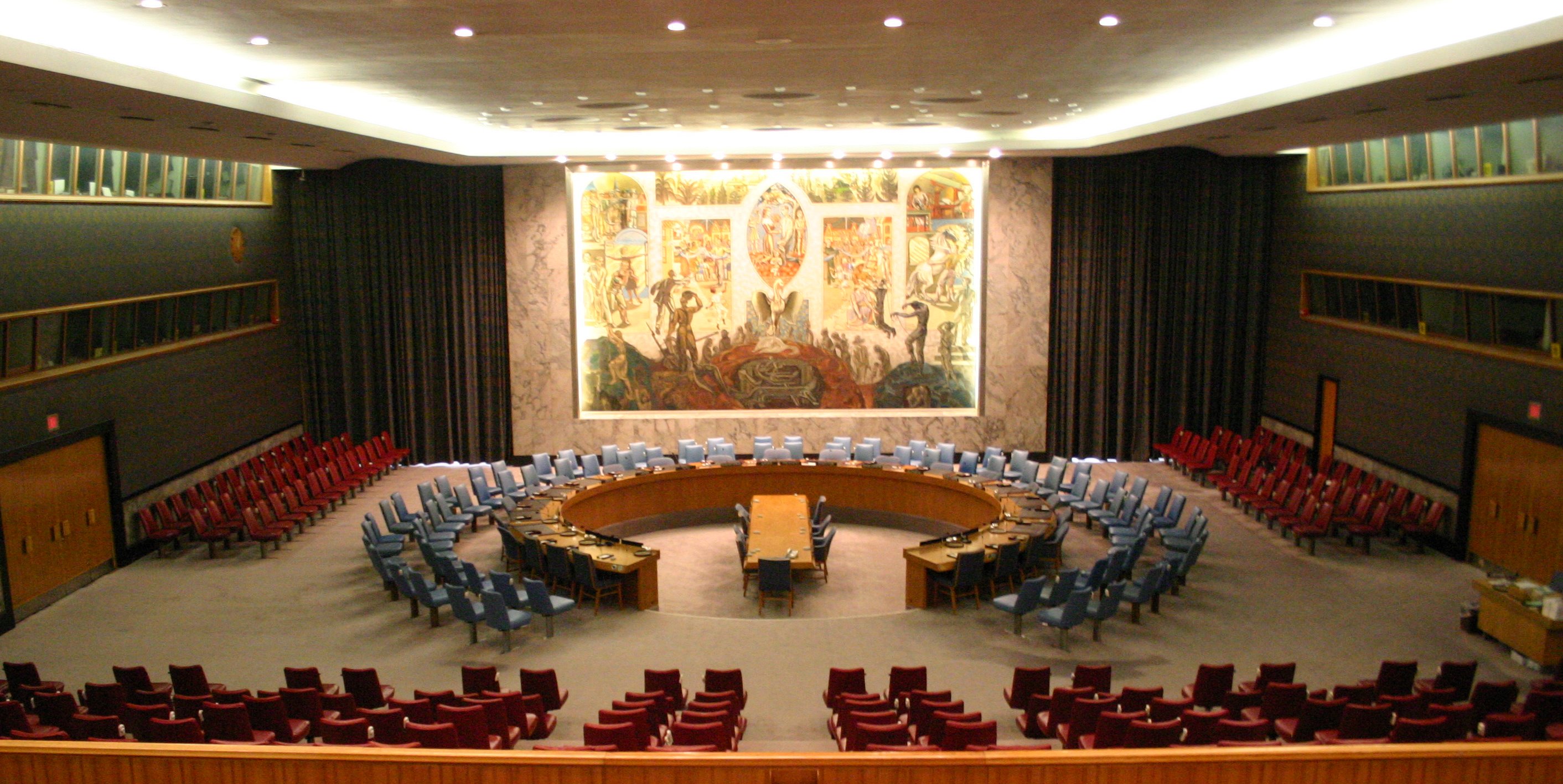
Where justice and politics meet, the United Nations Security Council
In questions of justice in conflicts authors have often described a marked divide between the interests of Western countries and the needs of the local populations directly affected by the conflict on the ground. Two prominent examples are Roy Licklider, who has argued that:
‘We are not just engaged in academic debates now; we are talking about other people’s countries and other people’s lives. And we do not know, in such a manner as to persuade others, what is true, what will work […]’
Adam Branch accuses the ICC of experimenting with African populations in their quest to bring justice to conflicts. As has been argued in various posts published in this blog there are always vested interests in questions of justice during conflicts. For example, in the case of the ICC’s investigations of the Lord’s Resistance Army, traditional leaders have been very vocal in their demands for traditional justice because their traditional authority is at stake. But how much truth is behind the view of a clash of international and local interests in pursuing justice in conflicts beyond the different interests at play?
The case of the ICC warrants against the President of Sudan over war crimes and alleged genocide committed in Darfur serve as a valuable case study to answering this question. The international pressure on Sudan over the Darfur conflict had been mounting for several months before the ICC was brought into play by the United Nations Security Council. Even the US decided to implicitly endorse the referral of the situation in Darfur to the ICC despite their concerns about the court by abstaining and not vetoing Resolution 1594 on 31 March 2005. Throughout the whole conflict verbal condemnations and pressure, especially by France, the US, UK and Canada, had been mounting. This tendency continued after the ICC referrals and culminated in a coordinated international campaign to pressure China, as the main supporter of the GoS, during the 2008 Olympics in Beijing. Human rights organizations like Amnesty International and Human Rights Watch have also consistently been pushing for accountability in Darfur. Additionally, the US applied unilateral sanctions under strong civil society pressure at various points during the conflict.

Save Darfur rally in Central Park, NYC
Yet, this verbal engagement has not been followed up by deeds in any way. The African Union Mission in Sudan (AMIS) was accepted by Sudan in October 2004. It was endorsed by the UN Security Council as its deployment meant that Western states could dodge pressure to become active in Darfur by pointing at the AU. Yet, AMIS failed to stabilize the situation amongst a lack of vital equipment and payment delays for the soldiers stationed in Darfur. The international community never supported the mission to a sufficient degree. In early 2008, after months of stalling by the Government of Sudan and a lack of commitment by Western states, the AU mission was finally replaced by a UN/AU hybrid mission called UNAMID. Yet, history is repeating itself with UNAMID. In 2010 the deployment progress of the mission was still at little over 50 per-cent and vital transport helicopters that are needed to operate effectively in the vast savannahs and deserts of northern and western Darfur were still missing.





 Justice in Conflict