

(Photo: David Pohl)
This week’s news that the US is negotiating with the Taliban in Afghanistan may have come as a shock to some. It has, however, been part of a long and heated conversation about how to resolve the seemingly unwinnable war in Afghanistan (see here for a diverse set of opinions). The decision of whether to deal with the Taliban is also a paradigmatic case in the debate about whether we can negotiate with some of history’s most abhorrent perpetrators.
Why write about the US negotiating with the Taliban on a blog dedicated to issues of justice in conflict? The Obama administration’s decision to begin talks with the Taliban is a paradigmatic case reflecting the cross-roads at which we find ourselves: Who is a legitimate negotiating partner? Does principle trump pragmatism when it comes to negotiating with perpetrators of mass violence? Does morality come before politics? These questions are central to all contexts in which justice is pursued in active conflict as well as in post-conflict situations.
Here is a simplified, but hopefully informative, account of this debate:
Orthodox thinking on conflict resolution, most famously put forward by Roger Fisher and William Ury, suggests that everything is negotiable. There is no issue, scenario, or object that is beyond negotiation. In this view, everyone is a potential negotiating partner, no matter how ‘evil’. In violent political conflicts, even the most brutal and aggressive leaders may be necessary partners in peace negotiations. Indeed, if they aren’t included in the peace processes, such actors can become destructive ‘peace spoilers’ who seek to undermine any potential for the successful implementation of a peace agreement. In this sense, negotiations are meant to moderate violence and transform violent conflict. If potential parties to peace in a war remain isolated and outside of the peace process, they have no incentive but to continue fighting – either for their own survival or in order to nudge their way into the peace process.
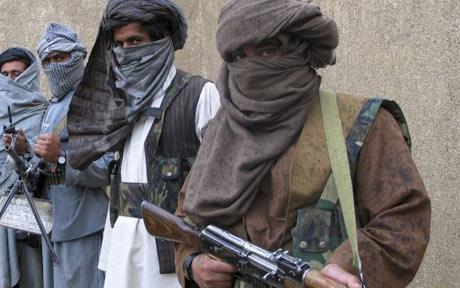
Taliban Fighters. Would you negotiate with them? (Photo: longwarjournal.org)
Thus, the theory goes, such individuals must be negotiated with even if that means that they receive amnesty for crimes they have committed, and may require that they get a share of the material and political resources of a society through a power-sharing agreements. As I have argued previously, this has been the norm for much of contemporary history. Some of history’s worst leaders have been granted cushy retirement in exchange for their removal from positions of power.
Recently, this angle on negotiations has come under sustained attack. The human rights movement has been pivotal in the attempt to undermine the orthdoxy of everything being negotiable. Instrumentalizing powerful labels such as “genocidal”, “evil” and “like Hitler”, the international human rights movement, and its international criminal justice wing in particular, has declared that there are some people who simply cannot be negotiated with; they are too “genocidal”, “evil” and “like Hitler”.
There are important drawbacks to negotiating with particularly vile adversaries. Bargaining with them risks rewarding and legitimizing their violence. If they had not been so successful in committing violence, they wouldn’t be in a position to negotiate. More commonly, it is seen as morally abhorrent: it is unjust to negotiate with individuals who commit atrocities against civilians and even more wrong to grant them amnesties or positions of power.









 Justice in Conflict