
US Negotiating with the Taliban: Bargaining with the Devil?

(Photo: David Pohl)

This week’s news that the US is negotiating with the Taliban in Afghanistan may have come as a shock to some. It has, however, been part of a long and heated conversation about how to resolve the seemingly unwinnable war in Afghanistan (see here for a diverse set of opinions). The decision of whether to deal with the Taliban is also a paradigmatic case in the debate about whether we can negotiate with some of history’s most abhorrent perpetrators.

Why write about the US negotiating with the Taliban on a blog dedicated to issues of justice in conflict? The Obama administration’s decision to begin talks with the Taliban is a paradigmatic case reflecting the cross-roads at which we find ourselves: Who is a legitimate negotiating partner? Does principle trump pragmatism when it comes to negotiating with perpetrators of mass violence? Does morality come before politics? These questions are central to all contexts in which justice is pursued in active conflict as well as in post-conflict situations.

Here is a simplified, but hopefully informative, account of this debate:

Orthodox thinking on conflict resolution, most famously put forward by Roger Fisher and William Ury, suggests that everything is negotiable. There is no issue, scenario, or object that is beyond negotiation. In this view, everyone is a potential negotiating partner, no matter how ‘evil’. In violent political conflicts, even the most brutal and aggressive leaders may be necessary partners in peace negotiations. Indeed, if they aren’t included in the peace processes, such actors can become destructive ‘peace spoilers’ who seek to undermine any potential for the successful implementation of a peace agreement. In this sense, negotiations are meant to moderate violence and transform violent conflict. If potential parties to peace in a war remain isolated and outside of the peace process, they have no incentive but to continue fighting – either for their own survival or in order to nudge their way into the peace process.
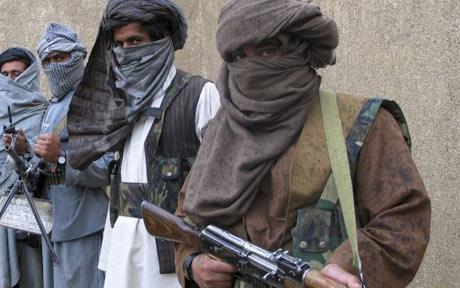
Taliban Fighters. Would you negotiate with them? (Photo: longwarjournal.org)

Thus, the theory goes, such individuals must be negotiated with even if that means that they receive amnesty for crimes they have committed, and may require that they get a share of the material and political resources of a society through a power-sharing agreements. As I have argued previously, this has been the norm for much of contemporary history. Some of history’s worst leaders have been granted cushy retirement in exchange for their removal from positions of power.

Recently, this angle on negotiations has come under sustained attack. The human rights movement has been pivotal in the attempt to undermine the orthdoxy of everything being negotiable. Instrumentalizing powerful labels such as “genocidal”, “evil” and “like Hitler”, the international human rights movement, and its international criminal justice wing in particular, has declared that there are some people who simply cannot be negotiated with; they are too “genocidal”, “evil” and “like Hitler”.

There are important drawbacks to negotiating with particularly vile adversaries. Bargaining with them risks rewarding and legitimizing their violence. If they had not been so successful in committing violence, they wouldn’t be in a position to negotiate. More commonly, it is seen as morally abhorrent: it is unjust to negotiate with individuals who commit atrocities against civilians and even more wrong to grant them amnesties or positions of power.
Continue reading

Posted in Afghanistan, Human Rights, Justice, Pakistan, Peace Negotiations, Taliban, United States | 2 Comments

Bashir to Visit China, US endorses it: But What Does it Mean?

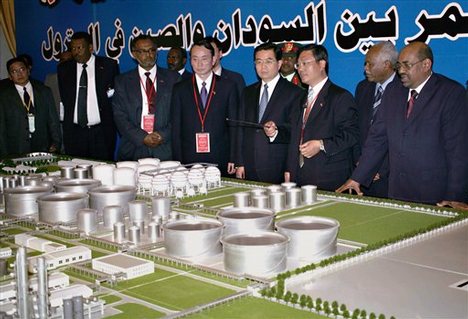
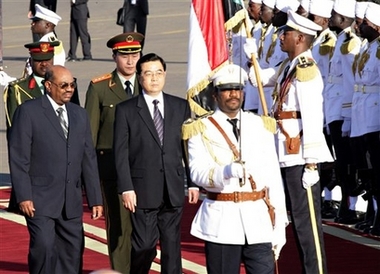
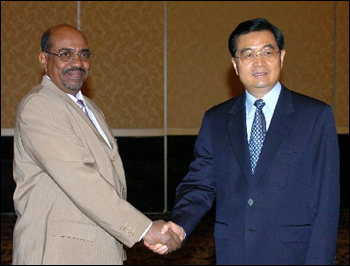
Chinese President Hu Jintao with Bashir

While Sudan’s President Omar al-Bashir won’t be visiting Malaysia due to “other engagements,” it looks very likely that he will, in fact, be visiting China. The Chinese Foreign Ministry has confirmed that Bashir, wanted by the ICC for his role in the crisis in Dafur, would visit later this month. The US has implicitly supported the decision.

That Bashir is seeking to make an official visit to another country, despite the ICC arrest warrant against him is, of course, nothing new. But, for a number of reasons, his upcoming China visit is much different than his foreign forays to Kenya, Chad, Djibouti and so on.

This post is an attempt to examine this potential trip in the context of the relations between all four key actors involved: China, Sudan, the ICC and the US.

China and Sudan

If Bashir visits China, it will be the first time since the warrants were issued that he has visited a member-state of the UN Security Council. Implicit in this is the fact that this will also be the first time he visits a state with international power of this magnitude . He will also be visiting one of the single largest investors in Sudan, especially when it comes to oil (see also here). There is a general trend – little analyzed and rarely considered in mainstream coverage of Chinese relations in Africa – that China often increases its dealings with states that the West has deemed illegitimate economic and political partners. China does not face such pressure. This is, at least in part, due to China’s repression of domestic human rights groups combined with the fact that its human rights advocates, understandably, focus on domestic respect for human rights. In short, this means that little focus is left for questionable international dealings by China. As such, it appears that every time the “West” closes up shop in states which fail to protect their own people, China sees an opportunity. This reality and the economic relationship between China and Sudan is central to any informed discussion on Bashir visiting China and future peace in Sudan – both in Darfur and between the South and North.

Bashir and Jintao

For China, the calculus seems pretty simple. It wants to protect its investments in China. To do so it needs two things. First of all, it needs good relations with the government. Second, and something rarely conceded by critics of Chinese foreign policy, it needs peace. With the exception of war economies, it is never good to do business while bullets fly and bombs fall. As the US State Department spokesperson rightly noted with regards to the visit and China’s privileging of economic interests over peace:

“it’s hard to have money and oil when there’s no peace.”

In a statement a Chinese Foreign Ministry spokesman said that:

“China would like to play a positive role in promoting Sudan’s peace and reconciliation, boosting the implementation of the Comprehensive Peace Agreement and safeguarding regional peace and stability”

This is very much true but omits: “…because our investments depend on it.”

China’s role in the international community is at a cross-roads. Its ventures into Africa, impressively chronicled by Chris Alden, have brought its traditional principles of national sovereignty and non-intervention into conflict with its increasingly overt political role. While the country’s advocacy of these principles may have always been more “myth than reality”, China will not be able to escape questions as to its increasingly frequent and ever-more politically intrusive international forays.

China and the ICC

The common view in the West is that China is a country to be weary of. There are uninformed undertones of paranoia that China will take over the world and destroy the liberal, democratic and human rights-respecting international system the West has painstakingly built following WWII. Much of this comes from a displacement of attitudes following the Cold War. The West, especially the US, no longer had an arch-enemy. Little understood and ever-growing, China presented – and continues to present – a perfect target for the politics of fear.

Drawing on these conceptions of China, there is a prevailing view that China is fundamentally opposed to the International Criminal Court. This popular presumption of China’s attitude feeds on the mainstream accounts of human rights violations in China, of which there are undoubtedly many, and on China’s consistent declarations that it holds the principles of national sovereignty and non-intervention as golden rules in the game of international politics. However, as I have explained before, China’s relationship with the ICC has at times been productive and positive.

China, of course, is not a member state of the ICC and it was one of only four states to vote against the Rome Statute in 1998. China has had significant disagreements with the Court over various issues, including the definitions of crimes under its mandate, the role of the UN Security Council, the powers of the Court’s Prosecutor, as well as its jurisdiction. Many of China’s dissenting views have been reconciled with the notable exception of its fear that the Court could become a political tool, something that – perhaps ironically – the Court’s greatest advocates also fear. During the Rome Statute negotiations in 1998, China participated actively. Since then, it has been an engaged partner in the ICC’s Assembly of States Parties and has, on occasion, voiced impressive political support for the Court. China has stated that it believes that the Court should play a role in contributing to international peace and security. In this contest, it’s important to keep in mind that China voted in support of referring the situation in Libya to the ICC. While this may come as a surprise to many, China has even suggested that its accession to member-state status is a realistic possibility.

Jintao and Bashir (plus some other guys)

Continue reading

Posted in China, Darfur, ICC Prosecutor, International Criminal Court (ICC), Sudan, United States | 1 Comment

Bashir to Malaysia? The ICC and Marginalizing Indicted Leaders

This week, Malaysia joined the ever-growing group of states which have considered inviting Sudanese President Omar al-Bashir to visit (note: it is now apparent he will not visit – see below). With the exception of a tiny minority of world leaders, this would be just another state visit by just another head of state. But Bashir, despite his own protestations and those of his supporters, is not just another head of state – he is a leader wanted by the ICC for the Court’s trinity of crimes: genocide, war crimes and crimes against humanity.

Regardless of whether or not Bashir is guilty of organizing atrocities in Darfur, he has been labeled as genocidal by the ICC and its advocates. This labelling aspect of international criminal justice, while rarely analyzed, is fundamental to its purpose. Politically, the perception or popular belief that a leader is guilty of committing atrocities may be just as important to the court as holding trials and achieving verdicts.

Labelling certain individuals as international criminals is intended to have numerous effects. It is meant to spread the popular perception of such individuals as illegitimate. Most importantly, it is intended to marginalize and isolate individuals who otherwise may benefit from a negotiated settlement.

The process and consequences of marginalization through ICC investigations and arrest warrants is not uncontroversial. Advocates argue that ICC indictments can isolate leaders both domestically and internationally, in large part by raising the costs of associating with individuals suspected of committing acts which violate the ‘conscience of humanity’. As mentioned previously, labelling individuals as international criminals is also an attempt to make leaders unfit for peace negotiations. Champions of international criminal justice point to the marginalization of Radovan Karadzic and Ratko Mladic during the Bosnian crisis, barring them from participating in (and presumably de-railing) the Dayton peace talks.

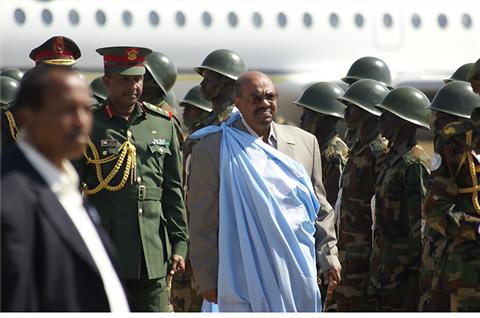
Despite being indicted by the ICC, Sudanese President Omar al-Bashir has visited numerous states (Photo: RNW)

Critics fire back that this is politically naive. In the “real” world, even the most unsavoury of leaders must be negotiated with. If justice is pursued at all, it must come after negotiated peace. Critics also argue, rather convincingly, that creating a political vacuum by isolating indicted individuals assumes that peaceful leaders will fill the void. There is also the ever-present, if rarely confronted, issue about the relationship between isolating leaders through judicial and other means and regime change. Most importantly, however, critics highlight that leaders who feel squeezed may respond by lashing out at vulnerable citizens. Rather than simply marginalizing them, warrants may embarrass and shame leaders. As has been persuasively argued by sociologist James Gilligan, shame is often a key cause of violent behaviour. In the case of Bashir, following the issuance of the ICC arrest warrant against him in 2008, Sudan retaliated by expelling a dozen NGOs from Darfur.

Continue reading

Posted in China, Darfur, International Criminal Court (ICC), Kenya, Malaysia, Peace Negotiations, Ratko Mladic, Serbia, Sudan | 4 Comments

Why Uganda is Our Best Chance to get to the Bottom of the Peace-Justice Debate

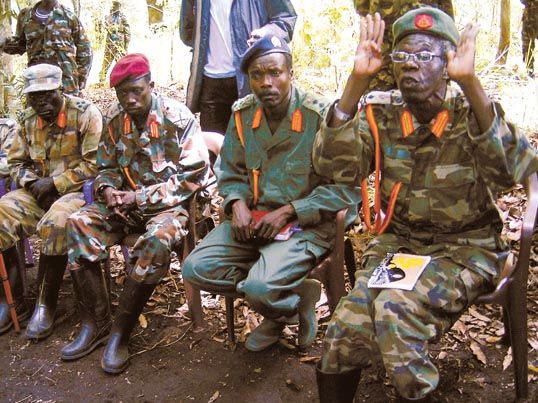
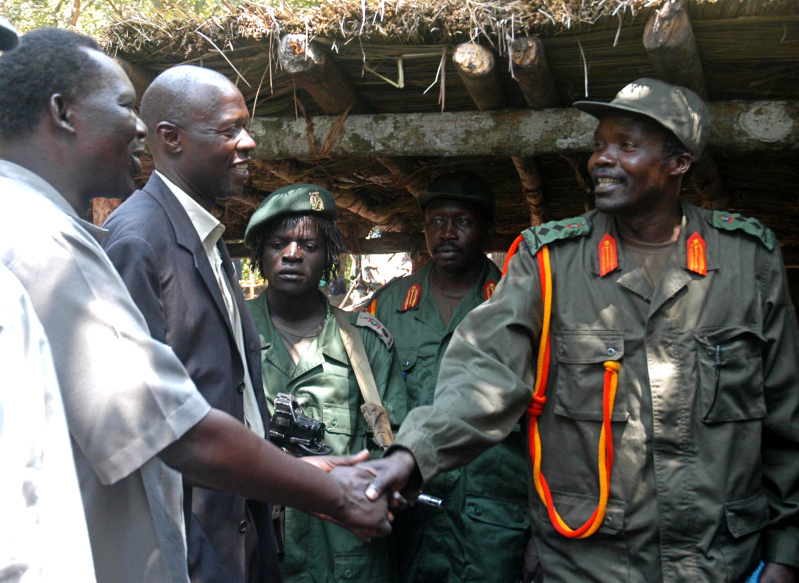
LRA leader Joseph Kony (second from right) and his second-in-command, Vincent Otti (far right), were both indicted by the ICC

Most of the academic and political attention that the International Criminal Court (ICC) receives these days comes from Sudan and Libya. There is little doubt that the investigations of Sudan’s Omar al-Bashir and Libya’s Muammar Gaddafi have captured the imagination of the Court’s fiercest advocates and most vehement critics alike.

It is no secret that the world’s attention can only be split so many ways. When our eyes and ears turn to Libya, we ignore Bahrain and Yemen. When we claim genocide in Darfur, we ignore the horrors of the Democratic Republic of Congo (DRC). Similarly, there is a significant division in the attention that the ICC’s cases get. Generally, the ongoing occurrences of war crimes and crimes against humanity in the DRC and the Central African Republic (CAR) are examined the least. The case of Darfur, thanks in large part to remarkably influential (if not always well-informed) activism of American human rights groups and celebrities as well as the labelling of the Khartoum regime as genocidal, remains a focal point of international political and media attention. Understandably, no case currently receives nearly the attention as Libya where a delirious tyrant, a former London School of Economics grad student and the Intelligence chief are in the cross-hairs of NATO bombs and the ICC’s Prosecutor. Somewhere, in the middle of the pack are the Kenya and Ugandan cases, with Kenya receiving more attention because of its recent nature.

Attention to northern Uganda from scholars, observers and international development community exploded in the early 2000s. A conflict which had long been neglected and seemingly relegated to oblivion, quickly became front-page news and emerged on the agenda of international institutions. This was in large part the result of the ICC’s involvement. In 2003, the situation in northern Uganda became the first case to be referred to the ICC, making Uganda “a litmus test for the much celebrated promise of global justice,” according to scholar Kasaija Phillip Apuuli. Two years later, the Court issued arrest warrants for the four senior members of the Lord’s Resistance Army (LRA): Joseph Kony, Vincent Otti, Okot Odhiambo, Dominic Ongwen and Raska Lukwiya.

Internationally, the ICC’s indictments were hailed as a historic moment symbolizing the end of impunity for violators of the gravest crimes. Locally, however, many viewed the ICC’s timing and intervention as precarious, if not dangerous.

The conflict in northern Uganda resulted in, at times, millions of civilians being forced into internally displaced persons camps (Photo: BBC)

The notoriously brutal LRA, led by Kony, had been at war with the government of Uganda for two decades. Numerous peace initiatives had stalled or failed for various reasons. Then, in 2000, the Government of Uganda passed an Amnesty Act which guaranteed that any LRA combatants who defected from the LRA would be granted reprieve from prosecution and reintegrated  into society. Justice would be achieved through context-sensitive traditional reconciliation mechanisms rather than through trials. When the ICC began its investigations and subsequently issued arrest warrants for Kony and the other top officials, many civil society, human rights and religious leaders in northern Uganda strongly criticized the decision. Tim Allen, who wrote a remarkably lucid account of “trial justice” in Uganda quotes one northern Ugandan human rights worker as saying: “There is a balance in the community that cannot be found in the briefcase of the white man.” Others, most thoroughly scholar Adam Branch, maintained that the Ugandan government was in effect using the ICC in order to justify and legitimize a military campaign against the LRA.

Continue reading

Posted in Amnesty, Central African Republic (CAR), Crimes against humanity, Darfur, Democratic Republic of Congo, International Criminal Court (ICC), Kenya, Libya, Lord's Resistance Army (LRA), Peace Negotiations, Traditional Justice Mechanisms, Uganda, War crimes | 13 Comments

Off to Uganda: Peace and/or/with/versus Justice

Juba peace negotiations

Joseph Kony, leader of the Lord's Resistance Army

Dear Readers,

I am off to Uganda today to begin almost three months of research on the effects of the ICC’s investigations and arrest warrants on peace processes and negotiations in Northern Uganda. In particular, I will be focusing on how the ICC’s intervention in Uganda affected the Juba Peace Negotiations between the government and the Lord’s Resistance Army. I will also be measuring the attitudes of different actors on the peace-justice debate. I look forward to sharing some of my findings and experiences with you.

Over the summer, posts may be less regular. I will be stationed, for the most part, in Gulu. While I have been told there will be regular internet, we’ll just have to see. 

Thank you, as always, for your readership and interest in JiC. It has been – and continues to be – an honour and a pleasure to write for you.

Mark 

Posted in International Criminal Court (ICC), Transitional Justice, Uganda | 1 Comment

Before you go Supporting Exile for Gaddafi, Beware of What You Assume

(Photo: Ivan Sekretarev/AP)

Photo: AP

Each time a conflicted and fragile society resolves to confront a murderous, tyrannical or dictatorial ruler, a similar question inevitably surfaces: should the ruler and his cabal be allowed, or even encouraged, to go into exile?

The logic in support of exile is simple and seemingly intuitive (although, it should be noted, far more complex in practice): Ushering violent leaders into exile removes them from power and thus revokes their ability to continue committing massacres and human rights abuses. When negotiating a fragile peace, the view holds, it may be better to use exile as a carrot – the leader is offered early retirement and protection from prosecution in exchange for allowing democratic and peaceful forces to take power. Leaders are assumed to be un-reformable and, without an offer of amnesty or exile, are presumed not to have any incentive to stop committing atrocities in an effort to maintain power. By trading exile for peace, greater bloodshed and the loss of life is thus prevented.

For a host of reasons, this position is problematic. It relies on assumptions about the logic of violent leaders, it generally neglects differences across contexts, and – as many will undoubtedly point out – it may be morally unacceptable. In many ways the simple logic of the exile argument resembles more an attempt at propping mountains up on matchsticks than a coherent, verifiable and objective hypothesis.  But there is another problem with the exile argument that is rarely addressed: the assumption that those who replace exiled leaders will necessarily be peaceful.

During and prior to the Cold War, offering exile and offering amnesty for past crimes was the norm as states negotiated their way away from violent political conflict towards consolidated peace. Some of history’s most brutal leaders, like Uganda’s Idi Amin and Haiti’s Jean-Claude Duvalier (Baby Doc), went into exile while the leaders of Argentina’s military juntas were granted amnesties for their role in the torture and disappearance of thousands of civilians during the Dirty War.

Idi Amin was among the tyrants who received exile during the Cold War

This approach is often said to reflect the realist’s understanding of international society. The only “realistic” way to end wars was to negotiate power-sharing agreements, manage conflict between warring parties and to offer exile or amnesty for particularly brutal leaders. Another possibility was internal exile: removal from power in combination with the granting of an amnesty to protect leaders from prosecution. If the leaders had committed crimes against civilians, so be it. Justice was a secondary goal, and only really pursued if it was deemed to help the cessation of direct political violence. Immunity from prosecution was exchanged for stability and, often, an aspiration to develop liberal, democratic institutions and traditions. This trade-off was seen and widely accepted as a necessary evil, a least worst option, driven by the fact that, as Mark Freeman argues, people may be repulsed by impunity but their “repulsion for war and tyranny is greater.” While there are important arguments about the extent to which this has occurred, the post-Cold War trend has shifted away from such logic.

Continue reading

Posted in Amnesty, Exile, International Criminal Court (ICC), Libya, Libya and the ICC, Sudan, Syria, Uganda, Yemen | 3 Comments

You Say Genocide, I Say Genocide: Some Thoughts on the Genocide Debate

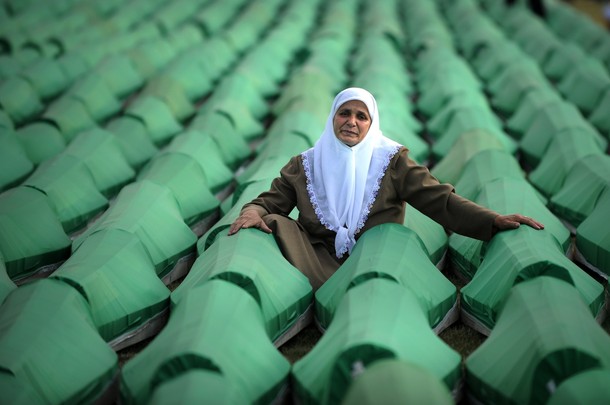
A Bosnian woman mourns over coffins of some of the victims of the 1995 Srebrenica massacre, which has been described as consituting an act of genocide (Photo: srebrenica-genocide.blogspot.com)

In an article on the continued debate about the meaning and use of the term ‘genocide’, The Economist writes:

“Prosecutors, judges, historians and politicians have made huge efforts in recent years to describe the boundaries of genocide: when mere mass murder stops and the ultimate human crime starts. Yet the term is far more than a tool of historical or moral analysis. Its use brings momentous political and legal consequences—and is therefore bound to be highly contested.”

Since the days when Polish lawyer Raphael Lemkin loitered in front of the offices of UN diplomats and pressed the international community to adopt the Convention on the Prevention and Punishment of the Crime of Genocide, few terms have inspired so many words, speeches, books and films as “genocide”. Perhaps only the term “nuclear” has evoked the same passion and interest. Genocide has, for better or worse, become known as the “crime of all crimes” and has seemingly defined the parameters of humanity’s capacity to conduct evil.

According to the Genocide Convention,

genocide means any of the following acts committed with intent to destroy, in whole or in part, a national, ethnical, racial or religious group, as such:

(a) Killing members of the group;
(b) Causing serious bodily or mental harm to members of the group;
(c) Deliberately inflicting on the group conditions of life calculated to bring about its physical destruction in whole or in part;
(d) Imposing measures intended to prevent births within the group;
(e) Forcibly transferring children of the group to another group.

At the center of the genocide debate has been the work of Professor William Schabas. Schabas has written extensively about his discomfort with what he sees as the abuse of the terminology of genocide, declaring that its expanded use and conflation with crimes against humanity has resulted in a “careless and potentially misleading use of precise terminology.” According to the Economist, however, Schabas now argues that the international community should turn its focus away from genocide to crimes against humanity.

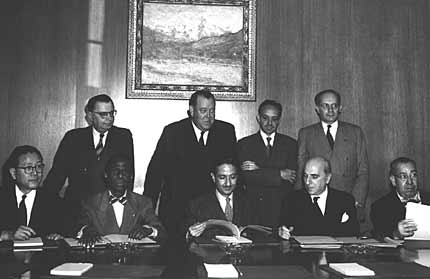
State representatives sign the Genocide Convention. On the far right, standing, is Raphael Lemkin who tirelessly worked to get recogntion of the term "genocide" (Photo: ushmm.org)

A trend towards applying crimes against humanity as a sort of blanket crime, would have significant consequences for the adjudication of international crimes. It would virtually guarantee that most perpetrators of mass atrocities are found guilty. Why? Because, as Dov Jacobs argues, they don’t need the intent to destroy, in total or in part, a particular group of people, as the crime of genocide requires, nor does it require a recognition that crimes were committed in the context of an armed conflict, as war crimes require.

Some may argue that there is something fundamentally positive about a world which sees all crimes which may amount to genocide as crimes against humanity. Because genocide must be done by one group against the “other”, calling crimes genocide implicitly and explicitly reifies the belief that some people are different. Crimes against humanity, on the other hand, is a fundamentally cosmopolitan international crime. Which people are targeted is irrelevant because the crime is one not against any type of people, but a crime against all people, against all of humanity. The architects and perpetrators of the Holocaust, for example, were not charged with genocide at the Nuremberg Tribunal (the term “genocide” did not yet exist). Instead, their acts were considered as crimes against all of humanity.

Continue reading

Posted in Crimes against humanity, Genocide, Peace Negotiations, Ratko Mladic, Rwanda, Sudan, United States | 8 Comments

The ICC’s Next Top Prosecutor: The Candidates

One thing is for certain: Angelina Jolie will not be the next ICC Prosecutor (photo: AP)

Last week, we had a fascinating and lively discussion about some of the criteria and political issues regarding the election of the International Criminal Court’s next Prosecutor.  In December, the ICC’s state-members will converge to elect the Court’s second Prosecutor. Prior to that, a search committee will short-list at least three candidates. In the weeks and months leading up to the December election, JiC will feature a series of posts relating to various issues pertaining to the question of the ICC’s next Prosecutor. This week’s post takes a look at some of the possible candidates to succeed current chief Prosecutor, Luis-Moreno Ocampo.

Please note that this list draws on numerous sources interested in this subject. Neither this list nor the characterization of these potential candidates is exhaustive. Some candidates are more feasible than others and new candidates may emerge and will be profiled if they do. Please also keep in mind that the candidates presented here are in no particular order.

Hassan Jallow

Jallow is an interesting candidate for a number of reasons. He is a Gambian lawyer and has been the Chief Prosecutor at the International Criminal Tribunal for Rwanda since 2003. He has previously been the Attorney General and Minister of Justice in Gambia. He has also been a legal expert at the International Criminal Tribunal for the Former Yugoslavia and, briefly, was appointed as judge in the Appeals Chamber at the hybrid Special Court for Sierra Leone (SCSL). This barely scratches the surface of Jallow’s achievements. All in all, Jallow has an extremely impressive resume that would put him in the top-tier of contenders for the ICC’s top job.

Helping his candidacy (as well as Fatou Bensouda’s and Kiril Idris’ below) is the fact that Jallow is African. The origin of a particular candidate may very well play into the decision-making of states. Indeed, the AU has already declared that it will put its weight behind an African candidate, likely to be named in the next few weeks.

Dov Jacobs comments that Jallow’s “stint at the ICTR makes him a sort of safe choice after Moreno-Ocampo, because he follows orders, as his deference to [Rwandan President Paul] Kagame shows.”

ICTR Prosecutor

Hassan Jallow, the current ICTR Prosecutor

One of the most common criticisms levied against Moreno-Ocampo is his penchant to be cavalier and overtly political in his work and his public statements. It could be argued, as Dov’s comments suggest, that Jallow would do neither and would thus make a more constrained and controllable Prosecutor. However, there have also been criticisms from various human rights groups and observers over Jallow’s reluctance to investigate and prosecute alleged crimes by the Rwandan government forces (RPF) prior to and following the 1994 Rwandan genocide. For the ICC to be successful, it must be impartial and apolitical, and the one-sided investigation of Rwanda remains effective fodder for those who maintain that international criminal justice is always and inevitably victor’s justice.

Both the ICTY and the ICTR have begun the process of shutting down operations. There will be key residual mechanisms in place for the foreseeable future, but neither ad hoc tribunal was intended to be permanent. Indeed, the reality that both tribunals will conclude their work during the tenure of the ICC’s next chief Prosecutor will only increase the pressure on the ICC to raise its global significance, its success and its effectiveness.

Some may argue that it would be wiser to keep Jallow (and Serge Brammertz – see below) in his current position as Prosecutor of the ICTR. It would benefit the ICTR to maintain some continuity as it slowly completes its work in the next few years. It also certainly wouldn’t look good for the ICTR (or the ICTY) if its chief employee skipped out to head the ICC’s OTP just when the tribunal was in the midst of slowly shutting down operations, especially with high-profile cases in the dock

It is important to remember that there remains critical work to be done at the ICTR. Earlier this month, Bernard Munyagishari, the alleged “mastermind” of the Rwandan genocide was arrested. This case will be of particular importance to the legacy of the Rwandan Tribunal. While the tribunals may be winding down, there is still much to be done before it closes its doors.

Louise Arbour

Arbour commands the respect of just about everyone I have spoken to, even those who have disagreed with her views and tactics during her long and illustrious career. It is hard to imagine a candidate who has been more involved with issues of justice, human rights and conflict than Arbour. Indeed, she has a remarkably impressive pedigree. The Canadian Arbour has also shown on numerous occasions, particularly in her role as Prosecutor at the ICTY and as UN High Commissioner for Human Rights, that she is tough as nails and not overly worried about annoying state and non-state actors in the defense of principles and values. At the same time, Arbour is one of those rare characters, unlike Moreno-Ocampo, who don’t feel the need to be flashy or use unnecessarily high rhetoric in the way they go about their business.

Louise Arbour, former Prosecutor at the ICTY and UN High Commissioner for Human Rights (photo: Le Devoir)

In his article on the subject of the ICC’s next chief Prosecutor, David Kaye writes that “Moreno-Ocampo is more Del Ponte than Arbour, and the ICC needs an Arbour.” Why name-drop Arbour specifically? Professor William Schabas believes that it is “as if a trial balloon is being floated to promote Louise Arbour’s candidacy.” Schabas goes on to say that Arbour was interested in becoming the Court’s first Prosecutor (what a counter-factual treasure trove!) but was ultimately unsuccessful. Nevertheless, Schabas concludes:

“She would get a lot of support if she wanted to throw her hat into the ring.”

Continue reading

Posted in International Criminal Tribunal for Rwanda (ICTR), Next ICC Prosecutor, Special Court for SIerra Leone (SCSL) | 9 Comments

The Arab World and the ICC: A New Chapter or Smoke and Mirrors?

Song and Emir

The ICC's President, left, and the Emir of Qatar opened the Court's first regional conference, in Doha, Qatar.

To date, the most fascinating, dynamic and at times frustratingly contradictory relationship the ICC has had has been with the African Union (AU) and its member states. Today, however, the relationship which appears set to define the Court’s second decade may be with the member states of the Arab League. The renewed engagement of Arab states with issues of international criminal justice has been propelled by the Arab Spring. The current level of engagement by Arab League states with the ICC is unprecedented.

In the early days of the Arab Spring, issues of justice and accountability were front and center. Within days of pushing President Zine el-Abidine Ben Ali out of power, an arrest warrant was issued for him, and Tunisia declared that it would ratify the Rome Statute of the ICC. Egypt has also expressed its desire to sign and ratify the Statute and has taken steps towards putting ousted leader Hosni Mubarak on trial. Libya, of course, was referred to the ICC in late February and earlier this month, the ICC’s Prosecutor requested arrest warrants for Colonel Gaddafi, his son Saif al-Islam and Libya’s head of intelligence services. Arab League support has been essential to the current intervention taking place in Libya. In Syria, Bahrain and Yemen, where Arab League support for intervention is lacking, there are still calls for the ICC to get involved.

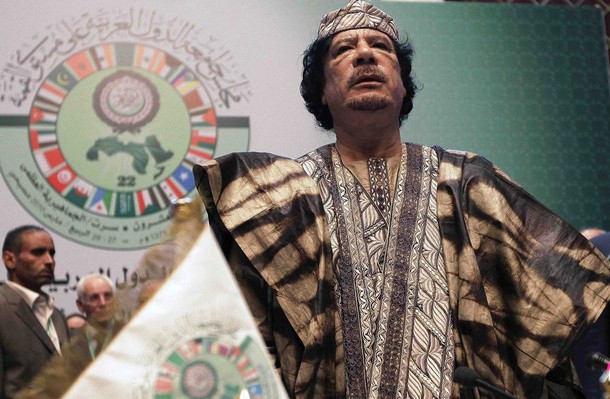
Libya's Gaddafi at an Arab League summit. The ICC Prosecutor has asked the Court to issue an arrest warrant for him, his son and Libya's head of intelligence (Photo: Zohra Bensemra/Reuters)

The Arab world’s drive for justice and accountability has thus far not been a passing fad; it has not diminished but only seems to be increasingly salient and widespread. Rarely does a day go by that news out of the Arab world does not relate to international criminal justice.

In this context, let’s take a look at some of the more remarkable recent developments regarding the ICC and the Arab League states.

The Doha Conference: What a difference a few months make!

Apparently unbeknownst to Western journalists, this past week the ICC held its first regional conference. It was held in Doha, Qatar from May 24-25.

Just how remarkable was this conference? Consider that only two years ago, Sudanese President, Omar al-Bashir, indicted by the ICC for his role in the Darfur crisis, attended Arab League meetings in Doha which resulted in the regional body declaring its “solidarity with Sudan and…rejection of the ICC decision” to issue an arrest warrant for Bashir.

Continue reading

Posted in African Union (AU), Arab League, Egypt, Human Rights, ICC Prosecutor, International Criminal Court (ICC), Justice, Libya, Libya and the ICC, Middle East, Qatar, Sudan, Syria, Tunisia, Uganda, UN Security Council | 1 Comment

Pursuing and Serving Justice Fairly: Is Mladic Fit to Stand Trial?

Mladic after being arrested

Ratko Mladic, soon after being arrested in Serbia

In a post a few months back, I pondered what a trial of Gaddafi would be like, given his aptitude for emotional and delusional outbursts. It was at that time that legal scholar Dov Jacobs of Spreading the Jam suggested that in the case of Gaddafi, it was entirely possible that no trial would go forward on the basis of his mental health.

So what about the 69-year old Mladic? Is he mentally and physically fit enough to stand trial?

A report by Radio Netherlands Worldwide showed video footage of Mladic in detention with a serious limp. The report also suggested that the questioning of Mladic had to be delayed because of his poor health. Other reports indicate that Mladic’s arm is paralyzed and that he may have suffered a series of strokes in recent years.

Mladic’s lawyer maintains that his client’s health is poor and as a result, he should not be extradited to The Hague (see also here). Of course a degree of skepticism must arise when lawyers speak of their client’s health. It is in Mladic’s interest to delay his extradition and a trial for as long as possible. In any case, today, a judge in Serbia ruled that Mladic could be sent to The Hague and was fit to stand trial.

As for the ICTY, it is undeterred by Mladic’s health and predictably so. It would be a huge victory and a signal of its continued importance and effectiveness to put Mladic on trial in the same court room in which his partner in crime, Radovan Karadzic is being tried and where Slobodan Milosevic was tried before them.

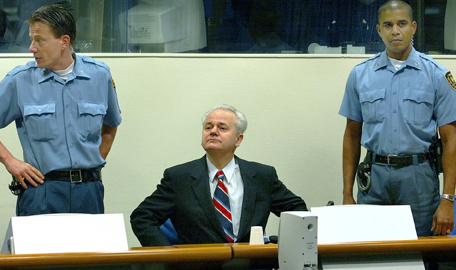
Milosevic at the ICTY

Questions of Milosevic's health plagued his trial at the ICTY (Photo: Paul Vreeker/AP)

Conspicuously, the ICTY’s Statute does not include provisions addressing the mental health of the individuals it seeks to try (note the ICC Statute does, in Article 31). However, the Court’s Rules of Procedure and Evidence do include some articles which may pertain to bringing up the mental health of both the accused and witnesses.

It is important to remember that the ICTY has already been plagued by problems arising from its handling of health issues, most dramatically in the case of Milosevic.

When Milosevic became ill and his trial began to suffer from significant delays, judges ruled in favour of forcing a lawyer on the former Serbian President. Many decried the decision as contradicting the basic right of a defendant to represent himself. One critic, John Laughland, writes:

Continue reading

Posted in Balkans, Genocide, Human Rights, ICTY, Justice, Libya, Serbia, Slobodan Milosevic | 1 Comment