
Below is an article I wrote, a version of which originally appeared in the Globe and Mail, on the increasingly blurred lines between immigration policy and international criminal justice. While the focus of the piece is on the Canadian experience and what the Canadian government can do better, this is an issue that many — if not all — states which open their doors to refugees and migrants face. The piece delves into the challenge of being open to refugees without sacrificing commitment to justice and accountability for international crimes. As always, your thoughts are welcome!
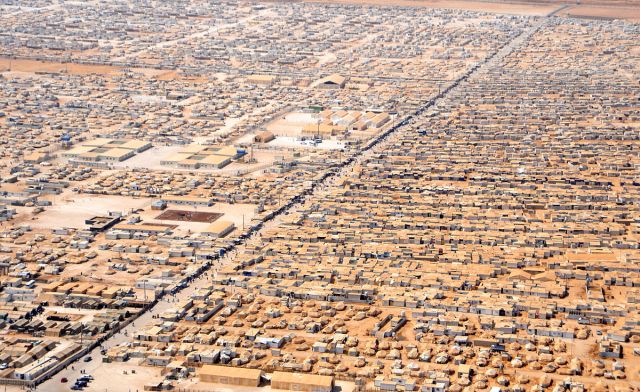
Za’atri camp in Jordan, which houses thousands of refugees fleeing violence and conflict in Syria (Photo: U.S. State Department)
Two crises define the world today: the perpetration of mass atrocities against civilians and the movement of peoples, often in direct response to those very same atrocities. This poses a distinct challenge for countries like Canada that welcome refugees, some of whom may carry with them criminal pasts.
It is not uncommon for perpetrators of atrocities to cloak themselves among refugees. Due to effective screening procedures, the number of war criminals amongst refugees is tiny. But they do sometimes slip through. When they do, they present an opportunity to achieve justice — and shouldn’t be used to cast a blanket pall of criminality over migrants. But how should governments approach this dilemma?
Earlier this month, and for the first time since the brutal civil war in Syria erupted six years ago, a Syrian soldier was convicted of war crimes. The trial occurred in Sweden. With no prospects of justice from an international tribunal and the increasing likelihood that Syrian President Bashar al-Assad will remain in power for the foreseeable future, the best chance to achieve accountability for the regime’s litany of atrocities lies in the courtrooms of distant states like Sweden, Germany, and Spain. These prosecutions could not happen if these very same countries didn’t open their borders to the millions of Syrian refugees fleeing crime and terror.
According to the Canadian Crimes Against Humanity and War Crimes Program, whose staff works tirelessly with limited resources to achieve remedies for international crimes, 200 perpetrators may currently reside in Canada. But unlike its European counter-parts, the Canadian government’s preference is to deport alleged war criminals for the simple reason that it is the cheapest option at their disposal.
This approach first gained notoriety under the Stephen Harper government when it published a ‘Most-Wanted’-style list of alleged war criminals to be “rounded up and kicked out of Canada”. The United Nations Committee Against Torture responded by stating that if alleged perpetrators “are apprehended and deported, they may escape justice and remain unpunished.” But the current government continues to do nothing to ensure that individuals deported from Canada will be prosecuted and receive a fair trial in their original countries.
Earlier this year, the Canadian government sought to strip Jorge Vinicio Sosa Orantes of his citizenship for his alleged responsibility for a 1982 massacre by the Guatemala military in Las Dos Erres. A decade after the atrocity, he was made a Canadian citizen. But if the government has its way, Sosa Orantes, who is now toiling in a US prison, will never step foot in Canada again. That may be comforting to many Canadians. But it does little-to-nothing to ensure that justice for the types of crimes he is allegedly responsible for is meted. Continue reading





 Justice in Conflict