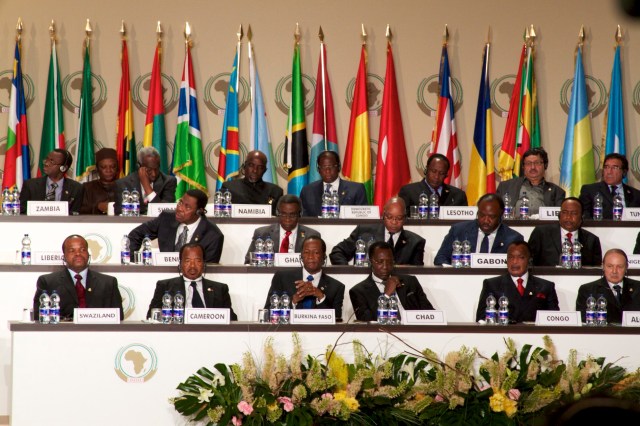
(Photo: Embassy of Equatorial Guinea)
At the thirtieth summit of the African Union (AU) last month, African states took a bold decision. They agreed to ask the United Nations General Assembly to seek an advisory opinion from the International Court of Justice (ICJ) on the issue of head of state immunity. For years now, this has been an ongoing point of contention for many states in their relationship with the International Criminal Court (ICC). So what’s behind the AU’s decision and what does it tell us about the ICC and its relationship with African states?
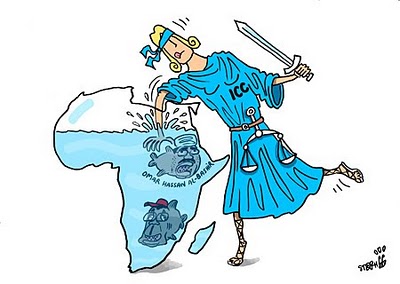
Some observers responded to the AU decision to seek an advisory opinion from the ICJ with skepticism. Due to the ongoing animosity of some African states to the ICC, fuelled by claims of African leaders that the Court is “race hunting” a “toy of declining imperial powers”, or the “International Caucasian Court”, observers were quick to frame the issue as another round of “Africa versus the ICC”. This oppositional binary, however, occludes more that it elucidates. Rather than an attempt to defy the ICC or undermine its credibility, the AU’s decision to seek an advisory opinion from the ICJ should be understood as a product of negotiated engagement with the Court.
Like any supranational institution, the African Union has many moving parts. The AU contains states that are supportive of the Court, states that are generally indifferent to the institution, and states vehemently opposed to it. Their positions are not equally covered. When the AU passed a resolution last summer adopting an “ICC Withdrawal Strategy”, numerous media outlets declared that African states had decided to leave the ICC en masse. On the contrary, the “ICC Withdrawal Strategy”, which in reads more like a platform for engagement and reforms of the Court, explicitly stated that mass withdrawal was not recognized under international law. Moreover, many states entered reservations into the resolution — and many more would have had the session adopting the Strategy not been cut short. Similarly, while the announcements that Burundi, South Africa, and The Gambia would withdraw from the ICC dominated headlines, the domestic legal defeat of South Africa’s pathway to withdrawal and the reversal of The Gambia’s position on withdrawal from the ICC received relatively scarce attention. The result is a cynical narrative that tends to focus on the negative elements of the Africa-ICC relationship, pitting ‘bad’ African leaders against a ‘good’ international organization.
Within the AU, however, pro-ICC states have to negotiate with those colleagues whose view of the Court is (much) less favourable. The same AU resolution which requests an ICJ advisory opinion also “condemns” the October 2017 decision of the ICC to open an investigation into Burundi as “prejudicial to the peace process under the auspices of the East African Community… [and] a move aimed at destabilising” the country.” Given previous statements from Uganda and Tanzania opposing the ICC’s investigation into Burundi as well as the fact that Burundi presided over the AU’s Open-Ended Committee on the ICC when the resolution was drafted, it should be unsurprising that this statement was included. Importantly, however, the statement did not lead to any requests for action. Indeed, it was likely the cost of approving an act of good-faith engagement with the ICC: the request for an advisory opinion from the ICJ.
Focusing on the negative elements of the Africa-ICC relationship fosters a conception of the relationship as inherently and invariably competitive. In this context, the AU’s move to seek an ICJ advisory opinion was seen as yet another attempt by African states to shield their leaders from accountability. This is incorrect. Or at least it is not entirely correct. To be clear, there are governments that want nothing less than impunity for their heads of state and political officials — and the ICC has gotten under their skin. But there are also those who want to ensure that the Court is premised on solid legal grounding and that want the institution improved. The AU decision, as with all AU decisions on the ICC, is the result of a negotiated engagement on behalf of African states with the Court. Continue reading