
Patryk I. Labuda joins JiC for this two-part post on the ongoing political and legal challenges facing the creation of the proposed hybrid tribunal for South Sudan. You can read Patryk’s previous contributions to Justice in Conflict here.
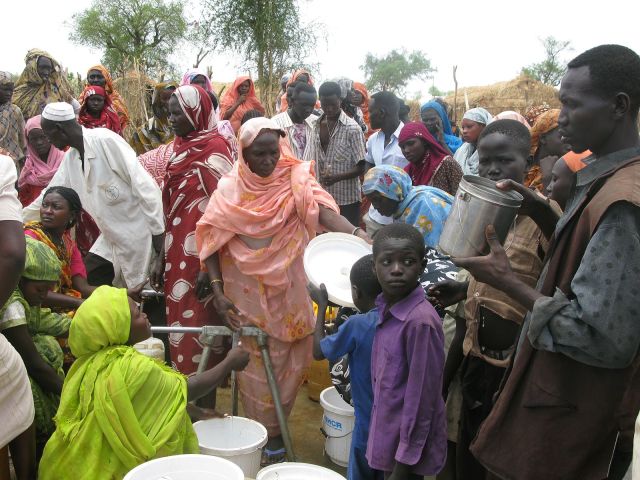
Tens of thousands of refugees have been displaced by conflict in South Sudan, including these civilians in Jamam camp (Photo: Robert Stansfield / Department for International Development).
In December 2013, South Sudan erupted into civil war. Three years later, there is still no end in sight to the violence that has claimed tens of thousands of lives and displaced over three million civilians. In fact, the conflict may get worse. The UN’s Special Adviser on the Prevention of Genocide warned recently that there was ‘potential for genocide’, while a separate UN-mandated Commission of Inquiry cautioned that South Sudan stood ‘on the brink of all-out ethnic war’.
Although the root causes of the South Sudanese conflict remain stubbornly entrenched, a silver lining may be the role of justice and accountability in its otherwise moribund peace process. As is well known, an entire section of the August 2015 peace agreement covers transitional justice issues, including victims’ rights, compensation, and truth and reconciliation. Most notably, it also calls for the establishment of the Hybrid Court for South Sudan (HCSS) “to investigate and prosecute individuals bearing responsibility for violations of international law and/or applicable South Sudanese law”, in particular war crimes, crimes against humanity, and genocide.
Eighteen months later, however, the transitional justice provisions have – like most of the peace agreement – yet to be implemented, and a host of questions about the HCSS remain unanswered. To make matters worse, a perfect storm of political and military developments in the region and at the international level raise difficult questions about the future of the hybrid court. In this two-part post, I will consider some of the challenges awaiting the HCSS (part 1) and what can be done to overcome them (part 2).
Delayed Justice
It is no secret that the establishment process of the HCSS is severely delayed. In line with the 2015 peace agreement, the hybrid court was expected to be fully operational one year from the date that a transitional government was sworn in, which translates into an estimated start date of April 2017 (Appendix VI). It is clear that this and other deadlines will not be met. Mandated to “provide broad guidelines” on the “infrastructure, funding mechanisms… [and] number and composition of judges”, the African Union (AU) has made little progress on legislation and other arrangements that are needed to bring the HCSS into existence. As of today, eighteen months after the peace agreement, the hybrid court exists only on paper.
There are various reasons for this delay, not least of which is the continued fighting between forces loyal to Salva Kiir, the country’s current president, and Riek Machar, his former deputy who launched a rebellion in 2013. But the biggest obstacle facing the HCSS is resistance from the government of South Sudan. This is not entirely surprising. Unlike other conflicts where hybrid tribunals eventually emerged as a tool of transitional justice, the war in South Sudan is far from over. Crucially, in South Sudan it is governmental forces – not the rebel movement led by Machar – who are allegedly responsible for most of the violence. In its October 2015 report, an AU-mandated commission of inquiry concluded that, while both sides were responsible for war crimes and crimes against humanity, evidence also “point[ed] to the existence of a state or organizational policy to launch attacks against civilians based on their ethnicity or political affiliation”. Leaders on both sides “dread the proposed hybrid court”, but it is the prospect of prosecutions against governmental actors that makes the HCSS inherently contentious. Continue reading
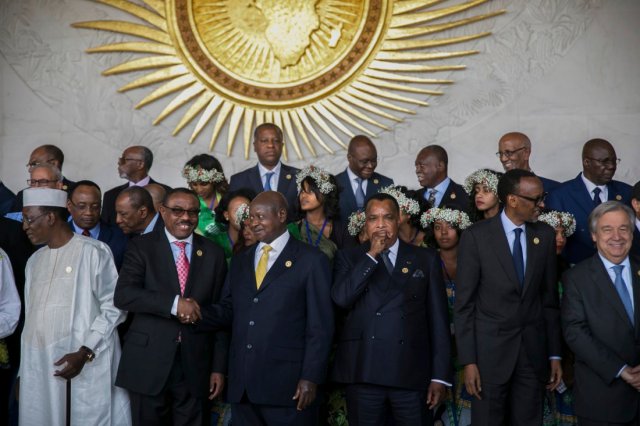
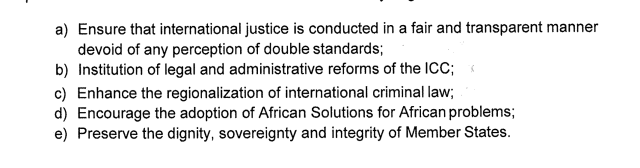 In reading the strategy, it is difficult not be left with the impression that African states remain engaged with the ICC. It certainly doesn’t sound like they’re collectively jumping ship. That’s because the Strategy reads like a largely reasonable list of possible reforms to the Rome Statute and the Court. Indeed, the arguments contained within the Strategy should be taken seriously and continue to be debated. There are at least a handful that should be acceptable to the Court and its champions, such as the long-standing request from Kenya to include “regional criminal jurisdictions” in the section of the Rome Statute’s pre-amble pertaining to the principle of complementarity. More attention also needs to be paid to the fact that the majority of the grievances and concerns expressed within the Strategy ultimately relate to



 Justice in Conflict