

(Cartoon: The Economist)
This is part one of a three-part series on the ICC-Africa relationship. Click here for part 2 and here for part 3.
There is no point denying it. The International Criminal Court (ICC) has a problem with its relationship with African states. Well over a decade into its existence, the ICC has never opened an official investigation outside of the African continent. Over the last five years, a significant number of African governments have spoken out against the institution and its interventions, insisting that they are biased against Africans. While some may wish it otherwise, these states cannot be swept under the rug of Africa’s dictatorships and autocracies, as offensive as that otherwise would be.
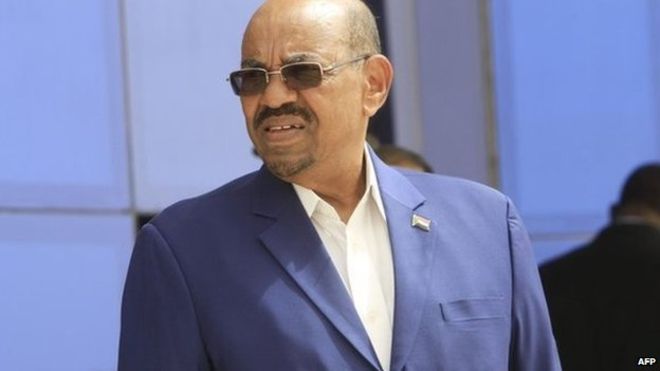
While proponents of international criminal justice have often blamed growing anti-ICC sentiment on the unyielding lobbying of autocrats, such as indicted Sudanese President Omar al-Bashir, today the Court’s sharpest critics are members of democratically-elected governments that previously made a point of supporting the ICC, including those in Kenya and South Africa. Even within the hallways of the ICC and amongst the Court’s champions, there is an acknowledgement that the institution has lost some of its high ground and needs to find a ‘road out of Africa’, i.e., some case or conflict that challenges the widespread perception that the Court is biased or unfair to African states.
Still, it is remarkable just how little we actually know about the relationship between the ICC and African states. In fact, our understanding of the ICC-Africa relationship seems entrenched within a harsh and overly simplistic dichotomy, wherein the Court is either viewed as a neo-imperial, colonial project bent on subjugating members of the Global South or as a deeply misunderstood force for good and a legal institution that rises above politics.
In this first part of a three-part series on the Africa-ICC relationship, I attempt to assess why we tend to view the relationship in such limited terms. Over the next two weeks, I will examine recent cases that demonstrate the rich political complexity of the relationship between African states and the ICC, as well as some new avenues for assessing and judging the relationship.
The Africa-ICC Relationship – More and Less than Meets the Eye
The understanding of diplomats, the media, and yes, even scholars, of the ICC-Africa relationship is overly simplistic and misleading. There are (at least) three key reasons for this.
First, many African states have presented their criticisms of the ICC in over-simplified and factually misleading terms. They often describe the Court as a neo-colonial institution, a tool of the West, or even as a “race hunting” institution. There is little evidence that the ICC is any of these things. Such labels are leveled at the institution not because they are accurate or based on reality, but because such tropes resonate with many constituencies for political and historical reasons. Indeed, such criticism makes little sense when the record shows that the ICC has legitimated more African governments than it has undermined.
Just as problematically, the ICC has responded to the concerns of African states and communities by invoking equally simplistic ripostes. The institution’s response to African criticisms is, at this point, a broken record: that the institution isn’t against Africa but is, in fact, a Court for Africa; that dozens of African states joined the Court; that they have numerous preliminary examinations outside of Africa. These arguments, as I have previously argued, have been repeated so often that the Court’s public relations strategy now borders on Einstein’s definition of insanity: repeating the same behaviours or arguments and expecting different results.
In short, neither African states critical of the ICC nor the Court itself are willing or able to have an open or candid dialogue about the politics behind their relationship because 1) it is more politically expedient for certain African governments to invoke the tropes of neo-colonialism and racism and, 2) the ICC has a phobia of even suggesting that it is a political institution or that the situations it investigates are the result of politics or political decision-making.
Compounding matters is the third reason why the ICC-Africa relationship is so poorly understood: that, with a few exceptions, we as observers of the ICC have been remarkably ineffective in assessing and analysing what is really going on in this relationship and teasing out its political complexities.
Observers have typically indulged and created what might be called a “crisis industry” that presents the Court as an institution that moves from one breaking-point and crisis of legitimacy to another.
Such a crisis mentality prevents us from understanding ICC selectivity. It places our focus on successive crises instead of the bigger picture of why the Court investigates some cases and not others. Specifically, observers of the ICC need to do better a much better job at disaggregating and differentiating two questions:
1) Why has the ICC targeted those states that it has?
2) Why hasn’t the ICC targeted those states that should be investigated?
In the dominant discourse on the ICC and Africa, these two questions are collapsed. We look at a map, see that all of the states the Court has intervened in are in Africa and assume that this surely must demonstrate some unfair bias.
But there are, in fact, answers to both questions that explain, at least to some extent, the distribution of interventions by the ICC around the globe. Continue reading







 Justice in Conflict