Checking in on Ivory Coast: Justice here and Justice there

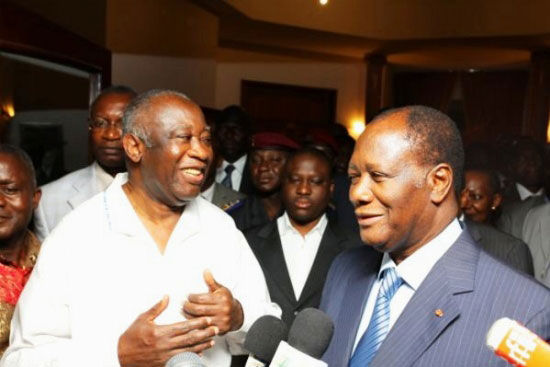
Gbagbo (r) and Ouattara in happier times

With the vast majority of international justice attention focused on the unfolding situation in Libya, the search for justice in post-conflict Ivory Coast has been chugging along without much international scrutiny. In sharp contrast to the rigid either-or-debate regarding where Muammar Gaddafi and the Tripoli Three should be tried, the transitional government in Ivory Coast appears to have decided that justice will be served both locally and internationally.

The ICC’s interest in Ivory Coast is nothing new. The Court has been pondering its course since the country declared, in 2003, that it accepted the ICC’s jurisdiction. When widespread post-election violence erupted across across the country late last year, the Court began to apply pressure on Ivory Coast officials, declaring that the Office of the Prosecution would not hesitate to issue arrest warrants for key Ivorian leaders responsible for large-scale violence amounting to war crimes or crimes against humanity. However, as pressure mounted to get involved in Libya and other Arab Spring states, Ivory Coast was largely relegated to the backburners of international scrutiny and interest.

On deeper inspection, Ivorian authorities have been quite busy in their pursuit of accountability and reconciliation. Inspired by the South African experience, a truth commission, the Truth, Reconciliation and Dialogue Commission, (which includes football star Didier Drogba!) has been set up to examine the four months of turmoil that swept and ravaged Ivory Coast. Along with the Commission, there has been significant pressure to bring former President, Laurent Gbagbo, and others to account for their role in the post-election violence. For four months, Gbagbo refused to concede electoral defeat, instead holing up in his Presidential palace in Abidjan, as his and Ouattara’s supporters engaged in brutal street wars. Thousands perished in what has been described as Ivory Coast’s “second civil war”. Gbagbo was finally, and forcefully, removed from power with the help of a French and UN military mission.

The new government has since begun the process of seeking retributive, criminal justice for key individuals. While fears of one-sided victors’ justice persist, despite evidence that both sides committed war crimes, in August, the government charged 12 Gbagbo supporters, including the former president’s son.

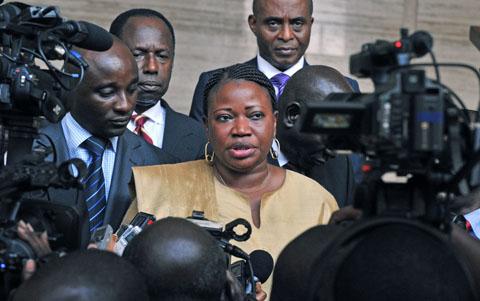
Since the guns were silenced in Ivory Coast, Ouattara has appeared eager to have the ICC involved in the process of the country’s political transition. Since then, the ICC’s Office of the Prosecutor’s requested the opening of an official investigation into the post-election violence. While the ICC still cites the Ivory Coast as being “under preliminary investigation”, a few days after the request for opening an official investigation, the Court’s Deputy Prosecutor, Fatou Bensouda, visited Ivory Coast and signed a deal allowing the Court to conduct a formal investigation.

The ICC’s investigation will undoubtedly focus around the role of Gbagbo. For the Court, putting its first head of state in the dock would be a first, and a tremendous political and politically symbolic victory. It also appears to be a priority for Bensouda, who is most likely to become the Court’s top prosecutor when Luis Moreno-Ocampo’s term concludes next year.
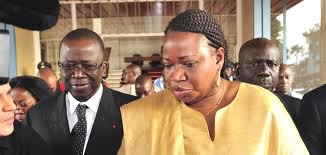
The ICC's Deputy Prosecutor, Fatou Bensouda, was recently in Ivory Coast to sign an agreement allowing the Court to open a formal investigation into post-election violence.

Responding to the dilemma of where justice should be served, President Ouattara recently declared that justice would be served both domestically and at the ICC:

“He will be judged in Ivory Coast for economic crimes and he will also be judged by the ICC at our request so that the trial is fair…The law will be the same for everybody. Impunity will not be tolerated and those who should face the judge will do so. We will not make any exemptions.”
Continue reading

Posted in Ivory Coast / Côte d'Ivoire, Ivory Coast and the ICC, Justice, Libya and the ICC, Truth and Reconciliation Commissions, Truth Commission | 1 Comment

If Caught, Libya likely won’t Extradite Gaddafi

Jalil in London

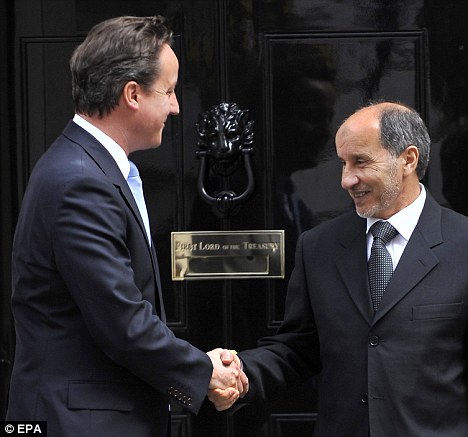
Interim Libyan leader Jalil and UK PM Cameron. There has been more pressure on Libya to get those responsible for Yvonne Fletcher's murder extradited than to get Gaddafi, if captured, to the ICC (Photo: EPA)

In a recent comment, a reader of JiC sent me a link to a Guardian post entitled: Libya may refuse to extradite Yvonne Fletcher murder suspect. Some of the statements made in the piece by Libyan rebel officials may have major implications on whether Gaddafi, if captured, might ever reach The Hague.

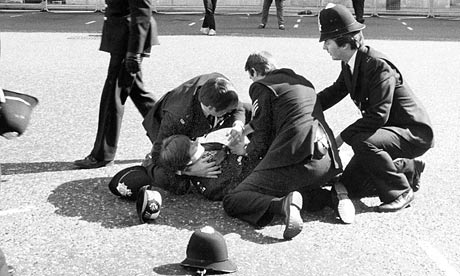
For those who may not know, Yvonne Fletcher was a British police officer who was shot dead during a protest in 1984 outside of the Libyan embassy in London. Numerous groups had been hoping that, with the installation of the transitional government in Libya, her alleged murderer would be extradited to the UK to finally face justice. In the wake of Fletcher’s murder, the UK severed diplomatic relations with Libya.

So why is a piece on the extradition of Yvonne Fletcher’s murderer relevant to the Gaddafi case? Because of the following statement made by the interim justice minister in Libya’s governing National Transitional Council (NTC), Mohammed al-Alagi:

“We will not give any Libyan citizen to the west.”

Another member of the NTC, Hassan al-Sagheer, similarly declared:

“Libya has never extradited or handed over its citizens to a foreign country. We shall continue with this principle.”

In 1984, Yvonne Fletcher was shot dead during a protest outside of the Libyan embassy in London (Photo: Photograph: Mohamed Maklovf / Rex Features)

Those with a keen sense for irony will point out the rather awkward situation of Libya rejecting extradition of its own nationals, while demanding that neighbouring states return pro-Gaddafi nationals.

However, the statements above don’t necessarily mean that there is no way anyone – including Yvonne Fletcher’s killer – won’t be extradited, although they are indicative of the level of resistance among the rebel governors to handing over Libyan nationals. Yet another NTC member, Fawzi al-Ali, maintains that an individual can be extradited if a “special agreement” is reached to do so. In short, what this indicates is that there will have to be significant pressure and political will in order for anyone to be extradited to face justice – including Gaddafi.

Unfortunately, for those who would like to see Gaddafi tried in The Hague (as well as those, myself included, who would like to see an ICC trial in Libya), such pressure from states is virtually absent to date. During the early stages of the conflict, key international powers, including the US and the UK, professed the need for Gaddafi to face international justice. More recently, these states have done an about-face, arguing that justice for Gaddafi’s acts is entirely up to the Libyan people (read: the NTC).

Indeed, while Yvonne Fletcher’s murderer should certainly face justice – and the UK is right to press the NTC on the matter – there is more pressure to achieve justice for her death than for the alleged war crimes and crimes committed by Gaddafi against his own people. That says a lot.

Posted in International Criminal Court (ICC), Libya, Libya and the ICC, The Tripoli Three (Tripoli3), United Kingdom, War crimes | 1 Comment

A Cunning Move: Justice in Libya or The Hague?

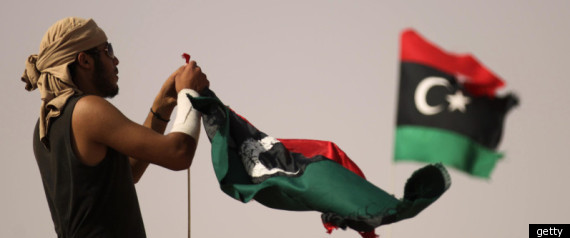
A rebel raises the new Libyan flag near Bani Walid (Photo: Getty)

Numerous commentators have given their two cents on whether the Tripoli Three – Gaddafi, his son Saif al-Islam and his intelligence chief, Abdullah al-Senussishould be tried in The Hague or in Libya. Predictably, most continue to argue that it is an ‘either or’ situation; that either justice must be served in The Hague or it must be served in Libya. However, a growing number of observers, including influential scholars David Kaye, Kevin Heller, and Stuart Ford, and some less influential ones (see my piece here), have begun to bandy about the idea of an ICC trial in Libya. This is a welcome development. Even if the Tripoli Three don’t end up being tried in Libya by the ICC, the debate has opened up a discussion on the possibility – of the Court being able to travel to where the crimes it investigates were committed and where the victims it purports to work for live.

If we’re honest, most commentators on the subject are privileged: there are no direct, negative repercussions for most of us if Gaddafi is tried in Libya or The Hague. For the people of Libya, however, this may not be the case. For them, the location of justice matters. While it may be problematic, the overwhelming desire to hold Gaddafi to account in Libya, before the eyes of the people whose lives he has terrorized for forty years is completely and utterly understandable.

In this context, I recently came across a largely under-reported quote from interim leader Mustafa Abdul Jalil (see video here):

“The crimes that Gaddafi committed against his people locally before 17 February are enough to bring him to trial for any other crimes he committed after 17 February.

“Libya has not signed the Rome agreement and the ICC’s justice is a complementary justice, as the local judicial system is the one responsible for this.”

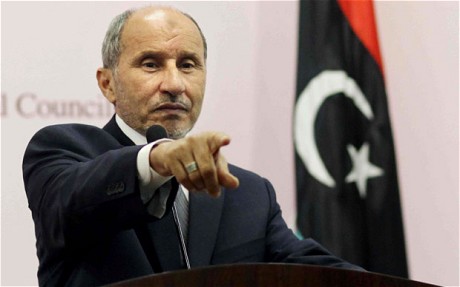
Interim Libyan leader Mustafa Jalil (Photo: AP)

The UN Security Council’s Resolution 1970, which referred the situation in Libya to the ICC, instructed the Court that only crimes after February 15, 2011 could be investigated. I have previously argued (here, here and here) that this provision in the referral is a distortion of international law and serves to protect particular Western states from having their very cozy political, military and, at times, criminal relationships with Gaddafi investigated. However, Jalil appears to be using this jurisdictional limit for entirely other means.

In his quote, Jalil is alluding to the possibility of the Libyan transitional government accepting this temporal jurisdiction of the UN Security Council’s referral of Libya to the ICC. Jalil clearly recognizes the temporal limit imposed on the ICC by the Security Council, even if his remarks speak of the more popular day of the Libyan uprising, February 17 2011. However, it appears the National Transitional Council (NTC) is more interested in achieving justice for forty years of dictatorship rather than half a year of brutality. After four decades of an autocratic police state headed by Gaddafi, there is surely no shortage of crimes which could be prosecuted prior to February 2011.

Jalil’s statement is a remarkably cunning political move. By arguing that Libya has the right to try Gaddafi for any crimes he committed prior the the ICC’s involvement in Libya, Jalil skillfully circumvents a show-down with the ICC. The NTC is not outright saying the ICC cannot or should not prosecute Gaddafi. Instead it is making, at least on the surface, a very sensible argument: Gaddafi has committed atrocities for a long time before February 2011 and he should be tried for the crimes he perpetrated against his own people. By making this argument, Jalil and the NTC can also claim that they are seeking a more encompassing justice which covers decades rather than months of injustices. Continue reading

Posted in Human Rights, International Criminal Court (ICC), Justice, Libya, Libya and the ICC, The Tripoli Three (Tripoli3) | 2 Comments

Squashing the Amnesty Law in Uganda? Possible Implications of the Kwoyelo Trial

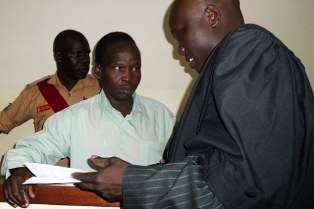
Thomas Kwoyelo arrives at Entebbe Airport after his arrest. REUTERS/James Akena (UGANDA)

Regular readers of this blog will be aware of the Kwoyelo Trial at the International Crimes Division (ICD) of the Ugandan High Court. Thomas Kwoyelo was a high ranking LRA Commander who was arrested in the DRC in 2009 and has been charged for violations of the Geneva Convention by the Directorate of Public Prosecutions. Mark has reported on the trial in the past here and here. In a nutshell, Kwoyelo’s defense stated that he is eligible for amnesty under the Amnesty Act of 2000 and the International Crimes Division referred the case to the Ugandan Constitutional Court to clarify whether Thomas Kwoyelo should be granted amnesty or not. This is where things started getting complicated.

To the surprise of many observers, the Principal State Attorney, Ms. Patricia Mutesi, focused her argument on the Amnesty Act as such and not so much on the specific case of Kwoyelo that was before the Constitutional Court. The Principal State Attorney in fact started to raise concerns whether the Amnesty Act as a whole is in violation of the Ugandan Constitution and Uganda’s international obligations under several treaties. The defense tried to stave off this discussion in the morning session, stating that the court was supposed to hear the case of Kwoyelo’s amnesty application and not to get into questions of the constitutionality of the Amnesty Act. Yet, the Principal State Attorney insisted on the point in her final remarks and the judges allowed her to proceed.

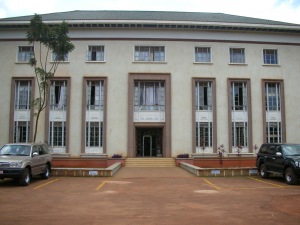
Supreme Court Building in Kampala

Let’s get the facts clear here first. From a legal point of view there is indeed no obvious reason why Thomas Kwoyelo should be denied amnesty. I think he is clearly eligible for amnesty, taking into consideration that the Amnesty Act is very broad and bordering on a blanket amnesty.

There are basically only two reasons why Kwoyelo would not be eligible for amnesty. One would be if he had already received amnesty once. In this case, he could get amnesty only under exceptional circumstances. Despite some reports that Kwoyelo had already applied for amnesty once, the Amnesty Commission has confirmed that this is not the case. The second reason would be an explicit exclusion of Kwoyelo from receiving amnesty issued by the Minister of Internal Affairs. The Minister of Internal Affairs, with approval by the Ugandan Parliament, can exclude certain individuals from receiving amnesty under a 2006 amendment to the act. Yet, experts have assured me there has not been a single case of somebody being excluded from amnesty yet. Taking these points into consideration, Kwoyelo’s defense had a strong case when going to the Constitutional Court.

It is difficult to ascertain why the Principal State Attorney chose to challenge the Amnesty Act as such during the Constitutional Court hearing. Maybe it was an act of desperation as the chances to challenge Kwoyelo’s amnesty application seemed slim. But it might also be a signal that the Government of Uganda is changing its transitional justice concept from a mixed approach, including both amnesties and trials, to an approach focusing on accountability. At this stage, these are of course mere speculations. Some informants have told me that they do not believe that the Principal State Attorney would have challenged the Amnesty Act without consulting the government, while others have the impression that debates about the Amnesty Act and the ICD have just now started within the executive and legislative branches. Be it as it may, the decision of the Constitutional Court will have huge repercussions beyond the case of Thomas Kwoyelo and will influence the course of transitional justice in Uganda for the years to come.

Thomas Kwoyelo discussing with his defence lawyer

Continue reading

Posted in Amnesty, Kwoyelo Trial, Lord's Resistance Army (LRA), Transitional Justice, Uganda | 8 Comments

Democracy at the Brink: A New Leader for Guatemala

With her latest post, Holly Dranginis comments on the upcoming election of a new President in Guatemala. As a Fulbright Scholar in Guatemala from 2006-2007 studying transitional justice and urban political violence, Holly is an informed and interested observer of justice and democratization in Guatemala. Enjoy!

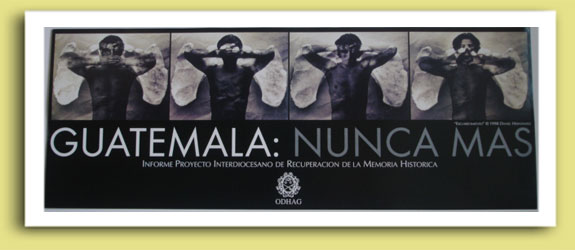
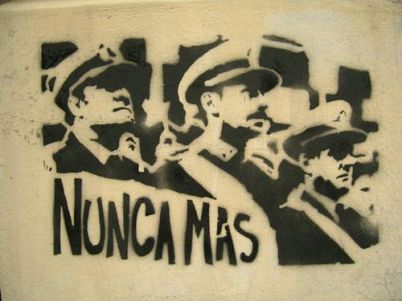
Nunca Mas Guatemala

This Sunday, Guatemalans will go to the polls to elect a new president. Voting will follow weeks of political violence, a common pattern for many struggling democracies in election season.

During the last election four years ago, the situation was no different. Amilcar Mendez, a renowned human rights activist, lost his son in a premeditated attack; two weeks later, the family member of another grassroots advocate was killed, along with a young boy, by national police who open fired on a peaceful protest.

This year, an estimated 38 people—political activists, relatives of politicians and even candidates—have been killed as a result of election-related incidents, helping make this campaign period one of the bloodiest in the country’s history.  In contrast, Sunday’s vote is slated to be relatively peaceful, shrouding the violence in the underreported lead-up rather than on the day the world will be watching.

We consider Guatemala a successful example of a democracy-in-progress—a country with a thriving export economy, vibrant ethnic diversity and deemed safe enough in recent years to return thousands of refugees who were granted asylum in the US during the 1960-1996 armed conflict. Yet campaign violence in past weeks hardly evokes progress. And Guatemala’s violence statistics over the past few years are no less alarming.

Guatemala election

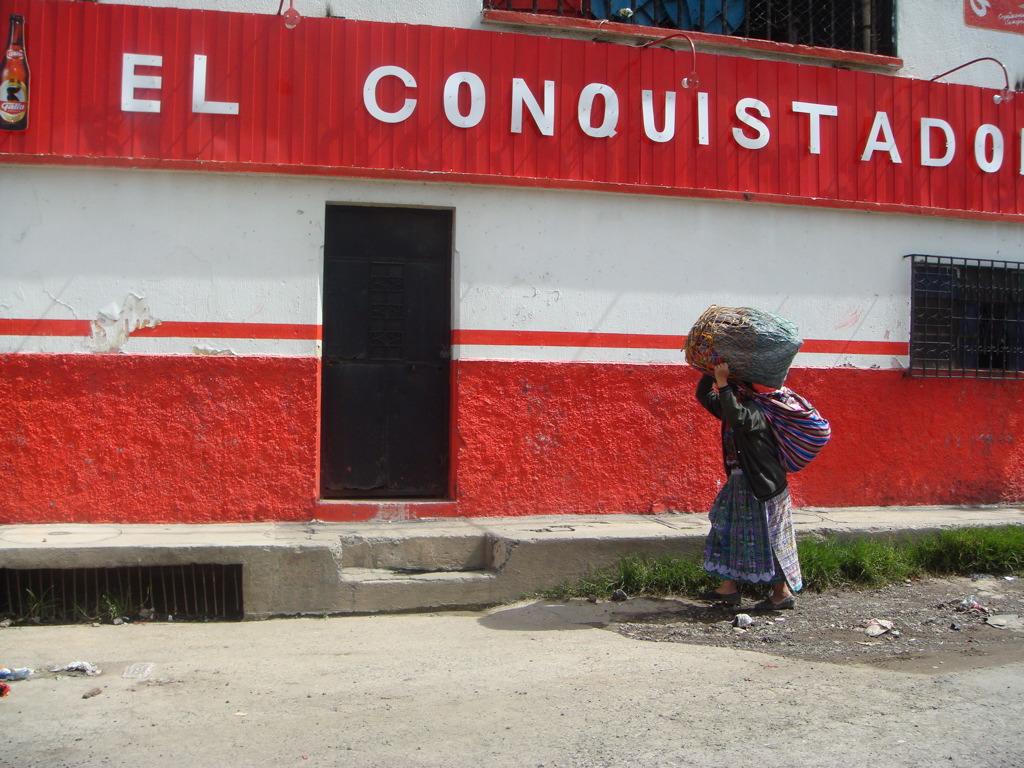
Indigenous woman carrying firewood, outside Guatemala City. (Photo: Holly Dranginis)

Homicide rates have climbed to over 52 per 100,000 (a rate of 10 per 100,000 indicates an epidemic of violence). Two women are killed a day, prompting the use of the term femicide. Furthermore, a culture of impunity is growing, as only 1.4% of homicide cases end in convictions. In popular media, incidents are attributed to random crime and gang violence, but experts have implicated the state in complicity if not direct involvement in the crisis.

The term “democratization” is a buzzword for media audiences worldwide, but Guatemala is a reminder that achieving it is not an overnight endeavor, and the process of its pursuit can be deceptive. Elections are an accepted benchmark, and for many an indication, that the years of organized violence are over. However, despite an ostensible democratic election system, the bloodshed leading up to Sunday’s elections illustrates that in Guatemala, a war is still on.

Experts and citizens use rhetoric like “low-impact war” and “the war on women,” and statistics of violence correspond to such terminology. Guatemalans are fleeing, immigrating to the US at rates higher than any other Central American country, many to escape the worsening security situation. Current president Alvaro Colom boasted decreased violence as a key tenet of his campaign, but crime and impunity rates are higher now than they were during the war.

Given these conditions, and the fact that many of those responsible for grave crimes during the armed conflict are still in positions of authority, Guatemala’s election period was bound to be compromised. General Otto Perez Molina is the frontrunner with a strong lead over other candidates despite his alleged participation in political assassinations while he was on the CIA payroll during the armed conflict. Other red flags are his implication in the use of torture during the genocide in the early 1980s and his diploma from the controversial Western Hemisphere Institute for Security Cooperation (formerly the School of the Americas).  Finally, a 2007 interview connected Molina to the infamous murder of Bishop Juan Gerardi, head of a comprehensive public inquiry into the wartime violence, just days after their report, “Guatemala: Nunca Más,” was released.

Guatemala election

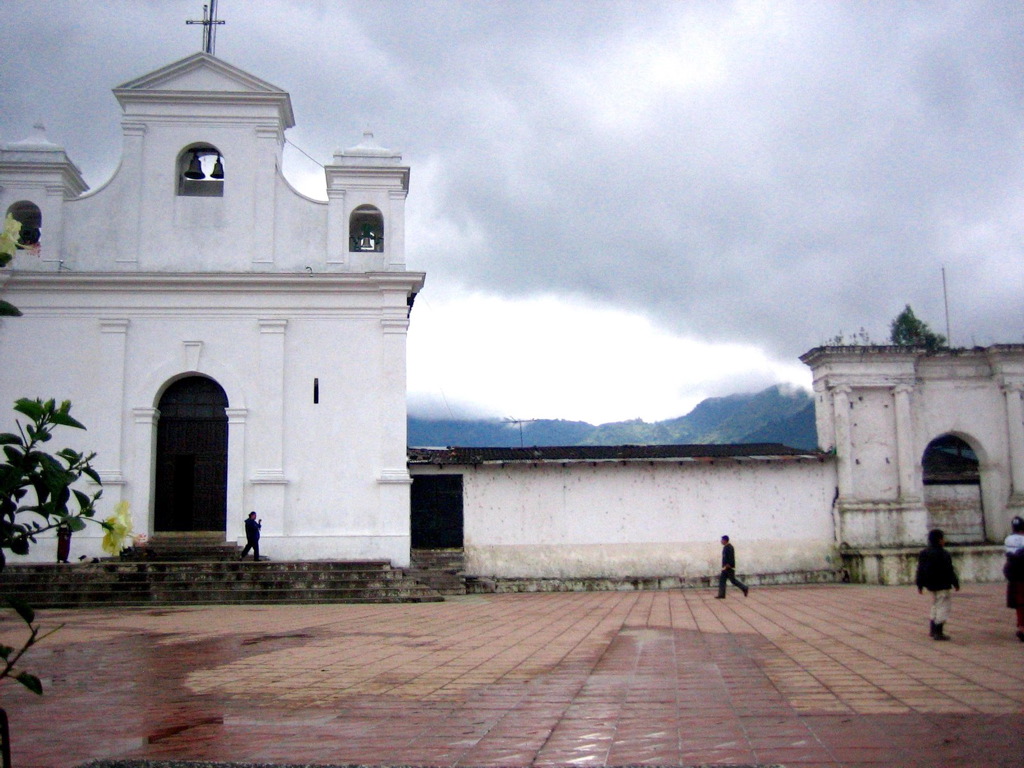
The main church in Quiche, a district where over half the atrocities during the Guatemalan civil war took place. (Photo: Holly Dranginis)

Continue reading

Posted in Guatemala, Latin America, Torture, Transitional Justice | Leave a comment

Gaddafi to Burkina Faso? Probably Not: Lessons from Charles Taylor

Where will Gaddafi be found? In a bird's cage? In a toilet bowl? In Burkina Faso? Probably none of the above (Photo: AP)

In the wake of pro-Gaddafi convoys speeding through the Sahara, apparently with cash and gold aboard, there has been a lot of confusion and concern regarding where Colonel Gaddafi is and whether he will seek asylum in Burkina Faso, via Niger.

If Gaddafi does, in fact, seek asylum he will surely be very careful which country he chooses for his refuge. Yet few analysts seem to know the slightest about Burkina Faso. Indeed, there has been zero concrete evidence that the pro-Gaddafi convoys are, in fact, heading to Burkina Faso. Most media reports suggest this could be the case because the capital of Niger is close to the border with Burkina Faso and because Burkina Faso had offered Gaddafi asylum.

Burkina Faso now denies that it had offered Gaddafi asylum and it’s interesting to look at media reports to the contrary which never quote any officials from the country.

Importantly, most analysts appear to have done little to no research on Burkina Faso to see whether the country could feasibly accept Gaddafi. Farouk Chothia, from the BBC African Service, on the contrary, has offered an insightful and coherent analysis:

Burkina Faso, which borders Niger, had been said to have offered him asylum but now denies it.

The landlocked country is heavily dependent on French aid – and is unlikely to follow through on its offer without approval from Paris, analysts say.

Pro-Gaddafi convoys have travelled into Niger while rumours are rampant that Gaddafi may seek asylum in Burkina Faso

Until recently, France was Burkina Faso’s most important economic partner. And, if Chothia is correct in her assertion – and I would suggest she is – that France would have a say in whether or not Burkina Faso accepts Gaddafi, it’s worth asking why journalists did not approach French officials to ask whether they were exerting pressure on Burkina Faso not to accept Gaddafi. That is, of course, if Burkina Faso was thinking about it in the first place.

Chothia goes on suggest that the country in which Gaddafi chooses to seek exile would have to be strong enough to withstand pressure from Western states to have him transferred to Libya or The Hague to stand trial.

Burkina Faso, or other African states such as Zimbabwe, Ethiopia or even South Africa, may be under pressure from other key African States to accept Gaddafi. South Africa and the African Union have yet to recognize the rebels’ National Transitional Council, indicating a continued implicit support for Gaddafi. But any state which decides to give the former Libyan leader safe haven will surely be susceptible to an onslaught of economic and political pressure from states and the UN as well as a barrage of criticism from human rights groups.

While Gaddafi may be seen as “delusional”, it is impossible to run a country for forty years and be absolutely insane. Surely, Gaddafi is keenly aware of Charles Taylor’s story.

In short, Taylor, a Liberian, was a key leader in the notoriously brutal conflict in Sierra Leone for which he has stood trial for orchestrating crimes against humanity, war crimes and other violations of humanitarian law. He subsequently became the President of Liberia which itself was mired in a deadly conflict. During peace negotiations in Ghana to end the civil war in Liberia, the Special Court for Sierra Leone (SCSL) issued an indictment for Taylor. He immediately returned to Liberia, agreed to resign his presidency and fled to Nigeria, which granted him asylum, immunity and refused to extradite him. After about two years, following requests by the new President of Liberia, Ellen Johnson Sirleaf, and under pressure from the United States and others, Nigeria agreed to send Taylor back to Liberia. Knowing this,  Taylor tried to flee to Cameroon but was arrested at the border, sent to Liberia and was eventually flown to The Hague to be tried by the SCSL.

Former Liberian President Charles Taylor was sent to The Hague to be tried by the Special Court for Sierra Leone

Nigeria was likely much more able to resist external pressure to hand over Taylor than Burkina Faso would be to give up Gaddafi. The costs of resisting political and economic pressures on Burkina Faso, an economically vulnerable and landlocked West African state, would surely be intolerable, even if other African states “pitched in” to help.

It is also worth considering whether all the talk about Burkina Faso may benefit Gaddafi’s manoeuvrings if he chooses to flee to a state more able to guarantee his safety and security. The “tantalizing clues” of Gaddafi’s exile to Burkina Faso may provide effective cover and sufficiently deflect attention for him to move elsewhere.

Of course, I may be wrong. Perhaps Gaddafi will show up this week in Burkina Faso. But it wouldn’t be a particularly wise choice for the leader and Burkina Faso would be unlikely to resist the carrots and sticks of the international community in arresting him (something they’ve now said they would do anyhow).

In the coming days, weeks or months, Gaddafi will surface. But the location of where he ends up is more likely than not to be a surprise. When was the last time an alleged war criminal was ever found precisely where everyone thought he’d be?

UPDATE: Alison Cole over at the Open Society has a post on this issue: Qaddafi: No Asylum Across Libya’s Southern Border. Cole comes to the same conclusion as I have, but primarily based on Niger’s and Burkina Faso’s legal obligations under the Rome Statute.

Posted in African Union (AU), Amnesty, Burkina Faso, Exile, International Criminal Court (ICC), Liberia, Libya, Libya and the ICC, Sierra Leone, Special Court for SIerra Leone (SCSL), The Tripoli Three (Tripoli3) | 4 Comments

Getting away with murder: Could Latin America become a safe haven for Libyan war criminals?

I’m very happy to welcome a guest-posting duo this week. Mariana Rodriguez Pareja is a communications expert and human rights advocate. You can follow her (here) on twitter. Salvador Herencia Carrasco holds an LL.M. from the University of Ottawa and is a legal adviser of the Andean Commission of Jurists. In their post, Mariana and Salvador consider whether Latin America, with its deep history of transitional justice and confronting past human rights abuses, could become a refuge for the individuals indicted by the ICC in Libya.

Reports of human rights violations in Libya since the beginning of 2011 prompted the United Nations (UN) Security Council to adopt Resolution 1970 in February 2011, requesting the International Criminal Court (ICC) to investigate the possible perpetration of international crimes in the country. On June 27, the ICC issued a warrant of arrest against M. Muammar Gaddafi, his son, M. Saif Al-Islam Gaddafi, and the head of Military Intelligence, M. Adhullah Senussi, for the alleged perpetration of crimes against humanity, namely murder and persecution.

This is the second time the ICC issues a warrant of arrest against an acting Head of State. The first time was in the situation of Darfur, when the ICC issued an arrest warrant against the President of Sudan, M. Omar Al-Bashir in 2009 and 2010, for the counts of genocide, crimes against humanity and war crimes. The Rome Statute, entering into force on July 1, 2002 has made possible what was unthinkable not too long ago: nobody is above the law vis-à-vis the perpetration of international crimes.

Despite the deterrent effect of the Rome Statute and the obligation of State Parties to fully cooperate with the ICC, there are questions as to what could happen if potential war criminals try to seek safe haven with non-State Parties or in State Parties that choose to ignore the authority of the Court for political reasons.

Some months ago, M. Al-Bashir was likely to visit Venezuela, raising some concerns. Although Venezuela is a State Party to the Rome Statute, the government had opposed the ICC investigation in Darfur. In their view, the Security Council referral caused a politically motivated prosecution, resulting in a refusal to cooperate with the ICC. In the end, M. Al-Bashir neither visited Venezuela, nor left the African continent.

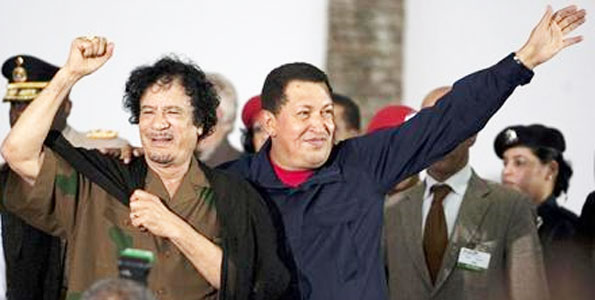
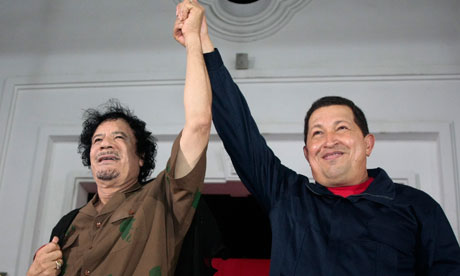
Huge Chavez and Muammar Gaddafi

In the past few days, the media had reported that M. Muammar Gaddafi might seek asylum in Nicaragua, Venezuela or Cuba. This hypothetical visit raises significant questions for jurists in the region: What would happen if Al-Bashir, Gaddafi or any other criminal pursued by the ICC would come to Latin America? Is there a system in place to surrender those who are under a warrant of arrest by the ICC?

Cooperation, cooperation, cooperation…

This situation presents two concrete aspects: First, the obligation to cooperate with the ICC is a binding commitment for the 15 Latin American countries that have ratified the Rome Statute, which includes the surrender of individuals. Second, the national prosecution of former Heads of State and Senior State officials for human right violations, enforced disappearances or torture, along with the jurisprudence of the Inter-American Court of Human Rights has created a legal framework that would prevent suspects of international crimes to seek safe haven in Latin America.

This last point is important because although Nicaragua, Cuba, El Salvador and Guatemala have not ratified the Rome Statute, they are members to the UN and have the obligation to arrest M. Gaddafi, or any other person subject to an ICC arrest warrant for the Libya and Darfur situation, as the situations stem from Security Council Resolutions that have referred Darfur and Libya to the ICC and thus require the cooperation of all UN Member States.

States Parties have a duty to arrest and surrender those who are suspected of committing crimes under the ICC Statutes, and those who are under an arrest warrant. Furthermore, seven arrest warrants issued for the ICC at the time of writing, are orders sent by INTERPOL, so the states are obliged to abide by them. If those suspected of committing a crime are arrested, the judiciary organ should decide whether to deliver them to the ICC. In the case of Darfur and Libya – both referred to the ICC via UN Security Council Resolution – then, all States that are members to the UN should comply and arrest those indicted by the ICC.

Gaddafi and Chavez have been particularly close and there have been reports that Chavez offered Gaddafi asylum in Venezuela

The most important challenge is to achieve the cooperation from the States Parties: In order to be effective and truly fight against global impunity, the Court needs be able to rely on the cooperation from its member States. But the cooperation needed is not solely for the execution of arrest warrants, it means much more than that. We will not elaborate each of the necessary aspects of cooperation, instead we will focus on one aspect in particular.

Continue reading

Posted in Argentina, Crimes against humanity, Darfur, Human Rights, Latin America, Libya, Libya and the ICC, Sudan, Venezuela | 2 Comments

A “Remarkable Relationship”: US and UK Complicit in Gaddafi Regime Crimes

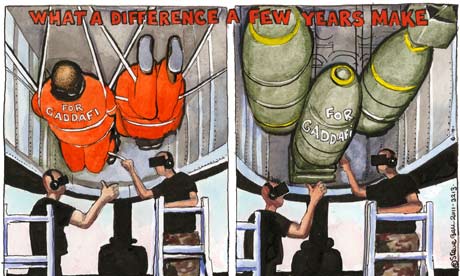
UK, US rendition in Libya

(Photo: Steve Bell, The Guardian)

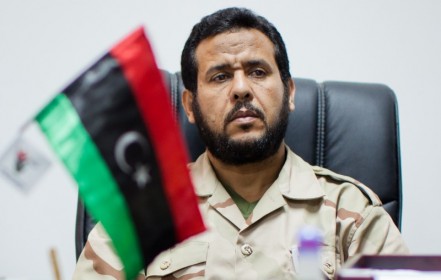
Shocking but unfortunately unsurprising reports have emerged that American and British intelligence agencies were complicit in the torture and extraordinary rendition of Gaddafi regime “enemies”. At the same time, in an awkward development for the rebels’ ally NATO, a key rebel commander, Abdul Hakim Belhaj, is considering suing the US and the UK for their role in his torture and rendition.

The records were found by journalists in the office of Moussa Koussa, Gaddafi’s former intelligence chief. Following his defection to the UK early in the Libyan conflict many human rights groups had called for his arrest but he was able to find asylum in Qatar. Surely UK officials are now wishing Koussa had taken the documents with him!

The implications of these revelations on the situation in Libya are unclear. Clare Algar, at The Guardian, suggests that the UK’s “relations with anti-Gaddafi forces [have been] poisoned virtually before they could even begin.” The extent to which relations have been damaged will only be revealed in the coming weeks and months. These developments, however, are only more evidence of the complicity of key Western states in propping up the Gaddafi regime. They also provide credence to and fuel calls for accountability, not only of pro-Gaddafi and rebel forces but of external actors as well.

Abdul Hakim Belhaj

Abdul Hakim Belhaj, a key rebel commander, is now considering suing the UK and the US for the complicity in his rendition and torture (AFP/Getty Images)

Of course, some will note that Western intelligence agencies should have a had a relationship with the Gaddafi regime. They wouldn’t be wrong. It was neither absurd nor unwise that the US or the UK and their intelligence agencies had a relationship with Libya. The problem is one of distance; it is now clear that the relationship between these Western intelligence agencies and a Libyan regime which had recently sponsored terrorism was remarkably close. Consider the friendly, cozy language of one memo from Stephen Kappes, a senior official in the CIA, and Moussa Koussa, at the time Libya’s spy chief:

“We are eager to work with you in the questioning of the terrorist we recently rendered to your country.”

Further, apparently at least one British memo ends with the epithet “Your Friend”, while another, by senior intelligence official Mark Allen in response to the successful transfer of Belhaj from Malaysia to Libya, reads:

“This was the least we could do for you and for Libya to demonstrate the remarkable relationship we have built over recent years.”

Additionally, the most recent Libyan foreign minister admitted last night, on BBC, that British intelligence officials had continued their work through January and into February 2011 – right up to the beginning of Gaddafi’s crackdown.

Peter Bouckaert of Human Rights Watch described the extent of cooperation:

“It wasn’t just abducting suspected Islamic militants and handing them over to the Libyan intelligence. The CIA also sent the questions they wanted Libyan intelligence to ask and, from the files, it’s very clear they were present in some of the interrogations themselves.”

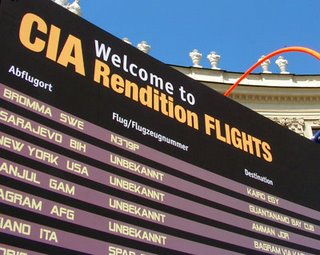
CIA rendition

Now offering service from our partners in the UK as well!

I have previously written about the remarkably close political, economic and military relationship between Western states and the Gaddafi regime. Many have been quick to say that any relationship between the West and the Gaddafi regime would have been wrong. This isn’t the case. Engagement between Western states and the Gaddafi regime was instrumental in guaranteeing that Libya discontinued its sponsorship of terrorism and its nuclear program. However, as Stephen Glover has rightly explained:

“What is not defensible is the subsequent indulging of this horrible man, and treating him as though he were a normal leader of a normal country.”

More broadly, The Guardian’s Editorial board presented the ever pressing challenge in dealing with autocratic regimes:

at the heart of this case lies a truth about the way democracies deal with dictatorships. The answer is: all too easily

What these damning documents demonstrate is that not only did the UK and the US treat Gaddafi and his regime as normal, but as partners in the war on terror and in the perpetration of torture – as obvious a crime against humanity as they come.

So how have the US and the UK responded?

Continue reading

Posted in Crimes against humanity, Extraordinary Rendition, Human Rights, International Criminal Court (ICC), Libya, Libya and the ICC, Torture, United Kingdom, United States | 2 Comments

ICC’s Next Top Prosecutor: In the Bag – AU Endorses Bensouda for ICC Prosecutor

Bensouda in Ivory Coast

It is increasingly likely that Fatou Bensouda will become the ICC's next top Prosecutor (Photo: VOA)

No suprise here, but as reported (apparently exclusively) by IntLawGrrls, the African Union (AU) has endorsed Fatou Bensouda as the ICC’s next chief Prosecutor. They did so in an AU meeting in Ethiopia back in June:

“Ms. Fatou Bomm Bensouda of The Gambia as the sole African candidate for election to the post of Prosecutor at the International Criminal Court (ICC); in conformity with African Union procedures for consideration and determination of African candidatures within the international system. The elections are due to take place at the 10th Session of the Assembly of States Parties at the United Nations Headquarters, New York, USA, from 12 to 25 December 2011.”

Bensouda was a virtual lock for the position. As I wrote back in June, there is little doubt that Bensouda, a previous legal advisor and trial lawyer at the ICTR and the current Deputy Prosecutor of the ICC, is the people’s choice so far. Whether in London, Uganda or on the internet, Bensouda is the name on the tip of everyone’s tongue when it comes to the ICC’s next top prosecutor. She satisfies all the political criteria  for the job.

Perhaps most importantly, Bensouda provides a degree of continuity and, judging by her professional demeanor, won’t cause too much controversy or havoc at the Court (although some, like Dov Jacobs, argue that her continuity is a weakness, not strength). This is particularly important given the controversial tenure of the ICC’s current Prosecutor, Luis Moreno-Ocampo. It is pretty obvious that the AU, and likely many other states, would prefer a secretary over a general as the ICC’s chief Prosecutor.

ICC Prosecutor, Luis Moreno-Ocampo, has often come under fire for targeting Africa (Photo: from film, The Prosecutor)

That said, Bensouda’s pedigree and experience suggest that if the AU’s support for her was the result of a belief that may be more amenable to political pressure, I have a feeling that they will be mightily disappointed.

It will be particularly interesting to see how the African Union treats the Court if Bensouda becomes Prosecutor. Because of their overt and public endorsement of her, Bensouda will be, for better or worse, “Africa’s Prosecutor”.

Continue reading

Posted in African Union (AU), Fatou Bensouda, International Criminal Court (ICC), Next ICC Prosecutor | 4 Comments

Arguing for a Department for Impact Assessment Within the ICC

I’m happy to announce that Patrick Wegner is joining JiC as a regular blogger! Patrick is currently doing research in Uganda on the effects of the ICC on the conflict in the north of the country and has a wealth of knowledge and experience to share with readers. His first post considers an issue that I spoke to him at length about when we met in Uganda: the ICC’s need to assess the impact of its work.

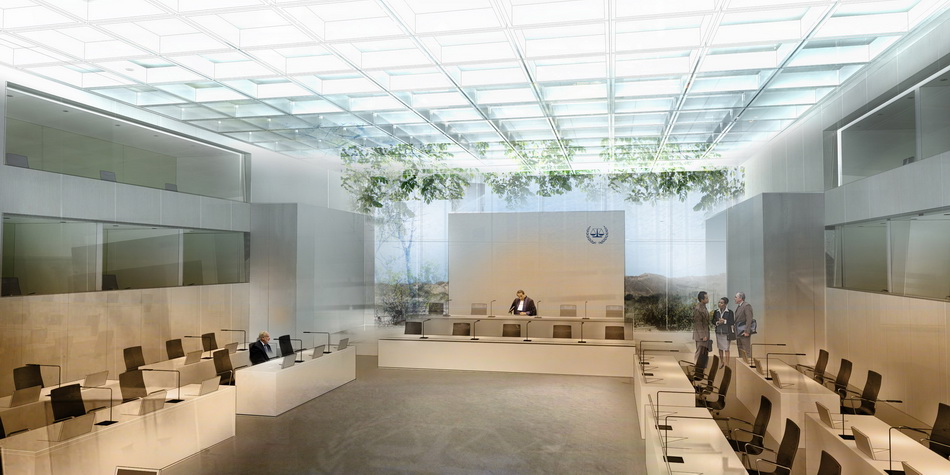
Court Room design in the new ICC premises ©schmidt/hammer/lassen architects

The work of the International Criminal Court, especially with regards to its involvement in ongoing conflicts, has been extremely polemic. In northern Uganda, the ICC warrants for LRA leaders have sparked a discussion about whether the Court is incapacitating those affected by the conflict that supposedly prefer traditional justice mechanism to ‘Western’ retributive justice. Many northern Ugandans also criticise the ICC for not investigating both sides of the conflict. They point out a history of National Resistance Army and Uganda People’s Defence Force crimes reaching back into the late 1980’s for which no accountability has been ensured to date.

In Darfur, humanitarian organizations have criticized the ICC for making their already difficult work even harder by indicting President al-Bashir. Within hours of the warrant, al-Bashir expelled 13 humanitarian organizations working in Darfur. The arrest warrant for President al-Bashir has also been criticized in general by the African Union and the Arab League for destabilizing the region and hindering peace.

Authors like Chris Dolan, William Schabas and Eric Leonard have pointed out errors of judgement committed by the Office of the Prosecutor or have accused the Prosecutor of not understanding the political implications of his decisions. Some of this criticism is justified. Two examples that come to mind are the joint announcement of investigations in northern Uganda by Chief Prosecutor Luis Moreno Ocampo and Uganda’s President, and the decision to issue a public arrest warrant for President al-Bashir in Sudan. Both decisions have been criticized heavily in retrospect and both have had consequences for the situation countries and the cases.

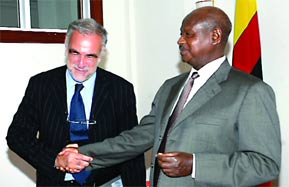
Due to the announcement of investigations in northern Uganda by President Yoweri Museveni, people in northern Uganda saw the court intervention as biased from the beginning. Repeated surveys have found that those affected by the conflict want to see both the LRA and the government held accountable for the crimes they have committed during the conflict. Seeing the Prosecutor and the President side by side made many locals think that the ICC is an instrument of the government that would only investigate the LRA. A later clarification by the Office of the Prosecutor that all sides of the conflict would be investigated was too little to effectively contravene the powerful iconography of the joint declaration. This miscalculation was one important reason for the strong initial hostility that the ICC met among the northern population and local civil society organizations.

President Museveni and Chief Prosecutor Moreno Ocampo, photo by Independent Photo

The decision to publicly apply for an arrest warrant against President al-Bashir of Sudan has also had negative repercussions for the situation in Darfur. It would be unfair to ascribe the eviction of aid agencies to the ICC, as the Sudanese government had been expelling agencies and their officials in the past. The direct reaction to the warrants was actually an attempt to blackmail the international community into withdrawing the warrants and should be seen as solely President al-Bashir’s responsibility. Yet, pursuing a sealed warrant would have avoided such an immediate backlash and would not have come at the expense of the ICC’s mission to guarantee justice. Additionally, the public arrest warrant was perfect propaganda material for the Darfuri rebel movements. It provided the rebels with another reason to reject negotiations with the government and strengthened their resolve to find a military solution as the pressure on the government could be expected to grow. At the same time, the ICC became part of the conflict as the investigations were exploited for propaganda reasons on both sides. Al-Bashir used them to claim a Western conspiracy to bring Sudan to its knees, thus rallying support even among Sudanese opposition parties. The rebels, on the other hand, emphasized that they were fighting against a criminal regime, with an indicted war criminal at its lead.

Arguably, these strategic mistakes could have been avoided with better knowledge of the situation on the ground. Nobody familiar with the situation in northern Uganda would have ever made an initial declaration at the side of President Museveni. And arguably, having followed the Darfur conflict and the failed negotiations up to that point, it was also pretty clear that the ICC would be drawn into the dynamics of the conflict upon publicly indicting President al-Bashir. Yet, the Office of the Prosecutor had not even tried to investigate the situation on the ground in Darfur due to security reasons.

Continue reading

Posted in Darfur, ICC Prosecutor, International Criminal Court (ICC), Justice, Lord's Resistance Army (LRA), Uganda | Leave a comment