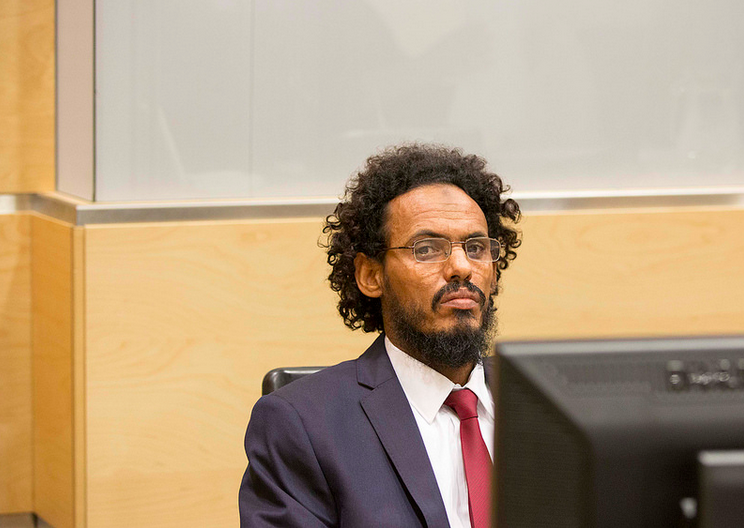
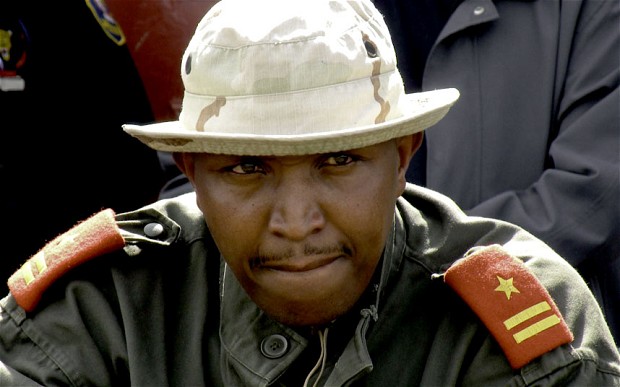
Bosco Ntaganda (Photo: Alain Wandimoyi / EPA)
Nine years after he was originally indicted and over two years after he shocked the world by walking into the American Embassy in Kigali, Rwanda, and asking to be hauled off to The Hague, the trial of Bosco ‘The Terminator’ Ntaganda has finally began at the International Criminal Court (ICC). Ntaganda, a chief warlord in a panoply of rebel movements in the eastern Ituri Province of the Democratic Republic of Congo (DRC) faces thirteen charges of war crimes and five charges of crimes against humanity. Born in Rwanda, Ntaganda also happens to have been a pawn and partner of the Rwandan government, raising the question: does his trial at the ICC pose a threat to the regime of Rwandan President Paul Kagame?
For years now, there has been a growing cohort of scholars, advocates and political figures pushing for investigations into the alleged atrocities committed or sponsored by Rwandan government forces and agents. Their efforts can be divided into three broad aims: one, accountability for alleged mass atrocities committed by Kagame’s Rwandan Patriotic Front (RPF) prior to and in the wake of the 1994 Rwandan Genocide, as laid out in detail in a 2010 United Nations report; two, accountability for aiding and abetting the commission of atrocities by rebel factions in the region; and three, accountability for repressive and violent tactics, including targeted assassinations and torture, deployed against domestic opponents of the Kagame government. Through it all, Kagame has been somewhat of a teflon man. No charges have stuck and, to date, no efforts at a thorough and independent investigation have led to much more than a series of false starts.
Rwanda has proven to be a rather curious case for international justice. While it is the focus of a tribunal that bears its name, the International Criminal Tribunal for Rwanda (ICTR) has a highly restricted temporal jurisdiction which is limited to 1994, the year the Genocide took place. The ICTR, based in Arusha, Tanzania, has experienced a quixotic and often fraught relationship with Kigali despite the fact that it has focused exclusively on the regime’s former enemies – Hutu perpetrators of the genocide. Periodic attempts to expand the reach of the tribunal have been met with sharp condemnation from Kagame and rebukes from the international community. Former Chief Prosecutor of the ICTR Carla Del Ponte has written that she was effectively fired from her position by the UN Security Council after she pushed for investigations into RPF crimes.
Many blame the lack of progress on the accountability front in Rwanda on what they see as the West’s shielding of the Kagame regime. There is little doubt that Rwanda is seen as an ‘African success story’, particularly in the US and the UK, and that there isn’t much appetite to upset this narrative. Domestically, the suggestion that the RPF or any factions associated with Kagame committed mass atrocities is often interpreted as genocide denial.
At the same time, the average well-being of Rwandans is incomparably better today then it was in the mid-1990s. Progress has been stunning and those members of the international community in the strongest position to push for accountability are also those most wont to do so lest Rwanda’s progress be undermined. I will never forget speaking to a senior jurist on the allegations dogging the Rwandan government and the various calls for justice and accountability. His response could be summed up as: ’Perhaps. But they have WiFi everywhere now!’

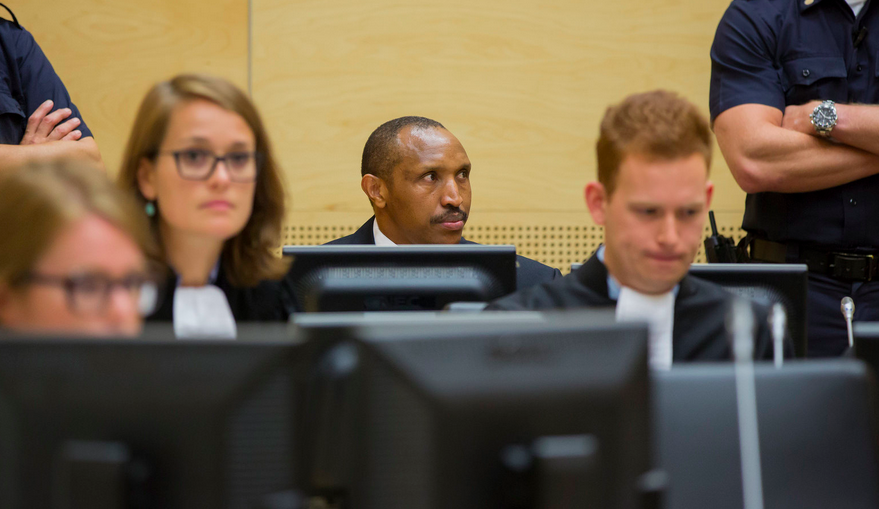
Bosco Ntaganda plead not guilty earlier this week at the International Criminal Court (Photo: ICC)
Still, in recent years, efforts to break through the impunity gap seem to have gained steam. Along with the UN report detailing alleged RPF atrocities after the genocide, General Karenzi Karake, the head of Rwanda’s intelligence services was recently detained in the UK after a Spanish judge charged him with war crimes and crimes against humanity allegedly committed in Rwanda and the DRC between 1990 and 2002. Moreover, when it became blatantly clear that the Kigali was supporting, perhaps even controlling, the Ntaganda-led M23 rebel group in the DRC, Rwanda’s’s traditional Western proponents wavered in what had, until then, been assumed to be unquestioned support. US Ambassador for War Crimes Issues Stephen Rapp went so far as to assert that Rwanda could be open to the war crimes charge of aiding and abetting the M23, comparing the role of Kagame to that of Charles Taylor, the former Liberian President convicted of war crimes in 2013:
There is a line that one can cross under international law where you can be held responsible for aiding a group in a way that makes possible their commission of atrocities.
Charles Taylor never set foot in Sierra Leone, and aided and abetted, and was convicted of aiding and abetting, the Revolutionary United Front with assistance that was substantial and, the judges said, without which the RUF could not have committed the atrocities to the extent they did commit them. Because of that evidence, Charles Taylor was convicted and sentenced to 50 years.
…if this kind of thing continued and groups that were being armed were committing crimes … then I think you would have a situation where individuals who were aiding them from across the border could be held criminally responsible.
As Kevin Jon Heller pointed out at the time,”Kagame’s response to Rapp’s statement was completely predictable: to blame the West for forgetting about the genocide.” However, as Heller right added: “Remembering the genocide, however, does not mean ignoring Kagame’s authoritarian rule or overlooking his government’s [alleged] crimes.”
But precisely because of the public uproar, combined with a rare willingness on the part of Western states to openly criticize Kagame’s government, many thought that the trial of Ntaganda would open the floodgates and expose Kigali’s alleged role in destabilizing and perpetuating violence in the eastern DRC. For at least two reasons, this is unlikely to ever occur. Continue reading →