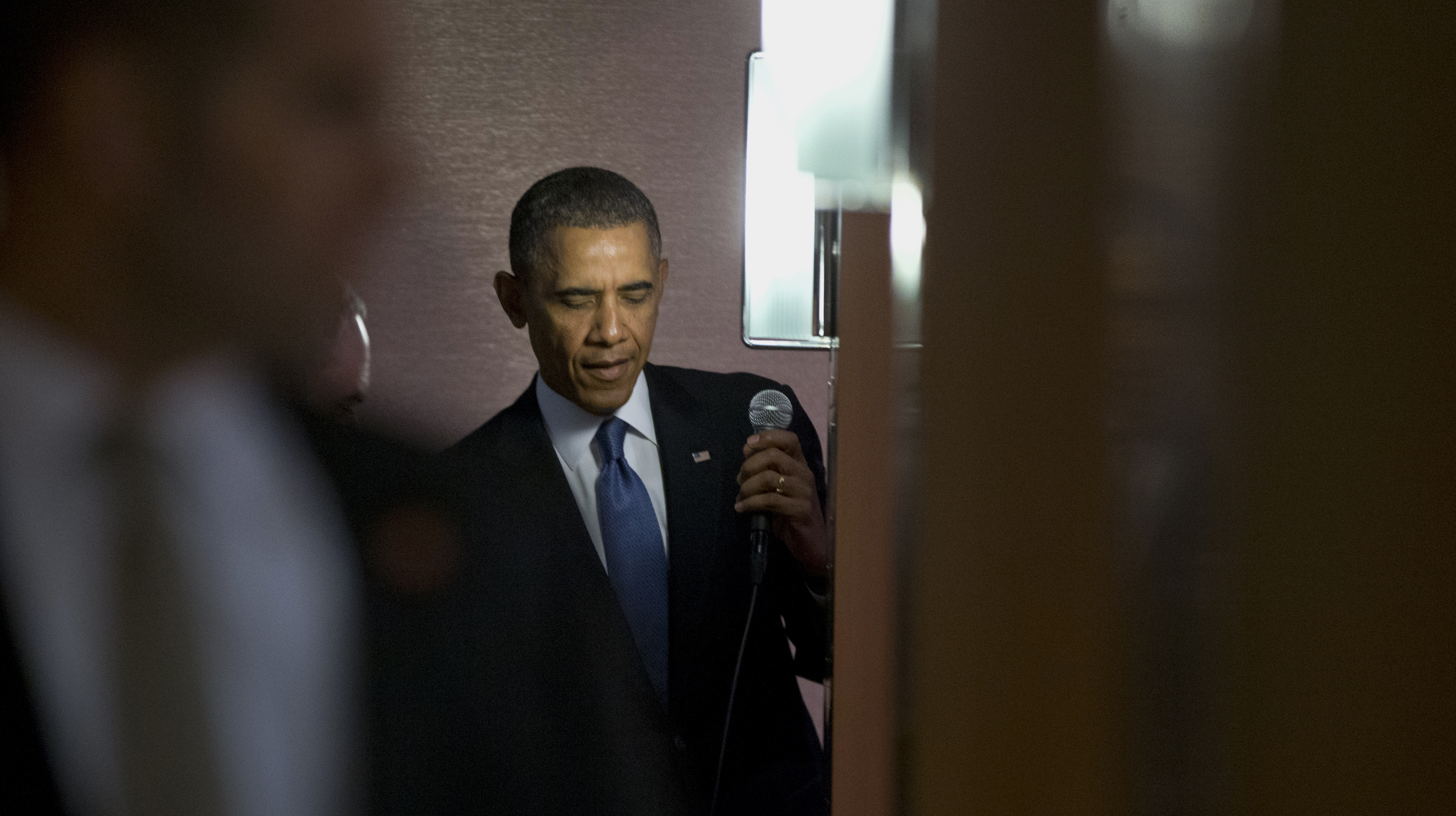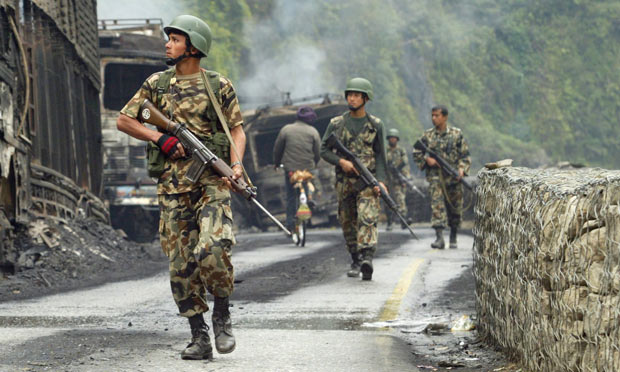

Conflicting views on Libya’s Political Isolation Law has led to clashes in Tripoli (Photo: Mahmud Turkia / AFP)
It has been a tough go for Libya. Almost two and a half years after the demise of the Gaddafi regime, the country continues to struggle in its ongoing and tumultuous transition. After forty years of autocratic rule, creating a stable, viable and democratic is undoubtedly a tall order. The country faces a host of challenges: the central government is very weak and has had an immensely difficult time creating strong governmental institutions; regional and city-based militias or ‘thuwar’ control key areas of the country; the economy remains vulnerable; assassinations of former regime officials are a regular and disturbing occurrence; and thousands of individuals remain in illegal detention. And while things in Libya may not be quite as bad as tends to be reported (and there has been some good news), the country faces a tough road ahead.
On matters of international and transitional justice, Libya is a fascinating case. Over the past few years, JiC has featured an array of posts on the International Criminal Court’s intervention into Libya and the subsequent battle over where to try the two remaining Libyan ICC indictees: Saif al-Islam Gaddafi and Abdullah al-Senussi. But there have also been other important developments pertaining to transitional justice in Libya. Amongst these are the passage of a blanket amnesty law and a de-Gaddafication law. These have received far less attention here than they deserve. I was thus thrilled by the opportunity to write an article on the latter in greater depth for a project by the Middle East Institute on Pathways to Transitional Justice in the Arab World. My contribution seeks to place Libya’s Political Isolation Law into context and decipher its potential impact on Libyan politics and the pursuit of post-conflict justice. Here’s a snippet:
In May 2013, Libya’s General National Congress (GNC) overwhelmingly passed the Political Isolation Law (PIL). The PIL’s enactment represented a far-reaching attempt to prevent members of the regime of Muammar Qaddafi from holding public office during the country’s transition. But the decision also appeared to fit a precarious pattern of post-conflict accountability in Libya, which has been characterized by acts of vengeance and one-sided justice aimed at anyone associated with the defeated regime. The passage of the law also reflects the current state of political instability in Libya wherein decisions are politically motivated and often forced at the barrel of the gun rather than agreed upon through public consultation and democratic decision-making.
At its heart, Libya’s PIL is a lustration law. Historically, such laws have been a common tool in the pursuit of transitional justice. Broadly speaking, lustration is a form of vetting citizens to discern whether or not they can hold public office on the basis of their relationship with a prior, delegitimized, and defeated regime. The idea of purging a vanquished political opponent is as old as the practice of war itself. New regimes require the exclusion of members, groups, and structures that sustained previous orders. In the twentieth century, exclusion by extermination of opponents shifted to exclusion through legal and political means. For example, following WWII, the process of de-Nazification sought to expel and subsequently prohibit former Nazi figures from political, cultural, and social positions―albeit with mixed results. More recently, the process of de-Ba`thification in Iraq ensured that individuals associated with Saddam Hussein’s Ba`th party were purged from public office. The policy is widely regarded as disastrous, leaving behind it a “bitter legacy” that has “polarized Iraqi politics and contributed to severe instability in the Iraqi military and government.” Continue reading