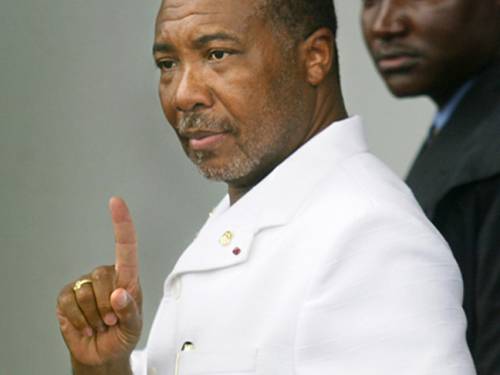
Charles Taylor is the second head of state to be convicted at an international criminal tribunal.
The triumphant and celebratory rhetoric is in full bloom. Many have claimed that the guilty verdict for former Liberian President Charles Taylor was a huge victory, a milestone in the fight against impunity and an unprecedented achievement for international justice and human rights.
To be sure, the Taylor verdict is a significant moment. There is no doubt that he was responsible for terrible atrocities (see here for a backgrounder of the trial) and his imprisonment, likely for the rest of his life, is welcome. Further, Taylor is only the second-ever head of state to be convicted by an international criminal tribunal. The first, Karl Dönitz, was convicted at the Nuremberg Trials. He had been the delegated leader of Nazi Germany after Adolf Hitler had committed suicide and “ruled” the Third Reich for about 20 days.
Nevertheless, the Taylor verdict exposes a number of ongoing challenges and controversies in the practice and pursuit of international criminal justice.
The Verdict
The reading of the verdict, by the Samoan Judge Richard Lussick, was as long as it was rich. In the end, the judges found that Taylor was guilty of “aiding and abetting” the commission of all the 11 charges he faced in Sierra Leone. Aiding and abetting is a rather precarious charge in the context of international armed conflict. As my friend and colleague, Joe Hoover, pointed out: how many world leaders haven’t aided and abetted (directly or indirectly) the commission of international crimes?
Perhaps just important as what Taylor was convicted of is what he wasn’t. The judges rejected the Prosecution’s case that Taylor held direct individual responsibility for any of the charges in the indictment or that he had been involved in a “Joint Criminal Enterprise” to commit war crimes or crimes against humanity. A chorus of rights groups are claiming this is a victory for international justice and Sierra Leone. Indeed, it may be and it is important not to discount that, for many, it matters more that Taylor is locked away rather than what he is locked away for. But this seems like a minimal victory, if not a defeat, for the Prosecution. Kevin Jon Heller, for example, has described the verdict as “a colossal victory for Taylor” and “a stunning rebuke to the prosecution.”
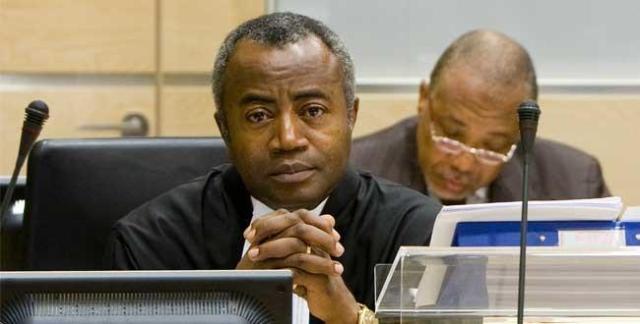
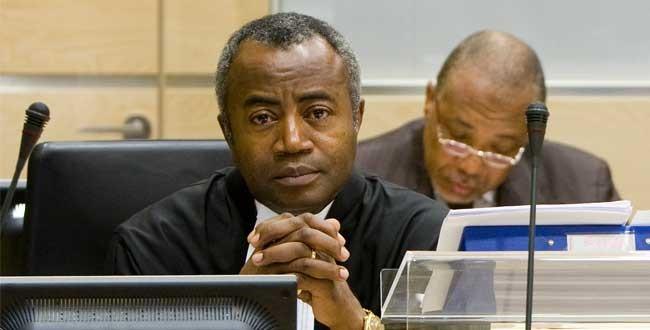
Lead defense counsel for Taylor, Courtenay Griffiths, during proceedings at the Special Court for Sierra Leone
In Defense of the Defense
A few months ago I had the opportunity to meet Taylor’s lead Defense counsel, Courtenay Griffiths. I disagreed with much of what he claimed about the state of international criminal law. But Griffiths spoke eloquently and persuasively about the role of defense lawyers in the project that is international criminal justice.
Regardless of what others may believe, Griffiths trusts in the idea of international criminal justice. He believes, however that it remains fundamentally political, that the politics of international criminal justice aren’t ‘good politics’, and that the justice it produces is far too selective. Critically, he claimed that he sees his role, and presumably that of other defense lawyers, not as undermining the work of tribunals but as making international criminal law work better and move closer to the vision of universal and unbiased justice.
It is perhaps inevitable that international criminal courts and tribunals have a predisposition in favour of prosecutors rather than the Defense. After all, it is the “worst” and “most responsible” international criminals that end up in the dock. But international justice will not, and cannot, be served if international tribunals are set up to do nothing more than convict alleged perpetrators of war crimes, crimes against humanity and genocide. It is not always going to be pretty or comfortable, but the legal defense of people like Taylor is vital to the project of international criminal justice. Defense lawyers, like Griffiths are often vilified for being “the Devil’s advocate”, heartless and immoral. But the reality is that they play an indispensable role in the functioning and progress of international justice.
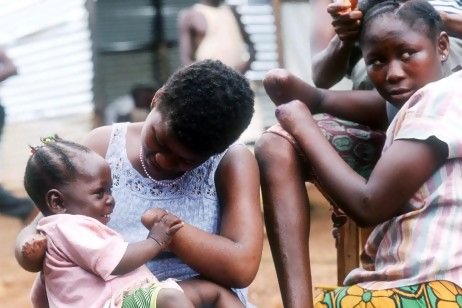
Victims of the conflict in Sierra Leone were often maimed and mutilated. (Photo: Malcolm Linton / Liaison)
Is Justice Delayed, Justice Denied?
Proponents of international criminal justice often exclaim that “justice delayed is justice denied”. Every day that justice isn’t “delivered”, as a result of undue delays, is another day of injustice for victims and survivors.
In this context, it is important to note that the Taylor trial was an arduous and drama-filled affair. When Taylor first arrived at the Court five years ago, he boycotted proceedings. In August 2007, the trial was postponed for almost half a year. The Defense regularly filed motions late which led to additional hearings about whether they were or were not in contempt of court. The Prosecution showcased a ‘star witness’, model Naomi Campbell, ostensibly to bring attention to the trial. A judge left mid-trial to take up a job at the International Court of Justice. The Defense twice walked out on the trial and, earlier this year, the Defense asked to reopen the case. Meanwhile, the SCSL consistently struggled with funding, requiring a number of “bail-outs” from donor states to ensure the trial reached a conclusion. When I visited in 2010, a staff member told me that they had three months of funding left and, if they couldn’t secure more, they would be forced to release Taylor. While it is unlikely that Taylor would actually ever have been released, all of these developments contributed to prolonging the trial. Continue reading →

 Dear Readers,





 Justice in Conflict