A New Deal: an ICC “Supervised” Trial for Saif Gaddafi in Libya?

Libya graffiti

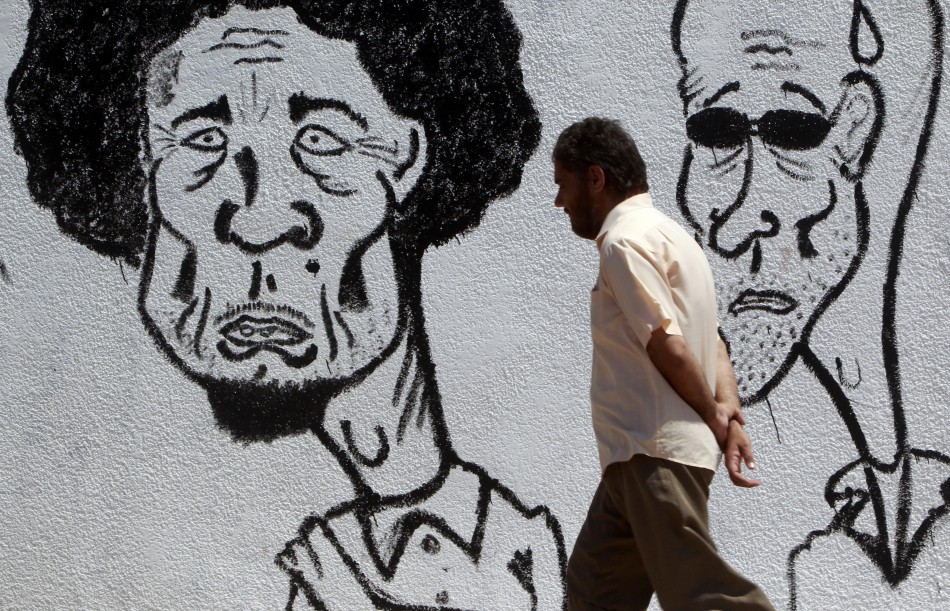
Graffiti depictions of Saif al-Islam Gaddafi (right) and his father, former Libyan leader Muammar Gaddafi (Photo: Reuters/Amr Abdallah Dalsh)

The debate on how and where Saif al-Islam Gaddafi, the son of former Libyan leader Muammar Gaddafi, is tried has taken a new and rather unexpected turn. The BBC has reported that a “Western official” told their correspondent that a deal between Libya and the International Criminal Court (ICC) is close to being completed. The agreement would see Saif tried in Libya, but “under ICC supervision”.

The reported deal, which would result in the ICC dropping its demands to try Saif in The Hague, comes just days after the ICC’s Pre-Trial Chamber ruled that Libya was obliged to surrender Saif to the Court immediately. The country’s National Transitional Council (NTC) subsequently decided it would appeal the ruling while simultaneously unveiling plans – and a refurbished courtroom – to begin Saif’s trial within the next few weeks.

The debate on who should try Saif and how, of course, is nothing new. Readers will recall that a number of commentators (including myself) have supported an ICC trial of both Saif and former Libyan intelligence chief, Abdullah al-Senussi, in Libya – a possibility the Rome Statute envisions. However, the BBC report leaves unclear how such an arrangement would work. Kevin Jon Heller raises a number of pressing questions on the subject:

What would the charges be?  Would the ICC impose a de facto complementarity requirement on Libya, conditioning any deal on Libya’s willingness to prosecute Saif for the same crimes against humanity, murder and persecution, based on the same conduct for which the arrest warrant was issued?  Or would the ICC be willing to allow Libya to prosecute Saif for “ordinary” crimes (i.e., not international) based on the same or different conduct as long as the charges were adequately serious?  (An approach to complementarity that I have defended here.)  How, exactly, would the ICC “supervise” the trial?  Are we simply talking some sort of positive complementarity, whereby the Court would provide the Libyan court system with training and the like?  Or would the ICC have the right to insist on specific rules of evidence, due-process guarantees, and so forth?

The answers to these key questions will determine whether any arrangement between the ICC and Libya is a bright idea – for the Court, for Libya, and for justice. Here are a few other questions and thoughts.
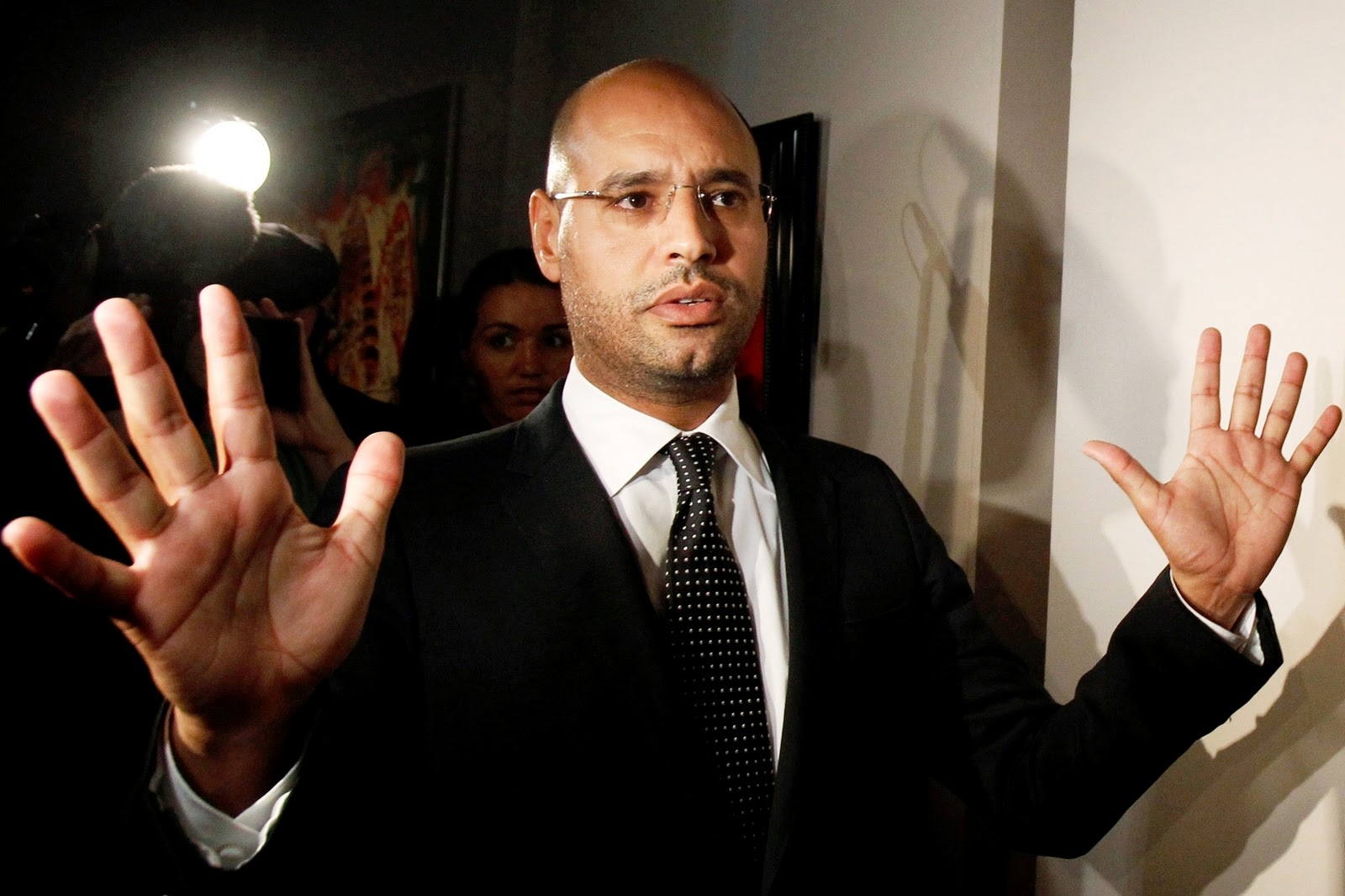
Saif al-Islam Gaddafi (Photo: Sergei Karpukhin/Reuters)

If the BBC’s report is accurate, it raises the question as to why the NTC has suddenly decided to cooperate with the ICC and given it a slice of the justice in Libya pie. While it was largely under-reported, an ‘in situ’ ICC trial in Libya was considered and proposed by the Court’s Office of the Prosecutor during negotiations with Libyan authorities. The idea was flatly rejected by the NTC which, while engaging with the Court in an effort to gain approval for a local trial, has been generally unconcerned with pressure exerted by the ICC. Continue reading
Posted in International Criminal Court (ICC), Justice, Libya, Libya and the ICC, Mauritania | Tagged , | 1 Comment

Defendants on the Run — What’s a Court to do?

Gillian McCall, a London-based researcher in international criminal law, joins JiC with a fascinating guest post on the question of whether trials in absentia are legitimate and legal. Gillian offers a glimpse into how the various international tribunals have treated the question of trials in absentia, concluding that the continuing absence of defendants before tribunals is an issue of politics, not law.

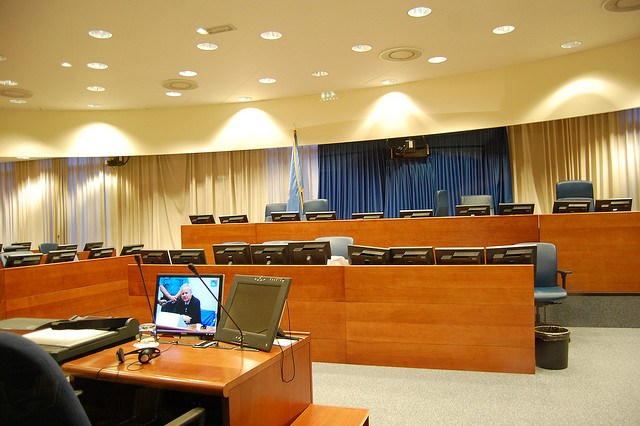
Courtroom chamber at the International Criminal Tribunal or the Former Yugoslavia (ICTY) (Photo: Klaasjanb)

International criminal courts have become famous — or infamous — in some quarters for their perceived inability to quickly capture and try those accused of serious crimes. Ratko Mladić, accused of genocide, spent 16 years on the run before his capture; Radovan Karadžić did so for twelve. At the ICC, Omar al-Bashir remains at large four years after his indictment, and Joseph Kony remains famously out of reach of the Court, over 6 years after being indicted. Why, critics ask, could their trials not have begun while they were on the run? Could trials in absentia be the way to rid international criminal law of unnecessary lengthy delays?

In the UK, the idea of conducting trials in the absence of the accused seems like an assault on the most uncontroversial of liberties. But elsewhere in the world, such trials are a far more common occurrence: one of the world’s newest international criminal tribunals, the UN Special Tribunal for Lebanon, even allows for it explicitly in its statute. This February, days before the seventh anniversary of the assassination of Hariri, the STL announced that the trials of the four accused would go ahead in their absence. Is this a step too far for international courts, or is there good reason to carry on without the accused?

The motive behind the STL’s decision is obvious; delays frustrate justice. Allowing for trials in absentia will either deter the accused from evading the court, forcing the accused to submit to the court to defend themselves; alternatively, it will allow trials to go ahead in the absence of the accused, meaning that justice won’t be frustrated by unnecessary delays in an international system with no police force, reliant on reluctant states to hand over defendants.

The STL is the first international court to allow for trials in absentia since Nuremberg, and even at Nuremberg only one of the top 24 defendants was actually tried in absentia. The STL is unique in many ways, though, and brings the issue of absentia trials into sharp focus.  Although the court is international, the statute is based on Lebanese law, Lebanon being a country which allows for trials in absentia in any event. It is also limited in jurisdiction: unlike other international or hybrid courts whose jurisdiction lasts a number of years with many, many accused, the STL was set up to try one single event, although there are now a series of connected cases. Its defendants, though, have avoided trial for over seven years. The court, in the meantime, has nothing to do, no other cases that it can pursue, and no investigations it can be getting on with. To be left in suspension would be to hemorrhage money — not to mention waste huge amounts of time and effort — for no apparent reason.

But what about the defendants’ rights? At the ICTY, the Blaškić Appeals Chamber stated that:

“…it would not be appropriate to hold in absentia proceedings against persons falling under the primary jurisdiction of the International Tribunal…Indeed, even when the accused has clearly waived his right to be tried in his presence…it would prove extremely difficult or even impossible for an international criminal court to determine the innocence or guilt of that accused”

Special Tribunal for Lebanon

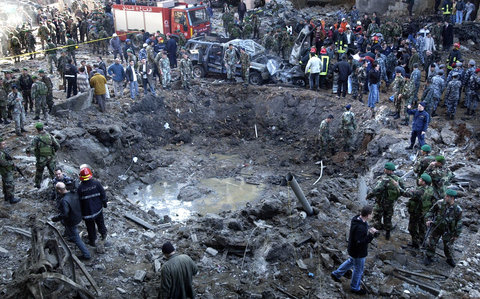
The crater left after the assassination of Lebanese Prime Minister, Rafik Hariri, in 2005 (Photo: AP)

This gets to the crux of the issue; how can a court determine culpability on hearing only half the story? While defence lawyers might be appointed to test the prosecution evidence, this must be a difficult task without instructions from the accused, never mind the impossibility of actively putting forward their individual defence case. The recent ICC judgment on Lubanga has demonstrated the absolute importance of mounting a strong defence, without which the prosecution’s use of false evidence via intermediaries may not have been discovered. A trial without a defence seems to be a process which does not tend towards finding out what happened, or bringing accountability for it. Continue reading

Posted in European Court of Human Rights, Guest Posts, ICTY, International Criminal Tribunal for Rwanda (ICTR), Lebanon, Special Court for SIerra Leone (SCSL), Special Tribunal for Lebanon, Trials in Absentia | Tagged , | 7 Comments

Wikileaks’ Death Knell for Invisible Children’s KONY2012?

KONY2012 van

(Photo: Micke Kazamowicz at Flickr)

The most remarkable thing about Invisible Children’s KONY2012 campaign is just how spectacularly it has shifted from one controversy to another.

When the film was first released, it was ripped by virtually every scholar and observer of northern Uganda and LRA-affected areas. I have yet to come across a single researcher not affiliated with the project who has not expressed at least some concern at the way Invisible Children has treated the situation facing victims of Joseph Kony and the LRA.

Shortly afterwards, an Invisible Children video campaign from 2006 did the rounds on the Internet. Many people couldn’t watch the whole clip, stating that it was just too painful. It is difficult to describe, but the video might be compared to a colourful, activist-version of a Glee club, Michael Jackson-inspired call to action in northern Uganda. Incredibly, the video features the creators of Invisible Children singing that Uganda needs to “sparkle and shine” and “we’re not qualified”! It concludes with a woman holding up a egg-beater leading a march of American youths chanting “we are going to end a war!”

A few short weeks later, Invisible Children’s director and the star of ‘KONY2012’, Jason ‘Radical’ Russell had a very public mental breakdown in San Diego. His wife was quick to blame criticism of KONY2012 for her husband’s meltdown. Yet, while many ridiculed and sometimes brutally criticized him and Invisible Children in the wake of the breakdown, it was an altogether unfortunate event – for Russell, his family, and for the story. No one should ever wish such a fate on their worst enemy and the issues with ‘KONY2012’ should never have been personal. Furthermore, many observers began believing that the ‘KONY2012’ campaign was wrong because of Russell’s dramatic mental collapse and not because the story Invisible Children was telling was wrong – and dangerous – all along.

Still, Invisible Children pressed on. Last week it released a sequel, entitled ‘Beyond Famous’, which was met with a resounding “meh” from observers. The damage had been done with ‘KONY2012’ and, while ‘Beyond Famous’ did attempt to deal with many of the criticisms levied against Invisible Children, it ignored key issues, particularly the organization’s faithful predilection towards military intervention. But Invisible Children’s public and dramatic fall from grace didn’t stop there.

UPDF

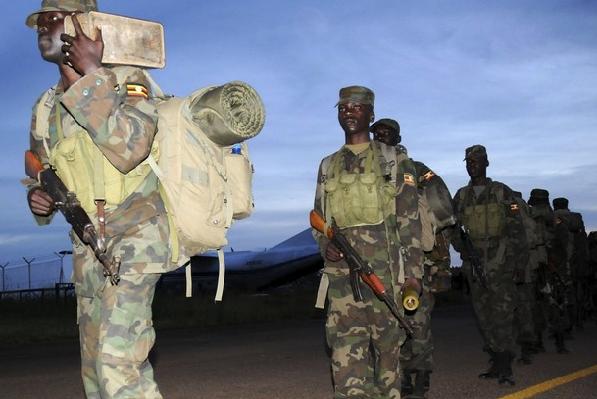
Ugandan troops in Entebbe, Uganda (Photo: Reuters)

This week, perhaps the most damaging of allegations against Invisible Children emerged. According to a Wikileaks cable which had been available online for months but remained unreported, Invisible Children previously provided intelligence to the Government of Uganda’s security services. The details are a bit murky (see here, here and here for more background) but the cable, signed by former US ambassador to Uganda, Steven Browning, alleges that Invisible Children tipped off the Ugandan military as to the location of a Patrick Komakech, who allegedly was involved in the creation of a new anti-Government rebel group, the Peoples’ Patriotic Front (PPF): Continue reading

Posted in Advocacy, Lord's Resistance Army (LRA), Peace Processes, Uganda | Tagged , , , , | 4 Comments

Part 1: Saif Gaddafi, Libya and the ICC

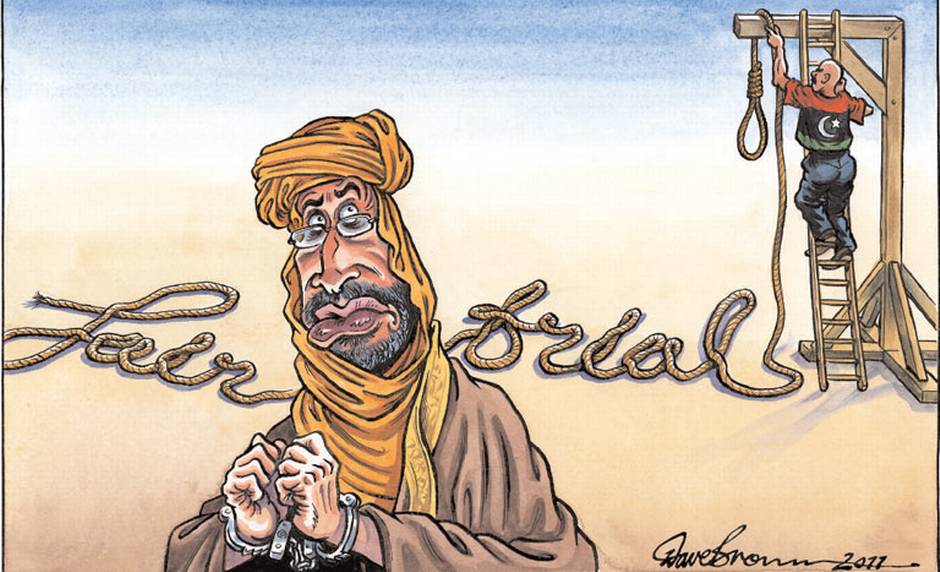
(Cartoon: The Independent / The Daily Cartoon)

Most readers will know by now that the Pre-Trial Chamber of the International Court dismissed Libya’s ruling National Transition Council (NTC)’s application to try Saif al-Islam Gaddafi in Libya. Saif, of course, was indicted by the ICC in June 2011 for his role in crushing the Libyan uprising in February 2011 and has been in detention since mid-November 2011. In this and the next post, I will offer some thoughts on the ruling, and the reactions and controversies it has stirred. This piece focuses on the curious and tumultuous situation on the ground in Libya.

Since being arrested by a group of Zintan rebels, Saif Gaddafi, the formerly gallivanting, ‘playboy’ son of late Libyan leader Muammar Gaddafi, has been held at a secret location in the city of Zintan, home to an impressive Libyan rebel militia which also has Tripoli airport in its prized possession. The circumstances of Saif’s detention is a point that often gets lost in analyses of justice in Libya but is worth stressing: to date, Saif has not been in the hands of the Libyan government. This fact has shaped post-conflict Libya as Saif’s fate has become quite the political asset. Notably Osama al-Juwali, a leader of the Zintani rebels, netted the position of interim defense minister in the NTC.

More troubling, however, has been Saif’s treatment in detention. Saif has become an unlikely cause of human rights groups which have criticized the fact that Saif has been held without legal representation since being arrested, was not informed of the charges against him, has been denied access to lawyers on a number of occasions, and has suffered without proper medical and dental care. More recently, in a letter containing stunning revelations, Xavier-Jean Keïta, principal counsel at the ICC’s Office of Public Counsel for the Defense at the ICC, suggested that Saif had been “physically attacked” while in custody.

Meanwhile, the NTC has been adamant that Saif has been treated fairly and will get a fair trial in Tripoli. To prove it, they’ve built an enormous prison featuring a basketball court, personal chef and satellite TV. One prison guard maintains that “[t]here is not one thing Saif will not have here. This prison is like a castle, a castle fit for a king.” Certainly, for those critics of the ICC who argue that imprisonment in The Hague offers too “cozy” a punishment, the lavish and luxurious nature of Saif’s personal prison palace is food for thought. It is further troubling that the governing authorities are willing to build such an enormous facility for one person, however prized, while thousands of other former combatants remain crammed in make-shift prisons.

But the oddest and most stunning news pertained to Keïta’s description of the charges the NTC originally wanted to levy against Saif:

“Mr. Gaddafi was advised that he was being investigated for trivial allegations concerning the absence of a license for camels, and irregularities concerning fish farms, and that he would not be pursued for serious crimes, such as murder and rape, due to lack of evidence.”

Saif al-Islam Gaddafi after being captured by rebels from Zintan

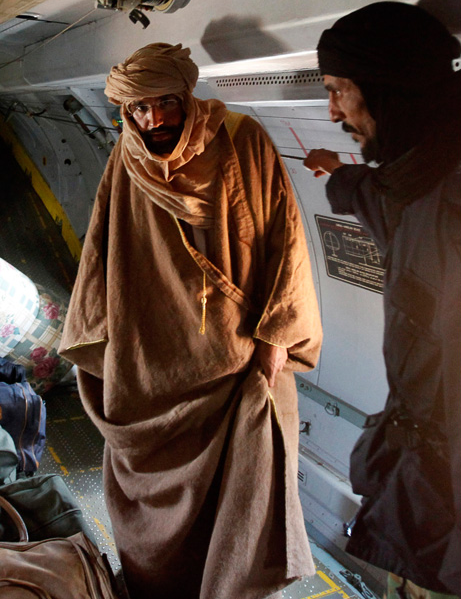
Saif al-Islam Gaddafi on a plane to Zintan shortly after being captured (Photo: Getty Images/AFP)

Keïta added that when the ICC began to put pressure on the NTC to adhere to its international legal obligations, Libyan authorities did an about-face and charged him with more serious crimes, similar to those for which the ICC issued an arrest warrant. But, seriously, camel licences? Irregularities concerning fish farms? Continue reading

Posted in Human Rights, International Criminal Court (ICC), Justice, Libya, Libya and the ICC, Peacebuilding, The Tripoli Three (Tripoli3) | Tagged , | 3 Comments

A Genocide in Northern Uganda? – The ‘Protected Camps’ Policy of 1999 to 2006

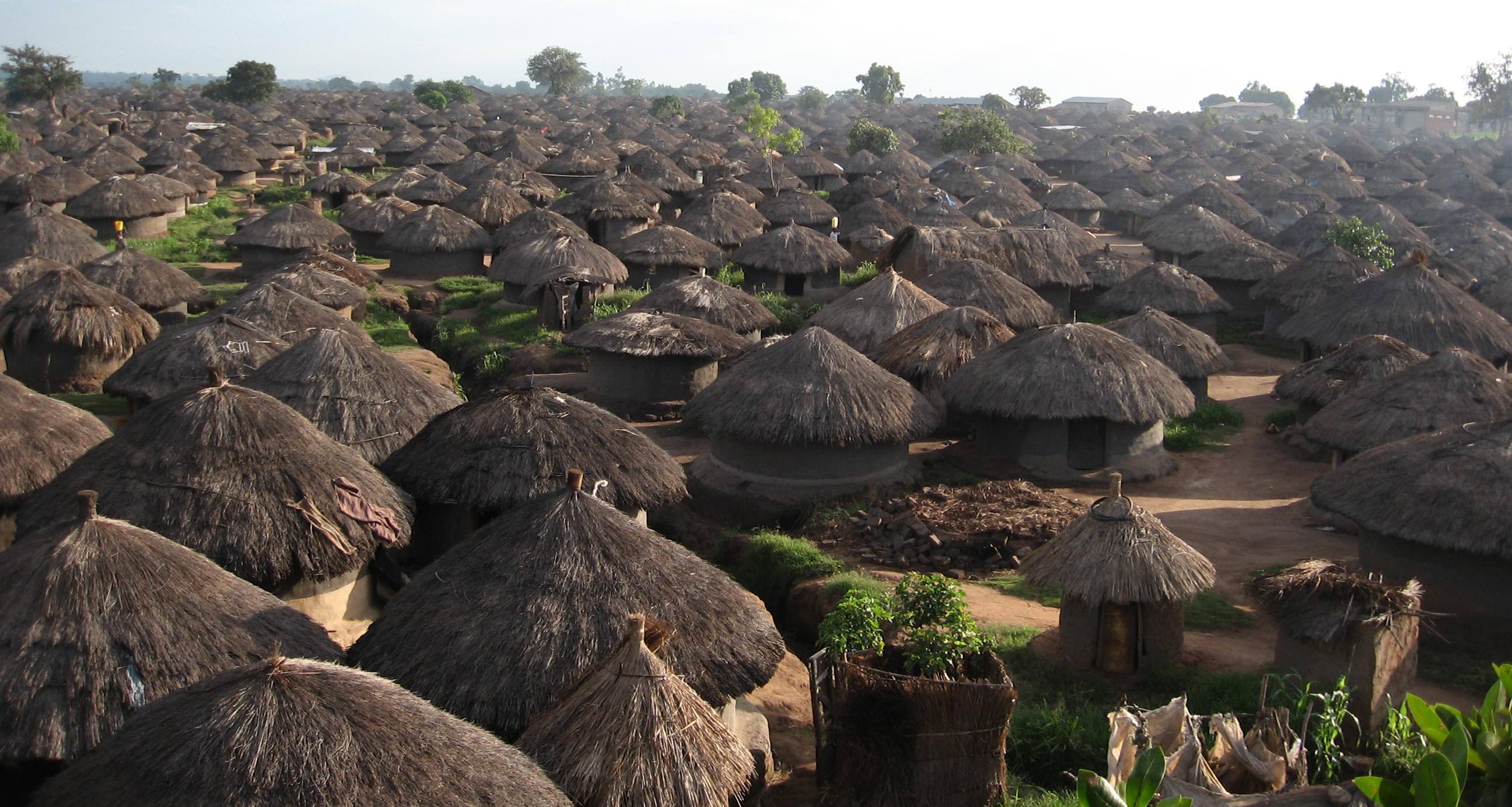
One of the 'protected camps' that were established during the LRA conflict in northern Uganda (Photo: http://joshuadysart.com)

The Lord’s Resistance Army (LRA) conflict effectively ended for northern Uganda in 2006, after 20 years of suffering, when the LRA moved out of Uganda at the start of the Juba Peace Talks. Despite relative peace returning to the area, the multiple legacies of this conflict have still not been fully addressed. One of the most contentious issue is the question of how to deal with human rights violations committed by the Government of Uganda (GoU) and the Uganda People’s Defence Forces (UPDF), as well as its predecessor, the National Resistance Army (NRA). The academic literature on the topic and human rights organisations are pretty clear about the fact that human rights violations were committed, in particular by the NRA in the 80s and 90s. Until this day, northern Ugandan victims call for justice for these crimes while the UPDF claims that it has prosecuted all violations that were committed. The ICC, with its jurisdiction starting in 2002, cannot help in this case, but there are also allegations regularly brought forward in northern Uganda that may fall under the jurisdiction of the ICC and are thus of particular interest.

When the Government of Uganda was not able to beat the LRA militarily, it started to drive the Acholi civilian population into so-called ‘protected camps’ in 1999. Civilians that did not comply were subjected to beatings or random shelling of their villages. In these camps people lived in grievous conditions around UPDF barracks. The army largely failed to protect the civilian population against LRA attacks on the camps. At the same time, diseases like Cholera, Ebola and Aids spread due to lacking hygiene and crowded conditions in the camps. At the height of the conflict 1.8 million people lived in such camps and roughly 1,000 of them were dying each week. Many northern Ugandans – from political and religious leaders to ordinary citizens – have claimed that this UPDF policy amounts to genocide. Only recently, an argument between the retired Bishop of Kitgum Macleod Baker Ochola II and a UN representative ensued at a workshop over whether the camp policy amounts to genocide, as claimed by Bishop Ochola.

Retired Bishop Ochola during the workshop at which he raised the genocide allegations (Photo: Sam Lawino/Daily Monitor)

It is clear that the conditions in the camps were horrendous. Chris Dolan, the Director of the Refugee Law Project in Kampala, Uganda, has fittingly described the camp system as ‘social torture’. According to the UN Office for the Coordination of Humanitarian Affairs the camps violated several rights of the displaced and nearly all UN Guiding Principles on Internal Displacement. Principles violated included, for example, the need to consult the people affected by the displacement (7.3), to minimise the time of displacement (6), to provide basic standards of living and medical care (18, 19), freedom of movement (14), the protection from abuses (11), and the protection of property (21). A diplomat I interviewed compared the IDP camp system to British concentration camp tactics during the Boer Wars in South Africa, and a staff-member of a human rights organisation stated in an interview that the GoU camp policy likely constitutes a crime.

Little doubt remains that the camp policy of the Ugandan Government was inhumane, maybe criminal, but does it amount to crimes under the Rome Statute? The Office of the Prosecutor of the ICC has not made any of the findings from its investigations of alleged UPDF and GoU crimes public, and I am not aware that the legal literature has attempted to clarify this aspect. I would like to give my own assessment of this question in the following paragraphs, stressing that I am not a lawyer and that my analysis might be open to criticism by people more experienced in questions of international criminal law. Continue reading

Posted in Complementarity, Crimes against humanity, Darfur, Genocide, IDP, International Criminal Court (ICC), Justice, Lord's Resistance Army (LRA), Sudan, Torture, Uganda | Tagged , , , , , , , , , , , , , , , , , , | 13 Comments

The International Criminal Court and Deterrence – The ‘Lubanga Syndrome’

Niki Frencken joins JiC for this thoughtful post on deterrence in the wake of the Lubanga verdict. Niki is a freelance researcher, documentary maker and writer who has focused much of her work on conflict resolution and transitional justice in East Africa.

(Photo: UN)

March 14th 2012 marked a historic day for the International Criminal Court. Thomas Lubanga is no longer suspected of recruiting and using child soldiers, but convicted of the crime. The ICC’s first verdict has been met with both excitement and criticism. Safe to say that it raises many questions, one of which concerns the deterrence effect of the Court and the Lubanga case.  Anecdotal evidence abounds that the Lubanga case has generated a fear of arrest amongst Congolese militia leaders. This fear has been dubbed the ‘Lubanga syndrome’. Yet, the question remains whether the ICC and the Lubanga case can contribute to deterrence and whether the ‘Lubanga syndrome’ truly exists.

Deterrence in (post) conflict situations

Within a widely varied palette of peace-building instruments, the threat of international prosecution is increasingly considered as a means to pressure leaders to put an end to hostilities, as was seen in Libya and Côte d’Ivoire. Inherent to this faith that the ICC can contribute to peace and security is the belief in the deterrent effect of (the threat of) international prosecution. This is underlined by the preambles of the Rome Statute: ‘[d]etermined to put an end to impunity for the perpetrators of these crimes and thus to contribute to the prevention of such crimes’ and contribute to peace, security and the well-being of the world.

Due to the material jurisdiction of the Court and its permanent nature, prosecutorial interventions often take place in a context of ongoing (non-)international armed conflict. On top of the already disputed nature of deterrence at the national level, these volatile contexts add an extra dimension to the relation between ICC prosecution and its contribution to deterring leaders from committing crimes. These politically unstable situations are inherently complex, making it difficult for the Court’s prosecutions to deter individuals from committing crimes.

Essentially, deterrence is aimed at preventing crimes based on the fear of the consequences of engaging in criminal behaviour. According to deterrence theory, individuals will refrain from engaging in criminal action if the likelihood of the materialisation of the costs outweighs the expected benefits of crime. Whilst leaders plausibly engage in rational calculations, the dynamics of violent conflict and immediate needs of warfare make it unlikely that the remote costs of prosecution penetrate or override strategic military and political decisions that lead to crime. There are, however, a number of factors that affect this cost-benefit calculation, amongst which are the certainty of apprehension, knowledge of consistent rule enforcement, different approaches to justice and the legitimacy of the Court.

(Un)Certainty of Apprehension: Cooperation and Enforcement Problems

Despite the legal provisions subjecting both party and non-party states to cooperation obligations, the Court suffers from significant cooperation and enforcement problems. The ICC does not have a police or military force and thus operates without an enforcement body. This makes the Court highly dependent on state cooperation to execute arrest warrants, provide access to evidence, enable the relocation of witnesses, and ensure the enforcement of sentences. The problem of cooperation therefore effectively comes down to the Court’s dependence on states that – for whatever reason – are, broadly speaking, either unwilling to cooperate or states that are unable to cooperate (or possibly both). Illustrative are the 11 suspects that still remain at large today. One such suspect is Bosco Ntaganda.

deterrence icc

Despite an outstanding arrest warrant, Ntaganda has been appointed a Deputy Commander in the Congolese army. He is well within the reach of the Congolese authorities to be transferred to The Hague, but the Prosecutor’s requests have remained unenforced, the reason being that Ntaganda is considered instrumental to the DRC in its fight against the Forces Démocratiques de Libération du Rwanda (FDLR). At the time of writing, his political usefulness therefore still functions as a shield, protecting him from prosecution. The political dynamics hampering the execution of Ntaganda’s arrest warrant instills Congolese military and militia leaders with confidence that they will be able to negotiate or buy their way around prosecution. It is not so much The Hague that matters, but rather Kinshasa. The political peculiarities of Congolese politics thus negatively influence the certainty of arrest and by extension undermine the ICC’s contribution to deterrence.

So far, the Court’s apprehension record also provides Heads of State with little reason for concern provided they maintain the right political allegiances or allies. The example of Sudanese President Omar al Bashir comes to mind. Thus, the ICC’s dependence on state cooperation significantly challenges the certainty that the accused will be apprehended and brought before the ICC, and thereby weakens the deterrent potential of ICC prosecutions. Continue reading

Posted in Democratic Republic of Congo, Deterrence, ICC Prosecutor, International Criminal Court (ICC) | Tagged , , | 1 Comment

Beyond Famous – Invisible Children’s Follow-up to Kony2012

Invisible Children aired Kony2012 Part II today (Logo: Invisible Children)

One month ago the US based organisation Invisible Children published their Kony 2012 video, campaigning for the arrest of Ugandan rebel leader Joseph Kony. The video went viral to an extent never witnessed before. Many people who had not heard about the LRA and Joseph Kony before started to get engaged with the topic and suddenly took interest in events thousands of miles away. Designed as a 30 minutes advocacy flick, the movie naturally also encountered a lot of criticism for the way in which the video chose to present the situation, for the oversimplification of the LRA conflict in general, as well as the lack of voices from people living in the affected areas. You can find JiC posts that were quite critical with the video here and here. As I have previously described, some of the criticism became as oversimplified as the original movie when internet critics and mass media started picking apart the organisational and financial structures of Invisible Children and people started accusing the organisation of making money off the misery of Africans. Another unfortunate event was the mental breakdown of Invisible Children co-founder and Kony2012 producer Jason Russel that diverted much of the media coverage that should have focused on the LRA conflict and its background.

Today Invisible Children launched part 2 of their Kony2012 video, entitled ‘Beyond Famous’. It puts the organisation’s advocacy approach and Kony2012 into perspective and explains the rest of the strategy that Invisible Children is propagating in order to end the LRA conflict. In doing so it addresses many of the concerns critics have brought forward and gives a lot more space to the voices of people living in areas formerly or currently affected by the LRA violence. With close to 20 minutes it is also a bit shorter than the last video which will hopefully help to ensure that as many people as possible watch it until the end. On a personal note, I still do not like the style of the video. Like the first part it aims at the gut without giving enough food for thought and tries to transport a ‘we can change the world’ attitude that I find naïve and dangerous. The unreflected and self-gratifying mass activism that is promoted in the video goes against my ideal of enlightened and critical citizens, but if that is what is needed to get people interested in the topic, so be it. Still, after having seen some of the old videos Invisible Children is producing with donations, like this High School musical, I would strongly advise you to rather give your money to World Vision, War Child or any other organisation that is doing humanitarian work in the area.

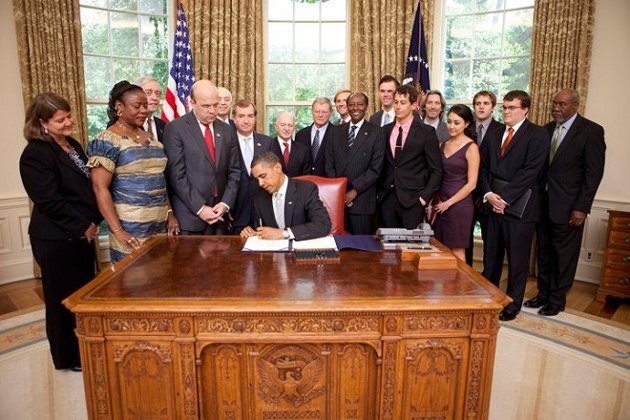
Invisible Children and Resolve staff watching President Obama sign into law the LRA Disarmament and Northern Uganda Recovery Act in May 2010.

There are still some minor issues with the video: It lacks any discussions about the dangers a military approach in the region might harbour, it doesn’t mention the human rights violations the Ugandan government has been acused of, and it is one-sided in not giving screen time to the critics of military approaches in the region who do exist. Yet, this is an advocacy video, and it wouldn’t make a lot of sense to criticize it for not giving the full picture, after all its aim is to mobilize the people in favour of one particular approach – military intervention. The video also implies that Kony2012 helped to coordinate a regional African response to the LRA which is wrong since African Union plans to create a joint brigade have existed for months and the US has been working on facilitating this cooperation for at least as long. Continue reading

Posted in Advocacy, African Union (AU), Central African Republic (CAR), Democratic Republic of Congo, Lord's Resistance Army (LRA), Southern Sudan, Uganda | Tagged , , , , , , , , , , , , | 3 Comments

Justice in Libya? The Senussi Sweepstakes!

Senussi Mauritania

Abdullah al-Senussi (Photo: ANP)

As many readers will already be aware, Abdullah al-Senussi was recently detained in Mauritania in a joint operation between French and Mauritanian intelligence forces. Senussi, variously called Colonel Muammar Gaddafi’s “right hand man”, “eyes and ears” and the Gaddafi regime’s “black box”, was the last free member of the ‘Tripoli Three‘ – the Libyan officials wanted by the International Criminal Court for their roles in the brutal crackdown against Libyans last winter.

There aren’t many Gaddafi-regime atrocities that Senussi isn’t linked to. As I have described elsewhere, Senussi is the ‘crown jewel’ of justice in Libya because of his knowledge of the Gaddafi regime and its vicious secrets. Here’s a brief summary of some of the crimes Senussi has allegedly played a key role in:

  • UTA Flight 772: The September 1989 bombing of a French passenger plane over Niger which killed 170 (all crew and passengers); In 1999, French authorities convicted Senussi in absentia for his role.
  • The Abu Salim Massacre (June 29, 1996): a reported 1,200 inmates who had complained of mistreatment were lured into believing they would receive better treatment, only to be killed; Senussi was said to have played a key role.
  • The Libyan Revolution: Senussi is allegedly responsible for organizing attacks on Benghazi, the same attacks that the UN Security Council reacted to by passing Resolution 1973, authorizing “all necessary means” to prevent the massacre of thousands of Libyan civilians. He may also have been responsible for bringing in the mercenaries who fought with Gaddafi loyalists against the rebels.

Given his position in the Gaddafi regime, Senussi also has an intimate knowledge of other crimes committed against both the Libyan people and against non-Libyan nationals. He holds the key to understanding the Lockerbie tragedy and the Gaddafi regime’s funding of the Irish Republica Army (IRA). He undoubtedly has a deep understanding of  the intimate political and economic relations between Western states and the Gaddafi regime (see herehere and here). Perhaps most importantly, Senussi also knows, to put it bluntly, where the bodies are; he knows where the thousands of victims of Gaddafi’s brutal reign was disposed.

With Senussi’s arrest, the primary question regarding his fate has changed. It used to be “where in the world is Abdullah al-Senussi?” Now it is “where in the world will Abdullah al-Senussi be tried?” Welcome to what David Bosco has aptly termed the “Senussi sweepstakes“!

In this context, this post is an analysis of the main players involved in determining where Senussi will end up facing justice.

The 'Tripoli Three': al-Senussi (L), Muammar Gaddafi (C) and Saif al-Islam (R) (Photo: Die Presse)

Libya: Welcome Home!

Unsurprisingly, Libya’s National Transitional Council wants Senussi delivered to Libya and has promised that if he is extradited to Libya, he will be put on trial before national elections this coming June. Libyan authorities, as in the case of Saif al-Islam Gaddafi (see here and here), have refused to entertain any option other than Senussi and Saif being tried in Libya, by the new Libyan judiciary.

In the wake of Senussi’s arrest, Libya sent a delegation, headed by the Deputy Prime Minister, Mustafa Abu Shagour, to persuade Mauritania to extradite Senussi. The NTC subsequently claimed that the two sides had reached a deal and that a date for Senussi’s surrender to Libya would shortly be announced. However, the delegation left without Senussi, the former intelligence chief remains in the capital, Nouakchott, and a Mauritanian source familiar with the negotiations has said that “[a]t this stage no commitment has been given by the Mauritanian side, it looks like wishful thinking by the Libyans.”

The biggest concern with Libya trying Saif is the very real possibility that he will be convicted quickly – likely for his role in the Abu Salim Massacre – and then sentenced to death. If that were to be the case, many of the truths about the Gaddafi regime would die with Senussi.

France: Bienvenue  à la Justice!

France has said that it wants Senussi surrendered to them and that they should get ‘first dibs’ because of their role in detaining him. As noted above, Senussi was allegedly involved in the bombing of the French UTA Flight 772. France, however, has removed the “allegedly” bit and has actually convicted Senussi in absentia for the crime back in 1999.

Initially, there was confusion about what France would do with Senussi, given that he had already been convicted. I myself wondered why they would request his extradition to France just to put him in jail. However, it is now clear that France would re-open and try Senussi again for his role in the demise of UTA Flight 772.

Importantly, the ICC may claim that if Senussi is sent to France, the French government is under an obligation, under the Rome Statute, to hand him over the Court.

Continue reading

Posted in Complementarity, International Criminal Court (ICC), Libya, Libya and the ICC, The Tripoli Three (Tripoli3) | 4 Comments

Hunting Kony – An Update on the US Deployment in Central Africa

US and Ugandan troops in formation during a training exercise

In May 2010, the United States Government started officially taking more interest in the Lord’s Resistance Army conflict that had ravaged Central Africa, and in particular northern Uganda, for 24 years. President Barack Obama signed into law the ‘Lord’s Resistance Army Disarmament and Northern Uganda Recovery Act’. Nearly one and a half year later, President Obama decided to deploy 100 combat armed military advisors to the areas affected by the LRA in the scope of this act.

JiC has reported about this deployment in the past here and here. The deployment was pushed into the public spotlight with the publication of a hugely popular but also heavily criticised video produced by the NGO Invisible Children that called for the arrest of Joseph Kony in the scope of its KONY2012 Campaign. A couple of months into the US deployment it is of course not possible to really assess its impact comprehensively, but some of its prospects and weaknesses can and should be analysed.

First, let’s get some of the facts straight. One of the reasons for this deployment was the consistent civil society pressure in the US, directed by organisations like Invisible Children. But another important motivation for the deployment was the strategic importance of Uganda to the United States. Oil had been recently discovered in the country and the Ugandan army provides many soldiers for a strategically important Peacekeeping Mission in Somalia. It is often overlooked that many of the military advisors ‘deployed’ were already stationed in the area before the deployment and that the troops are advising the armies in the region, but not taking part in combat operations. Catching Kony thus mainly depends on the capabilities of the local armies, among which the Uganda People’s Defence Force (UPDF) is clearly the most competent one. Furthermore, catching Kony will not be easy. The LRA operates in an area the size of the US State of Arizona or half the size of France. Within this area the LRA moves in small groups of 10-15 persons. UN sources have told me that the LRA groups manage to move up to 50 km per day, an impressive feat considering the dense jungle area.

Military operations have so far failed to stop the LRA. Unfortunately, past operations did not manage to control the LRA threat. Rather, they provoked retaliations and civilian casualties. During the UPDF led offensives to stop the LRA in northern Uganda and southern Sudan (now South Sudan), the LRA managed to outmanoeuvre the UPDF and spread the conflict consecutively to previously peaceful parts of the north and eventually even to eastern Uganda where civilians bore the brunt of the fury of the LRA. Additionally, military attacks on the LRA are likely to kill mainly freshly abducted civilians, among them children. While LRA fighters are experienced enough to disperse quickly into the dense jungle in the case of an attack, the abductees who move with them are often forced to carry looted goods and are tied together with ropes to prevent escape. Those civilians are unlikely to escape in the event of an ambush and are often accidentally killed by soldiers or attack helicopters.

An aerial view of the forests in Garamba National Park in north-eastern DRC. This might give you an idea why it is so difficult to catch Kony (Photo: Finbarr O'Reilly)

Finally, this is not the first attempt that the US made at supporting military efforts to stop the LRA. After the failure of the Juba Peace Talks in 2008, the US provided intelligence and military advisors for the UPDF-led Operation Lightning Thunder, meant to wipe out the LRA in its bases in the Garamba National Park in DRC. The LRA got wind of the attack and dispersed before the ground forces could arrive. A former LRA fighter who I spoke to summarized his deception with the operation:

 ‘[…] I was very surprised when […] Operation [Lightning Thunder] was launched. For me, I thought I would just wake up one morning and hear Joseph Kony was arrested or killed with his senior commanders and that would be the end of the war. But […] to my surprise, I was seeing in the papers that […] they were talking [about having found] maybe a blanket: ‘We got a real blanket of Joseph Kony that he was covering himself with, we [also] brought some bags of [Sesame].’ Now what is that?’

After eluding the UPDF forces, the LRA embarked on a killing spree in north-eastern DRC, killing 865 people in between December 2008 and January 2009. The LRA then killed another 321 civilians in DRC around Christmas 2009. Continue reading

Posted in Advocacy, African Union (AU), Central African Republic (CAR), Democratic Republic of Congo, Lord's Resistance Army (LRA), Southern Sudan, Uganda, United States, War crimes | Tagged , , , , , , , , , , , , , , , , , , , | 3 Comments

Lubanga and the Trouble with ICC Deterrence

This is piece was originally posted at Opinio Juris, which has organized a fascinating and thought-provoking virtual round-table on the Lubanga verdict and its legacy. Check out, inter alia, contributions from Mark Drumbl, Dov Jacobs, Jens Ohlin and Kevin Jon Heller. Drumbl’s masterful work on the subject of child soldiers should be of particular interest to readers of this blog. Big thanks to Jessica Dorsey, who organized the roundtable and offered me the honour to throw in share my two cents! 

(Photo: Pascal Guyot/AFP/Getty Images)

International lawyers will undoubtedly pour over the landmark verdict handed down this week by the International Criminal Court, in which Thomas Lubanga Dyilo was found guilty of conscripting, enlisting and using child soldiers in the long-standing and brutal conflict in the Democratic Republic of Congo. The trial, riddled with well-documented problems from the get-go, is likely to shape the practice of the ICC itself – at least so those disturbed by the conduct of the prosecution hope. But what of the political effects of the Lubanga decision beyond the Court room? Will the trial have a deterrent effect on the use of children in warfare in the DRC?

The widely held argument that international criminal justice can deter the commission of international crimes remains highly problematic. Scholarship on the subject typically, and rather dubiously, ignores the mixed evidence of deterrence in the case of domestic crimes. Studies generally assess international criminal justice’s effects in a vacuum where, for example, the use of military and economic sanctions aren’t taken into account when seeking to establish whether or not there is a deterrent effect. Most problematically, evidence of deterrence is forever slanted against those who claim its existence. As William Schabas has rightly observed, “while we can readily point to those who are not deterred, it is nearly impossible to identify those who are.”

Despite these key issues, deterrence continues to be among the most common arguments proffered in favour of holding perpetrators of international crimes to account. The increased prominence of the deterrence argument reflects a shift, elucidated recently by Leslie Vinjamuri, in the argumentation for international criminal tribunals, away from moral duties and obligations to the positive consequences that these tribunals can bring about. But will the verdict against Lubanga have a deterrent effect on the use of child soldiers?

Firstly, it is my opinion that, despite the issues outlined above, it remains possible to believe that the deterrence achieved through international criminal justice remains a worthy goal without having to prove that it happens or find conclusively that it necessarily does. It may be sufficient to say it is a feasible outcome of international prosecutions – and therefore worthy of support.

In this context, it remains a possibility that the verdict may help to deter the use of child soldiers by signalling that the Court is more than a paper-tiger. The ICC has demonstrated that it can function to punish those who seek to use children as combatants in violent political conflicts. NGOs, such asWar Child, have done a remarkable job in exposing the use of child soldiers in armed forces and groups. Certainly, it is difficult to imagine the Lubanga verdict undermining the progressive decline in the number of conflicts where child soldiers partake, which, according to some has halved since the mid-1990s (although note that there are also less conflicts in general).

Yet, while a general, long-term international deterrence effect seems entirely possible, to claim a specific deterrence effect on the ground in the DRC seems far-fetched – at best.

Thomas Lubanga Dyilo at the beginning of his trial at the ICC (Photo: Keystone)

The extent to which local deterrence can be achieved is likely to depend primarily on the sentence, rather than the verdict, handed down to Lubanga. In eastern provinces of the DRC and the epicentres of the conflict, a mixture of fear and anticipation awaited not simply the verdict – which was rather obvious – but the sentence to be handed down. Olivia Bueno has covered the conflict and paints a tense, divisive and complex picture of the situation in the lead-up to the verdict and sentencing:

“On the ground, opinions are divided. Not surprisingly, supporters of Lubanga hope that he will be acquitted or given a short sentence and released….Some are reportedly already planning a homecoming celebration…[But t]hose who do not support Lubanga are deeply concerned about the prospect of his release…For victims of the attacks of the UPC, a decision to acquit or give a light sentence to Thomas Lubanga is likely to result in indignation…Faith in international justice, and in the international community by extension, is likely to be deflated. Victims will feel betrayed by the Court and frustrated with the outcome. Some fear that this frustration could well up into violence…Others fear that the liberation of Thomas Lubanga and his potential return to Ituri might negatively impact the security situation on the ground because he may be a destabilizing figure.” Continue reading

Posted in Child Soldiers, Democratic Republic of Congo, Deterrence, International Criminal Court (ICC), Justice, Outreach | Tagged | 3 Comments