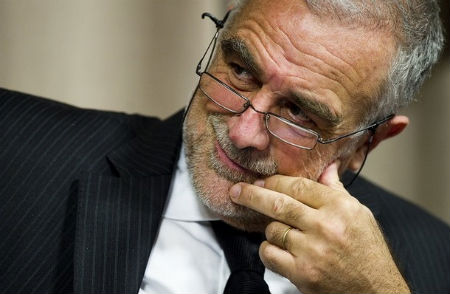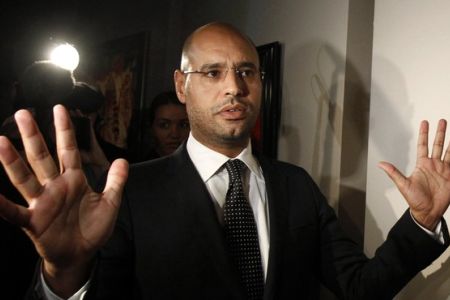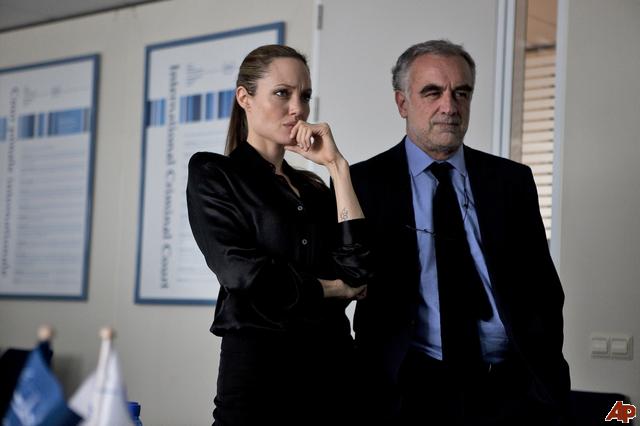
One thing is for certain: Angelina Jolie will not be the next ICC Prosecutor (photo: AP)
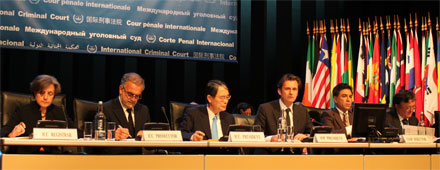
Last week, we had a fascinating and lively discussion about some of the criteria and political issues regarding the election of the International Criminal Court’s next Prosecutor. In December, the ICC’s state-members will converge to elect the Court’s second Prosecutor. Prior to that, a search committee will short-list at least three candidates. In the weeks and months leading up to the December election, JiC will feature a series of posts relating to various issues pertaining to the question of the ICC’s next Prosecutor. This week’s post takes a look at some of the possible candidates to succeed current chief Prosecutor, Luis-Moreno Ocampo.
Please note that this list draws on numerous sources interested in this subject. Neither this list nor the characterization of these potential candidates is exhaustive. Some candidates are more feasible than others and new candidates may emerge and will be profiled if they do. Please also keep in mind that the candidates presented here are in no particular order.
Hassan Jallow
Jallow is an interesting candidate for a number of reasons. He is a Gambian lawyer and has been the Chief Prosecutor at the International Criminal Tribunal for Rwanda since 2003. He has previously been the Attorney General and Minister of Justice in Gambia. He has also been a legal expert at the International Criminal Tribunal for the Former Yugoslavia and, briefly, was appointed as judge in the Appeals Chamber at the hybrid Special Court for Sierra Leone (SCSL). This barely scratches the surface of Jallow’s achievements. All in all, Jallow has an extremely impressive resume that would put him in the top-tier of contenders for the ICC’s top job.
Helping his candidacy (as well as Fatou Bensouda’s and Kiril Idris’ below) is the fact that Jallow is African. The origin of a particular candidate may very well play into the decision-making of states. Indeed, the AU has already declared that it will put its weight behind an African candidate, likely to be named in the next few weeks.
Dov Jacobs comments that Jallow’s “stint at the ICTR makes him a sort of safe choice after Moreno-Ocampo, because he follows orders, as his deference to [Rwandan President Paul] Kagame shows.”
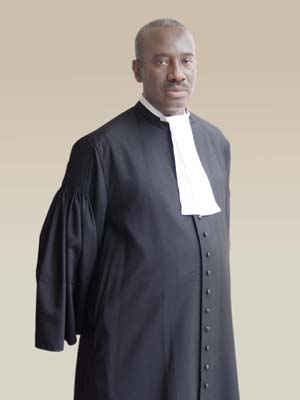
Hassan Jallow, the current ICTR Prosecutor
One of the most common criticisms levied against Moreno-Ocampo is his penchant to be cavalier and overtly political in his work and his public statements. It could be argued, as Dov’s comments suggest, that Jallow would do neither and would thus make a more constrained and controllable Prosecutor. However, there have also been criticisms from various human rights groups and observers over Jallow’s reluctance to investigate and prosecute alleged crimes by the Rwandan government forces (RPF) prior to and following the 1994 Rwandan genocide. For the ICC to be successful, it must be impartial and apolitical, and the one-sided investigation of Rwanda remains effective fodder for those who maintain that international criminal justice is always and inevitably victor’s justice.
Both the ICTY and the ICTR have begun the process of shutting down operations. There will be key residual mechanisms in place for the foreseeable future, but neither ad hoc tribunal was intended to be permanent. Indeed, the reality that both tribunals will conclude their work during the tenure of the ICC’s next chief Prosecutor will only increase the pressure on the ICC to raise its global significance, its success and its effectiveness.
Some may argue that it would be wiser to keep Jallow (and Serge Brammertz – see below) in his current position as Prosecutor of the ICTR. It would benefit the ICTR to maintain some continuity as it slowly completes its work in the next few years. It also certainly wouldn’t look good for the ICTR (or the ICTY) if its chief employee skipped out to head the ICC’s OTP just when the tribunal was in the midst of slowly shutting down operations, especially with high-profile cases in the dock
It is important to remember that there remains critical work to be done at the ICTR. Earlier this month, Bernard Munyagishari, the alleged “mastermind” of the Rwandan genocide was arrested. This case will be of particular importance to the legacy of the Rwandan Tribunal. While the tribunals may be winding down, there is still much to be done before it closes its doors.
Louise Arbour
Arbour commands the respect of just about everyone I have spoken to, even those who have disagreed with her views and tactics during her long and illustrious career. It is hard to imagine a candidate who has been more involved with issues of justice, human rights and conflict than Arbour. Indeed, she has a remarkably impressive pedigree. The Canadian Arbour has also shown on numerous occasions, particularly in her role as Prosecutor at the ICTY and as UN High Commissioner for Human Rights, that she is tough as nails and not overly worried about annoying state and non-state actors in the defense of principles and values. At the same time, Arbour is one of those rare characters, unlike Moreno-Ocampo, who don’t feel the need to be flashy or use unnecessarily high rhetoric in the way they go about their business.

Louise Arbour, former Prosecutor at the ICTY and UN High Commissioner for Human Rights (photo: Le Devoir)
In his article on the subject of the ICC’s next chief Prosecutor, David Kaye writes that “Moreno-Ocampo is more Del Ponte than Arbour, and the ICC needs an Arbour.” Why name-drop Arbour specifically? Professor William Schabas believes that it is “as if a trial balloon is being floated to promote Louise Arbour’s candidacy.” Schabas goes on to say that Arbour was interested in becoming the Court’s first Prosecutor (what a counter-factual treasure trove!) but was ultimately unsuccessful. Nevertheless, Schabas concludes:
“She would get a lot of support if she wanted to throw her hat into the ring.”
Continue reading →