2011 JiC International Criminal Justice Awards!
For the pursuit and project of international criminal justice, 2011 has been nothing short of extraordinary. We will almost surely still be talking about 2011 in 2031.
This past year has brought an unprecedented – and even surprising – level of interest and scrutiny to the work of international criminal justice. With the possible exception of 1945-6, during which high-ranking Nazi and Japanese officials were tried at the Nuremberg and Tokyo Military Tribunals, no year to date has seen so much attention paid to the efforts of bringing perpetrators of some of the worst human rights violations to account. In the past 12 months, the International Criminal Court has become involved in new conflicts (Libya and Ivory Coast), elected a new Prosecutor (Fatou Bensouda), and has been confronted with new challenges (funding) – all of which has created much fodder for commentary.
The inaugural JiC Awards are an opportunity to reflect on the year past, the year ahead and to recognize the contributions and stories that made 2011 a year like no other for the pursuit of justice in conflict. These awards represent the best and the worst from 2011. Thanks for reading and enjoy!
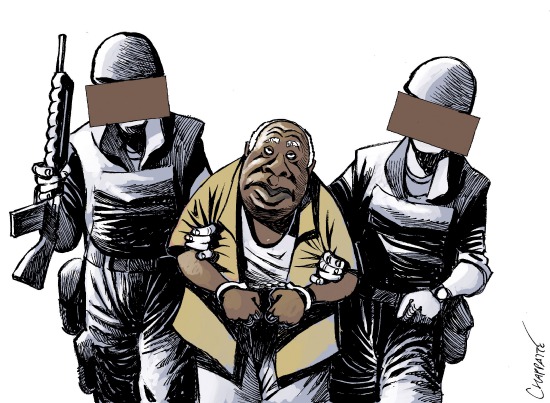
Biggest Catch: It was a close call, but the prize for the biggest catch in international criminal justice in 2011 goes to Laurent Gbagbo, narrowly edging out Ratko Mladic. Gbagbo is the first former head of state to be in the custody of the ICC, marking a significant political coup for the Court and (hopefully) justice in Ivory Coast. Quite simply, in terms of victories for international criminal justice, Gbagbo is a head (of state) above the rest.
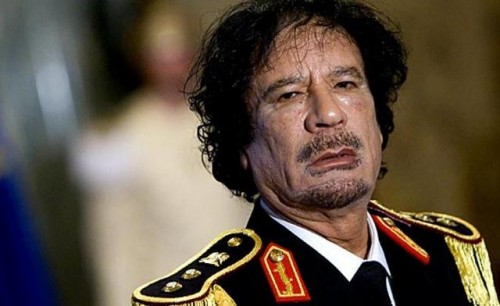
Best (Worst, really) Supporting Actor: There’s a myriad of individuals to choose from for this award, but the 2011 award goes to Abdullah al-Senussi, Muammar Gaddafi’s trusted henchman. While other perpetrators of atrocities have received greater attention this year and despite the lion’s share of attention being paid to the Western-groomed Saif al-Islam Gaddafi in Libya, al-Senussi holds the darkest secrets of the Gaddafi regime. Al-Senussi, not Gaddafi, is the “crown jewel” of justice in Libya.
Biggest Gaffe: This was a no-brainer. The biggest gaffe in international criminal justice was the target killings of individuals who really should have faced justice in the dock. It may be easier – and certainly a good thing – to live in a world where Osama bin Laden and Muammar Gaddafi are not able to wreak terror. But their assassinations were a missed opportunity for justice to be served and may pose a troubling counter-trend to international criminal justice.
Best Comedy: Not all talk of international criminal justice has been strictly serious this year. The funniest analysis of 2011 goes to The Onion for their report on the International Criminal Court’s Three Strikes Genocide Policy. The award for runner-up also goes to The Onion for their piece, ‘Lack Of Media Interest Makes Genocide Cover-Up Unnecessary.’
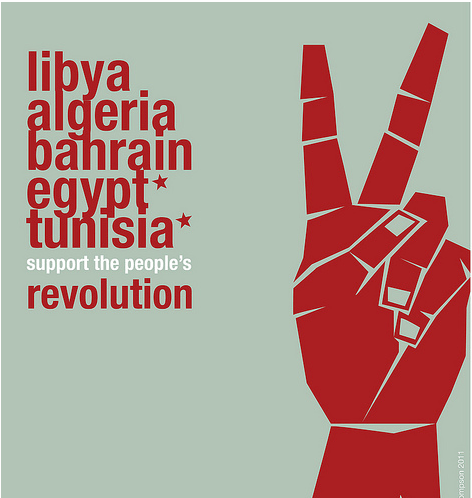 Biggest Surprise: In a year in which no one could have predicted the surging influence and impact of international criminal justice on international relations, there are a number of possible selections for this award. But nothing was as surprising as the role of international justice during the Arab Spring.
Prior to 2011 there had been minimal discussion about the potential relationship between international criminal justice and the Arab world. Arab states were the least represented amongst members states of the ICC. Tunisia has since joined the Court and there have been reports that Egypt would follow suit. In May, the ICC held a regional conference in Doha, Qatar, where a change in tone amongst Arab states towards the ICC was palpable. So surprising was this shift in attitude that the ICC itself appears to have been caught off guard. Within months of the Arab Spring, the Court launched a program to boost the number of Arabic lawyers able to practice at the ICC and the Court hired Fadi el-Abdallah, formerly an Outreach Officer at the Court, to be an ICC spokesperson. If the first decade of the ICC’s existence was dominated by its interventions in Africa, it is at least worth wondering whether the next decade might be defined by its work in the Arab world.
Of course, serious questions remain for the role of international criminal justice in the Arab world. It is likely – and in Tunisia, it is already the case – that Islamic governments will be elected and it remains unclear how international criminal justice will fit with Sharia Law as well as Islamic customs and traditions.
Most Overlooked Story: It is perhaps inevitable that in the midst of a myriad of high profile stories this past year a number were barely covered. For the most overlooked story we picked one that even JiC has barely examined: the arrests of militia leaders in European exile. Callixte Mbarushimana was extradited to the ICC by his host country France. Congolese militia leader Ignace Murwanashyaka is now being tried by his host Germany. JiC author Patrick Wegner argues that “these developments show that militia leaders are less likely to find a comfortable safe haven in Europe.”
A close runner-up for neglected story was Uganda’s first war crimes trial. For a country where the “peace versus justice” debate was in full-swing just a few short years ago, very, very little was said – within and outside of Uganda – of the trial of Thomas Kwoyelo. However, as both Patrick and I have suggested, the Kwoyelo trial could have significant repercussions on both peace and justice in northern Uganda.
Best Site: Opinio Juris. The commentary at OJ is top-notch. Written by some of the world’s preeminent international law scholars, the site’s contribution to debates on international justice and international law are second to none. There simply is no match. For readers of JiC, OJ is of particular interest as it is one of the few blogs of its calibre that consistently wrestles with the politics of international law.
There are a slew of other great, must-read sites of note this year. Here are just a select few: IJCentral, The Open Society Justice Initiative, Wronging Rights, PhD studies in Human Rights, and RNW International Justice. Continue reading →








 Justice in Conflict